The Vegan's Nutritional Gap - The 5 Nutrients Most Often Missing
A plant-based diet offers many benefits – but some nutrients can be tricky to get enough of. Here, we'll explore the vegan nutrient gap and the 5 most commonly missing nutrients.

Introduction
Eating plant-based has become increasingly common in Sweden, and for many good reasons. However, a well-balanced vegan diet requires a bit more planning than one might initially think.
It's not that there's anything wrong with plant-based food. It's simply that certain nutrients are present in smaller quantities, or are absorbed less effectively, from plant sources.
This is where the concept of a nutrient gap comes in. In this article, we'll go through the five nutrients that most often fall short – and how you can bridge that gap.
Why a Plant-Based Diet Can Lead to Gaps
Animal products are concentrated sources of certain nutrients. When these are removed, they need to be consciously replaced, not just assumed to still be present.
Furthermore, absorption plays a role. For example, iron and zinc from plants are absorbed less effectively than the same minerals from meat.
The good news is that every gap can be filled. It just requires knowing which nutrients to keep an eye on.
It's also worth remembering that a plant-based diet provides plenty of things that many others don't get enough of. Fiber, antioxidants, and a wide range of phytonutrients are some clear advantages.
In other words, it's not about one diet being better than another. It's about knowing the specific weak points and planning around them.
The 5 Most Commonly Missing Nutrients
The list below outlines the classic challenges in a vegan diet. They are worth extra attention, regardless of how long you've been eating plant-based.
1. B12 – The Biggest Challenge
B12 is the nutrient almost all experts agree on. In practice, it's not found in sufficient quantities in plant-based foods.
Among other things, B12 contributes to the normal function of the nervous system and the normal formation of red blood cells. Deficiency builds up slowly and often isn't noticed until after a long time.
For those eating entirely plant-based, a supplement or fortified products are practically essential. This is the gap you absolutely do not want to leave open.
2. Iron – Present, but Poorly Absorbed
Iron is abundant in legumes, whole grains, and leafy greens. The problem is that plant-based iron is absorbed less effectively than the iron found in meat.
A simple trick is to combine iron sources with vitamin C, which increases absorption. An orange or bell pepper with your lentil stew actually makes a difference.
Coffee and tea with meals can also inhibit absorption. Waiting a while after eating before having your coffee is a small but effective trick.
3. Omega-3 (EPA and DHA)
Plant-based diets contain a form of omega-3 called ALA, found in flaxseed and walnuts, for example. However, the body only converts a small portion of ALA into the active forms EPA and DHA.
According to EFSA, EPA and DHA contribute to normal heart function, and DHA contributes to normal brain and vision function. This is why this gap is worth taking seriously.
The solution for vegans is often an algal oil supplement, which provides EPA and DHA directly without relying on fish. It's one of the few supplements that truly justifies its place.
4. Vitamin D
Vitamin D is a challenge for many in Sweden, regardless of diet, especially during the winter months. For vegans, it becomes particularly relevant because several common sources are animal-based.
Vitamin D contributes to the normal function of the immune system and to the normal absorption of calcium. Between October and March, the sun in Sweden isn't strong enough to help us sufficiently.
Fortified products and supplements are the easiest way here. Preferably choose D3 from lichen, which is a plant-based source.
5. Zinc
Zinc is found in legumes, seeds, and whole grains, but just like iron, it's less readily absorbed from plants. Substances called phytates bind some of the zinc in the gut.
Zinc contributes to the normal function of the immune system and to normal skin, hair, and nails. It's a nutrient that's easily overlooked because deficiencies rarely show clear early signs.
Soaking, fermenting, and sprouting legumes and seeds can actually improve absorption. Otherwise, a supplement is an easy way to close the gap.
Three nutrients also worth a look
In addition to the big five, there are a few others that might fall short. They deserve an honorable mention even if they're not top of the list.
Iodine is one of them, especially if you avoid both fish and iodized salt. Calcium can become an issue if you don't consume fortified plant-based drinks or a lot of leafy greens.
Selenium is the third, as Swedish fields yield relatively little. None of these are causes for concern – just things to keep on your radar.
How to practically close the nutritional gap
This shouldn't deter anyone from eating plant-based. It's simply about planning a little smarter.
Vary your diet and use fortified products like plant-based drinks and certain cereals. Combine iron with Vitamin C and soak legumes when you have time.
For B12 and often omega-3, a supplement is the simplest and safest choice. The rest can be largely covered by a well-planned and varied diet.
Where Relivo fits in
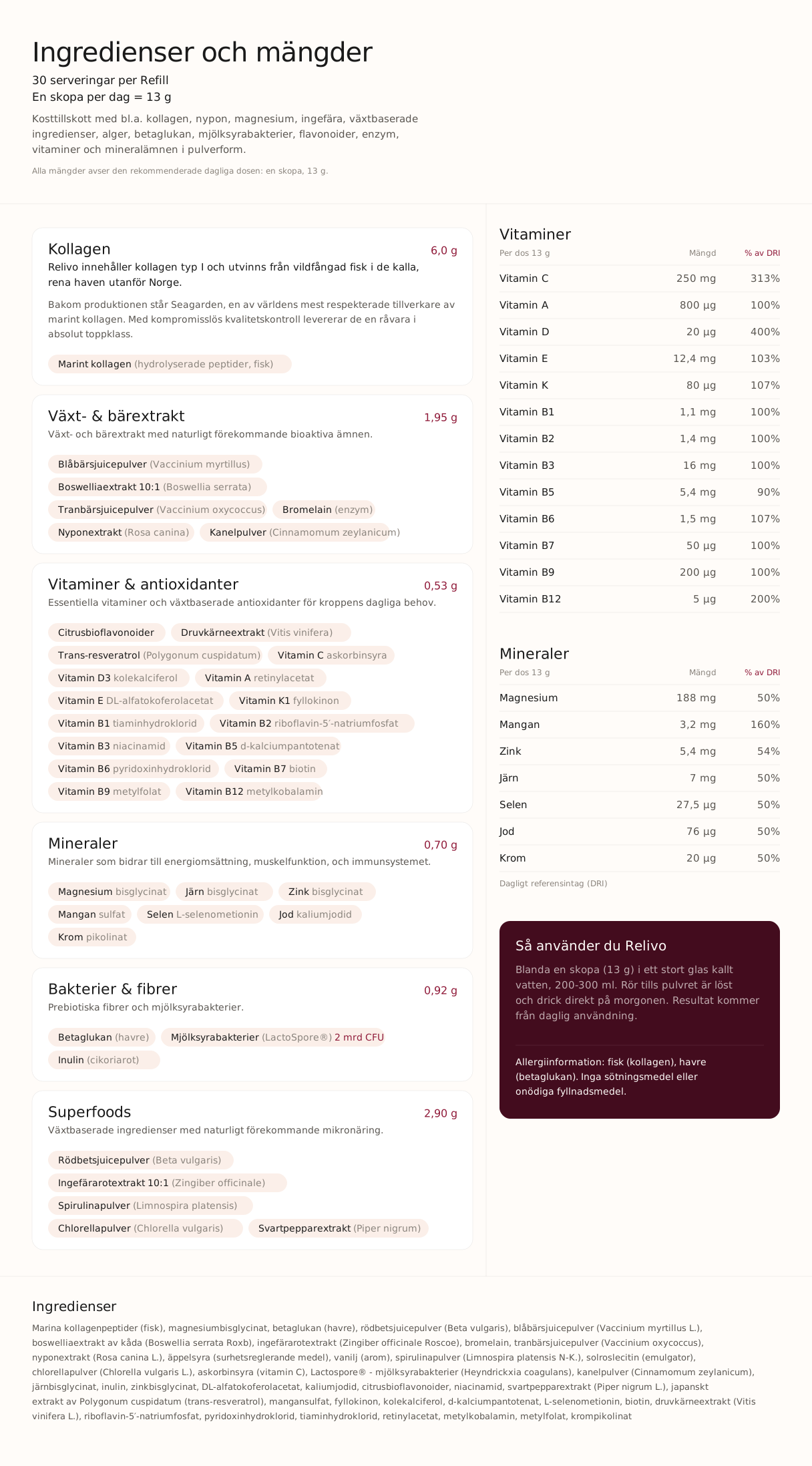
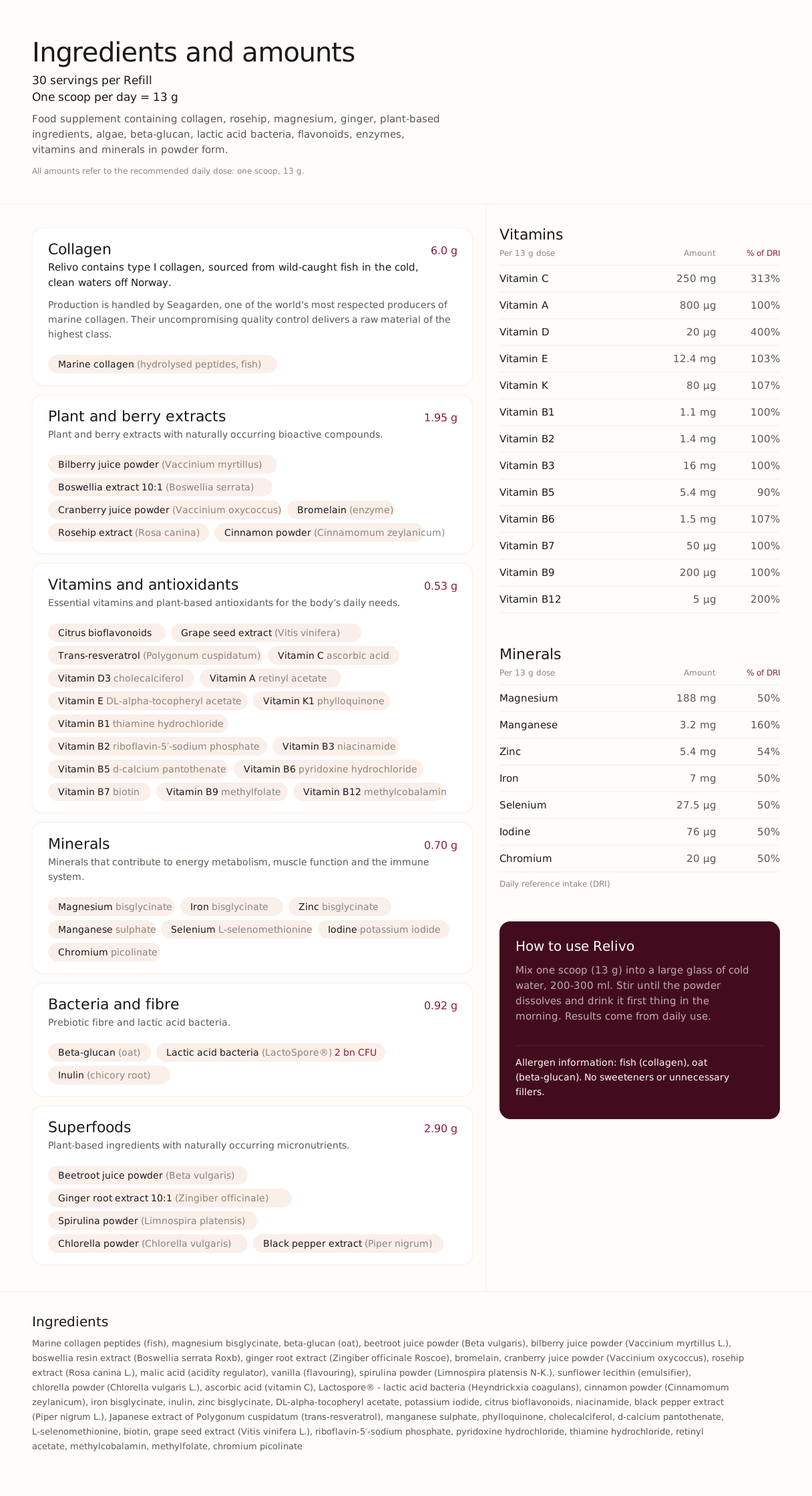
One of the ideas behind Relivo is to provide a broad foundation of precisely those vitamins and minerals that are easily deficient. Several of the substances on this list are included in the formula.
Relivo contains B12, iron, zinc, and vitamin D, among others – four of the five major gaps. However, omega-3 in the form of EPA and DHA is something you'll want to supplement separately, for example, with algal oil.
It's worth being honest that a supplement never replaces a well-planned diet. But for those eating plant-based, it can be a reliable foundation that covers several gaps at once.
If you want to read more about how nutrient deficiencies manifest in everyday life, you can check out our article on early signs of nutrient deficiency, or read more about all our work at relivo.se.
Summary
The vegan's nutrient gaps primarily concern five substances: B12, iron, omega-3 (EPA and DHA), vitamin D, and zinc. B12 and omega-3 are most easily addressed with supplements, while iron and zinc are mostly about smart combination and preparation.
With a little knowledge, these gaps are fully manageable. A varied diet, some fortified products, and the right supplements go a long way.
The point isn't to scare you, but to give you the tools. When you know where the gaps are, you can easily fill them – and get the most out of a plant-based diet.
About Relivo
Relivo is a complete daily nutritional supplement developed in collaboration with Swedish researchers and nutritionists. Relivo combines 38 carefully selected nutrients that support the body's most important systems and structures.
All combined in one scoop of powder, developed to be easy to use and integrate into daily life. Relivo mixes in 60 seconds and is used as a long-term nutritional foundation for energy, immune system, gut health, muscles, and joints.