Creatine for women - what the new 2026 research says
Only for bodybuilders? Think again. New research from 2026 identifies women as the biggest winners when it comes to creatine—from training to menopause.

Introduction
For decades, creatine was synonymous with protein-shake-scented gyms and guys looking to bulk up. Women avoided it—partly out of fear of "bulking," and partly because, until recently, most research was conducted on men.
That has changed rapidly. 2026 has become the year creatine for women went from a niche tip to a mainstream recommendation, driven by a wave of studies specifically looking at women in different life stages. The biggest news is that the benefits don't stop at muscles—creatine also appears to play a role in brain health, mood, and how the body handles hormonal shifts.
In this guide, we walk through what creatine is, which myths you can forget, what the new 2026 research actually shows, and how you can practically get started if it feels relevant to you.
What is creatine, really?
Creatine is a substance that the body produces itself in the liver, kidneys, and pancreas, and it is stored in the muscles and brain. It is not a hormone, not a steroid, and not synthetic—it occurs naturally in meat and fish.
The role of creatine is to rapidly regenerate ATP, the body's fundamental energy molecule. This is why creatine is linked to power and endurance in short, intense efforts—and why it may also be significant for the brain, where energy demand is constant.
Women generally have lower creatine stores in their muscles than men, which actually means that supplementation can have a proportionally greater effect.
Three persistent myths about women and creatine
There are a few classic objections that 2026 research can now put to rest once and for all.
Myth 1: Creatine makes women "bulk up" The most common concern. In practice, creatine is not about adding fat tissue or masculine features. The slight weight gain sometimes seen in the first few weeks is intracellular fluid—the muscles store more water, which is actually part of the effect.
Myth 2: Creatine is hard on the kidneys and liver For healthy individuals at normal doses (3–5 g per day), repeated safety studies have shown no strain on the kidneys or liver. This is one of the most studied dietary supplements in existence.
Myth 3: Creatine only works if you train heavily One of the biggest shifts in 2026 research is that the benefits are not limited to strength training. Cognition, mood, and energy appear to benefit even in people with more moderate activity levels.
What the new 2026 research shows
The study that has received the most attention is the so-called CONCRET-MENOPA study, which specifically examined peri- and postmenopausal women. The results are striking: participants showed improved reaction times and a measured 16.4 percent increase in creatine levels in the frontal lobe.
The study also indicated potential for reducing mood swings during periods of greater hormonal variation. It is one of the first studies of its kind to look at this specific group—and the results have spread rapidly in wellness and research circles.
Beyond CONCRET-MENOPA, there is now a broad body of research specifically focusing on creatine for women through all life stages: from the menstrual cycle to pregnancy and menopause.
Creatine and menopause
It is precisely during menopause and the post-menopausal years that creatine appears to offer the greatest relative benefit. As estrogen levels drop, muscle mass loss accelerates, bone density decreases, and the brain receives less support from the neuroprotective effects of estrogen.
Creatine seems to act as part of the counterweight. Studies show improvements in muscle strength, body composition, and cognitive function—often in combination with strength training, but also in less active women.
This is one of the reasons why creatine for women over 45 is now increasingly recommended by experienced nutritionists and physiotherapists.
Creatine and the brain
The brain accounts for approximately 20 percent of the body's energy consumption and is therefore sensitive to fluctuations in ATP availability. This is where creatine becomes truly interesting outside the world of the gym.
Research on creatine and cognition shows promising results for short-term memory, mental speed, and resistance to mental fatigue—especially during periods of sleep deprivation or increased stress. For women balancing family, work, and exercise, that is worth knowing.
There is also research looking at creatine and low mood, where early results suggest a supportive role in combination with traditional treatment. This research is still in its early stages but has shifted the view of creatine from a workout supplement to brain nutrition.
Creatine for those who strength train
The classic effect remains relevant. Creatine allows you to push 1–2 more reps per set, recover faster between sets, and build a bit more muscle mass over time.
For women who strength train 2–4 times a week, this can mean a noticeable difference within 4–8 weeks, both in performance and body composition. The effect is subtle but cumulative.
And no—you will not look like a bodybuilder. Your hormonal profile means that women get different results from strength training than men, regardless of whether creatine is in the equation or not.
Creatine and GLP-1 medication
An angle that has become highly relevant in 2026 is the use of creatine alongside GLP-1 medications like Ozempic and Wegovy. These drugs cause weight loss—but not all weight loss is fat; a significant portion can be muscle mass.
Creatine has become one of the most evidence-based tools for protecting musculature during GLP-1 treatment. Together with sufficient protein and strength training, it helps maintain muscle function even when total caloric intake is lower.
Dosage, timing, and form
The simplest and most studied form is creatine monohydrate. The standard protocol is 3–5 grams per day, taken at any time of the day. You do not need to "load" with higher doses at the start—it works just as well to begin directly with a maintenance dose.
The effect is not acute. Expect 2–4 weeks before muscle creatine stores are saturated and the noticeable effects begin to appear. Consistency beats timing.
Creatine is best taken with liquid. Some find it easier on the stomach if taken with a meal.
Safety and potential side effects
Creatine is one of the most well-studied supplements on the market. For healthy individuals taking recommended doses, the literature consistently shows a strong safety profile, even with long-term use.
The most common mild effect is a slight weight increase during the first few weeks (due to intracellular fluid, as described). Some may experience mild stomach discomfort if they take too high a dose at once—in that case, spread it out throughout the day.
If you have a known kidney or liver condition, you should always consult your doctor before starting any supplementation.
Summary
Creatine for women is no longer an experimental recommendation—new research from 2026, led by the CONCRET-MENOPA study, shows that the benefits extend far beyond the gym. Menopause, cognition, mood, and GLP-1 treatment are areas where creatine has become a natural part of the conversation.
About Relivo
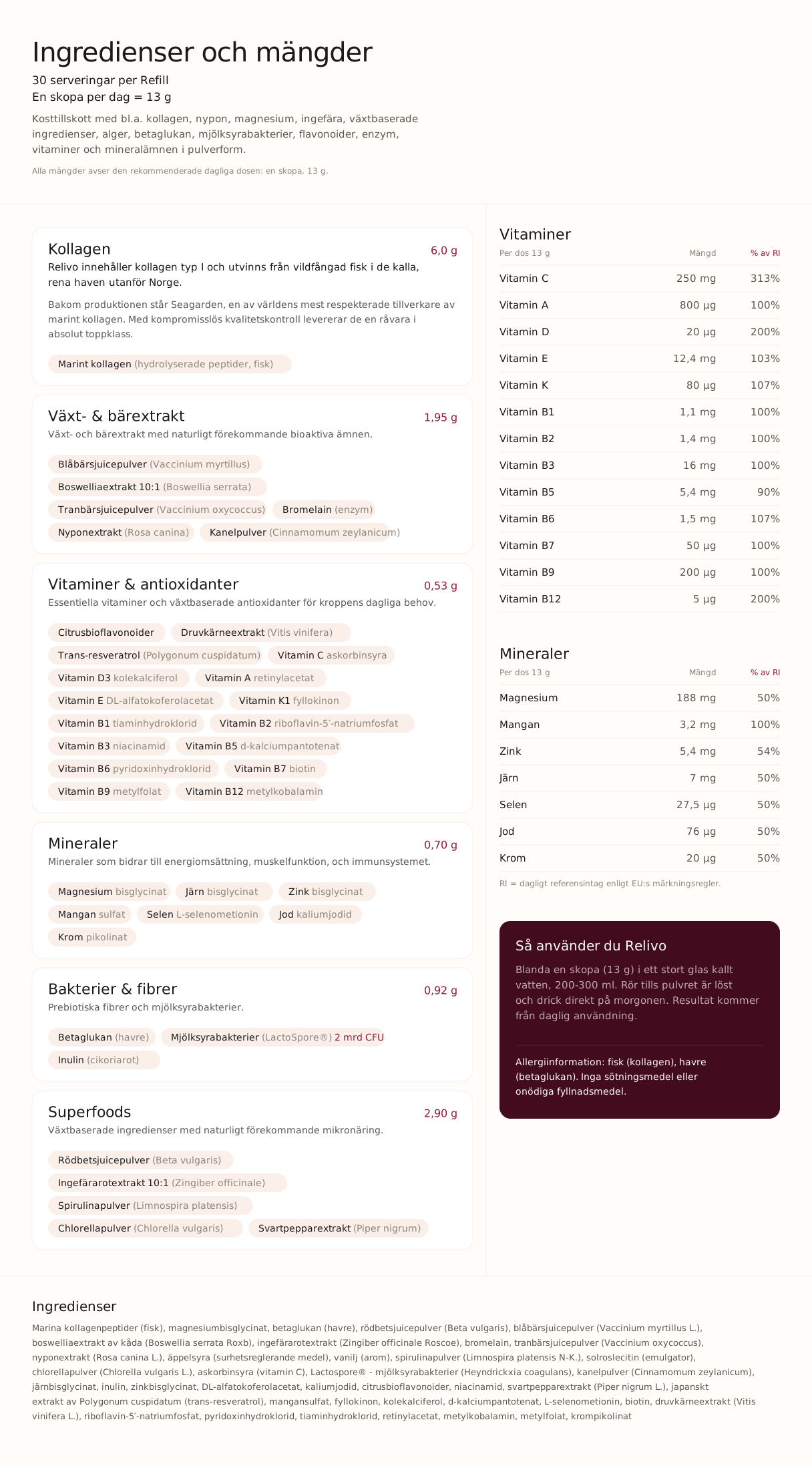
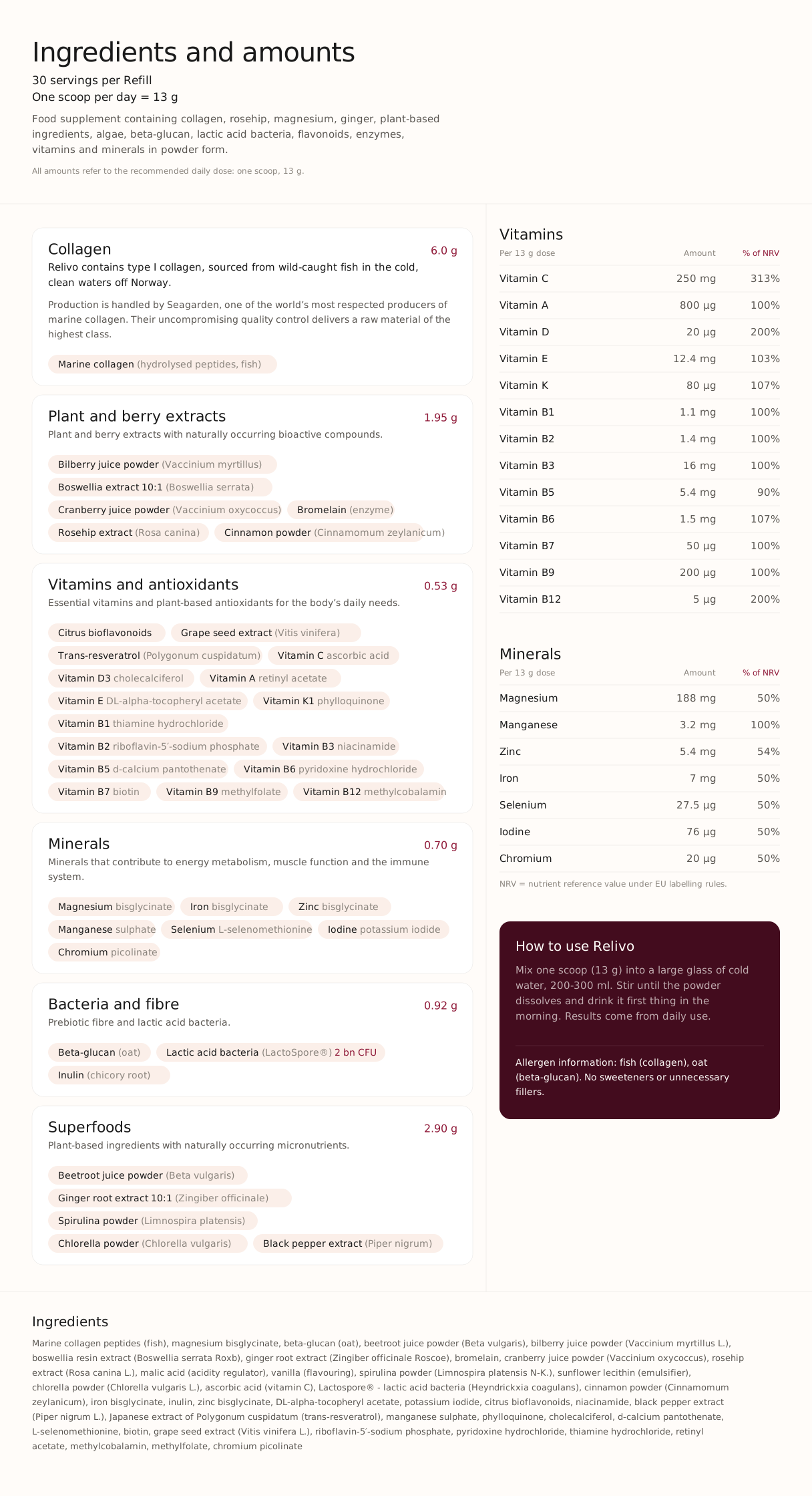
Relivo is a complete daily nutritional supplement developed in collaboration with Swedish researchers and nutritionists. Relivo combines 38 carefully selected nutrients that support the body's most important systems and structures.
Everything is contained in one scoop of powder, developed to be simple to use and easy to incorporate into your daily routine. Relivo mixes in 60 seconds and serves as a long-term nutritional foundation for energy, immune function, gut health, muscles, and joints.
Sources
- Smith-Ryan AE et al. – Creatine in women's health: bridging the gap from menstruation through pregnancy to menopause (2026)
- Tandfonline – Creatine in women's health (full text)
- Forbes SC et al. – Effects of Creatine Supplementation on Brain Function and Health (Nutrients)
- Kreider RB et al. – International Society of Sports Nutrition position stand: safety and efficacy of creatine
- Candow DG et al. – Creatine and Resistance Training: A Combined Approach to Attenuate Elderly Sarcopenia
- Roschel H et al. – Creatine Supplementation and Brain Health (Nutrients)
- University of Colorado Anschutz – Can Taking Creatine Help Women Stay Healthy as They Age?
- UCLA Health – Why everyone's talking about creatine
- Mayo Clinic – GLP-1 Medications and Muscle Loss
- EFSA – Creatine and increase in physical performance