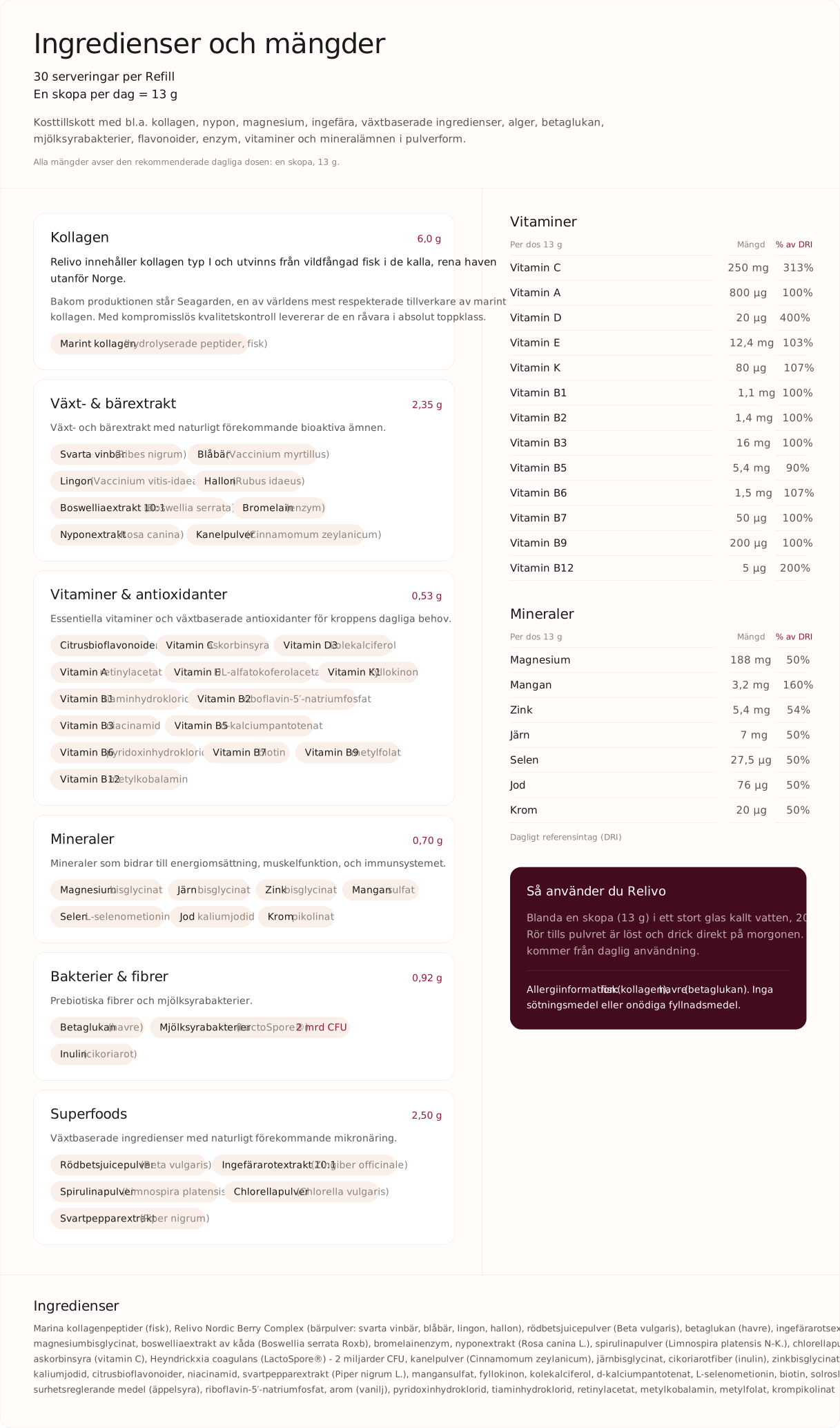
Rose hip extract - the research behind the Nordic berry
A small red berry from Swedish bushes has become one of the most studied plant substances for joints and mobility. Here is the research behind rosehip extract.

Introduction
Most people who grew up in Sweden have some connection to rosehips. Perhaps in the form of grandmother's rosehip soup during the winter break. Perhaps from bike rides where someone picked the red berries to make mash. Or perhaps from a school lesson on vitamins where it was cited as the "berry with the most Vitamin C."
What few people know is that over the last two decades, rosehips have become one of the most studied Nordic plant substances in joint nutrition. From Danish clinical studies to meta-analyses in international journals, the research on rosehip extract is more extensive than most realize.
In this guide, we go through what rosehips actually are, what the research shows about the concentrated extract, why rosehip soup and rosehip extract are two different things, and how you can think about it in practical terms.
What exactly are rosehips?
Rosehips are the fruit of wild rose bushes, primarily Rosa canina (dog rose) and closely related species. After the rose blooms in the summer, the characteristic red "berries"—which botanically are not berries but rather accessory fruits—ripen in late autumn.
Inside are the seeds and the sweet, mildly tart pulp that has traditionally been used both in food and as a natural remedy. Rosehips grow wild throughout Sweden, are easily accessible, and have been used in Nordic households for centuries.
The nutritional profile is impressive: high levels of Vitamin C, carotenoids (such as lycopene and beta-carotene), tocopherols (Vitamin E), and a range of polyphenols. Vitamin C contributes to normal collagen formation for the normal function of cartilage, bones, and skin, according to EU-approved health claims.
GOPO – the active substance that put rosehips on the research map
What really caused rosehip research to take off is the discovery of a specific component: a galactolipid called GOPO (galactolipid from Rosa canina, exact name: 1,2-di-O-α-linolenoyl-3-O-β-d-galactopyranosyl-sn-glycerol).
Studies have shown that GOPO has anti-inflammatory properties at the cellular level and can influence mechanisms linked to how immune cells react during joint inflammation. It is this substance that is central to the majority of clinical studies conducted on rosehip extract over the last 20 years.
Important to note: the amount of GOPO varies significantly depending on how the rosehip is harvested, dried, and processed. Traditional rosehip soup does not contain the same concentrated levels as a standardized rosehip extract.
What does the research say about rosehip extract?
Here is an overview of what has been studied:
Joints and mobility
Several randomized controlled trials have examined rosehip extract in people with osteoarthritis symptoms. Meta-analyses have indicated that standardized rosehip extract can contribute to increased joint comfort and mobility compared to a placebo, with generally good tolerance.
The effect sizes are moderate rather than dramatic, but the results are relatively consistent—which is unusual in the literature on plant substances, where large differences between studies are often seen.
Anti-inflammatory mechanisms
At the cellular level, GOPO has been shown to influence the activation and migration of certain immune cells (neutrophil chemotaxis), as well as inhibit certain markers in the inflammatory cascade. This provides a biochemical explanation for the clinical observations.
Antioxidant capacity
Rose hips have a high total antioxidant capacity, partly due to their vitamin C content but also thanks to polyphenols and carotenoids. This is relevant both for general cellular protection and for how the body manages oxidative stress during exercise or periods of stress.
Collagen and connective tissue
Vitamin C is an essential cofactor in the body's own collagen production. Since rose hips are one of nature's richest sources of vitamin C, they naturally complement the need for the building blocks of collagen—which is particularly relevant for joint issues or intense training.
Rose hip soup vs. rose hip extract - two different things
This is an important distinction that many people miss.
Rose hip soup is the traditional soup made from rose hip purée, sugar, and starch. It provides a small intake of vitamin C and a pleasant, filling drink. It does not provide clinically relevant doses of GOPO.
Rose hip powder from whole rose hips (peel + fruit + seeds) is closer to what has been used in clinical studies. Here, you get both vitamin C and GOPO, but in a more concentrated form.
Standardized rose hip extract is a further concentration that ensures a specific level of GOPO per serving, and is usually what is used in supplements.
Which form is right for you depends on your goal. Do you just want a nice Swedish food tradition? Rose hip soup is excellent. Are you looking for the researched joint nutrition angle? Then extract or powder from the whole rose hip is more relevant.
Who is rose hip extract particularly suitable for?
Based on research, the following groups are most often highlighted:
- People 40+ with early-stage joint issues - where mobility starts to feel stiffer
- Active exercisers and runners - where joints are subjected to repetitive strain
- People diagnosed with osteoarthritis - as a complement to (not a replacement for) medically prescribed treatment
- Individuals with a high inflammatory load - for example, due to a stressful lifestyle
The effect is usually subtle and cumulative. Expect 6–12 weeks of regular use before you can judge whether it makes a difference for you.
Who should be cautious?
Rose hip extract is generally well-tolerated and has a low side-effect profile. However, some groups should still exercise caution:
- Individuals with a tendency to bleed or those on blood-thinning medication - high doses of vitamin C can interact in some cases
- Individuals with kidney stones - high doses of vitamin C can, in rare cases, contribute to oxalate stones
- Pregnant and breastfeeding women - always talk to your midwife or doctor before starting concentrated herbal supplements
- Children - standardized extracts have primarily been studied in adults
If you are unsure, check with your doctor before starting.
Practical ways to include rose hips in your daily life
In addition to choosing a supplement containing rose hip extract, there are several homemade options:
1. Rose hip tea. Dried rose hips in hot water (steep for 10 minutes). A mild and antioxidant-rich drink.
2. Rose hip powder on porridge or yogurt. 1 teaspoon per serving is an easy way to add a few grams of rosehip to your daily routine.
3. Homemade rosehip soup from whole berries. Traditionally Swedish, filling, and a pleasant introduction to the flavor.
4. Rosehip in smoothies. A tablespoon of rosehip powder mixed with berries and fruit makes no noticeable difference in taste but boosts the nutritional value.
For standardized doses (if you are focusing on joint nutrition), a supplement where the amount is specified per serving is usually the most practical option.
Summary
Rosehip extract is one of the most studied Nordic plant substances in the field of joint nutrition, and research points to real potential—especially regarding joint comfort, mobility, and anti-inflammatory mechanisms via GOPO. The effect is usually subtle and cumulative, not acute.
About Relivo
Relivo is a complete daily nutritional supplement developed in collaboration with Swedish researchers and nutritionists. Relivo combines 38 carefully selected nutrients that support the body's most important systems and structures.
Everything is gathered in one scoop of powder, designed to be easy to use and simple to incorporate into your daily life. Relivo mixes in 60 seconds and serves as a long-term nutritional foundation for energy, immune function, gut health, muscles, and joints.
Sources
- Winther K et al. – A powder made from seeds and shells of a rose-hip subspecies reduces symptoms of knee and hip osteoarthritis (Scandinavian Journal of Rheumatology)
- Christensen R et al. – Does the hip powder of Rosa canina reduce pain in osteoarthritis patients? A meta-analysis
- Rein E et al. – A herbal remedy, Hyben Vital (stand. powder of a subspecies of Rosa canina fruits), reduces pain in osteoarthritis
- Kharazmi A – Laboratory and preclinical studies on the anti-inflammatory and anti-oxidant properties of rosehip powder
- Chrubasik C et al. – A systematic review on the Rosa canina effect and efficacy profiles
- Larsen E et al. – An antiinflammatory galactolipid from rose hip that inhibits chemotaxis of human peripheral blood neutrophils
- Andersson U et al. – A nutraceutical containing rose hip and its effect on markers of inflammation
- EFSA – Vitamin C and normal collagen formation for the normal function of bones, cartilage, skin
- Swedish Food Agency – Vitamin C
- Swedish Museum of Natural History – Rosa canina