Vitamin and mineral deficiencies in the Nordic region 2026: what are the gaps for Swedes?
We eat more varied diets than ever, yet we still miss out on the same nutrients year after year. Here are the six most common gaps and the new factors that have emerged.

Introduction
Sweden has one of the world's most secure food supplies. The selection is vast, the quality is high, and availability is good all year round.
Yet, the same pattern recurs in survey after survey. Certain nutrients consistently fall below recommendations for large parts of the population, and this is not due to poverty or lack of knowledge, but rather a combination of geography, soil conditions, and changing dietary habits.
During 2026, some new factors have also emerged that are affecting the picture in ways they didn't just a few years ago.
In this guide, we go through which gaps are most common in Sweden and the Nordic region, why they occur, which groups are at greatest risk, and what actually makes a difference.
Why the Nordic region is a special case
Three factors make the Nordic situation different from most other parts of the world.
Latitude. Sweden stretches from 55 to 69 degrees north latitude. During the winter months, the sun is too low for the skin to produce vitamin D, regardless of how much time you spend outdoors.
Soil conditions. Nordic soil is naturally low in selenium. Crops grown here therefore contain less selenium than corresponding crops from other parts of Europe and North America. Since the eighties, Finland has added selenium to commercial fertilizers, which Sweden does not do.
Dietary patterns. The traditional Nordic diet was based on fish, dairy, root vegetables, and whole grains. The modern diet looks different, and several of the foods that historically contributed the most to certain nutrients are eaten to a lesser extent today.
Gap 1: Vitamin D
The most well-known and widespread deficiency.
From October to March, the skin cannot effectively produce vitamin D in Sweden. The body's stores from the summer gradually deplete, and the lowest levels in the population are usually measured in February and March.
The recommendation is 10 micrograms per day for adults and 20 micrograms for people over 75.
Natural sources are few. Fatty fish is the most important, followed by egg yolks and UV-treated mushrooms. Fortified foods such as milk, plant-based drinks, and cooking fats account for a significant portion of intake.
Greatest risk: people with darker skin tones, the elderly, those who cover their skin, those who are rarely outdoors, and those who do not eat fish.
Door 2: Iron
Iron deficiency is the most common nutritional deficiency globally, and Sweden is no exception.
The problem is most prevalent among women of childbearing age, who experience monthly blood loss. Heavy periods increase these losses even further.
An important point to add is that iron deficiency often exists even when hemoglobin levels have not dropped. The body's iron stores, measured as ferritin, can be low for a long time before blood values are affected. Symptoms then creep up in the form of fatigue, reduced stamina, and difficulty concentrating.
Greatest risk: women of childbearing age, especially those with heavy periods, vegetarians and vegans, endurance athletes, and pregnant women.
Door 3: Folate
Folate intake is consistently below recommended levels for a large portion of the population, particularly among women of childbearing age.
This is problematic because the need for folate is greatest during the very first weeks of pregnancy, often before the pregnancy is even known. This is why the recommendation applies to everyone planning a pregnancy, not just those who are already pregnant.
The best sources are green leafy vegetables, legumes, whole grains, and citrus fruits.
Greatest risk: women of childbearing age, people who eat few vegetables and legumes, and those with intestinal diseases that affect absorption.
Door 4: Selenium
This is the most distinct Nordic issue.
Selenium is found in the soil and absorbed by crops. Nordic soil is naturally low in selenium, which means that Swedish-grown grains and Swedish-produced meat contain less selenium than equivalent products from many other countries.
Selenium is part of several enzyme systems, including those linked to thyroid function and the cells' protection against oxidative stress.
The best sources in the Swedish diet are fish, shellfish, eggs, and organ meats. Brazil nuts contain a lot of selenium, but the levels vary significantly depending on where they were grown.
Greatest risk: people who eat little fish and eggs, vegans, and those who eat a primarily locally produced plant-based diet.
Door 5: Iodine
Iodine is the topic that has changed the most in recent years, and it deserves special attention.
Sweden introduced iodine fortification of table salt in the 1940s in response to widespread goiter, especially in the inland regions and Norrland. The measure was highly successful.
But the circumstances have changed. We use less table salt today. Many have switched to sea salt, flaky salt, or other specialty salts that are rarely iodized. Dairy products, which are an important source of iodine in the Swedish diet, are being consumed less. And a growing number of people are eating plant-based diets, which excludes both dairy and fish.
The result is that iodine intake in certain groups has once again become a serious issue, particularly for pregnant women, whose requirements are elevated and for whom iodine is crucial for fetal brain development.
Greatest risk: vegans and vegetarians, people who use non-iodized salt, and those who are pregnant or breastfeeding.
Day 6: Magnesium
Magnesium rarely makes the headlines, yet it consistently falls below recommended levels in Nordic intake surveys, especially among women and the elderly.
This is rarely a matter of clinical deficiency, but rather suboptimal intake over time. Magnesium is involved in over 300 enzymatic processes, including energy metabolism, muscle and nerve function, and the activation of vitamin D.
The latter connection is particularly worth noting. The body requires magnesium to activate vitamin D, meaning these two topics reinforce one another.
The best sources are whole grains, legumes, nuts, seeds, and dark green leafy vegetables.
B12 and the plant-based shift
Vitamin B12 is found almost exclusively in animal products. Plants do not contain it in a bioavailable form.
For those eating a plant-based diet, B12 is therefore not a matter of eating a more varied diet, but of taking supplements or consuming fortified products. There is no way around it.
In addition to vegans and vegetarians, there are two other at-risk groups that are often overlooked: the elderly, because absorption requires stomach acid, which decreases with age; and people taking acid-reducing medication or metformin, both of which can affect absorption.
New factors in 2026
Three things have emerged or intensified in recent years that are affecting the landscape.
GLP-1 medications. Use has increased significantly. These medications substantially reduce total food intake, which means nutrient intake decreases as well. Anyone eating a noticeably smaller total volume of food will consume less of everything, regardless of how healthy the food is. This makes nutrient density more important than ever for this group.
The plant-based shift. More people are eating less meat and dairy. While this has environmental benefits, it changes the nutritional profile. B12, iron, zinc, iodine, selenium, and omega-3 are the nutrients most affected and require active planning in a plant-based diet.
Changing salt habits. The transition from iodized table salt to sea salt and other specialty salts has occurred gradually, and most people have not given the iodine issue a second thought.
Who is at greatest risk?
In summary, the following groups are most at risk.
Women of childbearing age: iron and folate.
Vegans and vegetarians: B12, iron, zinc, iodine, selenium, and omega-3.
The elderly: B12, vitamin D, and protein, partly due to reduced stomach acid and partly due to decreased appetite.
People with darker skin tones: Vitamin D.
Pregnant and breastfeeding women: folate, iron, iodine, and vitamin D.
Endurance athletes: iron and total energy intake.
People on GLP-1 medications: all nutrients, due to reduced total intake.
People taking acid suppressants: B12, iron, magnesium, and calcium.
How to find out where you stand
Guessing is rarely meaningful. You can get concrete answers.
Blood test can measure ferritin, B12, folate, 25-OH vitamin D, and in some cases selenium and zinc. Some of these are included in standard packages, while others need to be requested separately.
Dietary logging over a few days provides a picture of your intake. There are apps that calculate the nutritional content automatically.
Symptoms are unreliable but not useless. Fatigue, brain fog, susceptibility to infections, hair loss, and brittle nails can all have nutrition-related causes, among many others.
The most useful approach is usually to combine these. A blood test provides facts, dietary logging provides an explanation, and symptoms provide context.
What actually helps
1. Fatty fish two to three times a week. Provides vitamin D, selenium, iodine, B12, and omega-3 all at once. The single most effective step in a Swedish diet.
2. Keep using iodized salt in your cooking. Specialty salts can be used at the table, but let the iodized version be your staple.
3. Legumes regularly. Iron, folate, magnesium, and fiber in the same food.
4. Whole grains over refined. Magnesium, selenium, B vitamins, and fiber.
5. Combine iron sources with vitamin C. Increases the absorption of plant-based iron many times over.
6. Take vitamin D during the winter months. There is no dietary way around our latitude.
7. Plan actively when following a plant-based diet. Especially B12, iodine, iron, zinc, and selenium.
When should you seek medical care?
Book an appointment if you have:
- Persistent fatigue that does not improve with sleep
- Symptoms you suspect may be nutrition-related
- A diet that excludes entire food groups
- Plans for pregnancy or are currently pregnant
- Medications that may affect nutrient absorption
- Membership in several risk groups simultaneously
If you suspect a deficiency, a blood test is the right way to go. Self-treatment with high doses without knowing your baseline is rarely wise, as some nutrients can become problematic in excess. Read more at 1177 Vårdguiden.
Summary
The Nordic nutritional gaps are predictable and have partly geographical explanations. Vitamin D due to our latitude, selenium due to the soil, and iodine due to changing salt habits.
In addition, there are iron and folate, which primarily affect women of childbearing age, as well as magnesium, which is low in large parts of the population.
During 2026, the picture has been supplemented by three newer factors: the increased use of GLP-1 medications that reduce total intake, the plant-based shift that changes the nutritional profile, and the transition to non-iodized specialty salts.
The most useful thing you can do is find out where you actually stand. A blood test provides answers that no article can, and it makes it much easier to know what is worth addressing.
About Relivo
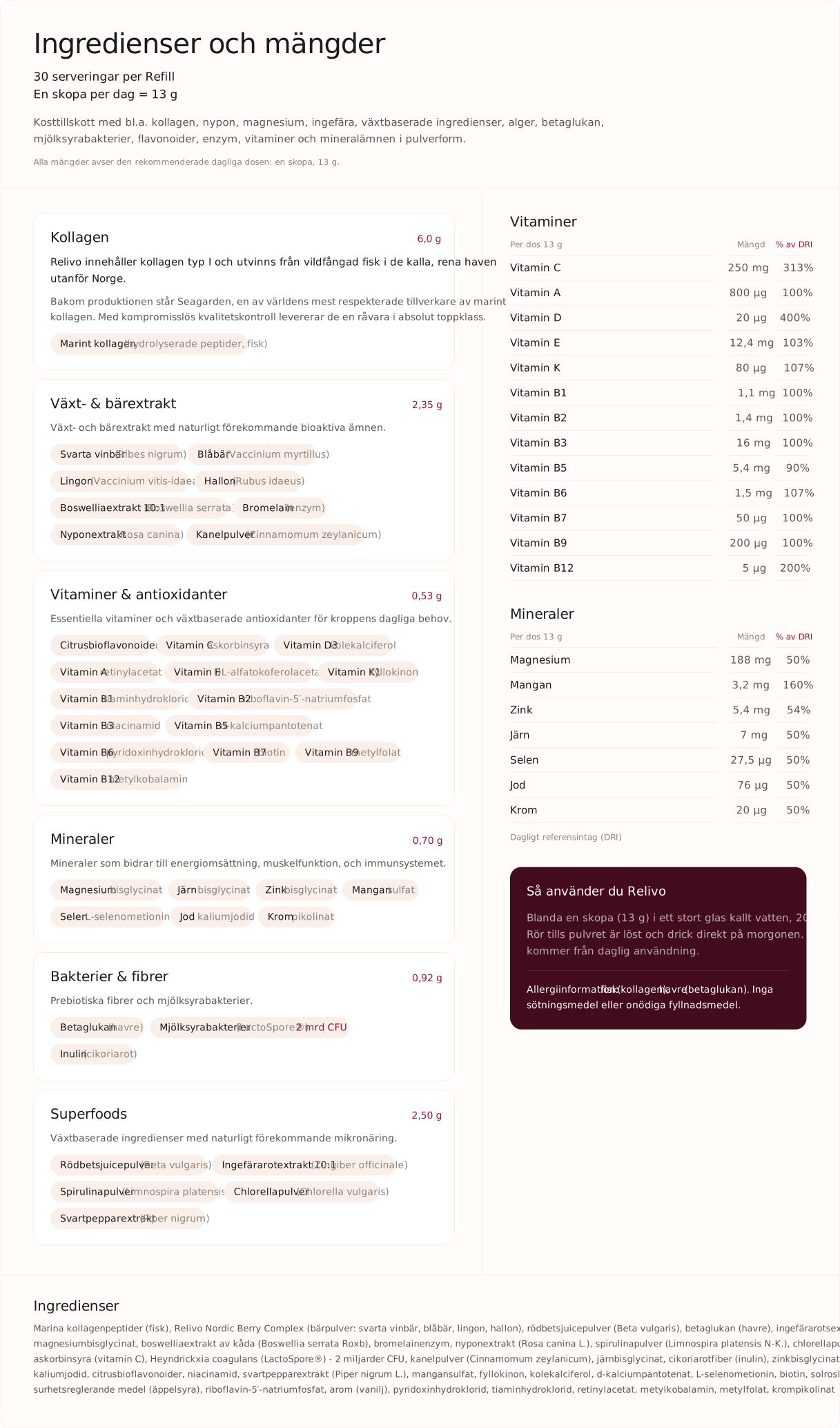
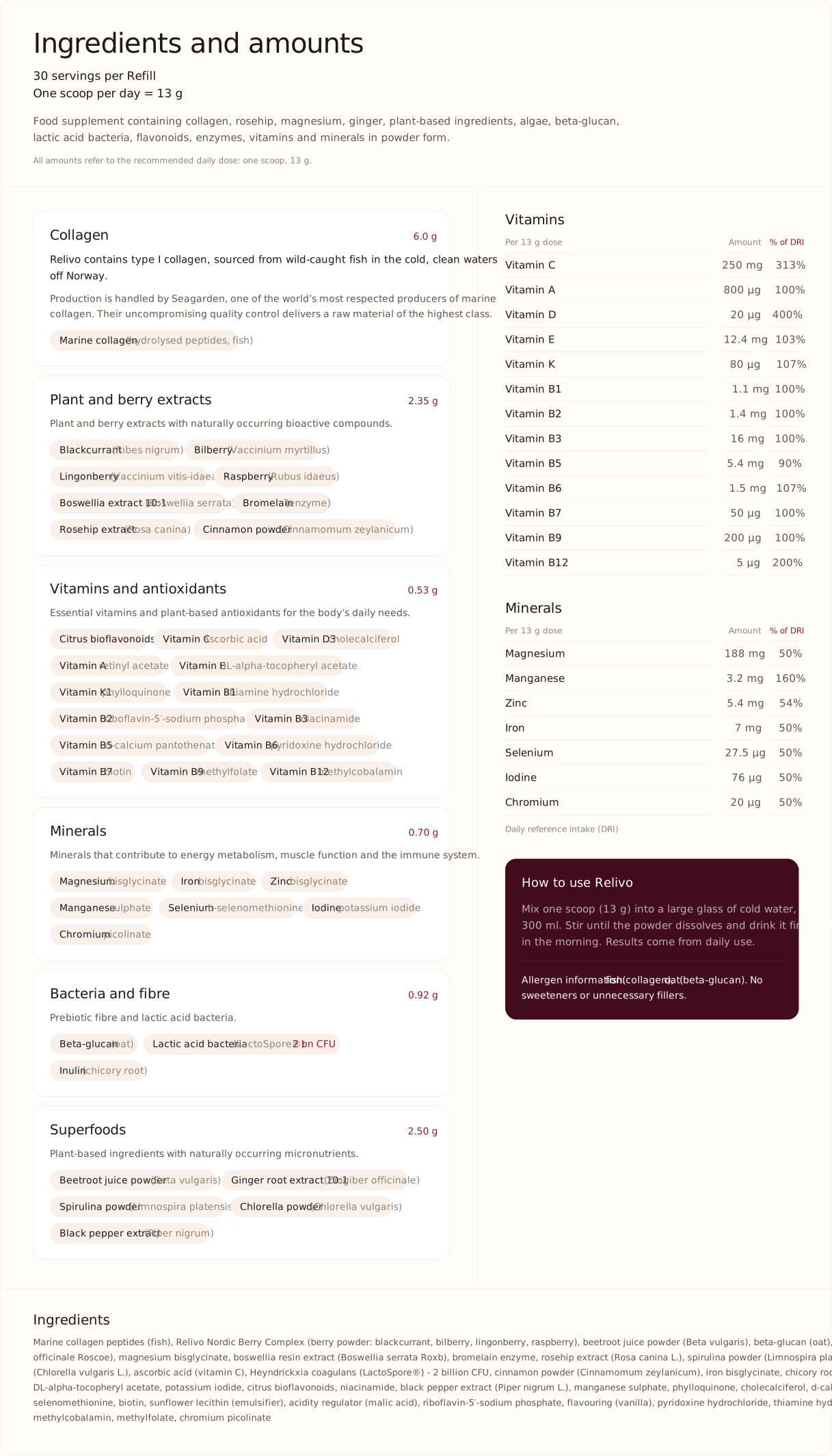
Relivo is a complete daily nutritional supplement developed in collaboration with Swedish researchers and nutritional physiologists. Relivo combines 38 carefully selected nutrients that support the body's most important systems and structures.
Everything is gathered in one scoop of powder, developed to be simple to use and easy to incorporate into your daily routine. Relivo mixes in 60 seconds and serves as a long-term nutritional foundation for energy, immune function, gut health, muscles, and joints.
Sources
- Swedish Food Agency: Riksmaten adults, dietary habits and nutrient intake
- Nordic Nutrition Recommendations 2023
- National Food Agency: Vitamin D
- Swedish Food Agency: Selenium
- Swedish Food Agency: Iodine
- Swedish Food Agency: Iron
- Cashman KD et al: Vitamin D deficiency in Europe: pandemic? (American Journal of Clinical Nutrition)
- Rayman MP: Selenium and human health (The Lancet)
- Manousou S et al: Iodine deficiency in pregnant women in Sweden (European Journal of Nutrition)
- Allen LH: How common is vitamin B-12 deficiency? (American Journal of Clinical Nutrition)
- 1177 Healthcare Guide: Vitamins and minerals