Restless legs – how iron and magnesium are linked to the condition
Tingling, itching, restless legs that refuse to stay still just as you’re trying to fall asleep? Research into restless legs points clearly to two nutrients in particular: iron and magnesium.

Introduction
You’ve climbed into bed. The light is off, your eyes are heavy. And then it starts—that indescribable urge to move your legs. You toss and turn, rearrange your pillows, maybe even get up to pace the cold floor. The relief lasts for a few minutes. Then it’s back.
For about 10 percent of adults, this isn’t just an occasional bad night, but a recurring reality. The condition is called restless legs syndrome (RLS), and while the causes aren't yet fully understood, there are two nutrients that research keeps coming back to: iron and magnesium.
In this guide, we’ll walk you through what restless legs actually are, why these two nutrients are so central, and what you can do in your daily life to support your body.
What exactly is restless legs?
Restless legs syndrome is a neurological disorder that creates a strong, often unpleasant, urge to move your legs. Symptoms are worst when the body is at rest—especially in the evening and at night—and are relieved by movement.
It’s not just uncomfortable. RLS disrupts sleep, lowers quality of life, and can eventually lead to chronic sleep deprivation, with all the consequences that brings for your mood, concentration, and overall well-being.
The condition is more common in women than in men, and the risk increases during pregnancy, with iron deficiency, and with certain other health conditions. Genetics also play a role—many people with restless legs have relatives with similar issues.
The central role of iron
Of all the links discovered regarding restless legs, the connection to iron is the most robust. It’s not primarily about iron in the blood, but about iron levels in the brain.
Iron is a cofactor for the enzyme tyrosine hydroxylase, which is needed to produce dopamine. And dopamine is the very signaling system that appears to be out of balance in people with restless legs. Low iron in the brain = less dopamine = more restlessness in the legs.
This also explains why many people with restless legs have normal hemoglobin levels but still feel better when they support their iron levels. It is ferritin—the body’s iron stores—that often turns out to be low.
The key role of ferritin
Many researchers and clinicians suggest that ferritin levels below 75 µg/L are worth noting in the context of restless legs, even if the traditional laboratory threshold is lower. For women with heavy periods or those who are pregnant, it is especially valuable to keep track of these levels.
If you want to read more about how to recognize the early signs of iron deficiency, see our in-depth article Iron deficiency in women of childbearing age – 7 early signs.
Magnesium – the other essential nutrient
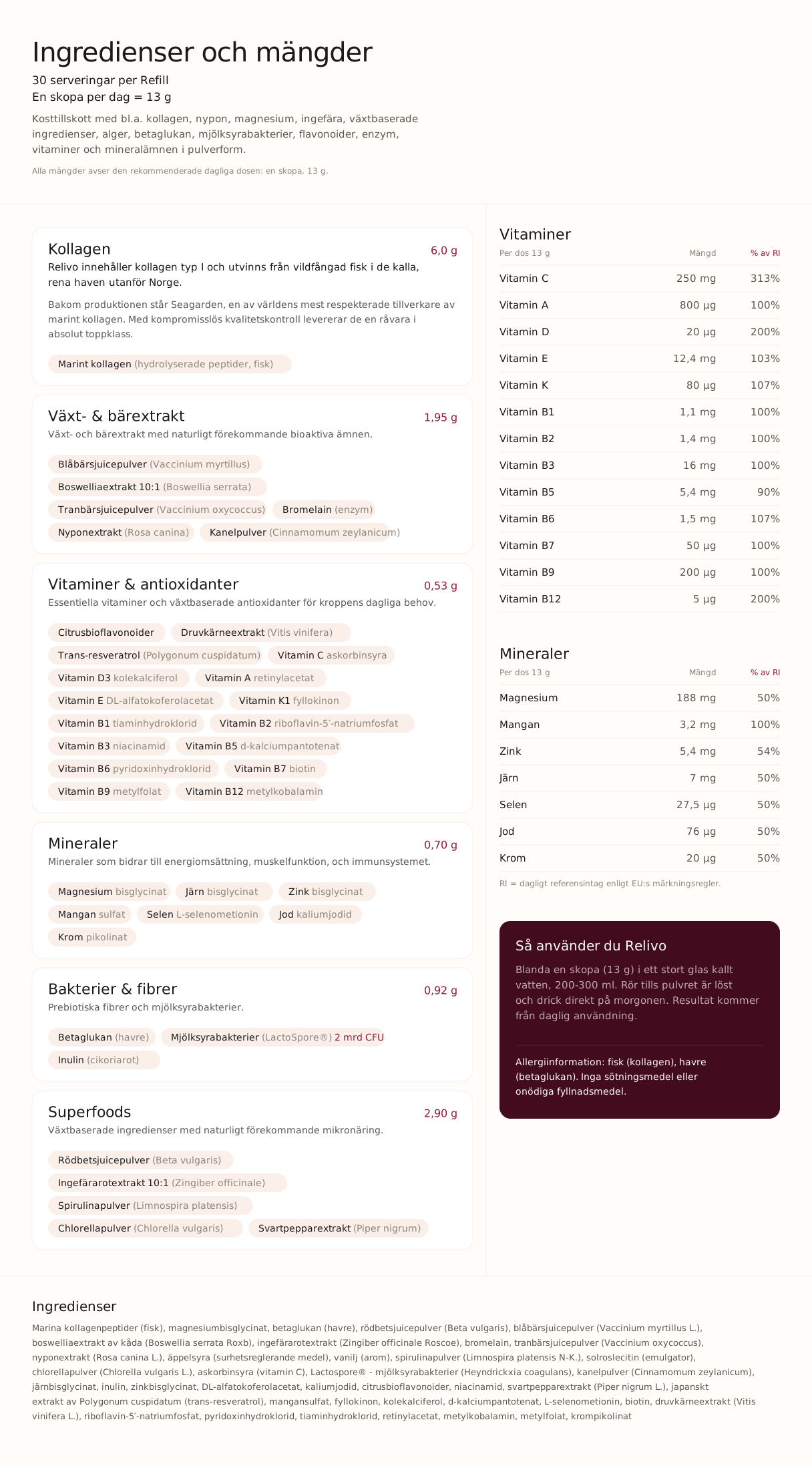
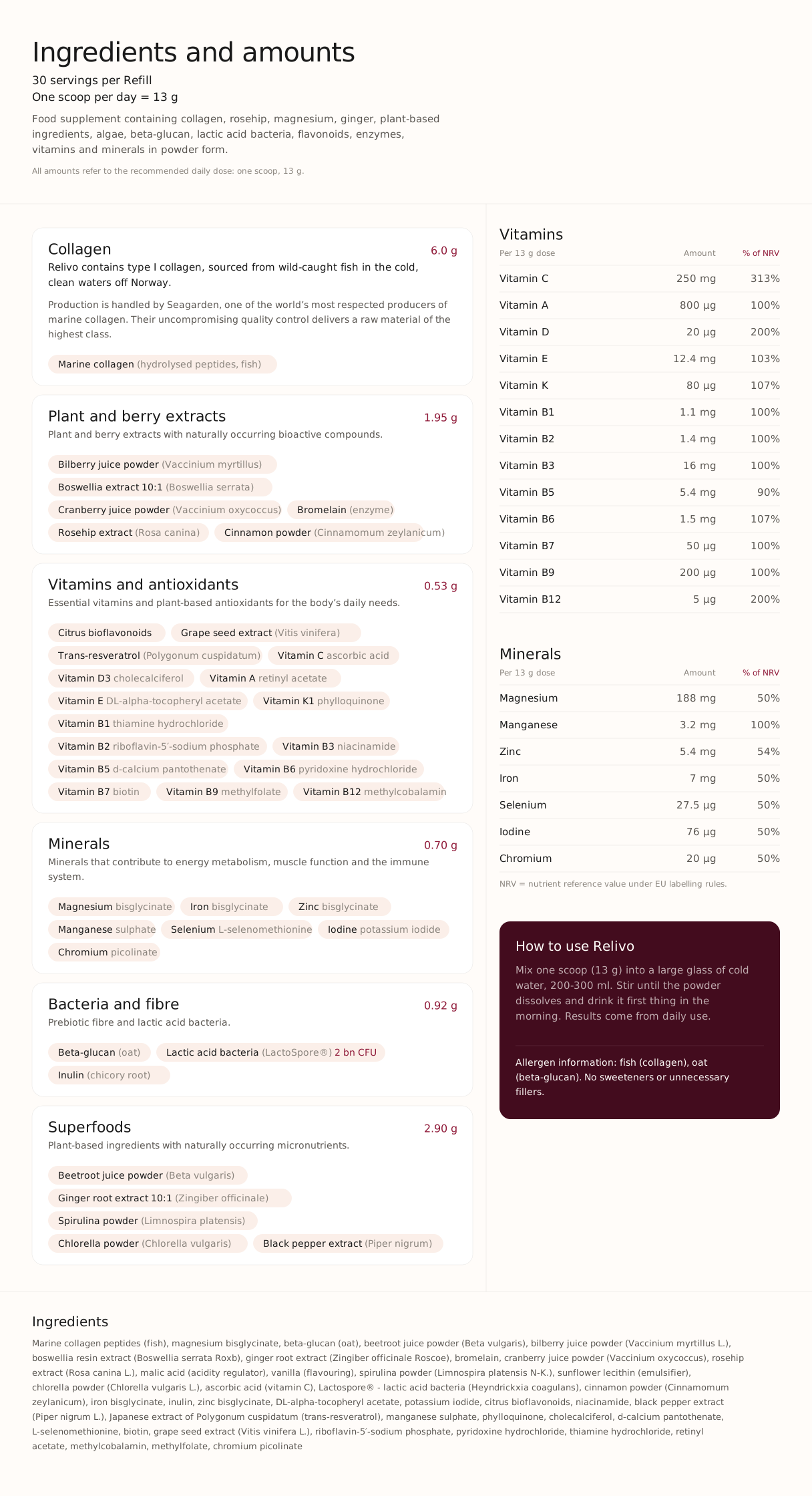
If iron is the building block for dopamine, magnesium is the conductor for your muscles. This mineral is involved in over 300 enzymatic reactions in the body, including those that regulate muscle relaxation and nerve signaling.
Magnesium deficiency can make muscles more prone to cramps and spasms, and the central nervous system more reactive. Both of these can exacerbate symptoms of restless legs.
Studies have also looked at magnesium specifically for RLS, with several smaller studies showing relief with supplementation. The effect is not guaranteed for everyone, but for people with both RLS and low magnesium levels, it is one of the most logical places to start.
Which form of magnesium works best?
For restless legs, magnesium bisglycinate (magnesium bound to the amino acid glycine) is one of the most studied forms. Glycine also has a calming effect on the nervous system, which potentially enhances the soothing effect on the legs.
Magnesium citrate is another well-studied form with good bioavailability. Magnesium oxide is inexpensive but has poorer absorption.
Other nutrients that may play a role
Iron and magnesium are central, but they are not alone. Three other nutrients frequently appear in research on restless legs:
Folate (B9) and vitamin B12 - both are needed for normal nerve function and are often linked to neurological symptoms when deficient.
Vitamin D - several studies have observed a link between low vitamin D status and RLS, although the mechanism is not fully understood.
Copper and zinc - both are required for normal iron metabolism. An imbalance can indirectly affect the same systems underlying RLS.
This is one of the reasons why broader nutritional support often does more than individual supplements for these types of issues.
Common triggers to watch out for
In addition to nutritional deficiencies, there are lifestyle factors that can trigger or worsen restless legs:
Caffeine in the afternoon and evening - stimulates the nervous system just when it should be winding down.
Alcohol - disrupts both sleep architecture and the balance of the nervous system.
Prolonged sitting – many find that a short evening walk makes a noticeable difference.
Certain medications – antihistamines, certain antidepressants, and anti-nausea medication can worsen symptoms. Check with your doctor if you suspect this is the case.
Stress and poor sleep in themselves – unfortunately create a vicious cycle that fuels the discomfort.
Practical habits that often help
The good news is that many people find significant relief from relatively simple everyday changes. Here are the most proven ones:
1. Check your iron levels. Ask for a blood test including ferritin. This is often the first step for those with recurring restless legs.
2. Support your magnesium intake. Through dark leafy greens, pumpkin seeds, almonds, whole grains, and legumes – or via supplements if needed.
3. Create an evening routine. Magnesium baths, light stretching, and a dark, cool bedroom. You can find more tips in our article How to create the ultimate evening routine for better sleep.
4. Stay active during the day. Moderate daily movement is one of the most reliable remedies for restless legs.
5. Cut back on caffeine after lunch. Many notice a difference within a week.
When should you seek medical care?
For many, checking iron levels and adjusting diet and sleep is enough to notice a difference. However, there are times when you should book an appointment with a healthcare provider:
- The symptoms are severe enough to disrupt your sleep several nights a week
- You experience restlessness during the day or in your arms
- You are pregnant and have recurring symptoms
- You have already supplemented with iron without effect – further investigation is often needed
- You suspect that a medication is involved
At 1177 Vårdguiden you can read more about restless legs and when it is time to seek medical care.
Summary
Restless legs is a more common condition than many think, and research consistently points to two nutrients that play a central role: iron (specifically ferritin levels) and magnesium. Add supporting nutrients like folate, B12, and vitamin D – along with smart habits regarding caffeine, movement, and evening routines – and you have a holistic approach to work with.
Sources
- Allen RP et al. – Restless legs syndrome/Willis-Ekbom disease diagnostic criteria (Sleep Medicine)
- Connor JR et al. – Iron and Restless Legs Syndrome (Brain Research)
- Earley CJ et al. – Iron, brain iron and restless legs syndrome
- Trotti LM, Becker LA – Iron for the treatment of restless legs syndrome (Cochrane)
- Marshall NS et al. – Magnesium supplementation for the treatment of restless legs syndrome
- Hornyak M et al. – Magnesium therapy for periodic leg movements-related insomnia
- Wali S et al. – Vitamin D and Restless Legs Syndrome
- Picchietti DL et al. – Restless legs syndrome and pregnancy
- 1177 Vårdguiden – Restless legs
- National Food Agency – Magnesium