Fibermaxxing - how to increase your fiber intake without digestive issues
The fibermaxxing trend is flooding social media right now—but for many, it ends in bloating instead of more energy. Here is how to do it the smart way.
Introduction
It started on TikTok last year. Influencers were scooping chia, slicing avocado, and eating bean salads for breakfast. The hashtag #fibermaxxing ticked up toward billions of views. Swedish media outlets have followed suit with reports, and suddenly a nutrient mostly associated with "boring health food" has become the trend of the year.
The idea behind fibermaxxing isn't crazy. Seven out of ten Swedes eat too little fiber according to the National Food Agency's surveys, and the positive role of fiber for digestion, blood sugar, and gut flora is something researchers largely agree on.
The problem arises when enthusiastic beginners go from 12 grams of fiber per day to 40 grams in a single week. The result? Bloating, gas, pain, and a feeling that the whole trend was a mistake. In this guide, we go through how to fibermax the smart way—so you get the benefits without your body putting up a fight.
What is fibermaxxing, really?
Fibermaxxing is about consciously increasing fiber intake across your diet, often up to or above official recommendations. The National Food Agency recommends that adults eat about 25–35 grams of fiber per day—but many Swedes land around 15–18 grams.
The trend itself is nothing new—it’s the same dietary advice that has existed for decades, just packaged in a TikTok-friendly format. It is still valuable, though: it increases awareness of one of the most significant gaps in the Swedish diet.
In the research community, fibermaxxing is now seen shifting from pure maximization to variation and balance. It’s not the amount alone that counts—but also the type of fiber, the number of different sources, and how the body is given time to adapt.
Why is fiber so important?
Fiber consists of the parts of plants that the body cannot fully break down. That might not sound exciting, but that is exactly why fiber does so much good.
Fiber contributes to a more stable blood sugar rise after meals, provides a longer feeling of satiety, acts as food for beneficial gut bacteria, and supports normal bowel function. Soluble fibers like beta-glucan from oats also have an EU-approved health claim: they help maintain normal cholesterol levels.
That is why the fibermaxxing trend—if done smartly—can provide concrete gains in how you actually feel in your daily life.
Soluble and insoluble fibers—what is the difference?
To truly understand how to increase your fiber intake without stomach issues, you need to know that fiber isn't just one thing. There are two main types, and both are needed.
Soluble fibers dissolve in water and form a gel-like mass in the gut. They slow down digestion, dampen blood sugar spikes, and act as food for gut bacteria. Examples: oats, legumes, apples, pears, chia seeds, psyllium.
Insoluble fibers pass through the gut more or less intact and increase the volume of intestinal contents, which supports regular bowel movements. Examples: whole wheat, bran, nuts, vegetables like cauliflower and carrots.
The classic mistake when fibermaxxing is to only increase one of the types—often insoluble—which easily leaves the stomach unhappy.
Why increasing fiber too quickly causes stomach issues
If you go from a low fiber intake to a high one in a short period, several things happen at once. Your gut bacteria suddenly ferment more fiber, which produces more gas. The gut itself isn't used to the increased volume. And if your water intake doesn't keep up, fiber can actually have the opposite effect—constipation instead of regularity.
That is why experienced nutritionists always recommend a gradual increase. The research is clear: the body adapts, but it needs time.
7 ways to fiber-load the smart way
Here are the most practical tips for increasing your fiber intake without paying for it with a bloated stomach.
1. Increase gradually - add 3–5 grams per week
If you are at around 15 grams per day today, aim for 20 grams in week 1, 25 grams in week 2, and so on. Your stomach has time to adapt, your gut flora has time to change, and the side effects stay away.
2. Drink more water
This is the most underrated tip. Fiber binds water, and without enough fluid, it becomes hard and difficult for the gut to process. Aim for at least 1.5–2 liters of water per day when you are fiber-loading.
3. Vary your fiber sources
It is better to have a handful of different fiber sources throughout the day than 40 grams from oatmeal alone. Each type of fiber feeds different bacteria in the gut, and variety is what builds a strong gut flora.
4. Combine soluble and insoluble fibers
Breakfast porridge with oats and nuts. Salad with chickpeas and grated carrots. That is how you even out the effect on your stomach.
5. Chew thoroughly
Digestion begins in the mouth. Quick lunches with poorly chewed food give the gut more work and more gas - especially when fiber-loading.
6. Support your gut flora with probiotics
Synbiotics - the combination of probiotics (beneficial bacteria) and prebiotics (fiber that the bacteria eat) - is one of the most studied approaches for balanced digestion.
Light activity - a short walk after a meal is enough - helps the gut work more efficiently. It is one of the simplest tools to use when you are increasing your fiber intake.
The best fiber sources in a Swedish diet
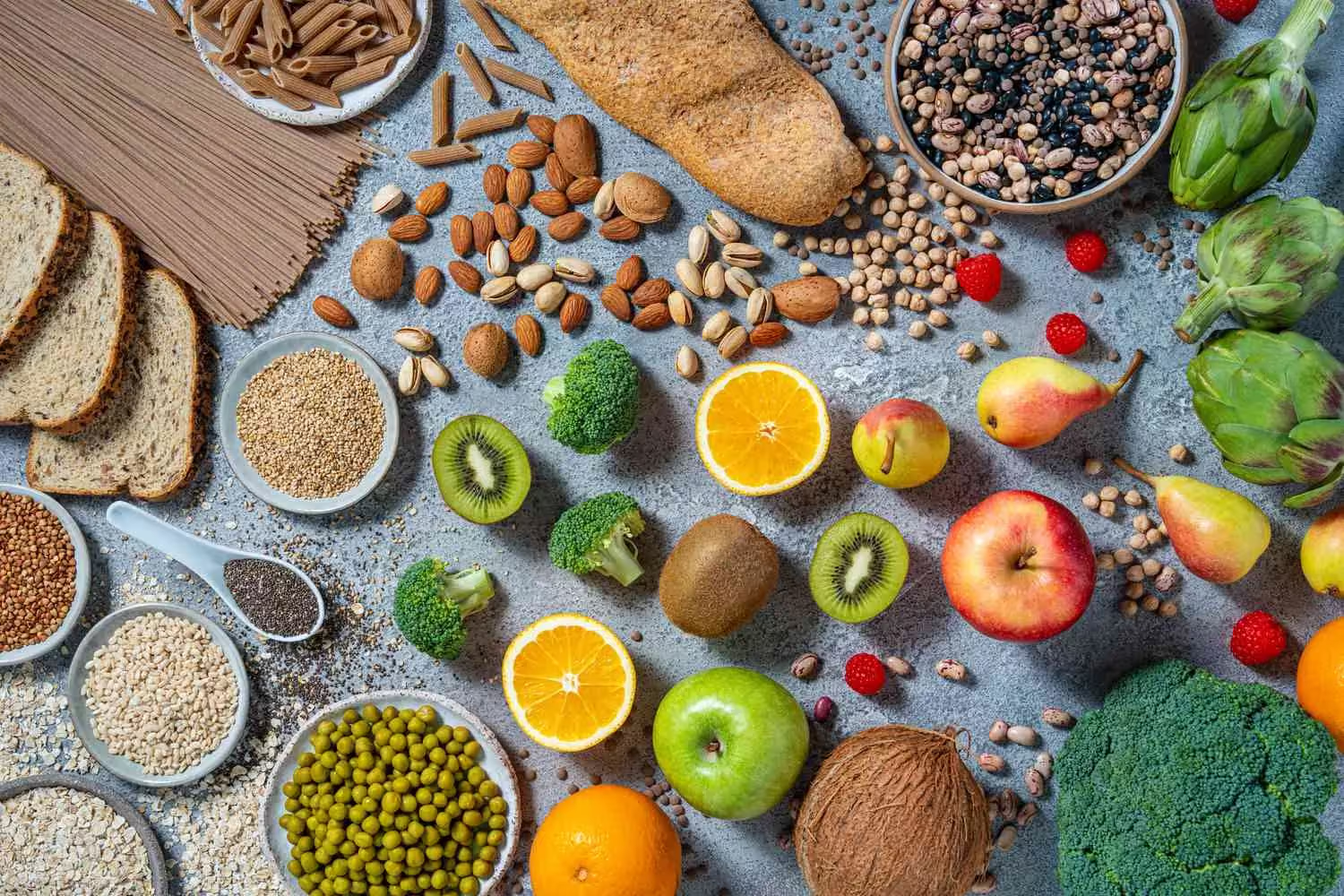
You don't need to find exotic superfoods. The best fiber sources are often the cheapest ones in the grocery store.
- Legumes – lentils, chickpeas, black beans (8–12 g of fiber per serving)
- Oats – rolled oats, oat bran, oat milk (5–8 g per serving)
- Whole grains – whole grain bread, brown rice, whole wheat pasta (4–6 g per serving)
- Seeds – chia, flax, hemp seeds (5–10 g per tablespoon)
- Berries – raspberries, blackberries, blueberries (4–8 g per serving)
- Vegetables – broccoli, carrots, Brussels sprouts (3–5 g per serving)
- Nuts – almonds, walnuts, Brazil nuts (3–4 g per handful)
Incorporating 2–3 of these into each meal is often the key to finding the sweet spot between effectiveness and digestive discomfort.
When should you cut back instead of increasing?
Fibermaxxing isn't for everyone, at least not at the same pace. If you have IBS, known inflammatory bowel disease, or other digestive issues, a rapid increase in fiber intake can worsen your symptoms.
In such cases, a more structured approach—like a low-FODMAP diet or consulting a dietitian—is wiser than following a TikTok trend blindly. Always listen to your body's signals, and don't be afraid to scale back if your stomach objects.
Summary
Fibermaxxing is one of the few social media trends that is actually backed by solid nutritional research. Seven out of ten people eat too little fiber, and the consequences are felt in blood sugar levels, digestion, and gut health. However, the pitfall of the trend is impatience—going from 15 to 40 grams of fiber per day in a single week is a guaranteed recipe for digestive distress.
By increasing your intake gradually, drinking more water, varying your fiber sources, and supporting your gut flora with probiotics, you can fibermaxx the smart way—and build a diet that actually lasts. And yes, a good nutritional foundation like Relivo can be a piece of that puzzle.
About Relivo
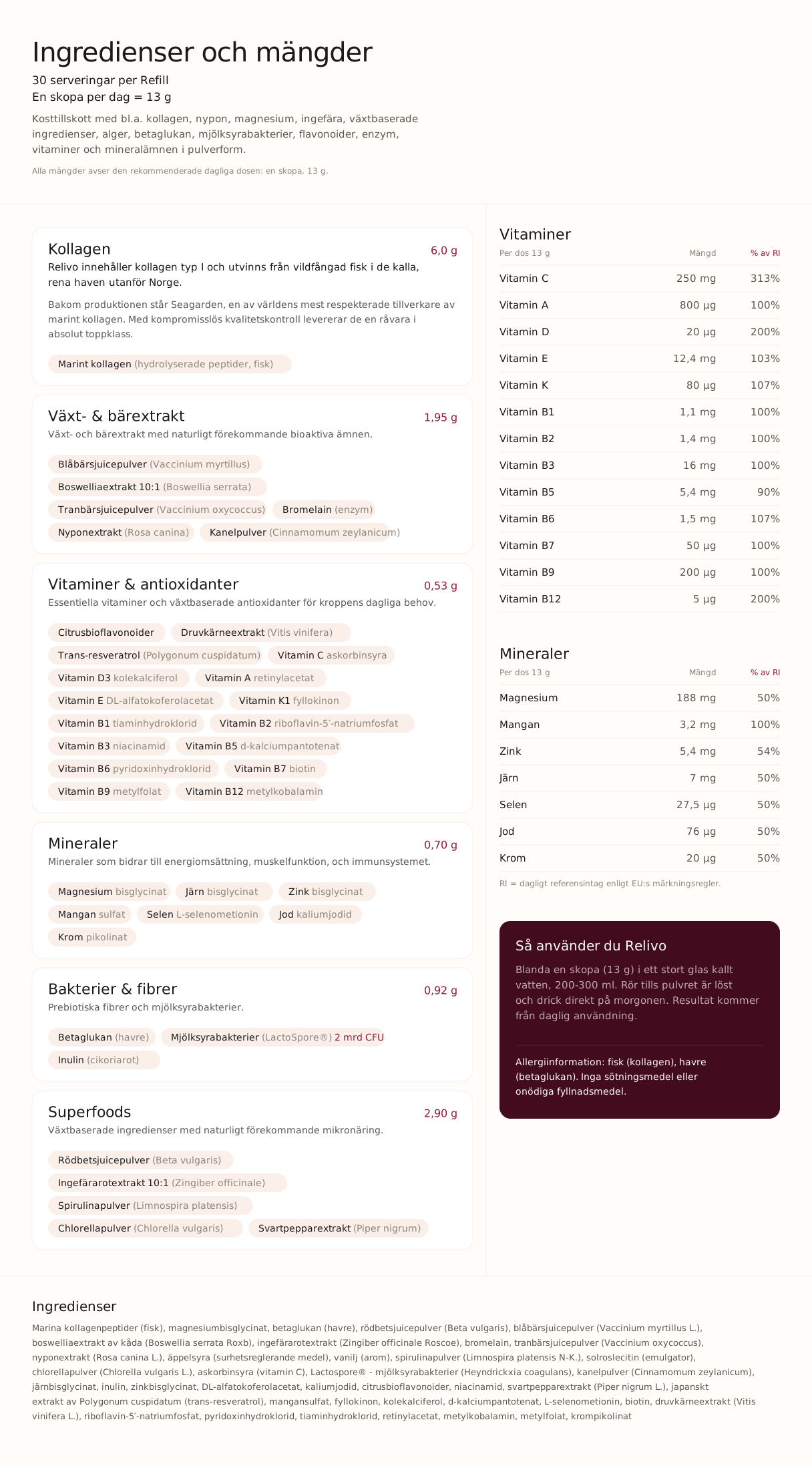
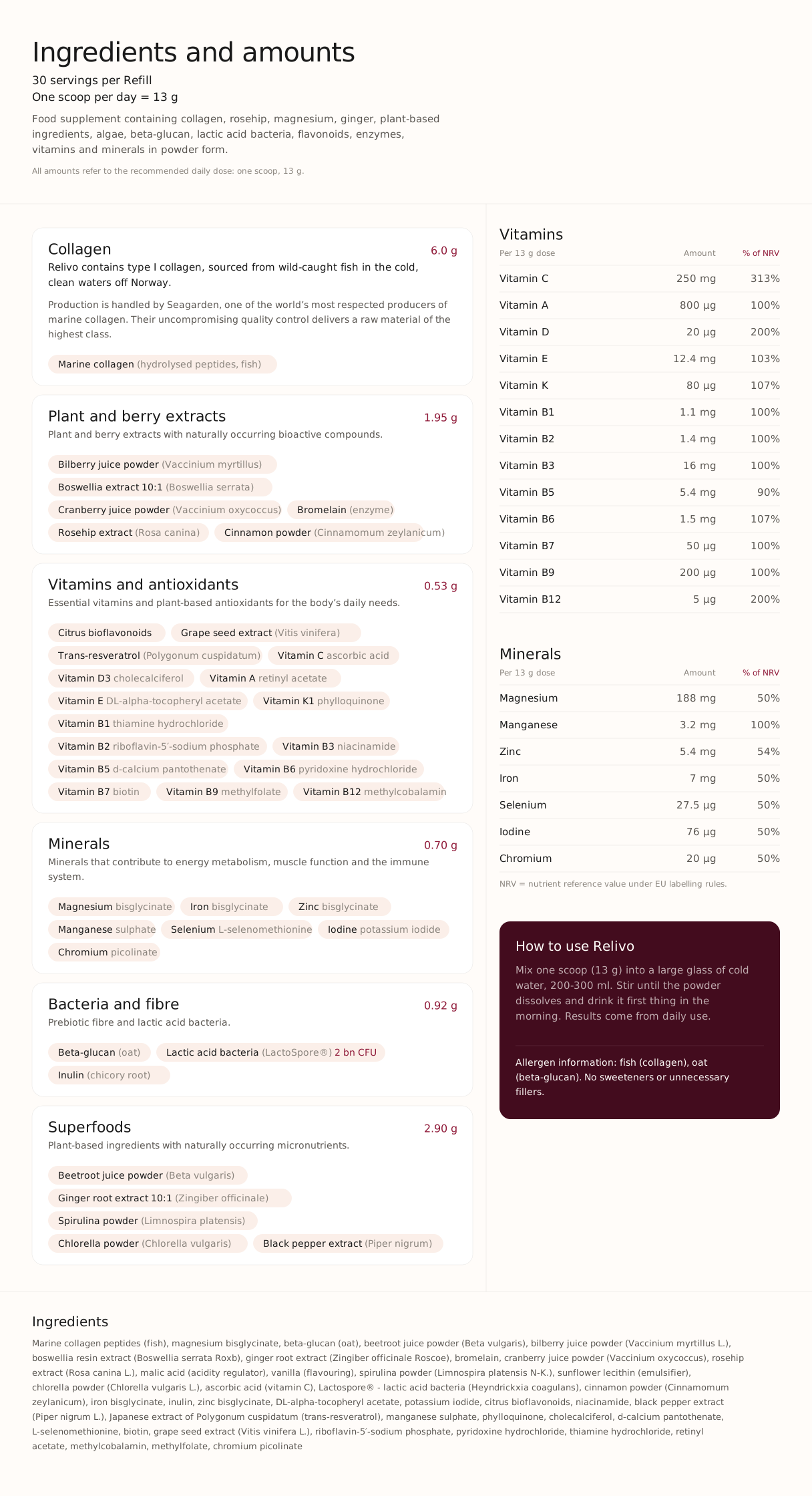
Relivo is a complete daily nutritional supplement developed in collaboration with Swedish researchers and nutritionists. Relivo combines 38 carefully selected nutrients that support the body's most important systems and structures.
Everything is gathered in one scoop of powder, designed to be simple to use and easy to incorporate into your daily routine. Relivo mixes in 60 seconds and serves as a long-term nutritional foundation for energy, immune function, gut health, muscles, and joints.
Sources
- National Food Agency (Livsmedelsverket) – Fiber
- EFSA – Beta-glucan from oats and barley and maintenance of normal blood cholesterol concentrations
- Reynolds A et al. – Carbohydrate quality and human health: a series of systematic reviews (Lancet)
- Slavin J – Fiber and Prebiotics: Mechanisms and Health Benefits (Nutrients)
- Sonnenburg ED, Sonnenburg JL – The Fiber Gap and the Disappearing Gut Microbiome
- SVT Nyheter – The fibermaxxing trend that could solve public health issues
- Kurera – Fibermaxxing and gut flora
- iform.se – Fibermaxxing diet trend
- Veronese N et al. – Dietary fiber and health outcomes: an umbrella review of systematic reviews and meta-analyses
- UCLA Health – Is 'fibermaxxing' a sound nutrition trend?