Fat-soluble vs. water-soluble vitamins – why it determines how you take them
Vitamins might sound like a single group, but they actually fall into two camps with completely different sets of rules. One type is stored in the body, while the other is flushed out every day. Here is why that difference determines how you should best take them.

Introduction
We often talk about vitamins as if they were all the same. But the body treats them in two very different ways, and that has more of an impact than you might think.
Some vitamins are stored in the body for weeks or months. Others pass through in a single day and need to be replenished constantly. This distinction determines when you should take them, whether you need to eat with them, and why "more" isn't always better.
The difference comes down to a simple chemical property: does the vitamin dissolve in fat or in water?
Two families with different rules
All vitamins belong to one of two groups. The fat-soluble ones are A, D, E, and K. The water-soluble ones are C and the eight B vitamins.
The name describes exactly what it sounds like. Fat-soluble vitamins dissolve in fat, and water-soluble ones dissolve in water. This simple chemical fact dictates how they are absorbed, how they are stored, and how long they stay in your system.
That is why this distinction is more than just a fun fact. It explains why two vitamins sitting on the same shelf might need to be taken in completely different ways.
Fat-soluble vitamins (A, D, E, K)
Fat-soluble vitamins require fat to be absorbed by the body. During digestion, they dissolve along with the fat from your food and are transported from the gut into the bloodstream.
Once absorbed, the body can store them, primarily in the liver and fatty tissue. This means you build up a kind of reserve—the body has a supply to draw from even on days when you consume less.
Each one has its own role. Vitamin D contributes to the normal absorption and utilization of calcium, vitamin E helps protect cells from oxidative stress, vitamin A is important for vision and the immune system, and vitamin K plays a role in blood clotting and bone health.
Because they are stored, they are mostly found in fatty foods: fatty fish, eggs, butter, oils, nuts, and seeds. And because they are stored, their absorption has a clear practical consequence, which we will get to shortly.
Water-soluble vitamins (B and C)
Water-soluble vitamins work in almost the opposite way. They dissolve in water, are absorbed without needing fat, and are not stored well in the body.
Any excess that the body doesn't use is instead flushed out in the urine. Vitamin B12 is an exception that can be stored in the liver for a longer period, but for vitamin C and most B vitamins, the principle is that they leave the body relatively quickly.
This means you need to replenish them continuously. Vitamin C contributes to normal energy metabolism and the normal function of the immune system, and the B vitamins are central to how the body releases energy from food.
The sources are often lighter foods: fruits, berries, vegetables, whole grains, and legumes. Because they are flushed out, there is no harm in eating them often—quite the opposite.
Why this determines how you take them
This is where theory meets practice. The difference in how these vitamins behave affects three practical aspects of your daily life.
Fat-soluble vitamins are best absorbed with food containing fat
Since vitamins A, D, E, and K require fat to be absorbed, it is a good idea to take them with a meal that contains some fat. A vitamin D supplement is simply more effective when taken with breakfast than on an empty stomach.
It doesn't have to be much. A little olive oil on your salad, an egg, some avocado, or a handful of nuts goes a long way in aiding absorption.
Water-soluble vitamins benefit from consistent intake
Vitamins C and B do not require fat and can be taken with water at any time. The key is consistency, as the body does not store them in the same way.
A steady daily intake is better than a large dose every now and then. If you take a very large amount of vitamin C at once, it is highly likely that some of it will simply be excreted in your urine.
More is not always better
Precisely because fat-soluble vitamins are stored, they can build up over time. For most people, this is not a concern through a normal diet, but it is the reason why you should stick to recommended levels for supplements, especially for vitamins A and D.
Water-soluble vitamins are more forgiving since the excess is flushed out, but the point remains the same: balance and reasonable doses beat megadoses. Vitamins are building blocks, not something you benefit from overdosing on.
A common misconception
Many people believe that expensive urine means supplements are a waste of money. This is partly true for water-soluble vitamins—any excess you don't need at that moment is indeed excreted in your urine.
But that doesn't mean the intake was unnecessary. The body takes what it needs at the moment, and since it doesn't store these vitamins, that steady, daily replenishment is the whole point. There is a difference between not storing something and not having benefited from it.
For fat-soluble vitamins, the opposite logic applies. Here, the body builds up a store, which is an advantage—but also the reason why dosage should be kept within recommended limits. Two groups, two different logics, same conclusion: moderate and regular.
Summary
Vitamins fall into two camps. Fat-soluble vitamins (A, D, E, K) require fat, are stored in the body, and are best taken with a meal. Water-soluble vitamins (B and C) are flushed out, are not stored well, and benefit most from steady, daily intake.
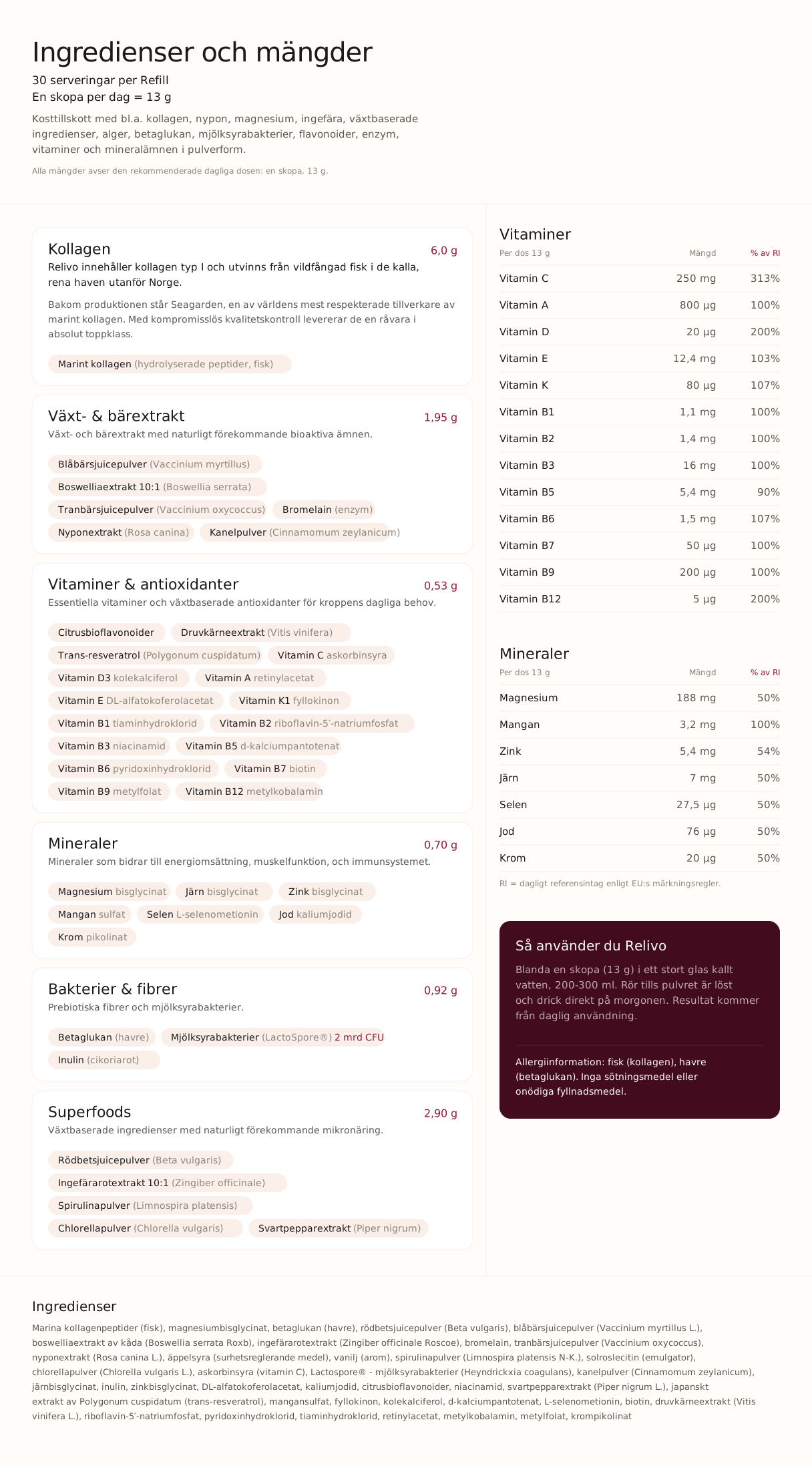
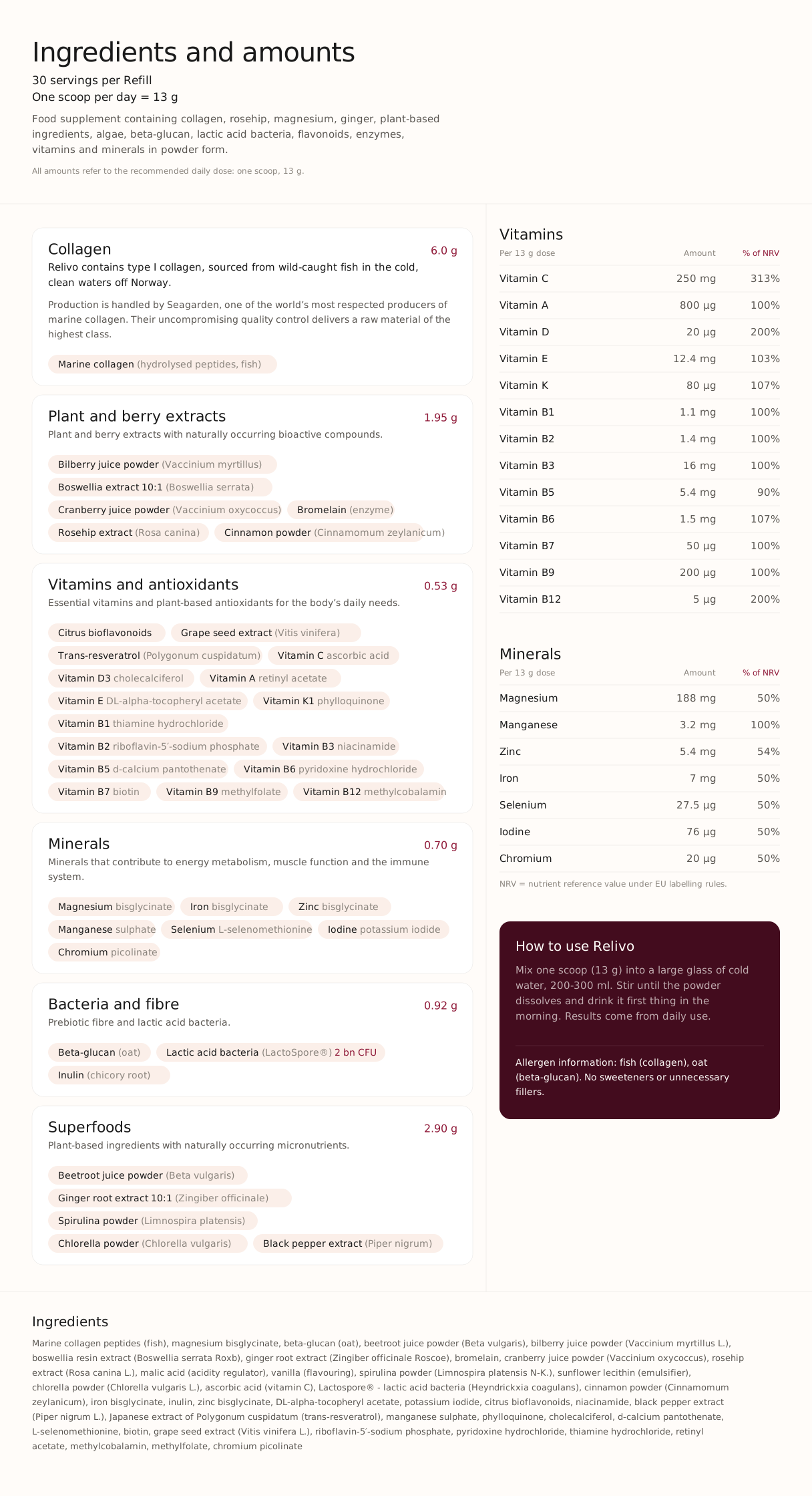
Once you understand that difference, you know most of what you need to know about how to take vitamins: fat-soluble with food, water-soluble regularly, and reasonable doses over megadoses. A complete supplement like Relivo brings both groups together—and when taken with a meal, the fat-soluble ones get their best chance at absorption.
About Relivo
Relivo is a complete daily nutritional supplement developed in collaboration with Swedish researchers and nutritionists. Relivo combines 38 carefully selected nutrients that support the body's most important systems and structures.
Everything is contained in one scoop of powder, designed to be simple to use and easy to incorporate into your daily routine. Relivo mixes in 60 seconds and serves as a long-term nutritional foundation for energy, immune function, gut health, muscles, and joints.
Sources
- Swedish Food Agency – Vitamins and antioxidants: https://www.livsmedelsverket.se/livsmedel-och-innehall/naringsamne/vitaminer-och-antioxidanter/
- 1177 Healthcare Guide – Vitamins and minerals: https://www.1177.se
- EFSA Journal – Health claims for vitamin D, vitamin E, vitamin C and B-vitamins (EU Register on nutrition and health claims)
- NIH Office of Dietary Supplements – Fat-Soluble Vitamins (A, D, E, K): https://ods.od.nih.gov
- NIH Office of Dietary Supplements – Vitamin C and B-vitamins: https://ods.od.nih.gov
- Arla – Vitamins: https://www.arla.se/halsa/halsosam-mat/naringsamnen/vitaminer/
- Relivo – Ingredients and research: https://www.relivo.se/en/forskning