Vitamin D in Sweden: how much you need from October to March
In Northern Europe, the skin stops producing vitamin D during the winter months, regardless of how much time you spend outdoors. Here is what that means and what you can do about it.

A beautiful winter day in February. A clear blue sky, a few degrees below freezing, and the sun on your face during a long walk.
It feels like your body should be getting vitamin D.
However, during the winter months, the sun is so low in Sweden that the skin cannot effectively produce any significant amounts of vitamin D from sunlight.
It is not primarily about how sunny it is or how long you spend outdoors. The deciding factor is how much UVB radiation actually reaches your skin.
Here, we explain why this happens, what vitamin D does in the body, how much we need, and how you can approach the darkest months of the year.
Why the winter sun isn't enough
Vitamin D can be synthesized in the skin when it is exposed to UVB radiation from the sun.
The problem at northern latitudes is that the sun is low during the winter months. Sunlight has to travel a longer distance through the atmosphere, and a large portion of the UVB radiation is filtered out before it reaches the ground.
Therefore, a sunny January day can be fantastic for your mood and for getting outside – but still contribute very little to your skin's vitamin D production.
In Sweden, the skin's vitamin D production from the sun is therefore severely limited during a large part of the winter season.
The further north you are, the longer this period lasts.
The body's vitamin D levels change throughout the year
Vitamin D is fat-soluble, and the body can store it.
During the brighter part of the year, sun exposure can help build up the body's vitamin D status. Levels of 25-OH-vitamin D, which is the marker typically measured in blood tests, therefore tend to be higher after the summer and lower towards the end of winter.
How much these levels change varies between individuals and is influenced by factors such as sun exposure, diet, any supplements taken, and individual biological differences.
It is not as simple as everyone building up a "reserve" in the summer that then lasts for a specific number of months.
However, the seasonal variation is clear: when the skin's own production decreases, diet becomes a more important source of vitamin D.
What does vitamin D do in the body?
The active form of vitamin D has hormone-like functions, and vitamin D is involved in several important processes in the body.
According to EU-approved health claims, vitamin D contributes to, among other things:
- normal absorption and utilization of calcium and phosphorus
- normal blood calcium levels
- the maintenance of normal bones
- the maintenance of normal muscle function
- the maintenance of normal teeth
- the normal function of the immune system
- the process of cell division.
It is therefore a nutrient with several established functions in the body.
How much vitamin D do we need?
The Nordic Nutrition Recommendations form the basis for Swedish recommendations.
For adults, the recommended intake is 10 micrograms of vitamin D per day. For people aged 75 and older, the recommendation is 20 micrograms per day.
Here is an important detail:
This refers to the total intake of vitamin D – not automatically the amount you need to take as a dietary supplement.
Vitamin D can come from food, fortified foods, dietary supplements, and, during the part of the year when there is sufficient UVB radiation, from the skin's own production.
This does not mean that all adults need to take 10 micrograms of vitamin D in supplement form every day.
Who might find it harder to get enough?
The conditions for producing or obtaining vitamin D vary from person to person.
Some groups that may need to be particularly mindful of their vitamin D intake include:
People who get little sun on their skin. This may be because they spend little time outdoors or cover large parts of their skin.
People with darker skin. A higher amount of melanin reduces the skin's ability to produce vitamin D from a given amount of UVB radiation.
Older adults. The skin's ability to produce vitamin D decreases with age.
People who eat little or no fish. Fatty fish is one of the most important natural sources of vitamin D.
People with conditions that affect fat absorption. Since vitamin D is fat-soluble, certain medical conditions can affect its absorption.
The need for supplements therefore depends not only on the time of year but also on diet and individual circumstances.
Where can you find vitamin D in food?
Vitamin D occurs naturally in relatively few foods.
Fatty fish is one of the best natural sources. Examples include salmon, herring, mackerel, and Baltic herring.
Egg yolk contains small amounts of vitamin D.
Mushrooms can contain vitamin D, especially if they have been exposed to UV light.
In addition, many Swedes get vitamin D through fortified foods.
Sweden fortifies several common foods
One reason why it is misleading to only look at natural sources is that vitamin D is added to several common foods.
In Sweden, regulations on vitamin D fortification cover, among other things, certain dairy products, equivalent plant-based alternatives, and cooking fats.
This means that two people with seemingly similar diets can get quite different amounts of vitamin D depending on which products they choose.
Therefore, it is a good idea to read the nutritional information before assuming that you are—or are not—getting vitamin D from your food.
Does everyone need to take vitamin D in the winter?
No, not automatically.
It is easy to jump to the conclusion:
No vitamin D production from the sun → everyone must take supplements.
But that conclusion goes too far.
What matters is your total intake and your individual circumstances.
A person who regularly eats fatty fish and vitamin D-fortified foods has different needs than someone who gets very little vitamin D through their diet.
That is why there are specific Swedish recommendations for vitamin D supplements for certain groups.
The point is not to maximize your vitamin D intake. The point is to get enough.
How do you know if you have a vitamin D deficiency?
Vitamin D status can be measured through a blood test for 25-OH-vitamin D.
According to the Nordic guidelines on which this article is based, levels above approximately 50 nmol/L are considered sufficient, while lower levels may indicate insufficient status or deficiency.
However, this does not mean that everyone needs to test their levels every winter.
If you belong to a risk group, suspect a deficiency, or have a medical condition that may affect your vitamin D status, it is better to discuss testing and potential dosage with a healthcare professional rather than experimenting with high doses on your own.
Can you get too much vitamin D?
Yes.
Unlike many water-soluble vitamins, vitamin D can be stored in the body. Very high amounts from supplements over a long period can therefore cause problems.
For adults, 100 micrograms per day is stated as the tolerable upper intake level in the documentation the article is based on.
This is not a recommended intake or a target to aim for.
More vitamin D is not automatically better.
Five things to keep in mind during the winter months
1. Look at your overall diet. Do you eat fatty fish? Do you use vitamin D-fortified products? Start there.
2. Check what your supplements already contain. Vitamin D is found in many multivitamins and combination products. Stacking multiple products can result in a significantly higher total intake than you intended.
3. Be extra careful if you belong to a risk group. Individual circumstances play a major role.
4. Avoid self-medicating with megadoses. More is not necessarily better.
5. If you suspect a deficiency – find out your actual status. A blood test provides much better information than guessing based on the time of year or symptoms.
Vitamin D is just one part of the whole
It is easy to treat supplements as separate issues:
Vitamin D in the winter. Magnesium in another bottle. B vitamins in a third. Something else for the immune system.
But the body does not work in product categories.
Vitamin D is an important nutrient, but it functions as part of a much larger nutritional system.
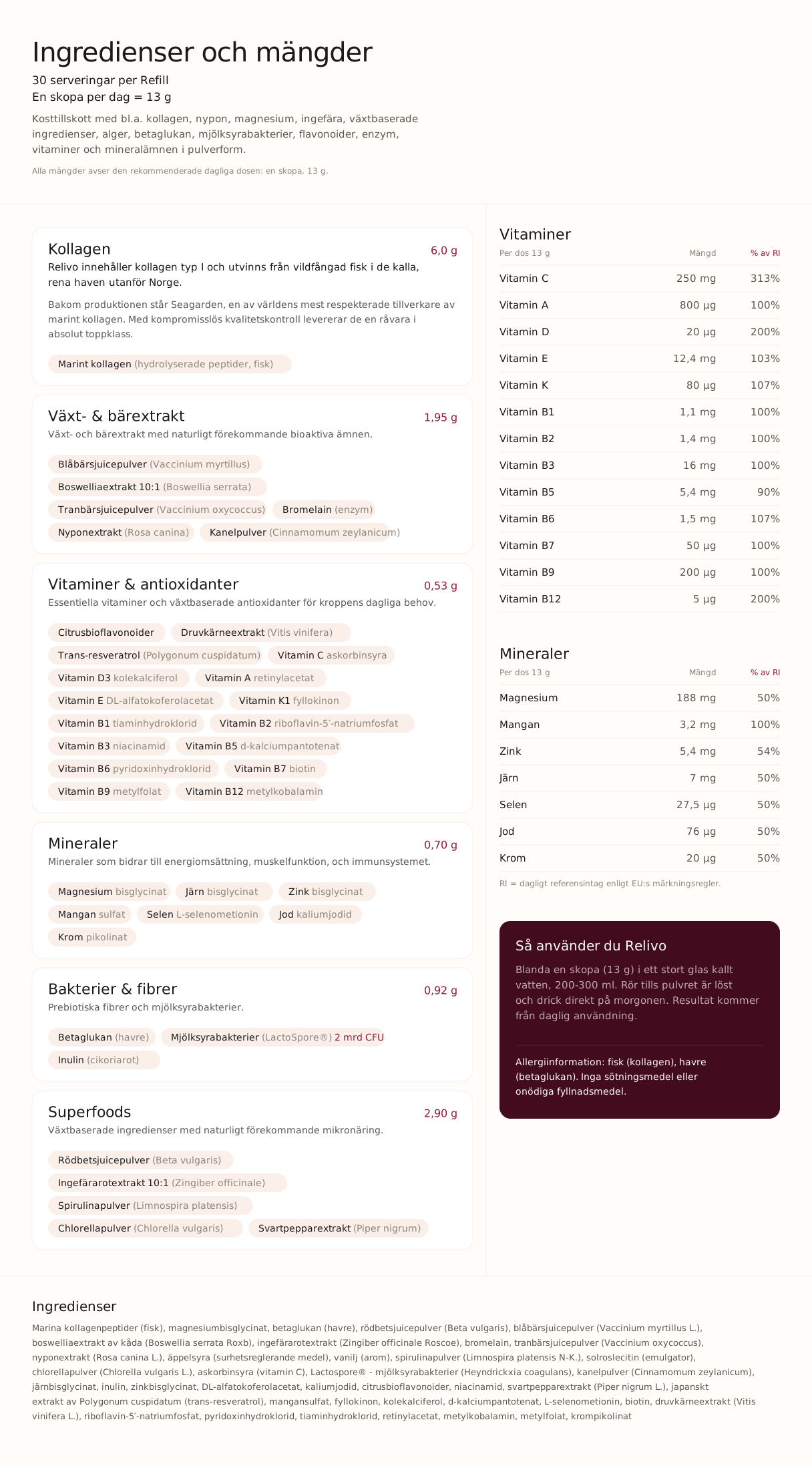
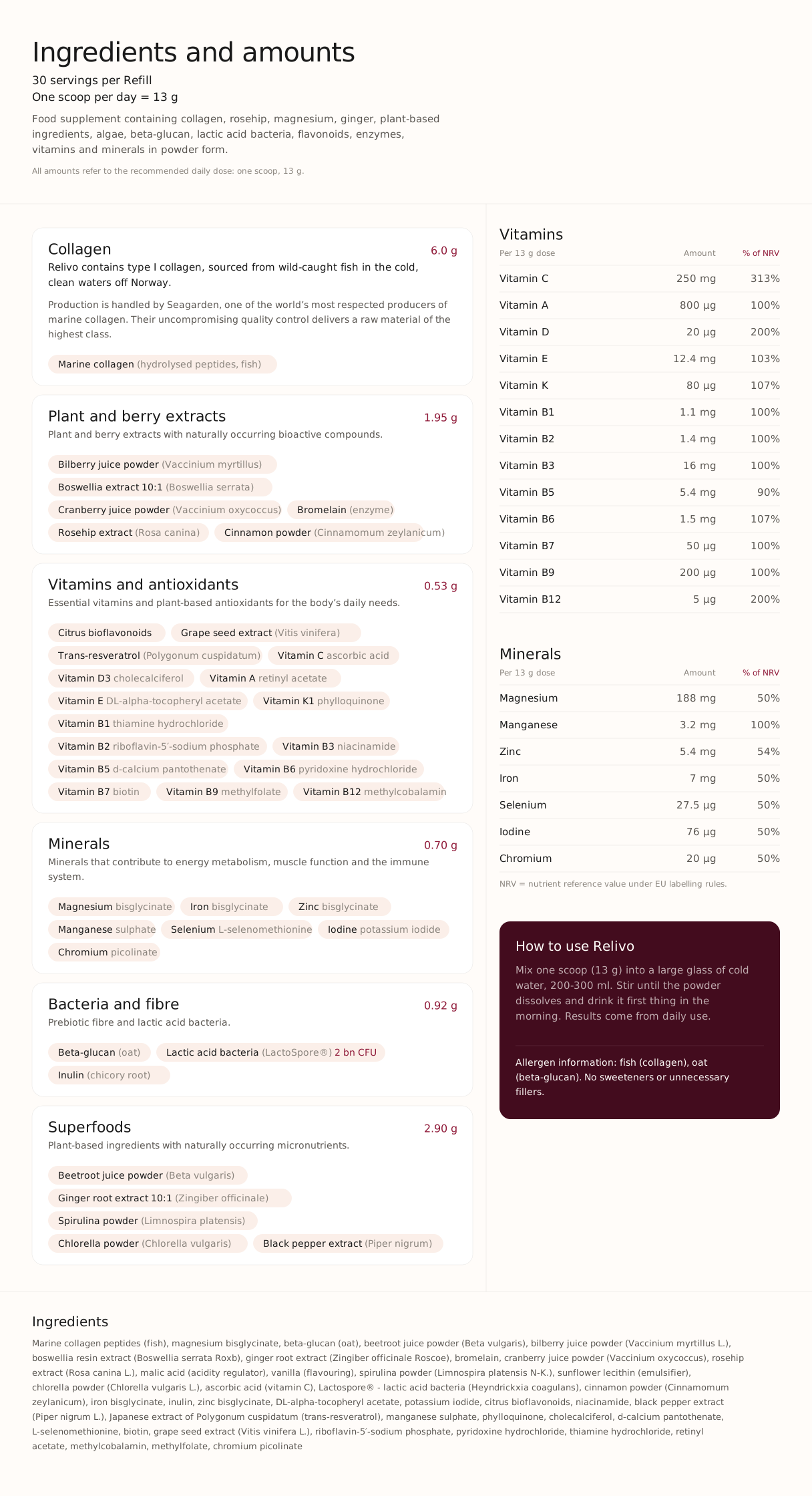
That is also the idea behind Relivo.
Relivo combines vitamin D with a broad spectrum of other vitamins, minerals, and additional ingredients in a daily serving – to make it easier to supplement a varied diet without building a routine involving many different products.
Summary
During a large part of the Swedish winter, UVB radiation is too weak for the skin to produce any significant amount of vitamin D.
Therefore, diet becomes a more important source during the darker months of the year.
For adults, the recommended total intake is 10 micrograms per day, and from the age of 75, 20 micrograms per day. This does not mean that everyone needs to take that amount as a supplement – food and fortified products count too.
So, the next time the sun is shining on a cold February day: by all means, go outside.
But do it for the walk. Not for the vitamin D.
About Relivo
Relivo is a complete daily nutritional supplement developed in collaboration with Swedish researchers and nutritionists. Relivo combines 38 carefully selected nutrients that support the body's most important systems and structures.
Everything is gathered in one scoop of powder, designed to be simple to use and easy to incorporate into your daily routine. Relivo mixes in 60 seconds and serves as a long-term nutritional foundation for energy, immune health, gut health, muscles, and joints.
Sources
- Swedish Food Agency: Vitamin D
- Swedish Food Agency: Food fortification
- Nordic Nutrition Recommendations 2023
- Holick MF: Vitamin D Deficiency (New England Journal of Medicine)
- Cashman KD et al: Vitamin D deficiency in Europe: pandemic? (American Journal of Clinical Nutrition)
- Webb AR et al: Influence of season and latitude on the cutaneous synthesis of vitamin D3 (Journal of Clinical Endocrinology and Metabolism)
- Uwitonze AM, Razzaque MS: Role of Magnesium in Vitamin D Activation and Function (Journal of the American Osteopathic Association)
- Tripkovic L et al: Comparison of vitamin D2 and vitamin D3 supplementation in raising serum 25-hydroxyvitamin D status (AJCN)
- EFSA: Health claims related to vitamin D
- 1177 Healthcare Guide: Vitamin D deficiency


.webp)