Zone 2 training – the research behind the trend
Peter Attia and elite cycling have made Zone 2 the hottest training method of 2026. Here is how it works—and why your mitochondria are the real winners.

Introduction
Two years ago, Zone 2 was a term used almost exclusively by elite cyclists and their coaches. Today, it is one of the most searched training concepts on Google, driven by Peter Attia’s podcast, Iñigo San Millán’s research, and a general surge of interest in longevity, metabolic health, and mitochondria.
But behind the hype lies real substance. Zone 2 training is one of the most scientifically studied forms of exercise in existence, with benefits ranging from endurance to blood sugar regulation, cognition, and long-term cellular health.
In this guide, we walk you through what Zone 2 actually is, where the trend comes from, what the research shows is happening in your cells—and how to practically incorporate it without needing lab equipment.
What is Zone 2, really?
Zone 2 is the training intensity where the body works aerobically, primarily burning fat for fuel, and where the mitochondria—the cells' tiny power plants—are trained most effectively. From a physiological perspective, Zone 2 is defined as being just below the first lactate threshold.
In practical terms, this means: you can hold a conversation without much difficulty, but you cannot sing. Your breathing is noticeable but not heavy. You are sweating, but still comfortably. If you keep at it long enough, you will feel that it is work—but never strenuous in a difficult way.
For most recreational athletes, this corresponds to roughly 60–70 percent of their maximum heart rate. If you have a heart rate monitor, that is your target. Without one, the "talk test" is more than enough.
Where does the trend come from?
The Zone 2 hype didn't start in everyday fitness, but in the world of elite cycling. Iñigo San Millán—a Spanish physiologist who coached Tadej Pogačar and Team UAE—was one of the first to publicly explain why the best endurance athletes spend 70–80 percent of their training time in Zone 2.
When Peter Attia, one of the world’s most listened-to longevity doctors, began dedicating entire podcast episodes to the method on his show, The Drive, Zone 2 made the leap from elite sports to the mainstream. Today, Andrew Huberman, wearable companies like Whoop and Oura, and thousands of personal trainers are talking about it in a way they never have before.
And unlike some other health trends, Zone 2 training stands up to scrutiny. The research behind it is solid.
What the research actually shows
Here is the short version of why Zone 2 works so well.
Mitochondria grow in number and size
Zone 2 training is one of the most effective stimuli available for building more and healthier mitochondria. More mitochondria = more efficient energy production in your cells. This applies not just to your leg muscles, but to your entire body’s metabolism, including your brain.
Fat oxidation increases
At low intensity, the body uses fat as its primary fuel. Over time, the body learns to do this even better. This is why endurance athletes can train for hours without needing to load up on sugar—their metabolism has the flexibility to switch between fuel sources.
Insulin sensitivity improves
Low-intensity, long-duration training has proven to be one of the most reliable methods for increasing cellular insulin sensitivity. Over time, this affects not only blood sugar levels but also energy, hunger, and the risk of metabolic conditions.
Resting heart rate and HRV respond quickly
Many people notice within a few weeks that their resting heart rate drops and their HRV (heart rate variability) increases. This is the body's way of signaling improved parasympathetic recovery.
How do you identify Zone 2 without a lab?
There are three practical ways to identify Zone 2 training in everyday life:
1. The talk test. You can speak in full sentences without being out of breath, but you cannot sing.
2. Heart rate. Approximately 60–70 percent of your maximum heart rate. A rough benchmark is 180 minus your age as the midpoint of the zone.
3. Nasal breathing. Can you breathe through your nose for the entire session? If so, you are most likely in Zone 2 or lower.
The most important tip from experienced coaches: almost all recreational athletes train too hard when they think they are doing Zone 2. If you are unsure, slow down a notch further.
How much Zone 2 do you need?
Peter Attia and San Millán generally recommend 3–4 sessions per week of 45–60 minutes for non-elite athletes. A total of about 180 minutes per week is a proven starting point.
Just two sessions per week is enough for most people to notice a difference in resting heart rate, energy, and recovery within 6–8 weeks. And it bears repeating: slower than you think is usually the right intensity.
Activities that work perfectly for Zone 2: cycling, running, brisk walking (especially uphill), rowing, swimming, and cross-country skiing. Strength training falls outside of Zone 2 and is counted separately.
Common mistakes to avoid
Zone 2 is simple on paper but tricky in practice. Here are the most common pitfalls:
- Too high intensity. You end up in Zone 3 (the gray zone), which effectively trains neither Zone 2 qualities nor high intensities.
- Sessions that are too short. You rarely get the full effect in under 30 minutes. 45–60 minutes is the sweet spot.
- Too few sessions per week. One Zone 2 session a week makes little difference. It’s the volume that counts.
- No progression. Just like with strength training, Zone 2 needs to be stimulated over time.
If you also do more intense training—intervals, strength, sports—count on Zone 2 being your foundation and the hard training being your peak. That’s how elite athletes do it.
Nutrition that supports mitochondrial health
Zone 2 training builds mitochondria, but mitochondria also need nutrition to function. Here are the nutrients that research consistently points to as essential:
Coenzyme Q10 – a naturally occurring coenzyme involved in mitochondrial energy production. You can read our existing article Q10 and Selenium for better health and a longer life.
B vitamins – the entire complex acts as cofactors in cellular respiration. B2, B3, B5, and B12 contribute to normal energy metabolism according to EU health claims.
Iron – contributes to normal oxygen transport in the body. Without enough iron, mitochondria cannot get the oxygen they need to work effectively.
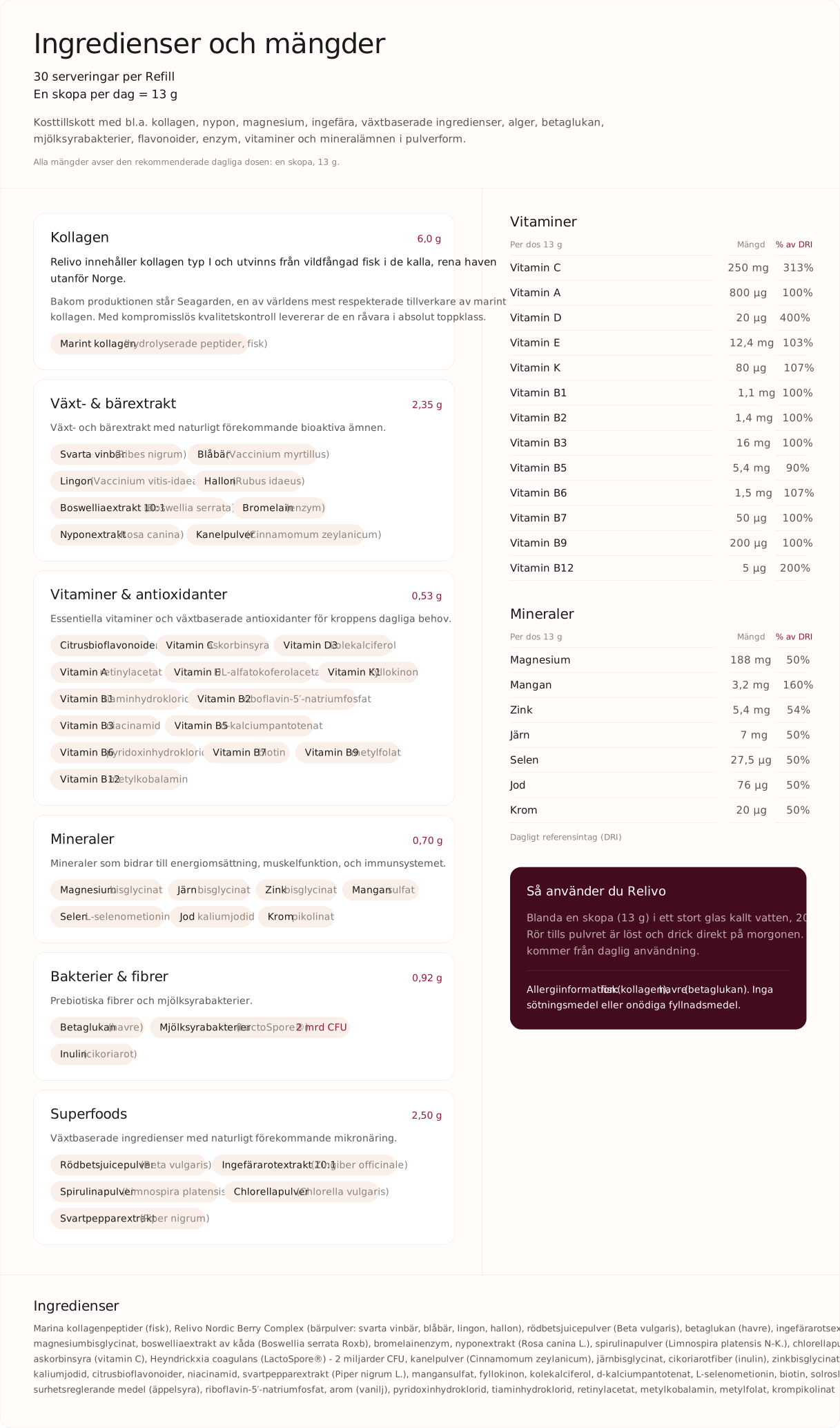
Magnesium – ATP production is impossible without magnesium. Contributes to normal energy metabolism.
Selenium and zinc both protect cells against oxidative stress caused by all forms of exercise.
How to start with Zone 2 next week
Want to give it a try? Here is how easily you can get started:
- Choose an activity you enjoy - cycling, running, or a brisk walk
- Check your max heart rate (estimate using 220 minus your age) and aim for 60-70 percent
- Do a 30-45 minute session, 2-3 times during the first week
- Use the talk test as a backup if your heart rate monitor is acting up
- Gradually build up to 3-4 sessions of 45-60 minutes
Expect to feel a bit strange during the first few sessions - your body is used to working harder. But after three weeks, you will notice your resting heart rate and energy levels starting to respond.
Summary
Zone 2 training is perhaps the most well-researched and underrated form of exercise available. By training slowly, for longer durations, and regularly, you build mitochondria, improve fat oxidation, increase insulin sensitivity, and enhance recovery - without putting the same strain on your body as high-intensity training.
Sources
- San Millán I, Brooks GA – Assessment of Metabolic Flexibility by Means of Measuring Blood Lactate, Fat, and Carbohydrate Oxidation Responses to Exercise
- Seiler S – What is Best Practice for Training Intensity and Duration Distribution in Endurance Athletes?
- Hood DA et al. – Maintenance of Skeletal Muscle Mitochondria in Health, Exercise, and Aging
- Holloszy JO – Biochemical Adaptations in Muscle to Endurance Exercise
- MacInnis MJ, Gibala MJ – Physiological adaptations to interval training and the role of exercise intensity
- Attia P – The Drive: Zone 2 Training with Iñigo San Millán
- EFSA – Magnesium and energy-yielding metabolism
- EFSA – Iron and normal oxygen transport
- EFSA – Coenzyme Q10 – opinion on health claims
- Sylow L, Richter EA – Exercise-stimulated glucose uptake — regulation and implications for glycaemic control