Cross-country skiing – why it is one of the most complete forms of exercise
The world's highest measured oxygen uptake capacities belong to cross-country skiers. Here is the physiology behind it - and what Swedish research on 200,000 Vasaloppet skiers has shown.
Introduction
If you list the highest oxygen uptake values ever measured in humans, you will notice a pattern. The names are predominantly Norwegian and Swedish, and most of them have been cross-country skiers.
This is no coincidence. Cross-country skiing places demands on the body that few other sports do: the entire body works simultaneously, for hours, often in the cold, and often on inclines. Physiologically, it is one of the most demanding activities a human can engage in.
At the same time, it is one of the gentlest. No foot strikes, no impact, no repetitive strain injuries from landing.
This combination makes cross-country skiing unique. In this guide, we go through what happens in the body when you ski, what Swedish research on Vasaloppet participants has actually shown, how different techniques affect the body, and what you need to consider if you want to get started as an adult.
Why skiers top the VO2 max lists
Oxygen uptake capacity, or VO2 max, measures how much oxygen the body can absorb and utilize per minute. It is one of the most established metrics for endurance capacity.
Elite cross-country skiers typically range between 80 and 90 milliliters per kilogram of body weight per minute. Several of the highest values reported in literature come from cross-country skiers.
The explanation is mechanical. When you run, your legs do most of the work. When you cycle, your legs do most of the work. When you cross-country ski, your legs, arms, back, chest, and core all work simultaneously—and the total muscle mass involved is therefore significantly larger.
More working muscle mass means a greater demand for oxygen. The body is forced to deliver more oxygen, which over time drives adaptations in the heart, blood vessels, and muscles.
This is also why many people find cross-country skiing unexpectedly strenuous. Your heart rate rises faster than expected, even at a moderate pace.
The whole body works
Let's take a closer look at what is actually engaged.
The legs drive the kick in classic style and the lateral push in skate skiing. Primarily the thighs, glutes, and calves.
Arms and upper body drive the pole plant. The triceps, latissimus, chest muscles, and shoulders perform continuous work that few other endurance sports require.
The core transfers power between the upper and lower body and provides stability with every stride. During double poling, the core work is particularly noticeable—many beginners experience sore abdominal muscles the next day.
Deep stabilizing muscles work constantly to maintain balance, as the surface is slippery.
Estimates suggest that a significant majority of the body's muscles are engaged during cross-country skiing. This makes it one of the few activities that truly deserves the label of a full-body workout.
Gentle on the joints
This is the second half of the explanation for why cross-country skiing is so beneficial.
The movement is gliding. The foot is not planted against a hard surface with body weight multiplied several times over, as it is in running. The load is distributed evenly and continuously.
This means that the risk of injury is generally low compared to running, and the activity is suitable for people who struggle with impact, such as those with knee or hip issues.
This is also one of the reasons why cross-country skiing is one of the few endurance sports you can continue throughout your life. Seeing seventy- and eighty-year-olds on the trails is completely normal in Sweden.
What Vasaloppet research has shown
Sweden has one of the world's most valuable research cohorts in endurance sports, and it is based on the Vasaloppet.
Researchers at Uppsala University and the Karolinska Institute have followed approximately 200,000 people who have participated in the Vasaloppet and compared them with matched controls from the general population. The data spans several decades.
The results are consistently striking. In these studies, Vasaloppet participants have shown a lower incidence of conditions such as cardiovascular disease, type 2 diabetes, certain forms of cancer, and dementia. One study also found a lower prevalence of depression and anxiety diagnoses.
An important caveat: these are observational studies. Those who sign up for the Vasaloppet are not randomly selected from the population—they are likely healthier, more active, and have different lifestyle habits from the start. Therefore, the correlations do not prove that skiing itself causes these outcomes.
However, the cohort is unusually large, the follow-up time is long, and the patterns are consistent. This makes the data some of the most cited in Swedish sports epidemiology.
The nuance: heart rhythm in the most highly trained
One finding in the same research material deserves special attention, as it contradicts the simple notion that more is always better.
When researchers looked at heart rhythm disturbances, they found that participants who had completed the most races and had the fastest times had a higher incidence of atrial fibrillation and slow heart rhythm compared to those who had participated fewer times or skied more slowly.
This phenomenon is also known from other endurance research. Very high training volumes over many years appear to be able to affect the heart's electrical system in some individuals.
This should not be interpreted as an argument against endurance training. The overall picture of health benefits remains strongly positive. But it is a reminder that the dose-response curve does not rise indefinitely, and that the very highest volumes have their own trade-offs.
Classic, skate, and poling
The different techniques place different demands on the body, allowing you to vary the stimulus.
Classic style follows the tracks and is based on diagonal stride with alternating leg and arm movement. The motion is similar to an elongated walk, making it relatively easy to learn. A great foundation for beginners.
Skate, or freestyle, is skied without tracks using a lateral motion that resembles ice skating. It is technically more demanding and generally more intense, requiring better balance.
Double poling involves propelling yourself forward using only your poles, drawing power from your core and upper body. It has become increasingly dominant in competitive racing and is exceptionally demanding on the core, back, and triceps.
For those who want to use cross-country skiing as a form of all-around training, varying your technique is an easy way to target different muscle groups.
High energy expenditure
Cross-country skiing burns a lot of energy. The combination of large muscle groups at work, long sessions, and cold temperatures makes the hourly calorie burn one of the highest in recreational sports.
The cold contributes in two ways: the body uses energy to maintain its core temperature, and your clothing and equipment add extra weight.
This is worth taking seriously, especially during longer sessions. Skiing for three hours without eating is an effective way to end up in an energy deficit, which can lead to poorer recovery and increased susceptibility to illness.
A practical habit among skiers is to keep something to eat in your pocket, even on medium-length sessions.
The cold and your body
Training in cold weather comes with some specific requirements.
Your thirst sensation is suppressed. You still sweat, but you notice it less because the sweat evaporates quickly in dry, cold air. Dehydration is more common in winter than many realize.
Your airways are under stress. Dry, cold air can irritate the mucous membranes. Many people experience a cough after hard sessions in sub-zero temperatures. Breathing through a buff or scarf helps.
Warm-ups take longer. Muscles and tendons need more time before heavy exertion in cold weather.
Sunlight is limited. The ski season coincides with the period when vitamin D production in the skin effectively ceases at northern latitudes.
As a complement to other training
Even for those who don't consider themselves skiers, cross-country skiing serves a purpose.
For runners, it offers an opportunity to build aerobic capacity without impact, which is valuable during periods of overuse injuries.
For cyclists, it provides the upper-body workout that cycling completely lacks.
For strength trainers, it provides an endurance stimulus with a lower risk of injury than running.
Many endurance athletes in the Nordic region use the ski season as a base training period for exactly these reasons.
Getting started as an adult
Learning to cross-country ski as an adult is entirely possible, but a few things make it easier:
Start with the classic style. The technique is more intuitive and the tracks help with steering.
Take a technique course. A few hours of instruction will save you months of frustration. Skiing is technical in a way that running is not.
Expect your heart rate to spike. Many are surprised by how strenuous it feels at first. This is because more muscles are working at the same time.
Waxing doesn't have to be complicated. Skis with scales or mohair skins work perfectly for recreational use and require no waxing.
Dress in layers. You warm up faster than you think.
Nutrition during the ski season
Three things are particularly relevant for those who cross-country ski a lot during the winter.
Energy. Long sessions in the cold require a lot. Insufficient intake over time increases the risk of impaired recovery and susceptibility to infections.
Hydration. The sensation of thirst is unreliable in the cold. Drink even when you don't feel the need.
Vitamin D. During the winter months, the skin produces virtually no vitamin D at northern latitudes, while training volume is often high.
Beyond this, the usual rules for endurance athletes apply: it is worth keeping an eye on iron levels, especially for female athletes.
Summary
Cross-country skiing combines two qualities that rarely occur together: extremely high physiological load and very low joint impact. The whole body works, the oxygen demand becomes high, and at the same time, the impact stress that makes running prone to injury is absent.
Swedish research on Vasaloppet participants has shown consistently favorable health patterns over decades, albeit with the caveats that apply to observational studies - and with an interesting exception regarding heart rhythm in the most highly trained individuals.
For those who want to build endurance, train the whole body, and be gentle on the joints at the same time, there are few better alternatives. And for those living in a country with five months of winter, it is one of the few activities that turns the season into an asset instead of an obstacle.
About Relivo
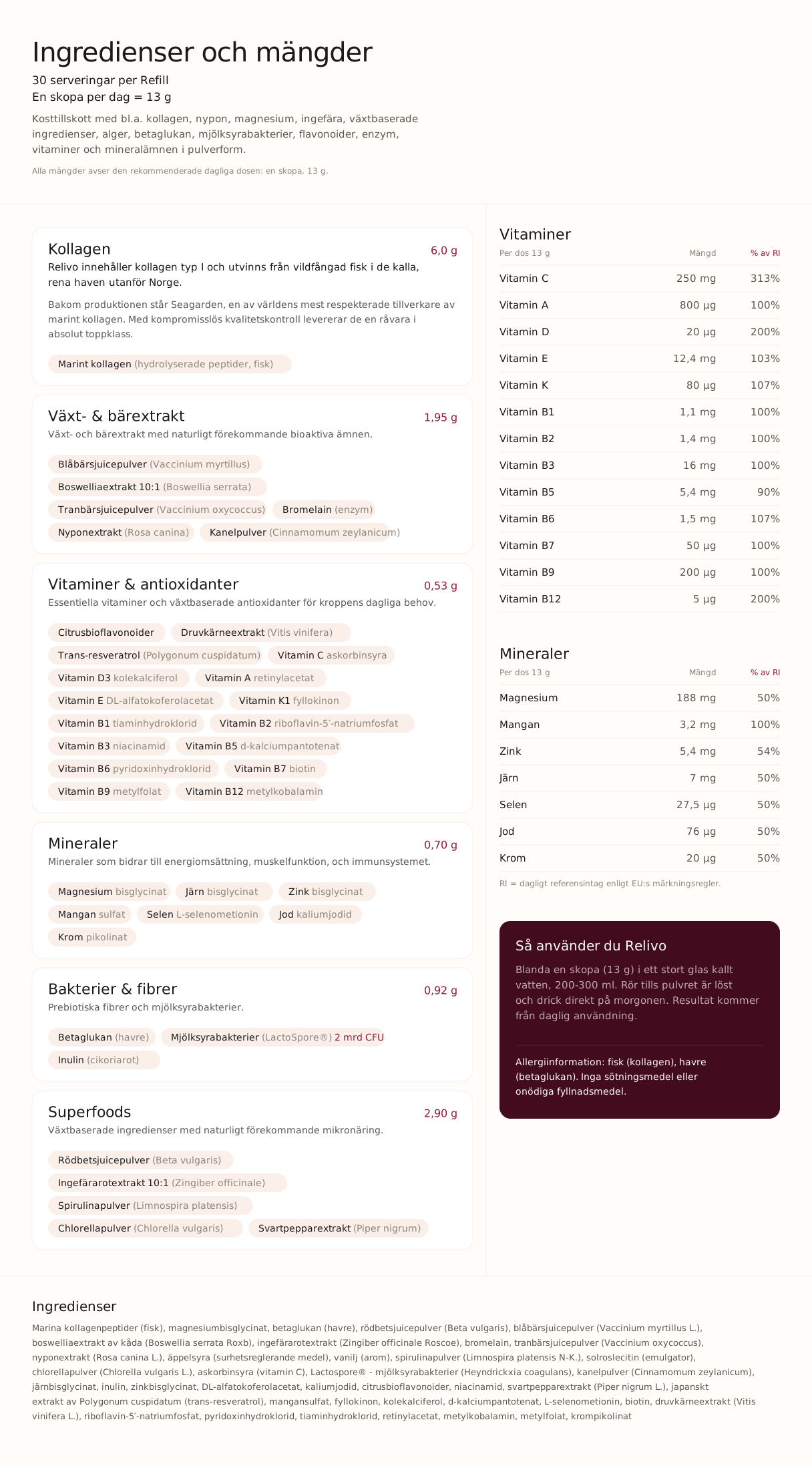
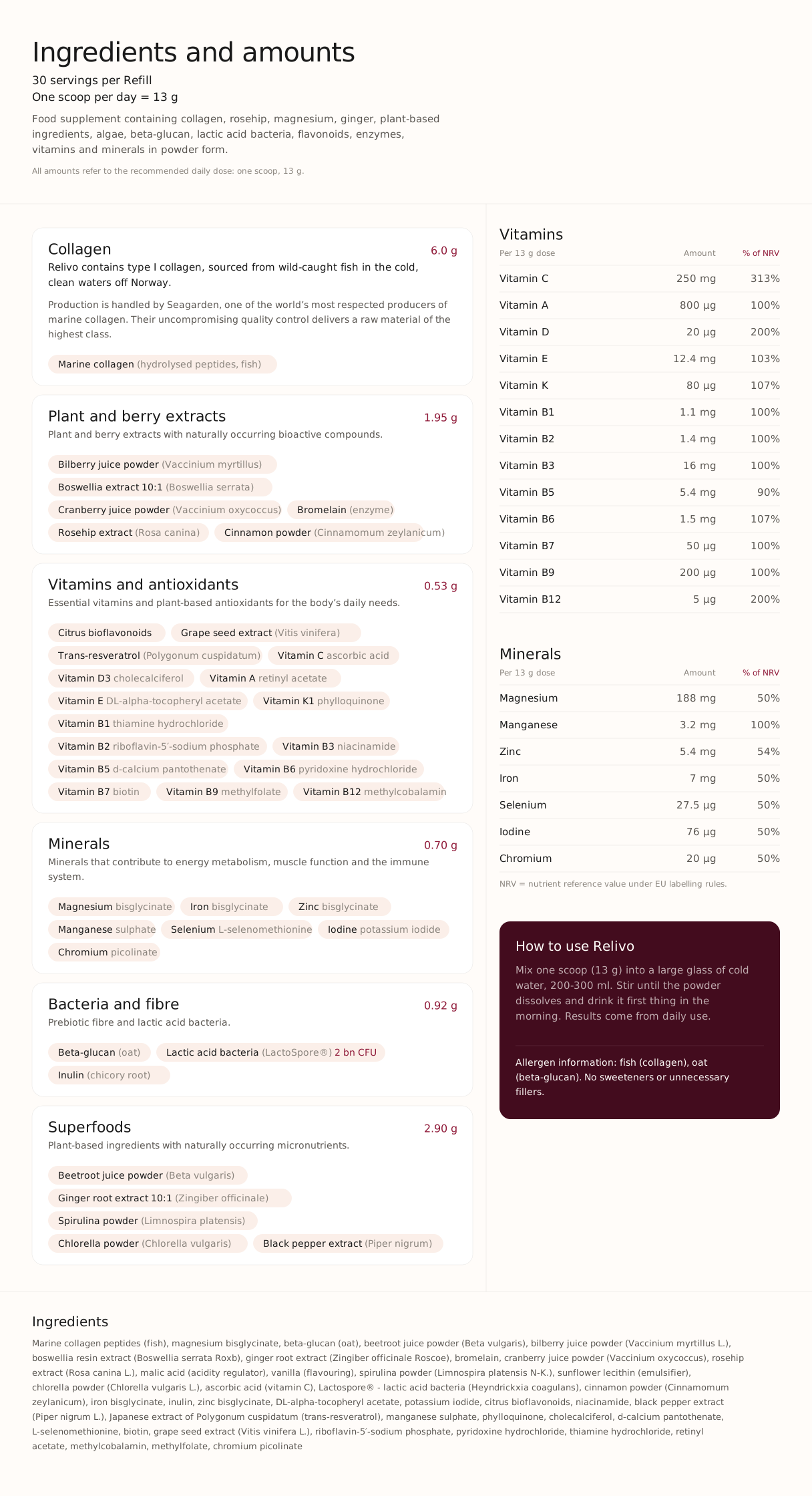
Relivo is a complete daily nutritional supplement developed in collaboration with Swedish researchers and nutritional physiologists. Relivo combines 38 carefully selected nutrients that support the body's most important systems and structures.
Everything gathered in one scoop of powder, developed to be simple to use and easy to incorporate into everyday life. Relivo is mixed in 60 seconds and used as a long-term nutritional foundation for energy, immune system, gut health, muscles, and joints.
Sources
- Farahmand B et al. – Mortality amongst participants in Vasaloppet: a classical long-distance ski race in Sweden (Journal of Internal Medicine)
- Hansson E et al. – Lower risk of depression among participants in a long-distance ski race (Vasaloppet cohort)
- Andersen K et al. – Risk of arrhythmias in 52,755 long-distance cross-country skiers: a cohort study (European Heart Journal)
- Sandvik L et al. – Physical fitness as a predictor of mortality among healthy, middle-aged Norwegian men (New England Journal of Medicine)
- Holmberg HC – The elite cross-country skier provides unique insights into human exercise physiology (Scandinavian Journal of Medicine & Science in Sports)
- Sandbakk Ø, Holmberg HC – Physiological Capacity and Training Routines of Elite Cross-Country Skiers (International Journal of Sports Physiology and Performance)
- Rusko H – Handbook of Sports Medicine and Science: Cross Country Skiing (physiological overview)
- EFSA – Health claims for vitamin D, iron, B vitamins, magnesium, zinc and selenium
- National Food Agency – Vitamin D