RED-S – when the body gets too little energy for training
You are training more but performing worse. You catch colds often. You sleep poorly. It could be that your body simply isn't getting enough fuel.
Introduction
It starts with ambition. You increase your training volume, perhaps for a race or because you've caught the bug. The first few weeks go well. Then, things start to feel off.
Your fitness plateaus even though you're training more. You catch two colds in a month. Your sleep suffers. You're constantly cold. Your fuse is shorter than usual. And your performance is actually declining.
The common reaction is to train harder. Sometimes, that is exactly the wrong thing to do.
RED-S—Relative Energy Deficiency in Sport—is a condition where the body does not receive enough energy to both handle training and maintain its basic functions. It affects far more people than you might think and is often overlooked by both the athlete and those around them.
In this guide, we walk through what RED-S is, how it occurs, the warning signs, why it is so difficult to detect—and what the road to recovery looks like.
What is RED-S?
The term was introduced by the International Olympic Committee in 2014 and has been updated several times since, most recently in 2023.
It replaced an older term, the so-called Female Athlete Triad, which described the connection between low energy intake, menstrual dysfunction, and osteoporosis in female athletes.
The expansion was made for two reasons. First, men are also affected. Second, it turned out that the consequences are significantly broader than the original three—they affect hormones, the immune system, metabolism, bone health, the cardiovascular system, digestion, and mental well-being.
The core of the condition is simple to state but easy to miss: the body is not receiving enough energy relative to how much it is expending.
Energy availability—the key concept
To understand RED-S, you need to understand the concept of energy availability.
The idea is to subtract the energy expended during exercise from your total energy intake. What remains is what the body has to work with for everything else: breathing, circulation, immune function, hormone production, cell division, digestion, and cognitive function.
In research, this is expressed as kilocalories per kilogram of fat-free mass per day. Approximately 45 kcal per kilogram of fat-free mass is considered a normal level. When the figure drops below about 30 kcal per kilogram, measurable disruptions in the body's functions begin to occur.
The practical takeaway here is the realization that you can eat a completely normal amount of food and still end up in an energy deficit if your training volume has increased without a corresponding increase in intake.
It is not always about eating disorders
This is an important distinction.
RED-S can arise in several ways. Sometimes it involves conscious restriction, in which case there is often an underlying eating disorder that needs to be treated separately.
But just as often, it is unintentional:
- Training volume has increased gradually without considering the need for more food
- Appetite is suppressed after intense exercise, which is a well-known physiological effect
- A busy schedule makes it difficult to find time to eat properly
- Dietary changes have been made without calculating the energy content
- Long sessions lead to skipped meals
This means that RED-S can affect someone with a perfectly healthy relationship with food who simply hasn't realized how much fuel their new training volume requires.
What happens in the body
When energy availability is low over a long period, the body begins to prioritize. What is immediately vital for survival gets what is available. What can wait is put on hold.
Hormones. In women, menstrual disturbances are one of the clearest signs—irregular periods or their complete absence. In men, lowered testosterone levels are observed.
Skeleton. Bone density decreases. Stress fractures become more common. This is one of the most serious long-term consequences, as lost bone mass can be difficult to rebuild.
Metabolism. Resting metabolic rate drops. The body saves energy by turning down consumption, which, paradoxically, can make it harder to lose weight.
Immune system. Susceptibility to infections increases. Recurring colds are a common sign.
Stomach and gut. Digestive issues are common.
Blood values. Iron deficiency and anemia are more common.
Mental well-being. Irritability, low mood, anxiety, and difficulty concentrating are common.
Performance. Endurance, strength, coordination, and training response deteriorate. The risk of injury increases.
Men are affected too - but are diagnosed later
Because the concept emerged from research on female athletes, the male variant has long been underdiagnosed.
In women, there is a clear and relatively easy-to-observe marker: menstruation. When it becomes irregular or stops, it is a signal that can be detected.
In men, there is no corresponding clear sign. Lowered testosterone causes more diffuse symptoms - reduced libido, impaired recovery, poorer mood, and lower motivation. It is easy to attribute these to stress or age.
The consequences, however, are the same, including the impact on bone density. Studies have shown that male endurance athletes have lower bone density than expected, which has been partly linked to energy deficiency.
Warning signs
Here are the signs that are usually highlighted. Isolated symptoms do not mean much - it is the pattern that counts.
- Performance plateaus or declines despite increased training
- Recurrent colds and infections
- Recurring injuries, especially overuse injuries
- Fatigue that does not improve with rest days
- Sleep problems despite hard training
- Feeling cold often, even indoors
- Irregular or absent periods
- Reduced sex drive
- Irritability and mood swings
- Stomach issues
- Slow recovery between sessions
If several of these occur simultaneously over a period of several weeks, it is worth taking seriously.
Who is at risk?
Certain groups are particularly vulnerable:
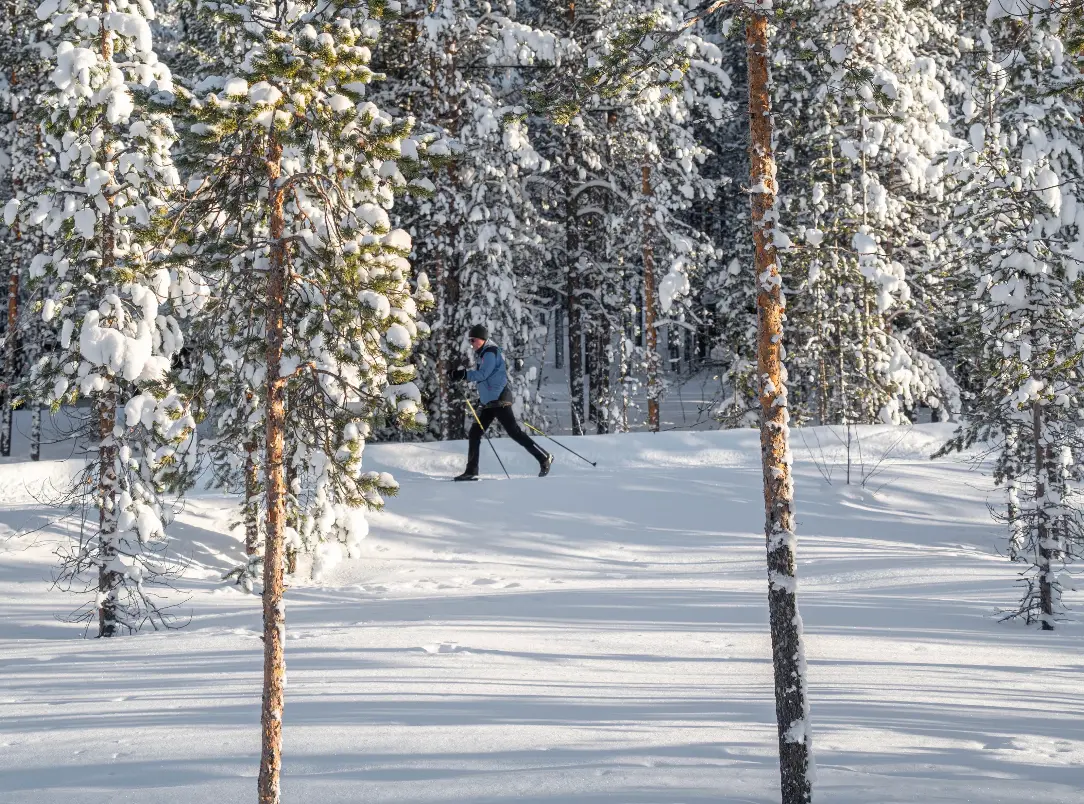
Endurance athletes. Running, cycling, triathlon, and cross-country skiing involve high energy expenditure that is easy to underestimate.
Aesthetic sports. Gymnastics, dance, and figure skating, where body ideals play a role.
Weight-class sports. Martial arts and rowing, where weight loss is part of competition preparation.
Recreational athletes who have increased their training rapidly. Those who have gone from two to six sessions per week without changing their eating habits.
Individuals with restrictive dietary plans. Regardless of whether it involves low-carb diets, fasting, or plant-based diets, the risk increases if the plan is not well-thought-out in terms of energy.
Young athletes. Here, additional risks are linked to growth and development.
Why it is so difficult to detect
Several factors work together to make the condition elusive.
The symptoms are nonspecific. Fatigue, poor sleep, and susceptibility to infections can be caused by many other things.
The culture rewards discipline. Eating little and exercising a lot is often perceived as ambition rather than a risk.
Weight doesn't tell the whole story. You can have a completely normal body weight and still have low energy availability. It is the relationship between intake and expenditure that matters.
Performance may be good initially. It takes time for the effects to manifest, which makes it difficult to see the connection.
Appetite is unreliable. Intense exercise can temporarily suppress hunger, meaning the body's own signals are not helpful.
The road to recovery
Treating RED-S usually requires a team—a doctor, a dietitian, and, if necessary, a psychologist.
The fundamental principle is to increase energy availability. This can be done by eating more, exercising less, or both. In practice, it is often easier to add food than to cut back on training, especially for someone whose identity is tied to their sport.
It is important to understand the timeline. Hormonal function can normalize within months. Bone density takes significantly longer to rebuild, and in some cases, it does not fully recover.
It is also common for the process to feel difficult at the start. Eating more can initially lead to weight gain and a feeling that your fitness is declining before the body begins to respond. This is one of the reasons why professional support makes such a big difference.
Prevention
1. Increase your food intake when you increase your training. It sounds obvious, but it is the most common mistake.
2. Eat around your workouts. Both before and after. Long sessions on an empty stomach increase the risk.
3. Do not skip meals. Consistency beats trying to make up for it later.
4. Use markers. Menstruation, sleep, mood, frequency of infections, and performance are all signals to track.
5. Be mindful when changing your diet. New eating habits can unintentionally lower your energy intake.
6. Be careful with the combination of fasting and intense training. They can be combined, but it requires planning.
When should you seek medical advice?
Contact a health center, sports physician, or dietitian if you recognize yourself in several of the warning signs, and especially if you have:
- Missed periods for three months or more
- Recurrent stress fractures or overuse injuries
- Persistent fatigue that does not improve with rest
- Decreased performance despite continued training
- Difficulty eating enough despite wanting to
If thoughts about food, weight, or exercise feel compulsive or difficult to control, help is available. Frisk & Fri and the National Eating Disorder Society offer support, and your local health center can provide referrals to specialized care.
This is a condition you can recover from, but it goes faster with the right support. Read more at 1177 Vårdguiden.
Summary
RED-S occurs when the body does not receive enough energy relative to the training load. The consequences extend far beyond performance—they affect hormones, bone health, the immune system, metabolism, and mental well-being.
The condition is more common than you might think, affects both women and men, and often occurs unintentionally in people with a perfectly normal relationship with food. Weight is not an indicator of risk. It is the balance between intake and expenditure that matters.
The most important preventive measure is simple to state: when training increases, food intake must increase accordingly. And if your fitness is declining despite training more, consider that it might be the fuel, not the training, that is the problem.
About Relivo
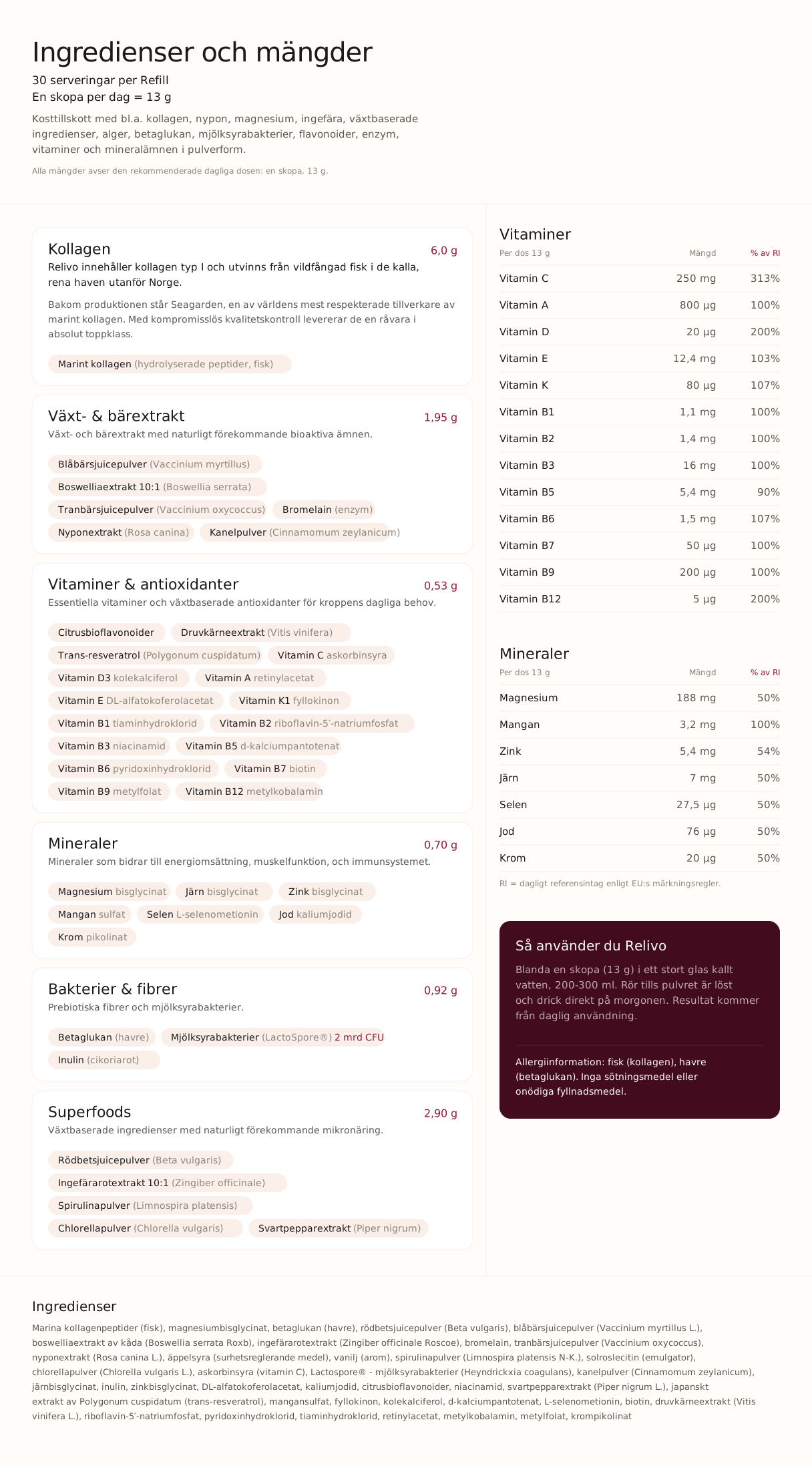
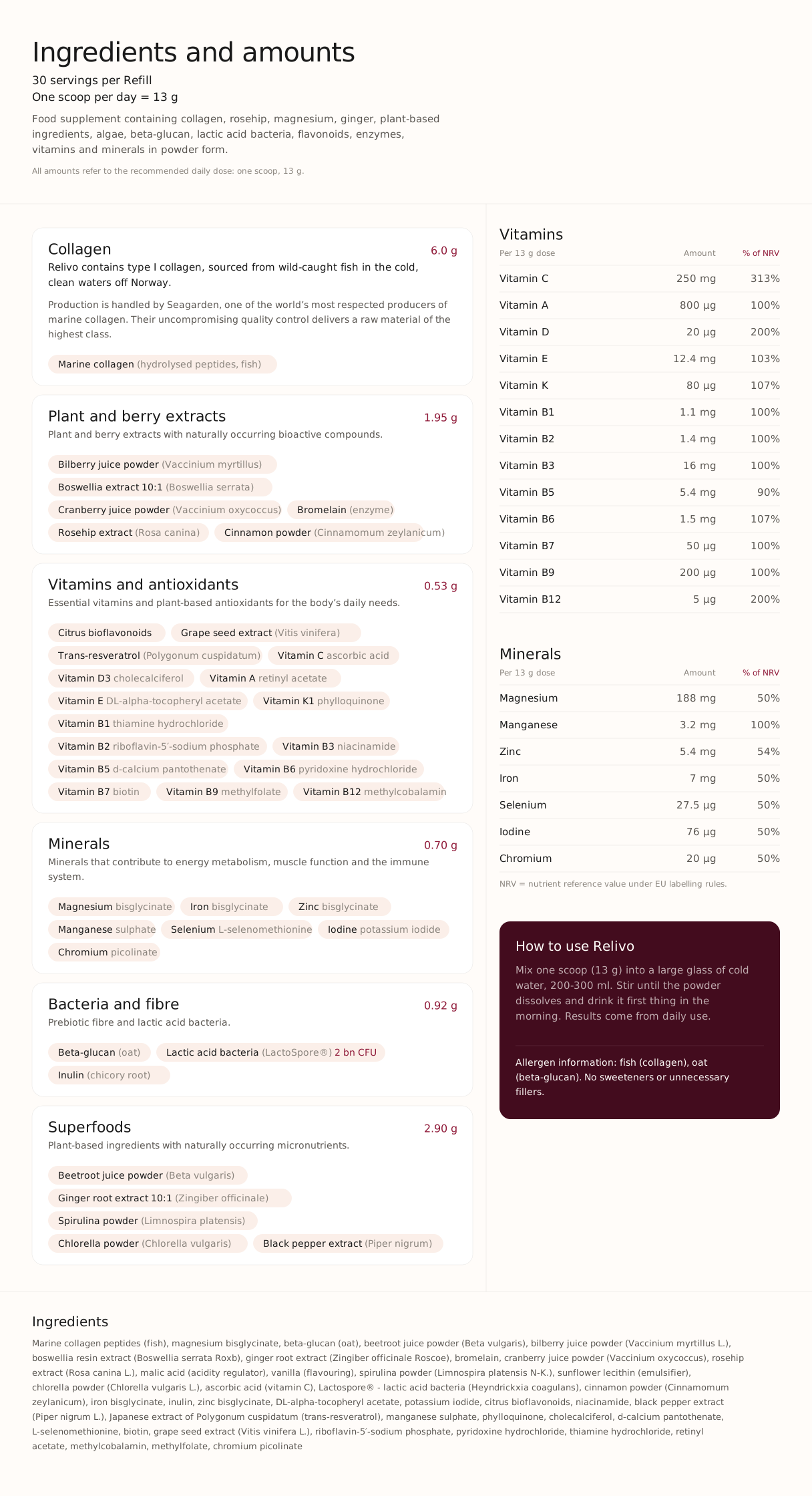
Relivo is a complete daily nutritional supplement developed in collaboration with Swedish researchers and nutritionists. Relivo combines 38 carefully selected nutrients that support the body's most important systems and structures.
Everything is contained in one scoop of powder, designed to be easy to use and simple to incorporate into your daily routine. Relivo mixes in 60 seconds and serves as a long-term nutritional foundation for energy, immune function, gut health, muscles, and joints.
Sources
- Mountjoy M et al. – 2023 International Olympic Committee's (IOC) consensus statement on Relative Energy Deficiency in Sport (REDs) (British Journal of Sports Medicine)
- Mountjoy M et al. – IOC consensus statement on relative energy deficiency in sport (RED-S): 2018 update (BJSM)
- Mountjoy M et al. – The IOC consensus statement: beyond the Female Athlete Triad—Relative Energy Deficiency in Sport (RED-S) (BJSM, 2014)
- Loucks AB et al. – Energy availability in athletes (Journal of Sports Sciences)
- Logue DM et al. – Low Energy Availability in Athletes 2020: An Updated Narrative Review of Prevalence, Risk, Within-Day Energy Balance, Knowledge, and Impact on Sports Performance (Nutrients)
- Ackerman KE et al. – Low energy availability surrogates correlate with health and performance consequences of Relative Energy Deficiency in Sport (BJSM)
- De Souza MJ et al. – Female Athlete Triad Coalition Consensus Statement (BJSM)
- Tenforde AS et al. – Association of the Female Athlete Triad Risk Assessment Stratification to the Development of Bone Stress Injuries (American Journal of Sports Medicine)
- 1177 Vårdguiden – Eating disorders