A runner's iron requirements - why runners lose iron faster
Tired legs, a higher heart rate on inclines, and fatigue that won't go away despite rest? A runner's iron requirements are higher than those of a sedentary person—here is why, and what you can do about it.

Introduction
You sleep for eight hours. You eat reasonably well. Yet, the kilometers feel heavier than they used to, your heart rate is higher at the same pace, and your legs aren't responding the way they should. Many runners recognize this pattern but rarely land on the right explanation: iron.
Runners—especially female runners—are at a significantly higher risk of developing low iron status compared to the general population. It is not a matter of a poor diet or a lazy lifestyle. It is the body's own response to running long, often, and hard. Five mechanisms work together, and collectively they can deplete iron stores faster than you can replenish them.
In this guide, we walk through what actually happens in the body, why a runner's iron needs differ from those of a sedentary person, how to recognize early warning signs, and what you can do to keep your levels where they need to be.
Why a runner's iron needs are higher—five mechanisms
Here are the five research-backed reasons why runners are affected more often than other groups.
1. Foot-strike hemolysis—when foot impact crushes red blood cells
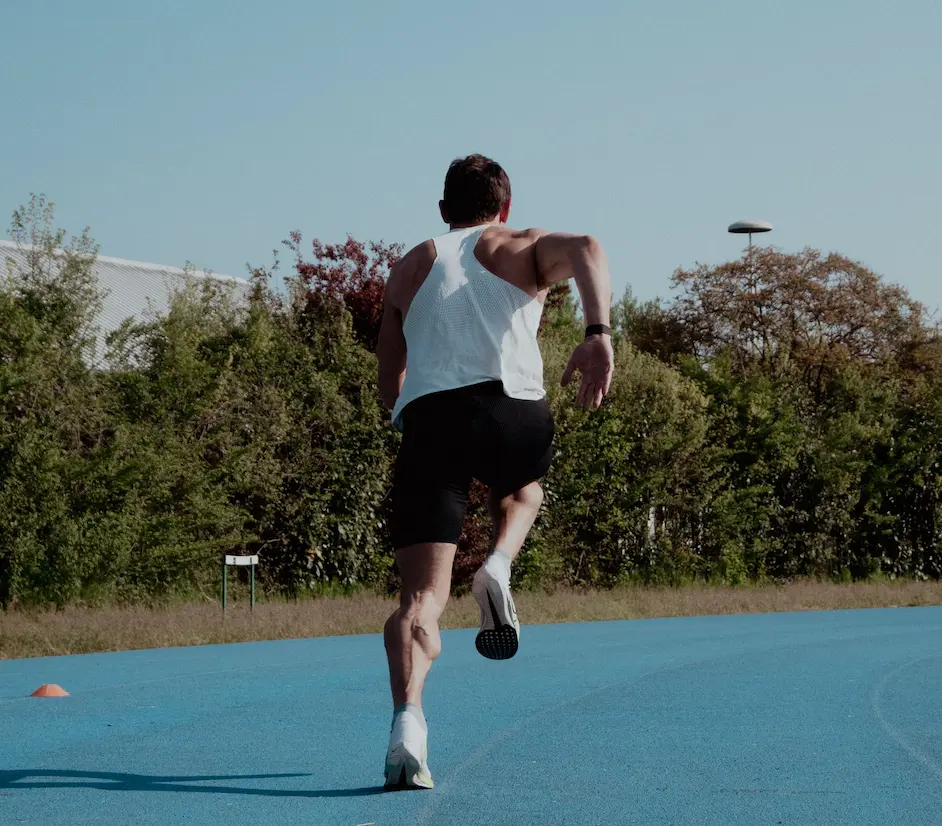
Every time the sole of your foot hits the ground, the blood cells in the smallest vessels of the foot are subjected to mechanical stress. At a sufficiently high volume or intensity, small amounts of red blood cells can break down earlier than normal—a phenomenon known as foot-strike hemolysis.
The effect is usually small per session, but accumulated over weeks and months, it can contribute to an increased turnover of iron in the body. Marathon runners and long-distance athletes are particularly affected.
2. Sweat loss—small but consistent
Iron is also lost through sweat. The amounts per session are small, but multiplied by 4–6 sessions per week, and especially during the summer months, it contributes to the net balance.
For a runner training 60–90 minutes daily, sweat losses can reach measurable levels on a monthly basis.
3. Hepcidin—the body's own iron inhibitor after exercise
This is perhaps the most important mechanism. After intense exercise, the production of a hormone called hepcidin increases. The function of hepcidin is to block the absorption of iron from the gut and prevent the release of stored iron.
The effect is greatest 3–6 hours after a session, which paradoxically means that if you eat your iron-rich meal immediately after training, absorption may be worse than if you wait. This is a detail few runners are aware of.
4. Gastrointestinal micro-bleeding
Long-distance training can cause small, often invisible, bleeding in the gastrointestinal tract. The effect is mild but cumulative at high training volumes.
This is one of the more debated mechanisms, but it is documented in studies on marathon runners and ultra-endurance athletes.
5. Female runners—a double vulnerability
Women of childbearing age lose iron every month through menstruation. For runners, the four mechanisms mentioned above are added on top of this. This is why female runners are the group most frequently reporting iron deficiency in sports contexts.
Common symptoms in runners with low iron status
The signals are often subtle and can easily be mistaken for "normal" training fatigue. Here are the most common ones:
- The pace that felt easy last month feels heavy now
- Heart rate is consistently higher at the same training intensity
- Shortness of breath occurs sooner
- Recovery between sessions takes longer
- Motivation and desire to train decrease
- Sleep quality deteriorates
- Paleness, cold hands and feet
- Restless legs at night
On their own, these can be explained by a thousand things. Together, in a runner with high training volume, it is worth checking your iron status.
Ferritin - the value that matters most for runners
Blood tests usually measure hemoglobin (Hb) first. That is reasonable, but for runners, it is not enough. Many have normal hemoglobin but extremely low ferritin levels – the body's iron stores.
Ferritin is the real alarm for runners. Experienced sports doctors and clinicians working with active athletes often point to ferritin levels below 30–40 µg/L as a point where performance and recovery begin to be affected – long before traditional anemia develops.
This is sometimes called "iron deficiency without anemia" (IDNA) and is by far the most common form among runners. A blood test that only measures Hb misses it entirely.
"Sports anemia" - real or false?
A phenomenon known as "sports anemia" describes a situation where runners have slightly lowered hemoglobin concentration, but where it is not actually a case of true anemia.
During endurance training, blood volume increases as plasma volume (the fluid-rich part) expands. The blood becomes "diluted," and the Hb concentration looks lower on paper. This is a positive adaptation that benefits performance, not a sign of iron deficiency.
The difference is visible in ferritin: true iron deficiency results in low stores, while sports anemia does not. This is why a dietitian or sports doctor usually looks at both values together.
How to maintain your iron levels as a runner
Here are six practical strategies that make a big difference over time.
1. Combine heme and non-heme iron in your diet
Heme iron (from meat, fish, and poultry) is absorbed much more efficiently than non-heme iron (from plant-based sources). Try to combine both for the best net absorption. Vegetarians and vegans usually need to consume larger amounts of non-heme iron to compensate.
2. Always eat with vitamin C
Vitamin C increases the absorption of non-heme iron significantly. Squeeze lemon over your lentil stew, eat bell peppers with your whole-grain pasta, or drink orange juice with your oatmeal.
Vitamin C also contributes to normal iron absorption according to EU health claims—one of the most well-studied nutritional relationships in existence.
3. Be mindful of when you eat your iron-rich meal
This is where hepcidin comes into play. Because this hormone is elevated for 3–6 hours after exercise, iron absorption can be suboptimal during that window. Try to eat your iron-rich meal either early in the day (before a morning workout) or in the evening (many hours after your session).
4. Avoid iron inhibitors during meals
Coffee and tea contain polyphenols that can reduce iron absorption by up to 60 percent if consumed with a meal. It is best to wait an hour after eating. Calcium from dairy products can also inhibit iron absorption—not a disaster, but worth knowing.
5. Prioritize recovery
Chronic training stress raises baseline hepcidin levels. Incorporating rest days, sleep, and stress management is therefore not a sign of "weakness"—it is strategic iron management.
6. Check your ferritin levels regularly
Especially before and after major training blocks or competition seasons. This is the only reliable way to know where you stand.
Summary
A runner's iron requirements are genuinely higher than those of a sedentary person, and it is not necessarily due to a poor diet. Foot-strike hemolysis, sweat loss, post-exercise hepcidin, micro-bleeding in the gut, and—for female runners—menstruation are five mechanisms that can deplete iron stores faster than you can replenish them.
About Relivo
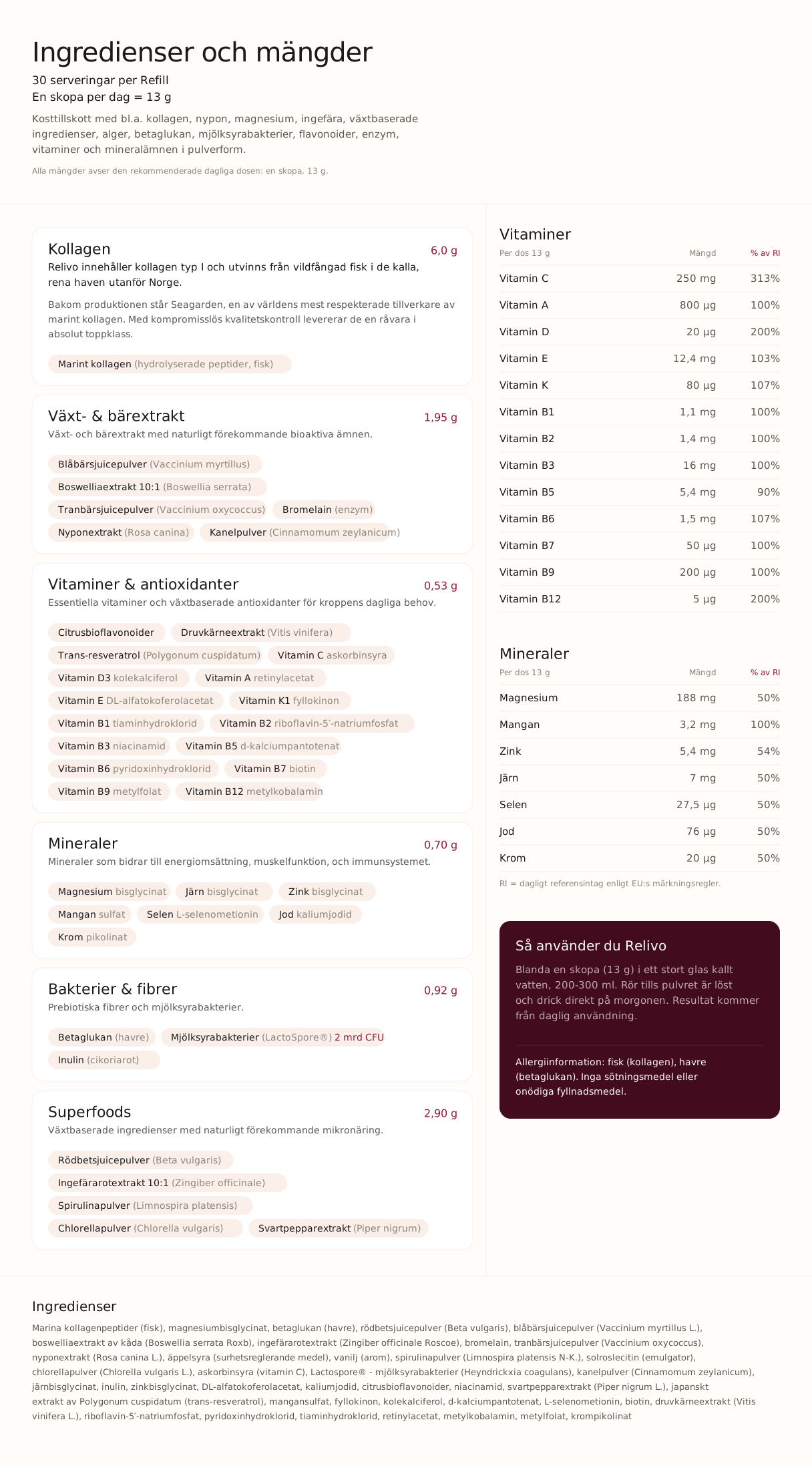
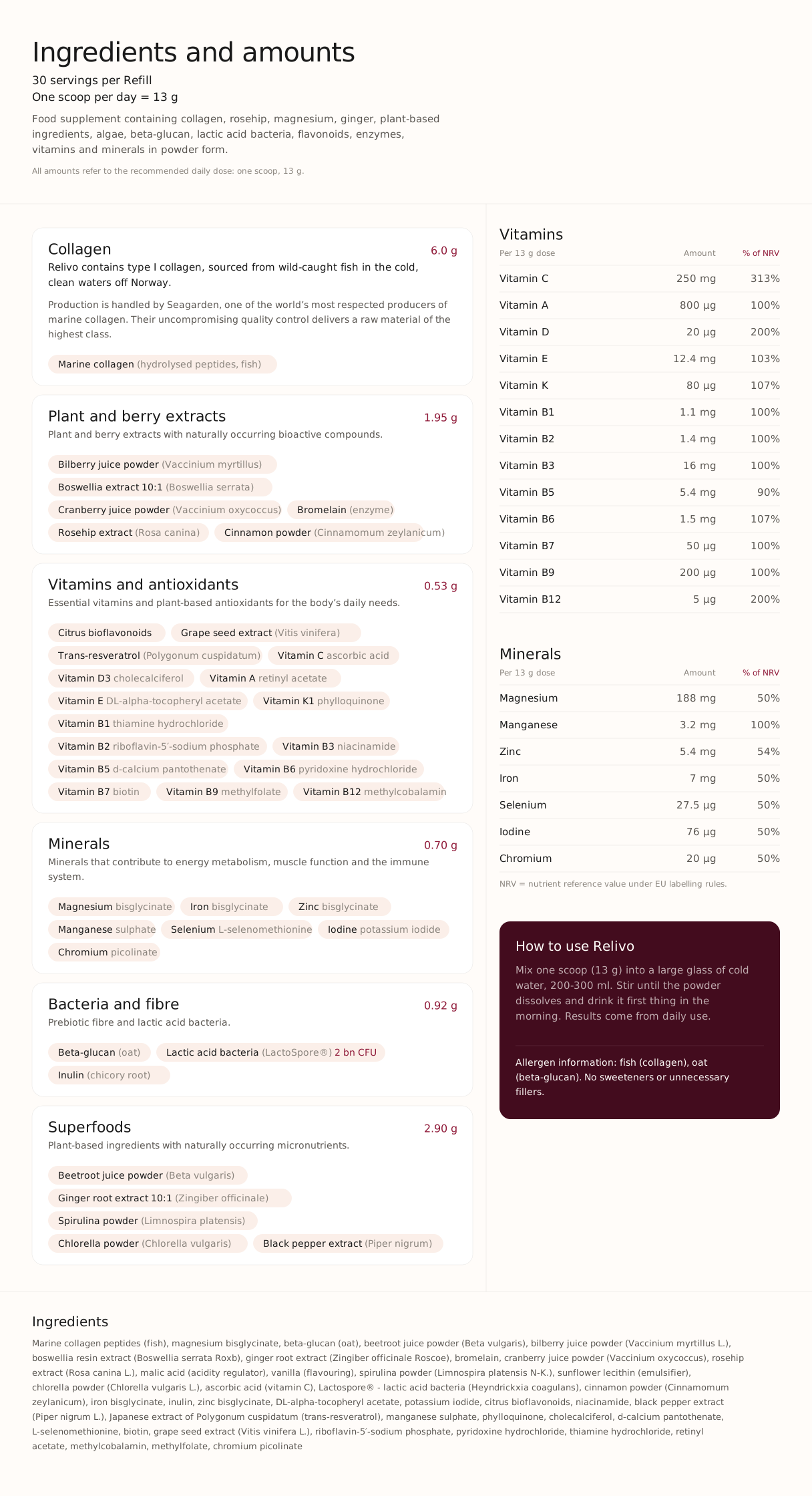
Relivo is a complete daily nutritional supplement developed in collaboration with Swedish researchers and nutritionists. Relivo combines 38 carefully selected nutrients that support the body's most important systems and structures.
Everything is contained in one scoop of powder, developed to be simple to use and easy to incorporate into your daily routine. Relivo mixes in 60 seconds and serves as a long-term nutritional foundation for energy, immune function, gut health, muscles, and joints.
Sources
- Peeling P et al. – Effects of Exercise on Hepcidin Response and Iron Metabolism During Recovery
- Sim M et al. – Iron considerations for the athlete: a narrative review
- DellaValle DM – Iron supplementation for female athletes: effects on iron status and performance outcomes
- Beard J, Tobin B – Iron status and exercise
- Clénin G et al. – Iron deficiency in sports – definition, influence on performance and therapy (Swiss Med Weekly)
- Nabhan D et al. – Impact of iron deficiency on female Marine recruits
- Peeling P et al. – Athletic induced iron deficiency: new insights into the role of inflammation, cytokines and hepcidin
- EFSA – Iron contributes to normal oxygen transport in the body
- EFSA – Vitamin C contributes to increasing iron absorption
- 1177 Vårdguiden – Iron deficiency