Why do we sleep poorly even though we are tired?
Being tired all day but still having trouble sleeping at night is more common than many people think. Here we go over why it happens - and what actually affects sleep.

Introduction
Sleep problems are today a widespread phenomenon, despite the fact that many people experience constant fatigue.
It can feel contradictory that the body craves rest while losing sleep.
The explanation rarely lies in a single factor.
Sleep is influenced by several interacting elements in everyday life, from stress and routines to light, environment and nutrient intake.
Why do we sleep poorly even though we are tired?
Fatigue does not automatically mean that the body is ready for sleep.
The body and brain need to be in sync for sleep to occur naturally.
If the nervous system is activated, even with physical fatigue, it can be difficult to calm down.
Stress and the role of the nervous system in sleep
Stress affects the body's signaling system and can make it harder to unwind in the evening.
When the body experiences demands or pressure, it is kept in a more active mode.
This may explain why many people feel exhausted but still experience restlessness when going to sleep.
Difference between mental and physical fatigue
Physical fatigue is often linked to movement and strain on the body.
Mental fatigue is more about cognitive overstimulation.
Mental fatigue can make your mind stay active even though your body is tired.
Screen time, light and circadian rhythm
Light is one of the strongest factors that control the body's circadian rhythm.
Exposure to bright and blue light in the evening can affect the body's natural sleep signals.
Screens late at night can therefore make it harder to feel sleepy at bedtime.

Evening habits that affect sleep
Using mobile or computer as relaxation can have the opposite effect.
The brain keeps taking in information instead of preparing for rest.
Reducing screen time in the evening is one of the most studied lifestyle changes linked to sleep.
Irregular routines and sleep quality
The body works according to biological rhythms.
When the times of sleep and awakening vary greatly, the rhythm can be disturbed.
This can cause the body to not perceive a clear “now it's night” mode.
Regularity over perfection
Small, consistent routines can help the body regain structure.
It also applies on weekends.
Regularity signals security to the body and can contribute to easier sleep over time.
Diet's link to sleep
What and when we eat can affect how the body experiences the evening.
Stimulating substances late in the day can make the body stay alert.
Even imbalances in nutritional intake can affect the body's ability to relax.
Nutrition as part of the evening routine
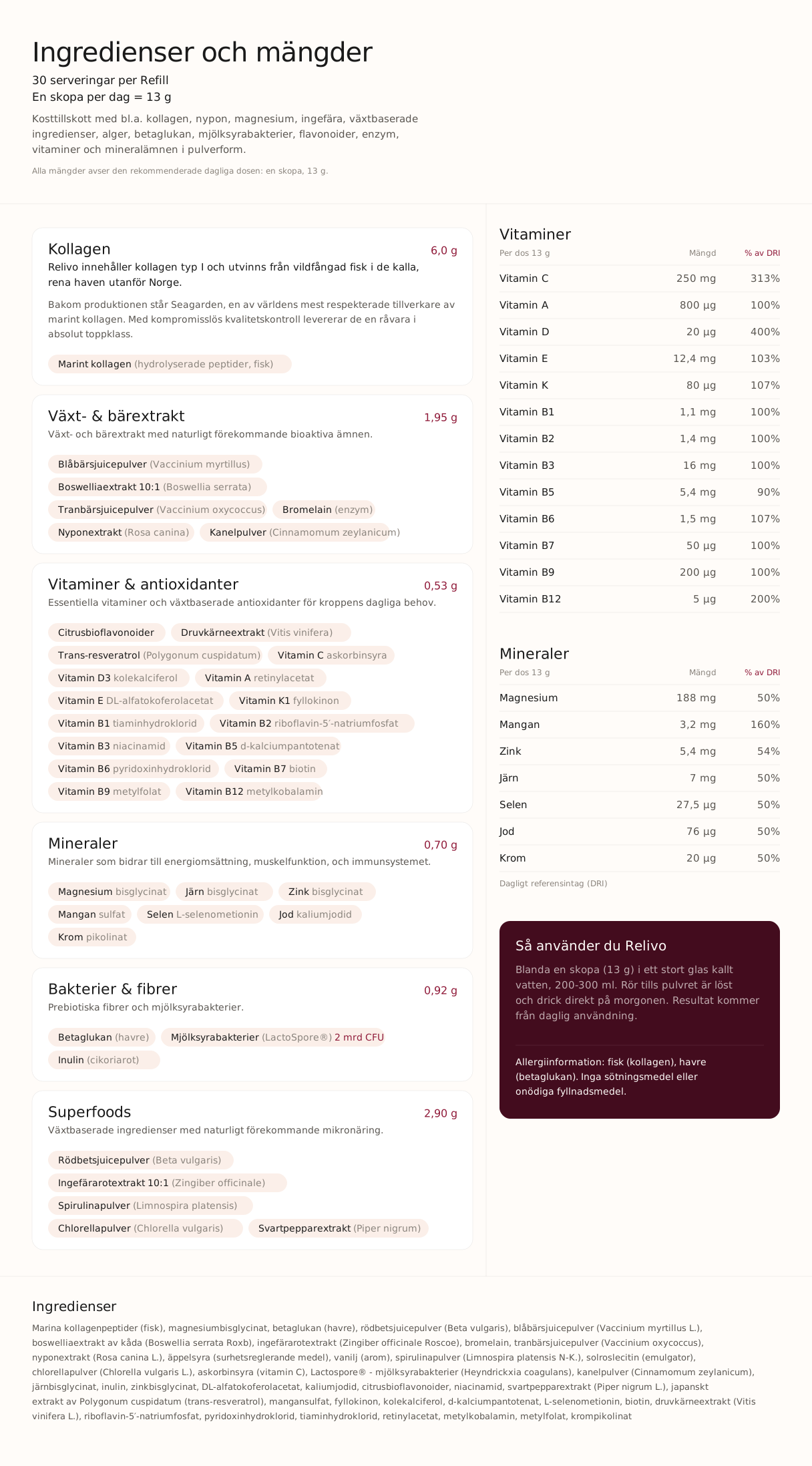
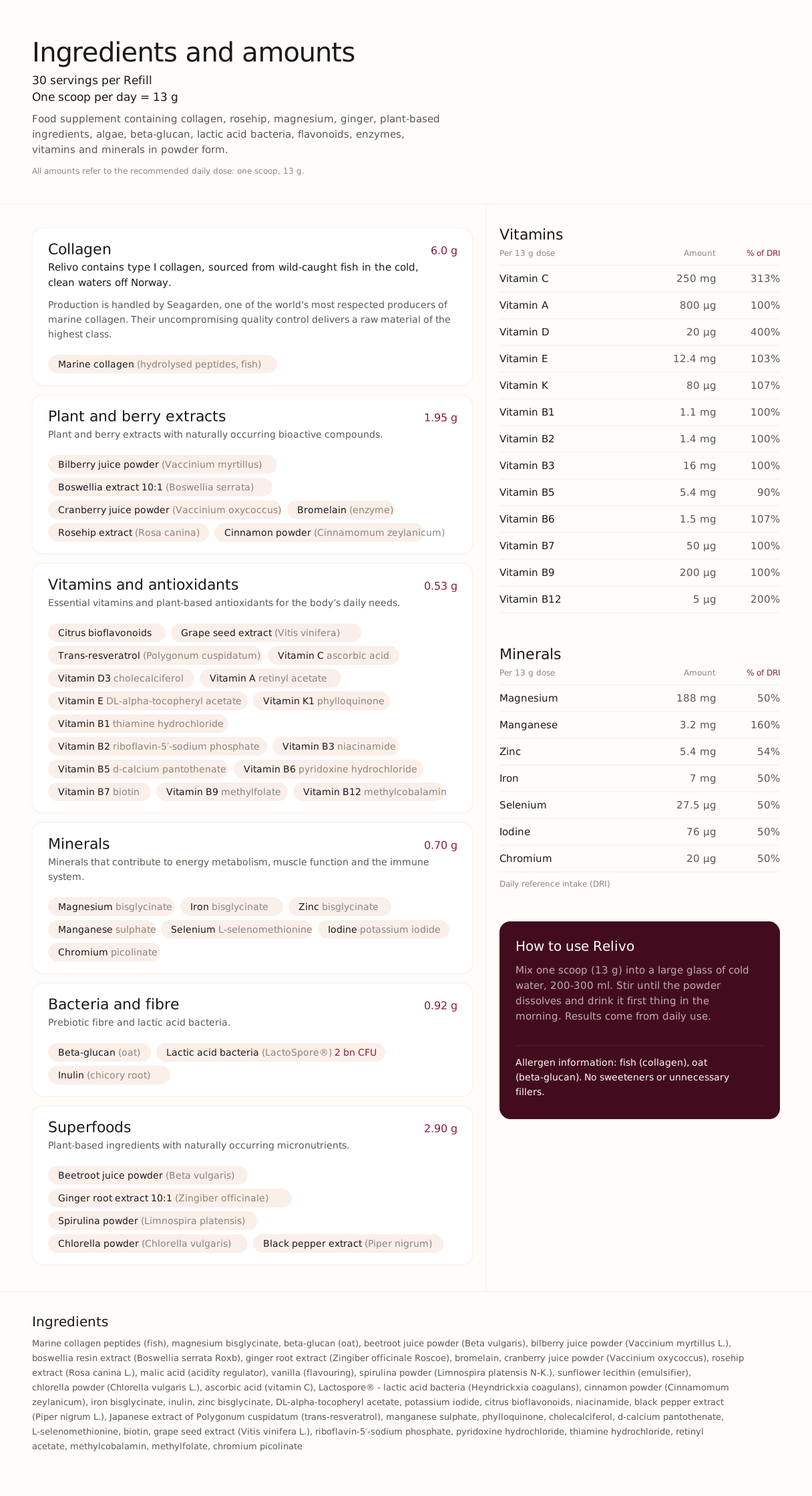
Some minerals are linked to the body's normal nerve function. Magnesium is an example that often appears in research on relaxation.
Overstimulation in everyday life
We are exposed to vast amounts of information on a daily basis.
Sounds, notifications and multitasking keep the brain active for long periods of time.
When recovery is lacking in the daytime, it can be more difficult to let go in the evening.
The importance of mental pauses
Calm activities without demands can help the brain switch down.
It can be about reading, writing or sitting in silence.
Recovery is as much about mental rest as physical.
The importance of the sleep environment
The environment in which we sleep affects how the body perceives rest.
Light, sound and temperature all matter.
A cool, dark and quiet bedroom can provide better conditions for sleep.
Small adjustments in the bedroom
Blackout, lowered temperature and minimized background noise can make a noticeable difference.
Often it is simple changes that produce the greatest impact.
Relivo's view on sleep and recovery
Relivo sees sleep as part of the big picture.
It's not about quick fixes, it's about sustainable habits.
Our products are designed to complement a balanced lifestyle.
Practical tips for better sleep
• Create a consistent bed time
• Limit screens in the evening
• Prioritize calm evening habits
• Review the sleeping environment
• Avoid stimulants late
Small adjustments can make a big impact over time.
Summary
Sleeping poorly despite being tired is complex, but common. Sleep is affected by many aspects of life, not just how tired you feel.
Through increased understanding and conscious habits, the conditions for rest can be improved step by step.