Sleep traps in everyday life: 7 habits that spoil your night's sleep
Sleep is influenced more by everyday habits than many people think. Here are seven common sleep traps that can surreptitiously screw up your night's sleep - and what you can do instead.
Introduction
Sleep is a fundamental part of everyday life, but still something that is often prioritized last.
Many people find that their night sleep deteriorates without understanding why.
Often it is not about a single cause. These are small, recurring habits that together affect how we sleep.
Identifying these sleep traps in everyday life is a first step towards more stable and predictable night sleep.
1. Irregular sleep times
Going to bed and waking up at different times each day can make it harder for the body to find a clear rhythm.
The body works best when it gets predictability.
Large variations between weekday and weekend can create a sense of “social jet lag.”
It can affect how tired or alert you feel.
Regularity is therefore an important basis for a good night's sleep.
Practical tip
Try to keep about the same times, even on the weekend. Small deviations are often easier for the body to deal with than large ones.
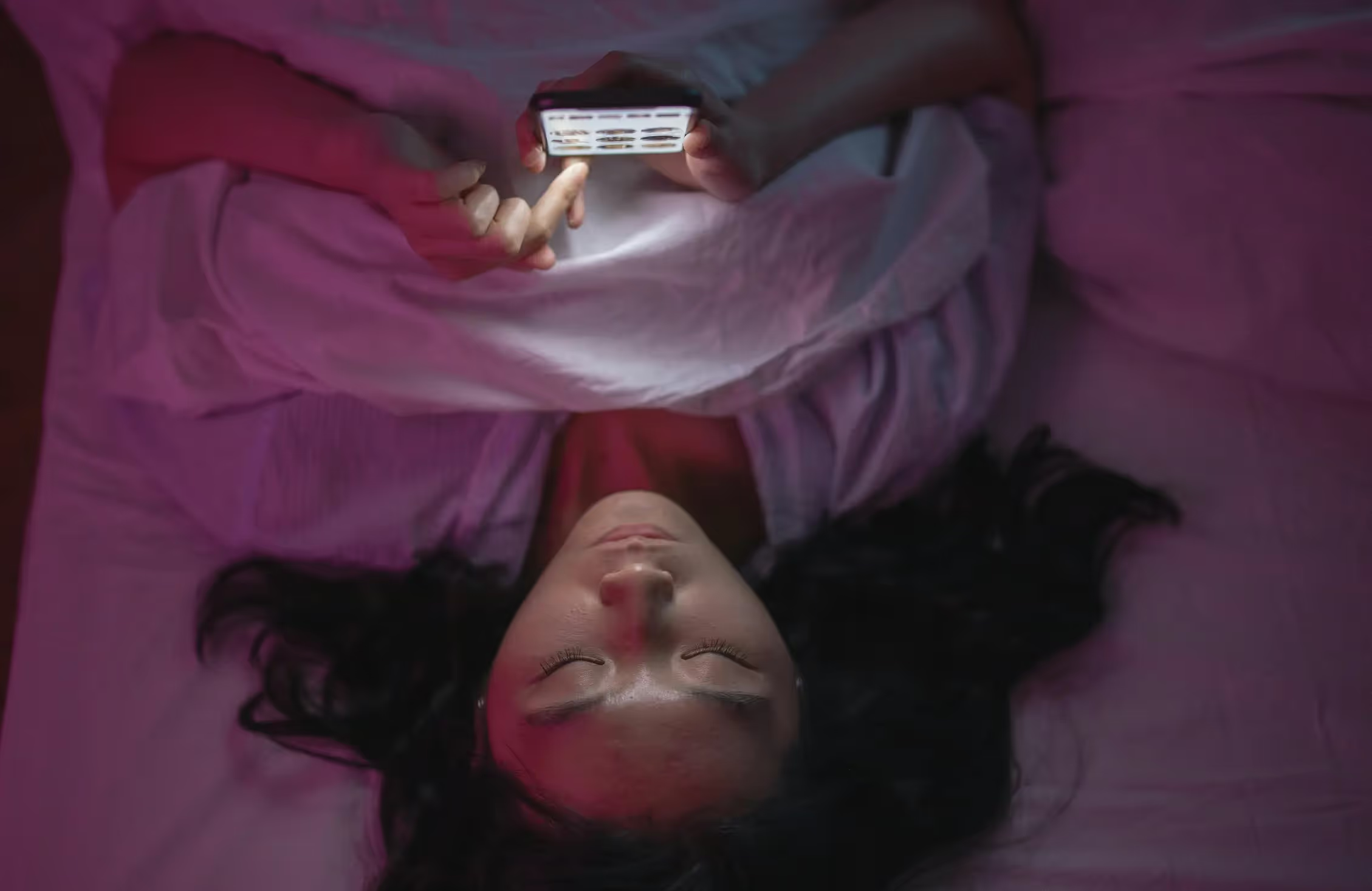
2. Late night screen time
Mobile phones, tablets and computers are ever-present.
The light from screens can affect the body's experience of evening.
Screen content additionally stimulates the brain. It can make it harder to unwind before the night.
Many people notice that the tanks keep spinning long after the screen is turned off.
Practical tip
Try reducing screen time in the last hour before bedtime.
Dimmed lighting and calmer activities can help the body switch down.
3. Too much light in the bedroom
Light exposure in the evening can affect the body's circadian rhythm.
Even low light can matter.
Street lights, digital clocks or standby lights can contribute to a brighter sleeping environment than you think.
A darker bedroom is perceived by many as more soothing.
Practical tip
Use blackout curtains and turn off unnecessary light sources.
Small changes can make a big impact over time.
4. Caffeine late in the day
Caffeine is not only found in coffee. Tea, energy drinks, soft drinks and chocolate can also contribute.
The body breaks down caffeine differently quickly.
For some, a cup in the late afternoon is enough to affect night sleep.
The effect is not always noticeable immediately, but can manifest itself at bedtime.
Practical tip
Try limiting caffeine intake after the early afternoon.
Note whether it affects how easily you fall asleep.

5. Late and heavy supper
Eating late at night can affect how the body experiences rest.
Digestion is an active process.
Large or heavy meals near bedtime can make it harder to relax.
Many people experience a better night's sleep when the last major meal is earlier in the evening.
Practical tip
Aim to eat supper well in advance. If hunger arises later, something lighter may be an option.
6. Too little daylight and movement
Sleep is influenced not only by the evening, but also by the day. Limited exposure to daylight can make circadian rhythms more blurred.
Stagnant indoor environments provide fewer natural signals to the body. It can affect the experience of fatigue in the evening.
Daylight and movement help the body distinguish between day and night.
Practical tip
Try to stay outside during the day, even for short periods of time. A walk in daylight can make a difference.
7th. Stress and constant connection
A high tempo and constant availability can make it difficult to unwind. Thoughts often accompany you all the way to bed.
When the body is in an active state, sleep can take longer. Sleep requires a certain degree of mental downshifting.
Recovery sometimes needs to be planned, not just hoped for.
Practical tip
Create a simple evening routine that signals the end of the day. It can be reading, calm music or reflection.

Sleep traps in everyday life - the big picture is crucial
It is rarely a single habit that affects night sleep the most.
Often it is the sum of several small factors.
When several sleep traps interact, the effect becomes more apparent.
At the same time, small adjustments can make a noticeable difference.
It's not about perfection, it's about awareness.
Diet, routines and sleep in context
Sleep interacts with diet, movement and lifestyle. Therefore, many choose to review several parts at once.
Dietary supplements are sometimes used as a supplement to routines and habits. Then the holistic perspective becomes important.
Relivo highlights the importance of everyday balance, where sleep, nutrition and routines interact rather than replace each other.
Small changes that can make a big difference
Adjusting one habit at a time makes the change more sustainable.
It is easier to notice what actually affects sleep.
Give each change a few days or weeks. The body needs time to adapt.
Sleep is a long-term project, not a quick fix.
Summary
Sleep traps in everyday life are often hidden in what feels normal. By becoming more attentive, it is possible to make adjustments.
Small, conscious choices can create better conditions for a night's sleep over time.
Start where it feels easiest — and build on it step by step.
Sources
- National Sleep Foundation — Sleep hygiene and daily habits
- NIH — Sleep, circadian rhythms and light exposure
- European Sleep Research Society — Lifestyle factors and sleep
- Harvard Medical School — Blue light and sleep
- World Health Organization (WHO) — Sleep and well-being
- Sleep Health Journal — Caffeine and sleep timing
- NC State University — Daily routines and sleep patterns