How Sleep Boosts Your Post-Workout Muscle Recovery - 7 Research-based Tips
Are you sleeping enough to get the most out of your workouts? Discover how sleep boosts your post-workout muscle recovery with seven research-based tips.
Introduction
Do you sleep like you work out - or just train hard and hope for the best? Here are seven research-based tips on how sleep boosts your muscle recovery after exercise.
What if the most important part of your muscle recovery doesn't happen at the gym, but in the bedroom.
Sleep is one of the most underrated tools for muscle recovery after exercise, despite the fact that the body does the most repair work when you sleep. If you train hard but sloppy with sleep, you risk slowing down your results, even if your diet and exercise program fit perfectly.
When you sleep, the body goes into a more recuperative mode. Muscles strained during strength training, HIIT or running get a chance to build up again. Research on athletes shows that longer and better sleep can improve both performance and the sense of recovery between workouts.
Why Sleep Is Crucial For Muscle Recovery After Exercise
During sleep, several processes take place that directly affect muscle recovery after exercise. The body fine-tunes hormones, replenishes energy stores and copes with inflammation that occurs after heavy workouts. Without enough quality sleep, it becomes more difficult for the muscles to adapt and respond to the exercise.
For those who exercise regularly, sleep can be seen as an extra “pass” that occurs automatically every night. The difference is that you don't have to fight your way through it — you just need to give your body the time and the right conditions. The result is often smoother energy, less stiffness and better development over time.
1. Deep sleep — the body's natural window of recovery
Sleep consists of different stages, with slow-wave sleep being particularly important for muscle recovery after exercise. During deep sleep, the body goes down in turns, the pulse drops, and the nervous system switches from “gas” to more recovering mode. This is where much of the physical repair takes place.
Studies show that during deep sleep, more growth hormone and other substances involved in tissue repair and adaptation after exercise are released. Although growth hormone is not the only factor, it is part of a broader recovery environment that makes it easier for muscles to build up after strain.
2. Growth hormone, hormones and muscle recovery
One of the reasons sleep is so important for muscle recovery after exercise is the hormonal balance. During the night, more growth hormone is released, which helps the body cope with tissue damage and adapt after physical activity. At the same time, stress hormones such as cortisol get a chance to drop when you sleep undisturbed.
Research also shows that too little sleep can disrupt levels of hormones linked to muscle building and recovery, which can help you feel sturdier and less ready for the next workout. By prioritizing good sleep, you support the hormonal environment that is needed for training to pay dividends.
3. Sleep replenishes glycogen - the fuel for your muscles
When you exercise, you partially deplete muscle glycogen, i.e. stored glucose that serves as fuel during the workout. During sleep, the body continues to replenish these stores, especially if you have ingested carbohydrates during the day and after exercise. Filled glycogen levels allow you to perform better on the next workout.
If you combine good nutrition with a sufficiently long and deep sleep, the muscles will have more chance to restore their energy stores. It is noticeable not only in hard intervals, but also in everyday energy. Many people who start taking sleep more seriously experience both more stable energy and less feeling of total exhaustion after days of exercise.

4. Sleep helps the body cope with inflammation
After a tough strength workout or HIIT session, a controlled inflammation process occurs in the muscles. It is a natural part of adaptation but needs to be kept in balance. During sleep, anti-inflammatory signaling substances (cytokines) are released, among other things, that help the body cope with this process.
When you sleep too little, the inflammatory response can become more protracted and you may feel stiffer, heavier, and less ready for your next workout. By prioritizing regular sleep habits, you support your body's ability to “clean up” after heavy loads more effectively.
5. How much sleep do you need for muscle recovery after exercise?
For most adults who exercise regularly, 7—9 hours per night are usually highlighted as a benchmark. Research on athletes shows that extended sleep -- that is, sleeping longer than one usually does -- can improve both physical performance, precision and sense of recovery.
In studies where athletes extended their sleep time by around one to two hours per night, there were clear improvements in sprinting performance, accuracy and reaction time, for example.
At the same time, research on sleep deprivation (for example, 4 hours a night) showed clear impairments in muscle power and mental acuity.
6. Naps - small sleep boosts for active recovery
If you find it difficult to get a long night's sleep every day, shorter daytime naps can be a smart addition. Several studies in athletes show that naps of 20—90 minutes can restore impaired performance after nights of limited sleep and also provide extra lift after normal nights.
A short power-nap of 20—30 minutes can provide more focus and energy without making you sore.
In addition, longer naps of around 60-90 minutes can go through more sleep phases and provide more recovery, but require more planning. Try different lengths and times of day to find what suits your everyday life and workout.
7. What happens to the muscles in case of lack of sleep?
When you consistently sleep too little, both the feeling in your body and the underlying processes of muscle recovery after exercise are affected. Research on sleep restriction shows that power production, responsiveness, and endurance can deteriorate after several nights of short sleep.
In a study in which participants slept only 4 hours per night for five nights, they saw reduced levels of muscle protein synthesis, which is the process by which new muscle proteins are built up.
High-intensity exercise was able to counteract the effect to some extent, but the lack of sleep still meant a strain on the body.

Practical, research-based sleep tips for better muscle recovery
1. Set a sleep window of 7—9 hours
Start from when you have to get up and plan a regular bedtime. Try to keep the same times even on weekends to stabilize the circadian rhythm.
2. Create a warm-up routine in the evening
Turn off screens 30—60 minutes before bedtime and switch to quiet activities. A short stretch, light breathing, or a warm shower can help the body switch over to recovery.
3. Combine evening meals with recovery thinking
An evening meal of protein can support nocturnal muscle protein synthesis, especially if you exercised later in the day. Choose something easily digestible so that digestion does not interfere with sleep.
4. Keep the bedroom cool, dark and quiet
The environment affects how easily you fall asleep and how deeply you sleep. Blackout, earplugs when needed and a slightly cooler temperature can make a big difference.
5. Plan coffee and caffeine smartly
Try to avoid caffeine 6—8 hours before bedtime. Otherwise, the risk increases that you have a harder time falling asleep and having more disturbed deep sleep, which directly affects muscle recovery.
6. Use naps strategically
If you've had a late night or rough night, plan a nap in the middle of the day. Keep it short if you need to be sharp right after, or longer if you can “land” afterwards.
7. See sleep as part of your exercise program
Write sleep goals into your workout plan in the same way as workouts, sets, and repetitions. When you start measuring sleep with the same seriousness as exercise, it becomes easier to make sustainable changes.
Summary
Sleep isn't a “nice to have” if you take exercise seriously - it's a central part of post-workout muscle recovery. By understanding what happens in your body when you sleep, and adjusting your habits step by step, you can get more impact from each session.
Start with one or two of the tips above and build from there. When you combine well-thought-out workouts, nutrition and quality sleep, you get a recovery strategy that lasts in the long run.
About Relivo
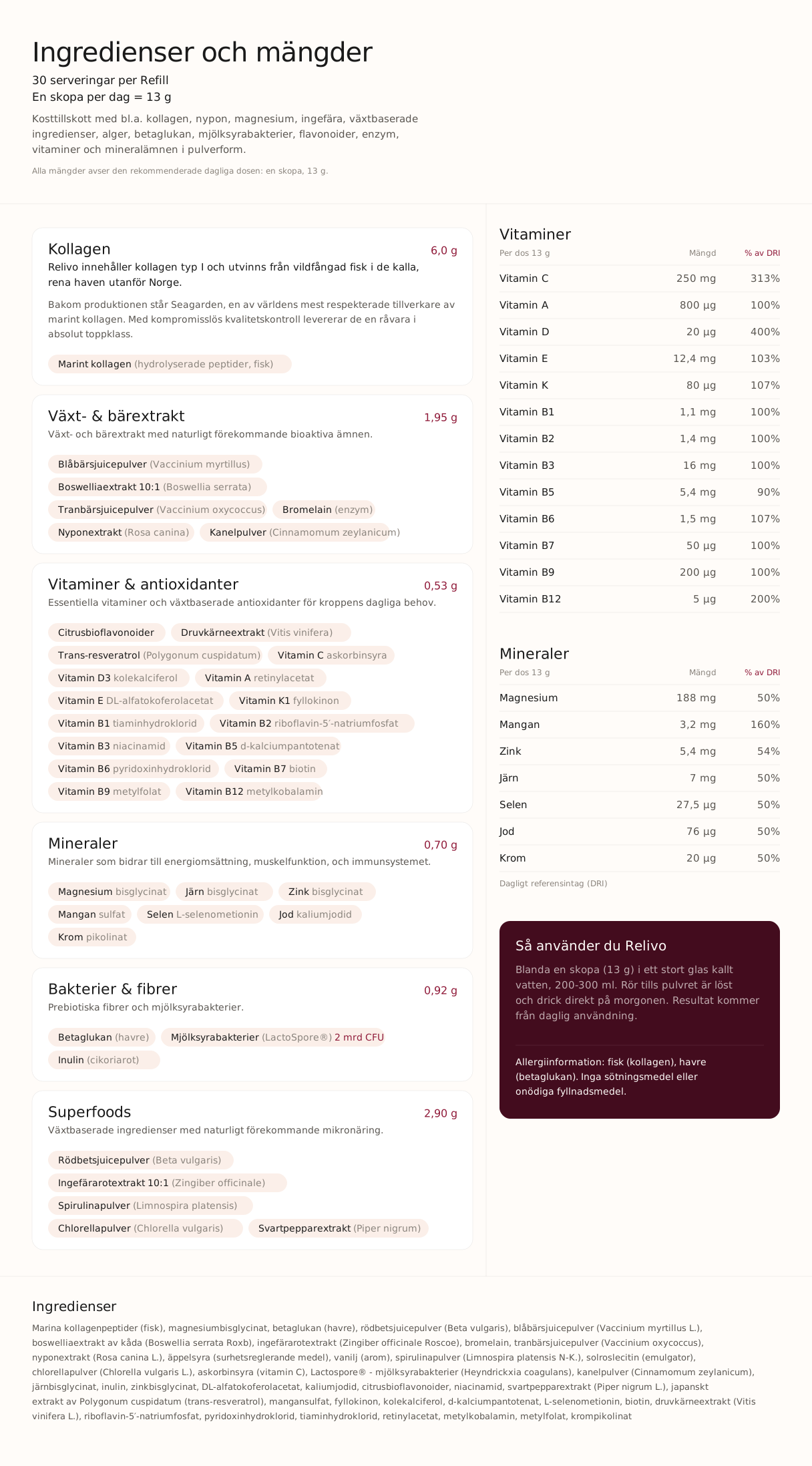
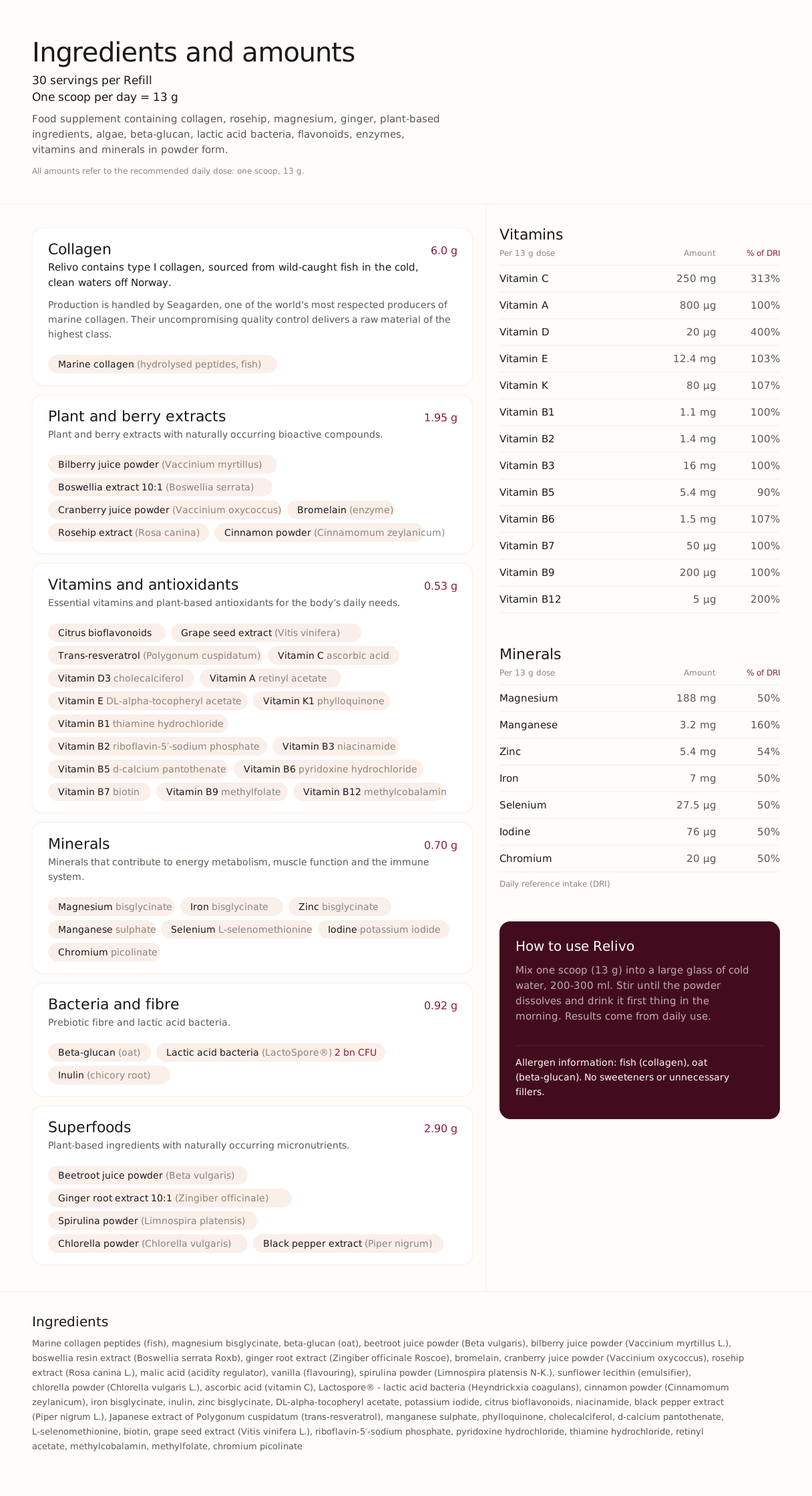
Relivo is a complete daily nutritional supplement developed in collaboration with Swedish scientists and nutritionists. Relivo combines 38 carefully selected nutrients that support the body's most important systems and structures.
All collected in a scoop in powder form, developed to be easy to use and easy to bring into everyday life. Relivo is blended in 60 seconds and is used as a long-term nutritional foundation for energy, immune system, gut health, muscles and joints.
Sources
• BetterUp: Sleep for Muscle Recovery
• PMC: Sleep for Elite Athletes
• Third Space: Sleep and Protein Synthesis
• Parmanand Hospital: Roles of Sleep in Muscle Recovery
• PMC: Sleep Interventions on Performance
• PMC: Sleep Restriction and Protein Synthesis
• Health.com: Sleep Needs for Muscle Recovery
• PMC: Sleep and Athletic Performance
• Bodybuilding Aesthetician: Sleep and Protein Synthesis
• ACE Fitness: Benefits of Sleep for Recovery