What does spirulina do in the body?
Spirulina is popping up in everything from greens to smoothie bowls—but what actually is it? Here, we break down what spirulina is and what it really does in the body.

Introduction
Few ingredients have received as much attention in such a short time as spirulina. This bright green algae is now available in powders, tablets, and an increasing number of ready-to-drink beverages.
However, there is also a lot of hype surrounding spirulina. It is worth distinguishing between what it actually contains and what marketing claims promise.
In this article, we take a closer look at what spirulina is, what it contains, and what those building blocks can contribute. We stick to what can actually be backed up by evidence.
What is spirulina, really?
Spirulina is not a plant, but a type of cyanobacteria—a microscopic organism that lives in freshwater. It has existed on Earth for billions of years and has served as food for humans since ancient times.
Today, it is usually cultivated in controlled ponds in warmer climates. The algae is harvested, dried, and turned into the dark green powder or tablets you find in stores.
Spirulina is considered one of the most nutrient-dense foods on Earth per gram. That is one of the reasons it has gained such a prominent place in the health world.
It was used by the Aztecs in Mexico and has long been a staple food around Lake Chad in Africa. It is therefore not a new fad, even if it has been rediscovered in the Western world.
What spirulina contains
To understand what spirulina does in the body, you need to know what it actually contains. That is where the interesting story begins.
Spirulina is unusually rich in protein, iron, a number of B vitamins, and pigments that act as antioxidants. However, its composition is complex, and some substances are more bioavailable to the body than others.
Protein and amino acids
Spirulina consists of about 60–70 percent protein, which is high for a plant-based source. It also contains all essential amino acids.
However, the amounts you get in a typical daily dose are small. Spirulina is therefore not a realistic protein source on its own, but rather a supplement among many.
Iron and other minerals
Iron is one of the nutrients where spirulina stands out. This is interesting for vegans and women of childbearing age, two groups that are often at risk of deficiency.
It is worth noting that the iron in spirulina is absorbed differently depending on the individual. Combining it with vitamin C is a simple way to improve absorption.
Spirulina also contains smaller amounts of magnesium, potassium, and several trace elements. Not at levels that replace a varied diet, but as a contribution.
B vitamins – with an important caveat
Spirulina contains B vitamins, including a form that resembles B12. However, research is clear that this is a so-called pseudo-B12 that the body cannot fully utilize.
This is one of the most common misconceptions about spirulina. It should therefore not be counted as a source of B12, especially for those who eat a strictly plant-based diet.
For other B vitamins, such as B1 and B2, spirulina is a reasonable contributor. Just not the sole solution.
Phycocyanin – the pigment that provides the blue-green color
Phycocyanin is the pigment that gives spirulina its characteristic color. It is also a substance increasingly being studied in laboratories for its antioxidant properties.
Research is still in its early stages, and much of it takes place in test tubes or animal models. It is interesting, but not yet a basis for making major claims.
What spirulina actually does in the body
When you take spirulina, your body receives a concentrate of protein, minerals, B vitamins, and pigments. It is these building blocks that do the work, not spirulina itself as a single ingredient.
For example, iron contributes to the normal formation of red blood cells, according to the EFSA. Several B vitamins contribute to normal energy metabolism, and antioxidants are part of the body's counterweight to oxidative stress.
In other words, spirulina is an ingredient that can supplement your diet with a wide range of nutrients. What it does in the body is a matter of the sum of these building blocks – not any miracle effect.
Who can benefit most from spirulina?
Spirulina is not for everyone, but for some, it can be particularly interesting. Here are a few groups for whom it is often worth considering.
Those who eat a plant-based diet may benefit from the iron and protein. Those with a monotonous diet or who are going through stressful periods can view it as one supplement among others.
Athletes and active individuals sometimes take spirulina for its breadth of nutrients. As always, everyday food is the foundation, not supplements.
What you should know before starting with spirulina
Spirulina is a natural product, and quality varies greatly between manufacturers. This is one of the most important things to keep in mind.
Choose spirulina that has been tested for heavy metals and contaminants, as the algae can absorb substances from the water in which it is grown. Reputable brands are transparent about their testing.
The taste is polarizing – many find it strong and somewhat earthy. When combined with other ingredients, such as in a greens blend, it is often barely noticeable.
Dosage also varies between products. Start carefully and increase gradually so that your body can get used to it, especially if you have a sensitive stomach.
Summary
Spirulina is a nutrient-dense algae containing protein, iron, B vitamins, and pigments like phycocyanin. It is these building blocks that actually do the work in the body, rather than spirulina itself being a single miracle ingredient.
Spirulina can be a great supplement if you eat a plant-based diet or want to broaden your nutrient intake. However, it does not replace B12 from a reliable source, and the quality of the product matters significantly.
Use spirulina for what it is: a nutrient-dense piece of a larger puzzle. That is when it becomes truly useful.
About Relivo
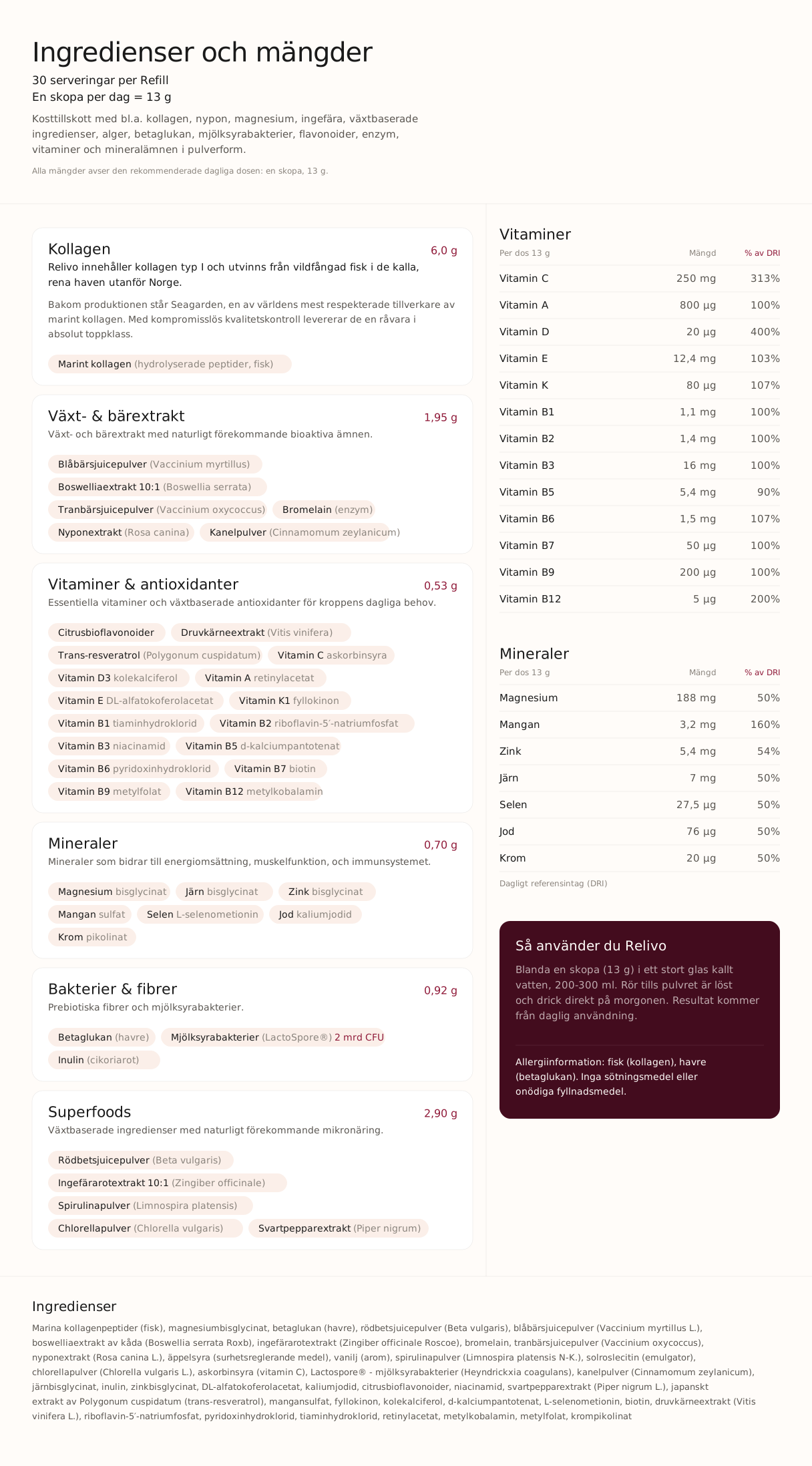
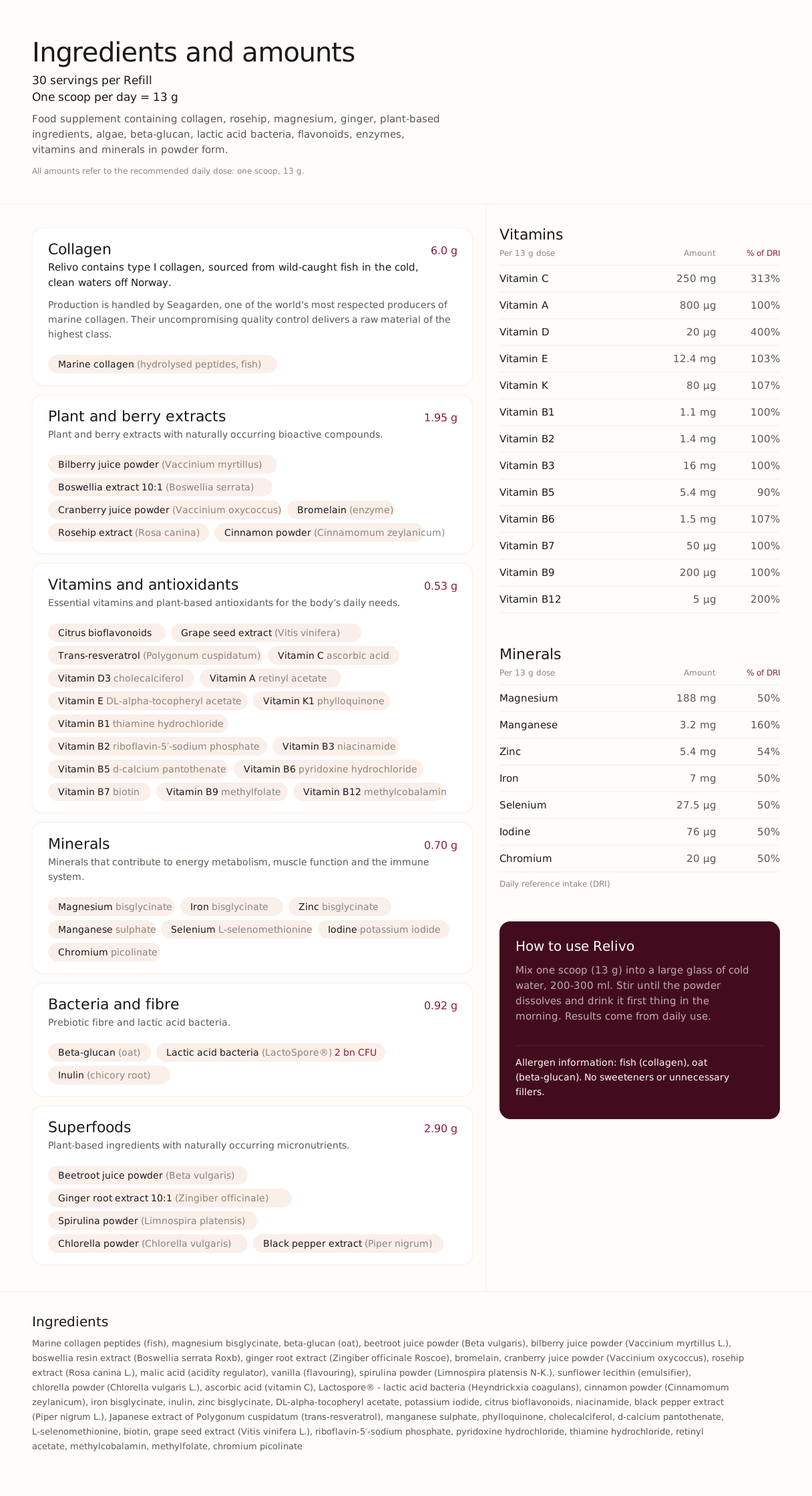
Relivo is a complete daily nutritional supplement developed in collaboration with Swedish researchers and nutritionists. Relivo combines 38 carefully selected nutrients that support the body's most important systems and structures.
Everything is gathered in one scoop of powder, designed to be simple to use and easy to incorporate into your daily routine. Relivo mixes in 60 seconds and serves as a long-term nutritional foundation for energy, immune function, gut health, muscles, and joints.
Sources
- Swedish Food Agency – Algae as food
- EFSA – Health claims on vitamins and minerals
- NIH – Spirulina overview
- Watanabe F et al. – Pseudovitamin B12 in spirulina
- Karkos PD et al. – Spirulina in clinical practice: evidence-based human applications
- Romay C et al. – C-Phycocyanin: a biliprotein with antioxidant properties