The thyroid gland - the small gland that controls metabolism
The thyroid gland is small but controls almost everything in the body related to energy. Learn how it works and why it's often called the body's own thermostat.
.avif)
Introduction
There's a small, butterfly-shaped gland at the front of your neck that has a disproportionately large influence on how you feel.
It's called the thyroid gland, and despite its modest size, it affects how fast your heart beats, how easily you get cold or sweat, and how your body uses energy from the food you eat.
The thyroid gland acts as a kind of thermostat for your metabolism. When it's in balance, you barely notice it. When it's out of balance, your whole body can feel it – often before you realize it's the thyroid gland that's the issue.
In this article, we'll take a closer look at how the thyroid gland is structured, what its hormones do in the body, and why so many – especially women – suffer from problems with it.
What is the thyroid gland and where is it located?
The thyroid gland, or thyroid as it's medically known, is located at the front of the neck, just below the larynx and directly in front of the trachea.
It's shaped roughly like a butterfly with two lobes – one on each side – connected by a narrow band in the middle.
In an adult, the thyroid gland weighs around 20 to 25 grams. Despite its small size, it's one of the body's most important endocrine glands.
It consists of small sacs, called follicles, whose walls are made up of cells that produce and store the thyroid hormones.
To do its job, the thyroid gland needs iodine, a mineral we get through our diet – primarily through iodized salt, fish, and dairy products.
The hormones the thyroid gland produces
The thyroid gland primarily produces three hormones. The two most important are thyroxine (T4) and triiodothyronine (T3). The third is calcitonin, which plays a role in regulating calcium in the body.
T4 – the storage hormone. It is the most common form and is produced in the largest quantity. T4 circulates in the blood and acts as a reserve that can be converted into the active form when needed.
T3 – the active hormone. It is T3 that actually performs the work in the body's cells. Most T3 is formed by conversion from T4 in the tissues – a large portion actually occurs in the gastrointestinal tract and some in the liver.
Calcitonin. This hormone plays a minor role in metabolism, but helps regulate the amount of calcium in the blood.
How is the thyroid gland regulated?
The thyroid gland doesn't work independently. It's part of a finely tuned control system called the hypothalamus–pituitary–thyroid axis. This involves an interplay between three different components:
The hypothalamus in the brain releases a hormone called TRH. TRH signals the pituitary gland to release TSH (thyroid-stimulating hormone). TSH then reaches the thyroid gland via the bloodstream and triggers the production of T4 and T3.
The beauty of this system is that it's self-regulating. When hormone levels in the blood are high, the brain receives a signal to reduce TRH and TSH. When levels drop, the signals increase again.
That's why the TSH value is often the first thing checked in blood tests – it indicates whether the brain thinks the thyroid gland is working hard enough.
What do thyroid hormones do in the body?
Thyroid hormones are often described as the body's accelerator pedal. They influence how quickly cells work and how much energy is consumed. This means they affect almost every organ and tissue in the body.
Metabolism and energy. The hormones determine how quickly the body converts food into energy, thereby affecting everything from weight to endurance.
Body temperature. They regulate how much heat the body produces, which is why thyroid imbalances often manifest as feeling colder more easily or getting warm faster than usual.
Heart and circulation. The hormones affect heart rate and blood pressure. With high thyroid function, the heart often beats faster; with low function, it beats slower.
Brain and nervous system. T3 is important for brain function. It affects concentration, mood, and energy levels.
Growth and development. Thyroid hormones are crucial for normal growth during childhood. They are also central to fetal development during pregnancy.
Stomach and intestines. The hormones affect bowel movements, which is why constipation or diarrhea can sometimes be early signs of imbalances.
In short, there's almost no system in the body that isn't affected by the thyroid gland in some way.
When the thyroid is out of balance
Thyroid disorders are common, especially in women. Approximately 5 percent of the population is affected during their lifetime. The most common conditions are hypothyroidism (underactive thyroid) and hyperthyroidism (overactive thyroid).
Hypothyroidism - when the thyroid produces too little. This is the most common problem. Common symptoms include fatigue, feeling cold, weight gain, dry skin, constipation, difficulty concentrating, and low mood. Hypothyroidism is more than five times more common in women than in men, and some are affected during menopause or after childbirth.
Hyperthyroidism - when the thyroid produces too much. Here, symptoms include heart palpitations, sweating, weight loss despite increased appetite, feeling hot, anxiety, and sometimes tremors. It is less common than hypothyroidism but can feel more dramatic.
Goiter. This is when the thyroid gland becomes enlarged. It can function normally, too low, or too high - and can sometimes appear as a swelling on the neck.
If problems are suspected, a blood test is an initial assessment. TSH, free T4, and sometimes free T3 provide a good indication of how the thyroid is functioning. In more complex cases, antibodies against the thyroid are also examined.
What affects the thyroid?
The thyroid is affected by several factors – some can be influenced, others cannot.
Iodine. The availability of iodine is crucial, as it is a building block for T3 and T4. In Sweden, most people get enough through iodized table salt, but with a diet low in or without salt, or if consuming a lot of unrefined sea salt, iodine intake can be low.
Selenium. This trace element is part of the enzymes that convert T4 into active T3. Selenium is found in Brazil nuts, fish, and eggs, among other foods.
Autoimmune processes. The most common cause of hypothyroidism is Hashimoto's thyroiditis, where the immune system attacks the thyroid gland. For hyperthyroidism, Graves' disease is the equivalent.
Stress and hormonal changes. Prolonged stress, menopause, and the postpartum period can trigger imbalances in individuals who are predisposed.
Certain medications. Some medications can affect both thyroid hormone production and test results.
How to support your thyroid in everyday life
If a condition is diagnosed, healthcare professionals always lead the treatment, often with synthetic thyroid hormone. However, to support the thyroid's fundamental health, there are some simple habits that research suggests.
Get enough iodine. Iodized salt and fish are the most important sources in the Swedish diet.
Vary your diet. A diet rich in selenium, zinc, and iron provides the thyroid with the building blocks it needs.
Prioritize sleep and recovery. Chronic stress affects the entire hormone system, not just the thyroid.
Pay attention to subtle signals. Persistent fatigue, unexplained weight changes, cold sensitivity, or heart palpitations are worth checking with a simple blood test.
Summary
The thyroid is a small organ with enormous influence. It functions as a thermostat for the entire body, affecting almost everything – from our heartbeat to how we manage our day.
For many, this regulation occurs completely unnoticed. But for some, imbalances can significantly impact how they feel, and the good news is that today there are both good tests and effective treatments available.
Understanding how the thyroid works is a way to understand your own body a little better – and perhaps to dare to listen a little more carefully to the subtle signals when something feels different.
About Relivo
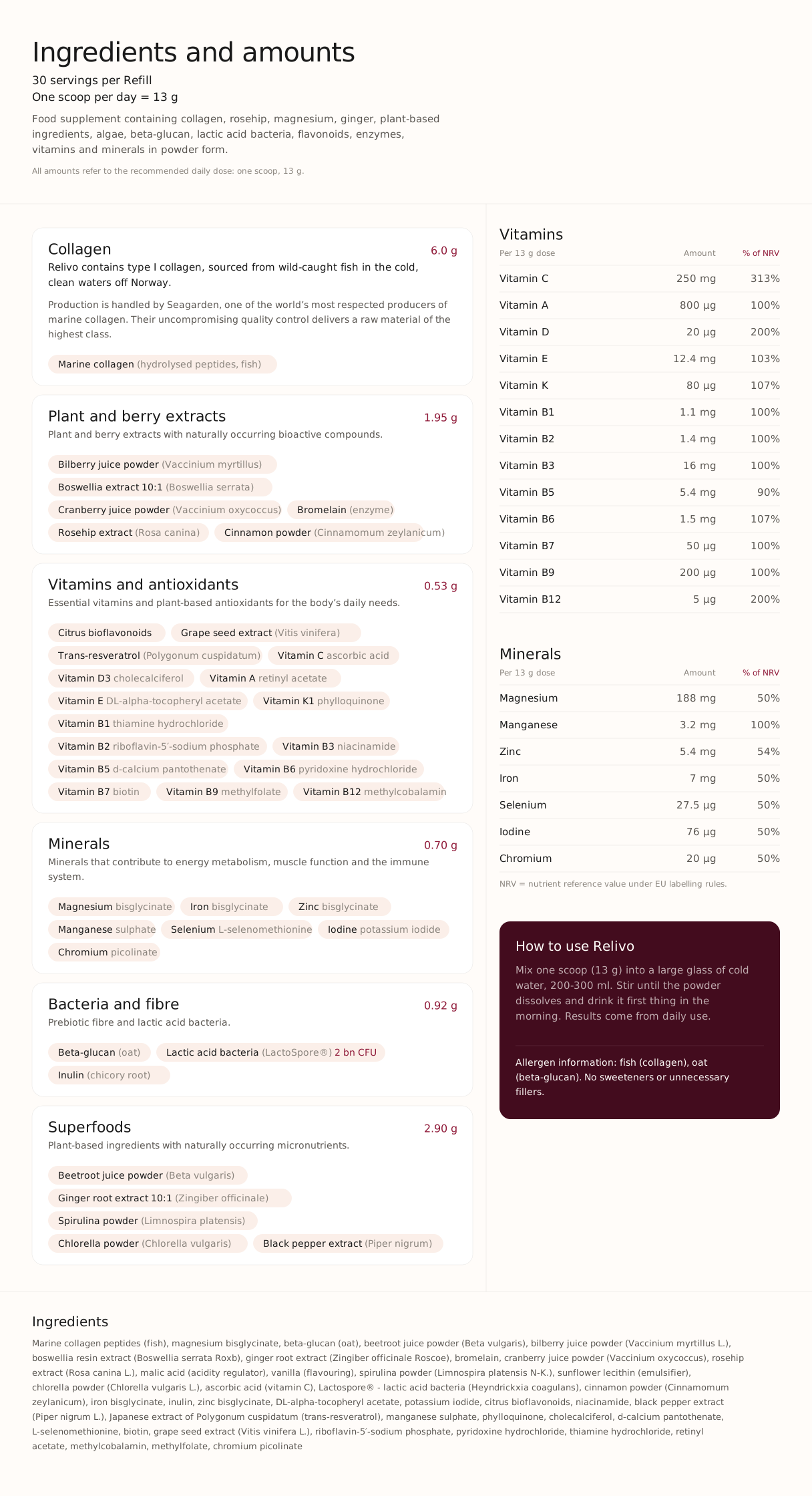
Relivo is a complete daily nutritional supplement developed in collaboration with Swedish researchers and nutritionists. Relivo combines 38 carefully selected nutrients that support the body's most important systems and structures.
All gathered in one scoop in powder form, developed to be easy to use and integrate into daily life. Relivo mixes in 60 seconds and is used as a long-term nutritional foundation for energy, the immune system, gut health, muscles, and joints.