How the Gut Microbiota Works - And Why It Controls More Than You Think
The gut microbiome is so much more than just digestion. Here you'll learn how the invisible ecosystem in your gut affects everything from mood to immune system - and what the research actually says.
Introduction
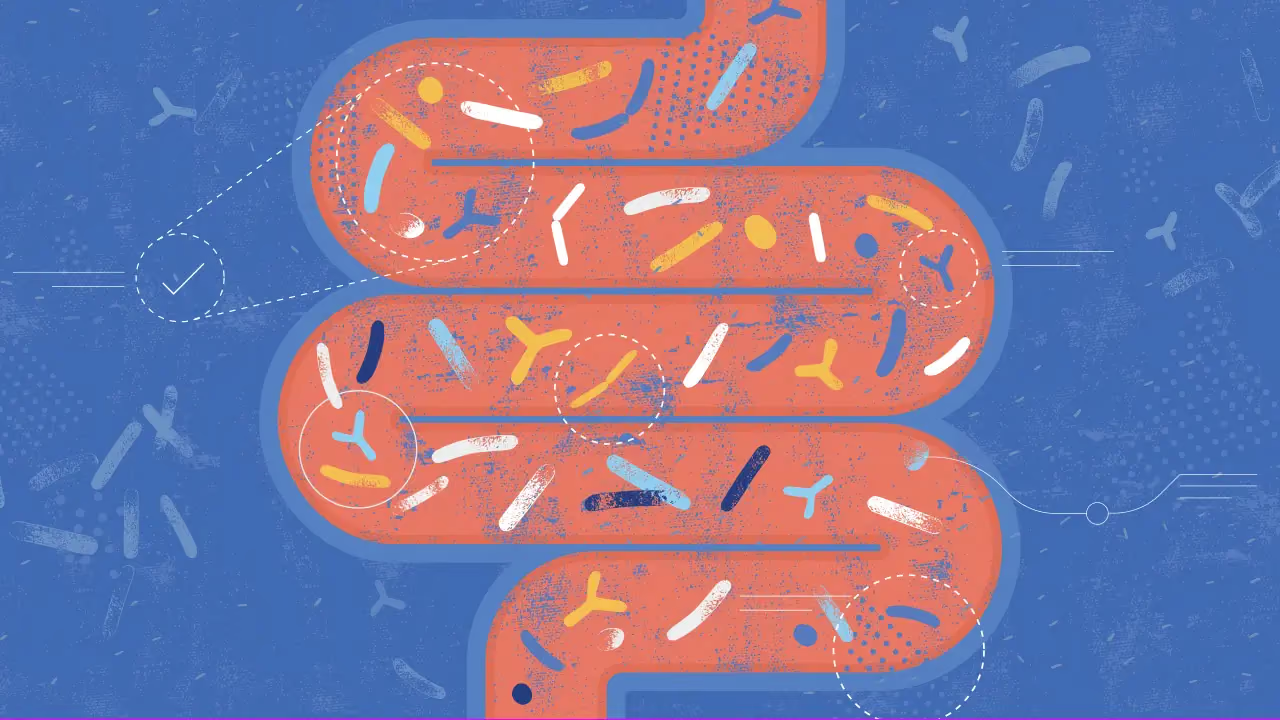
There's an entire ecosystem inside you that you rarely think about. Billions of bacteria, viruses, and fungi live in your gut, together forming what we call the gut flora or microbiome.
For a long time, they were mostly seen as passive passengers that aided digestion. Today, we know that the gut microbiome plays a much larger role than that.
Research into the microbiome has virtually exploded in the last decade, and it turns out that the gut microbiome affects our immune system, our mood, how we absorb nutrients - and perhaps even how we think.
In this article, we'll take a closer look at how the gut microbiome works, why it's so central to the body, and what you can do to provide it with good conditions.
What exactly is the gut microbiome?
The gut microbiome consists of all the microorganisms that naturally live in the gastrointestinal tract. In an adult human, this amounts to about one to two kilograms of bacterial mass, and in total, there are around 1,000 different bacterial species that can colonize the gut.
Each of us carries our very own mix of a few hundred of these species. The microbiome is so extensive and has so many functions that scientists sometimes describe it as its own organ.
It develops right from birth and is shaped by everything from how we are born, what we eat, the environments we move in, and the medications we take.
A key insight from recent years' research is that it's not primarily about which individual bacteria are present, but about diversity. The more diverse the species, the more resilient and stable the gut microbiome tends to be.
The Gut Microbiome's Three Main Functions
The gut microbiome has many functions, but three of the most important are aiding digestion, training the immune system, and communicating with the rest of the body.
Digestion and nutrient absorption.
Humans lack enzymes to break down certain types of dietary fiber. Gut bacteria take over this job when food reaches the large intestine, and in this process, important substances are formed that the body can use.
Protection against unwanted microbes.
A healthy gut microbiome simply makes it harder for pathogenic microorganisms to take hold. The good bacteria compete for space and nutrients, and some also produce substances that inhibit other microbes.
Communication with the body.
Gut bacteria produce a variety of neurotransmitters and metabolites that affect the nervous system, immune system, and hormonal system. This is where much of the new research is taking place.
Short-chain fatty acids - the gut flora's superpower
One of the most exciting discoveries concerns short-chain fatty acids, often abbreviated as SCFA. When gut bacteria ferment dietary fibers in the large intestine, substances such as acetic acid (acetate), propionic acid (propionate), and butyric acid (butyrate) are formed.
Butyric acid has received particular attention. It is used as energy by the cells in the intestinal lining and also has an anti-inflammatory effect.
Short-chain fatty acids also help strengthen the gut's barrier function, making it more difficult for unwanted substances to pass into the body.
Short-chain fatty acids also function as signaling molecules. They interact with receptors that regulate the immune system and play a role in the communication between the gut and the rest of the body.
The Gut and the Immune System
Approximately 70 percent of the immune system is based in the gut. This is logical when considering that the gut is one of the largest contact surfaces between the body's interior and the outside world - after all, everything we eat passes through here.
The gut flora is central for the immune system to function properly. The bacteria help "train" immune cells to distinguish between harmless and harmful substances, and influence the production of both antibodies and inflammation-regulating substances.
The lack of fiber in a typical Western diet has been linked to a less diverse gut flora, which in turn can affect how the immune system regulates inflammation in the body.
The Gut-Brain Axis: When the Stomach Talks to the Head
Perhaps the most fascinating area in today's microbiome research is the gut-brain axis.
It concerns the bidirectional communication that constantly occurs between the gut and the brain - via the nervous system, hormones, the immune system, and the substances produced by gut bacteria.
A central player is the vagus nerve, the body's longest nerve, which runs between the brain and the gut.
Approximately 80 percent of the fibers in the vagus nerve are afferent, meaning they send information from the gut up to the brain - not the other way around. The gut thus constantly "reports" to the head.
The gut also produces neurotransmitters that are otherwise associated with the brain, such as serotonin, dopamine, and GABA.
In fact, approximately 90 percent of the body's serotonin is produced in the gut, both by the gut cells themselves and with the help of gut bacteria and their metabolites.
What Affects the Gut Flora?
The gut flora is dynamic and constantly changes depending on how we live. Some of the most important factors are:
Diet.
What we eat likely has the biggest impact. Fiber from vegetables, fruit, legumes, and whole grains acts as food for the beneficial bacteria.
One study showed that participants who swapped white bread for rye bread for their evening snack had a measurably improved gut flora by the very next morning, with a higher presence of the beneficial bacterium Faecalibacterium prausnitzii.
Sleep and stress.
Chronic stress can disrupt the balance of the gut flora, and sleep deprivation appears to affect the microbiome's composition. This clearly illustrates the gut-brain axis – if the brain is unwell, it shows in the gut.
Antibiotics and medications.
Antibiotics save lives, but they also eliminate many beneficial bacteria in the process. The gut flora usually recovers, but for some, the imbalance can persist longer.
Dietary variety.
Eating a varied diet – ideally with all the colors of the rainbow – provides more types of bacteria with something to work on. Dietary diversity often leads to gut diversity.
Prebiotics, probiotics, postbiotics, and synbiotics – what's the difference?
These terms can be confusing, but they refer to different things:
Probiotics are live microorganisms that, in sufficient quantities, can have a beneficial effect. They are naturally found in fermented foods like sauerkraut, kimchi, kefir, and yogurt.
Prebiotics are fermentable dietary fibers that serve as food for beneficial bacteria. Inulin from Jerusalem artichokes, onions, garlic, and leeks are classic examples.
Postbiotics are the substances formed when bacteria do their job – such as short-chain fatty acids.
Synbiotics is a combination of prebiotics and probiotics.
Research on dietary supplements is still evolving. Many experts emphasize that a varied and fiber-rich diet generally has stronger evidence than individual supplements when it comes to supporting gut flora long-term.
Practical tips for a more balanced gut flora
The good news is that your gut flora responds quickly to changes. Here are some concrete steps that research suggests:
- Eat at least 25–35 grams of fiber daily from vegetables, fruits, legumes, and whole grains.
- Vary your diet and aim to consume several different plant-based foods each week.
- Include fermented foods regularly – a few spoonfuls of sauerkraut or a cup of kefir can make a difference.
- Limit highly processed foods with high sugar content and additives.
- Prioritize sleep and try to manage stress, as both affect the gut-brain axis.
Adjust your diet gradually. If you suddenly increase your fiber intake significantly, your stomach may need a few weeks to adjust.
Summary
The gut flora is one of the body's most complex and underestimated systems. It helps us digest food, interacts with the immune system, communicates with the brain, and affects our well-being in ways that research is still mapping out.
The great thing is that we have a significant opportunity to influence it ourselves. By eating a varied, fiber-rich diet and prioritizing the fundamentals – sleep, exercise, and stress management – we give the small but diligent workers in our gut the best conditions to do their job.
And when your gut is healthy, it often shows throughout your entire body.
About Relivo
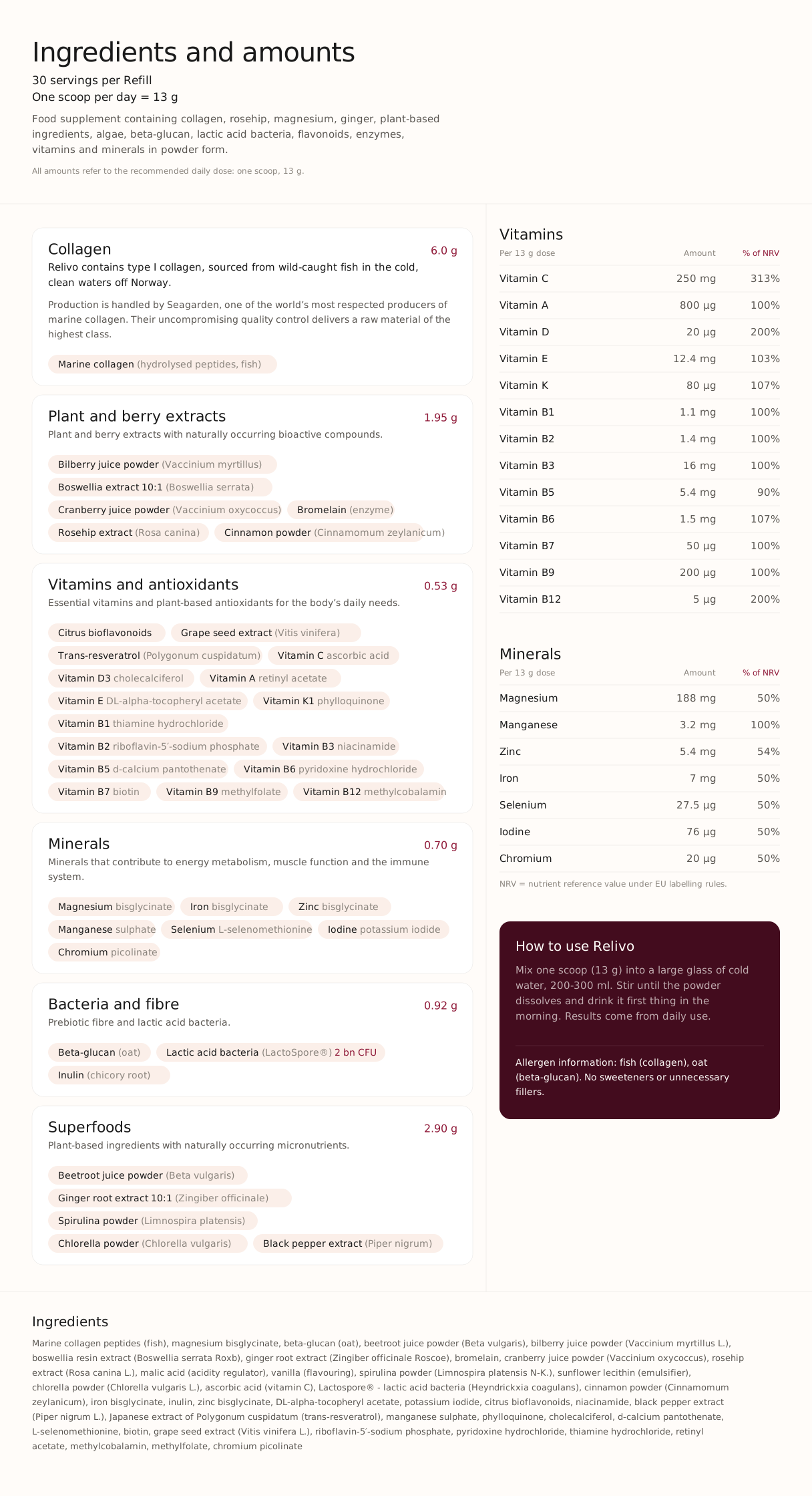
Relivo is a complete daily nutritional supplement developed in collaboration with Swedish researchers and nutritionists. Relivo combines 38 carefully selected nutrients that support the body's most vital systems and structures.
All of this is conveniently packaged in a single scoop of powder, designed for ease of use and seamless integration into your daily routine. Relivo mixes in 60 seconds and serves as a long-term nutritional foundation for energy, immune function, gut health, muscles, and joints.
Sources
- Swedish Food Agency – Gut Microbiota
- Lund University – News About Our Gut Microbiota
- Science & Health – Knowledge About Our Gut Microbiota Is Exploding Right Now
- The Swedish Medical Journal – The Gut Microbiota Impacts Health and Disease
- Sahlgrenska / Bäckhed Lab – The Role of Gut Bacteria
- Chalmers University of Technology – The Role of Fatty Acids in Infant Immune Systems
- Min Doktor – The Importance of Gut Microbiota for Health
- Dietisten.net – The Gut Microbiota: Link Between Diet and Health