The Liver: The Body's Detoxification System That Works Around the Clock
The liver is one of the body's most versatile organs – and perhaps its hardest working. Here, you'll learn how it functions and why it plays a central role in virtually everything you eat and drink.
.avif)
Introduction
There's an organ located to the right, beneath your ribs, that works around the clock without a break. The liver is the body's largest internal organ, functioning simultaneously as a purification plant, storage facility, and chemical factory.
Despite its vital importance, surprisingly few people know just how much it actually does. Researchers have calculated that the liver performs over 500 different functions – from breaking down what we eat to producing proteins, storing vitamins, and helping the body eliminate substances it doesn't need.
In this article, we'll take a closer look at the liver's structure, what it does, and why our modern habits can put a strain on it.
Where is the liver located and what does it look like?
The liver is located in the upper right part of the abdomen, just below the diaphragm and protected by the ribs. It weighs approximately 1.5 kilograms in an adult, making it the body's largest internal organ.
It is divided into a larger right lobe and a smaller left lobe, and consists of millions of liver cells, known as hepatocytes.
One thing that distinguishes the liver from most other organs is its blood supply. It receives blood from two sources: the hepatic artery transports oxygen-rich blood from the heart, while the portal vein delivers nutrient-rich blood directly from the intestines.
This means that virtually everything absorbed through food passes through the liver first – before moving on to the rest of the body.
In fact, the body's entire blood volume passes through the liver in approximately three minutes. This speaks volumes about its central role in the body's functions.
The Liver's Most Important Functions
The liver is so versatile that it's difficult to give a brief description of what it does. However, most of its functions can be divided into a few main categories.
Detoxification. The liver breaks down and transforms substances the body wants to eliminate – everything from metabolic waste products to alcohol, medications, and environmental toxins. It repackages these substances so the body can excrete them via the kidneys or intestines.
Bile for Digestion. The liver produces bile, a yellowish-green fluid stored in the gallbladder and released when we eat. Bile helps the body break down and absorb fats from food.
Metabolism of Carbohydrates, Fats, and Proteins. The liver converts nutrients into energy and builds the building blocks the body needs. It is also central to regulating blood sugar – it stores sugar as glycogen and releases it when levels drop.
Nutrient Storage. The liver acts as a storage for fat-soluble vitamins (A, D, E, and K), iron, copper, and sugar in the form of glycogen.
Production of important proteins. Many of the blood's proteins are produced in the liver, such as albumin (which helps maintain fluid balance) and several of the factors needed for blood coagulation.
How does the liver's detoxification work?
Detoxification is perhaps what people most often associate with the liver. This isn't wrong, but the word "detoxification" is somewhat misleading.
It's not about the liver "cleansing toxins" in the way often described in marketing. Instead, it works in two steps.
In the first step, substances the body wants to eliminate are converted into intermediate products with the help of enzymes. In the second step, they are combined with other molecules to become water-soluble – allowing them to be transported out of the body via urine or bile.
It is this continuous process that keeps the liver working around the clock. Everything we eat, drink, inhale, and ingest – from coffee and alcohol to medications and additives – passes through this system.
A unique ability: the liver can regenerate
One of the most fascinating characteristics of the liver is its ability to regenerate tissue. Unlike most other organs, liver cells can divide and grow back if a part of the organ is damaged.
In some cases, the liver can regenerate itself even if a large portion has been removed. This is one reason why liver transplants can be performed from living donors – both the donor's and the recipient's liver can grow back to almost full size.
However, this regenerative capacity has its limits. With prolonged stress, such as persistently high alcohol consumption or untreated fatty liver, the tissue can eventually be replaced by scar tissue. In such cases, the liver loses parts of its function.
What affects the liver?
The liver is resilient but not invincible. Several habits and conditions in modern life can put pressure on it.
Alcohol. Breaking down alcohol is one of the liver's most energy-intensive jobs. High and regular consumption can, over time, lead to inflammation and fat accumulation.
Diet high in sugar and refined carbohydrates. Large amounts of fructose and sugar are currently linked to one of the most common liver diseases – non-alcoholic fatty liver disease (NAFLD). It is estimated to affect approximately one in three adults in Sweden.
Overweight and insulin resistance. Both are strongly linked to fat accumulation in the liver.
Medication. Most medications are broken down in the liver, meaning high doses or combining several preparations can strain the organ.
Sedentary lifestyle. Lack of physical activity is linked to poorer liver health, partly through weight and blood sugar, and partly through direct effects on fat metabolism.
Many liver strains show no early symptoms, which is one reason conditions like fatty liver are often discovered incidentally during blood tests.
Signs that may indicate liver impairment
The liver is unusually quiet. It rarely makes its presence known until the strain is significant. When symptoms do appear, they may include: [SEG SEGMENT 8] Persistent fatigue without a clear cause
- Pain or discomfort under the right rib cage
- Yellowish tint to the skin or whites of the eyes
- Darker urine than usual
- Itching or skin reactions
- These signs can have many different causes, so if you have concerns, it's always a good idea to contact healthcare professionals. Liver values in the blood, such as ALT and AST, often provide a good initial picture of the organ's condition.
How you can support your liver in everyday life
There's no magic way to "cleanse" the liver – it does the job itself if we give it the right conditions. It's mostly about fundamental habits that research repeatedly highlights.
Vary your diet.
A diet rich in vegetables, fruits, whole grains, legumes, and healthy fats gives the liver plenty to work with. The Mediterranean diet is often highlighted as a good example. Be moderate with alcohol.
The liver processes alcohol regardless of the amount, but the more it has to process, the greater the strain over time. Keep an eye on sugar and processed foods.
Large amounts of fructose and added sugar are clearly linked to fat accumulation in the liver.
Exercise regularly. Physical activity is one of the most well-studied ways to support liver health, regardless of weight.
Sleep and stress management. Both affect metabolism and, consequently, how the liver functions.
In short: what's good for the body as a whole is good for the liver.
Summary
The liver is one of the body's most underestimated organs. It works around the clock, processes everything we consume, and performs hundreds of different tasks simultaneously – all while rarely complaining.
The remarkable thing is that it largely responds to how we live. It has an impressive ability to recover, and even small changes in daily life can make a difference over time.
Understanding how the liver works is a way to understand your own body a little better – and to realize how much is actually happening beneath the surface, every second of the day.
About Relivo
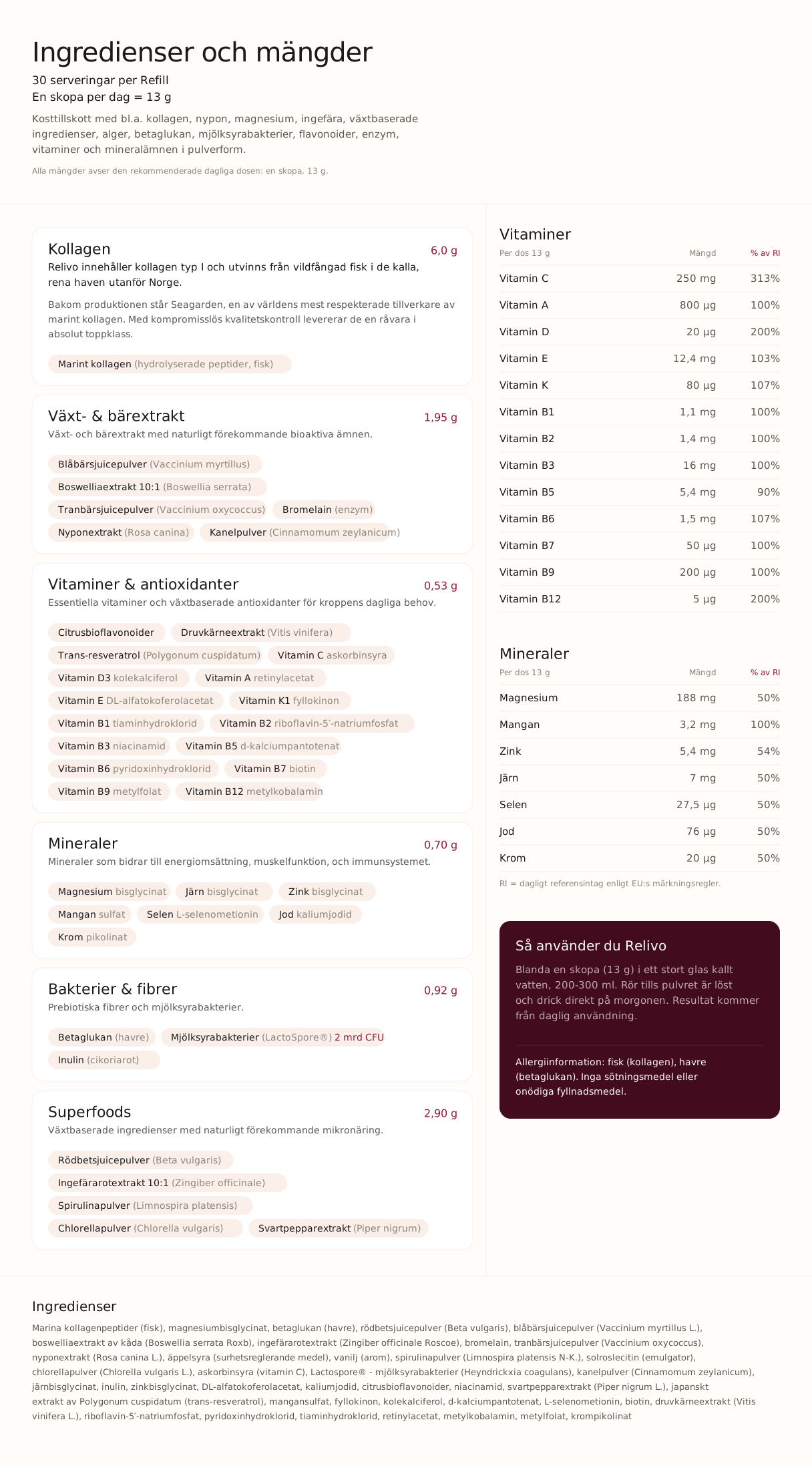
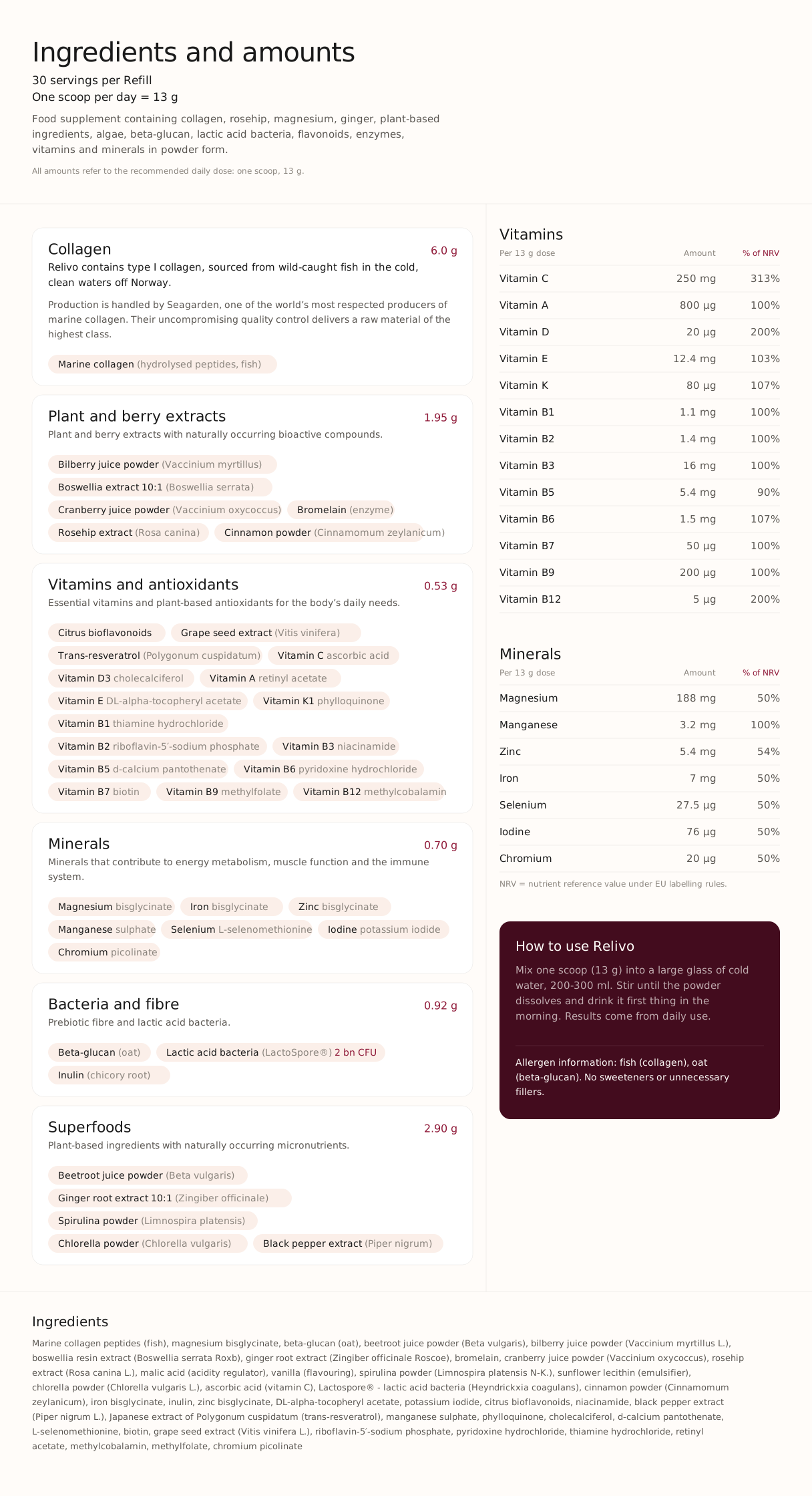
Relivo is a complete daily nutritional supplement developed in collaboration with Swedish researchers and nutritionists. Relivo combines 38 carefully selected nutrients that support the body's most important systems and structures.
All in one scoop of powder, designed to be easy to use and simple to incorporate into daily life. Relivo mixes in 60 seconds and serves as a long-term nutritional foundation for energy, immune system, gut health, muscles, and joints.
Sources
- Werlabs – Liver Function and Health
- Testmottagningen – Liver: Function, Diseases, and Symptoms
- Levern.se – Liver Function and Liver Problems
- LifeComp – About Liver Function
- Vital – Fatty Liver: The Silent Threat to Your Liver Health
- Science & Health – Fatty Liver: A Hidden Disease That Can Be Slowed
- Kurera – How to Support Your Liver
- Werlabs – Fatty Liver: Symptoms, Causes, and Treatment