The Spleen - the organ most people forget about
Most people know where the heart is located, but how many can point to their spleen? Despite being the body's largest lymphatic organ, it's one of the most underestimated. Here, we take a closer look at what it actually does.
Introduction
Most organs in the body get their fair share of attention. The heart, liver, brain – all have their own space in our consciousness. But then there's the spleen. An organ most people know they have, but few know where it's located or what it does.
That's a shame, because the spleen is actually the body's largest lymphatic organ and plays a role in both the immune system and blood composition.
Despite its modest size, it works around the clock on tasks that most other organs couldn't manage without.
In this article, we take a closer look at what the spleen actually does, where it's located, and why it's often described as the body's most underestimated organ.
Where is the spleen located and what does it look like?
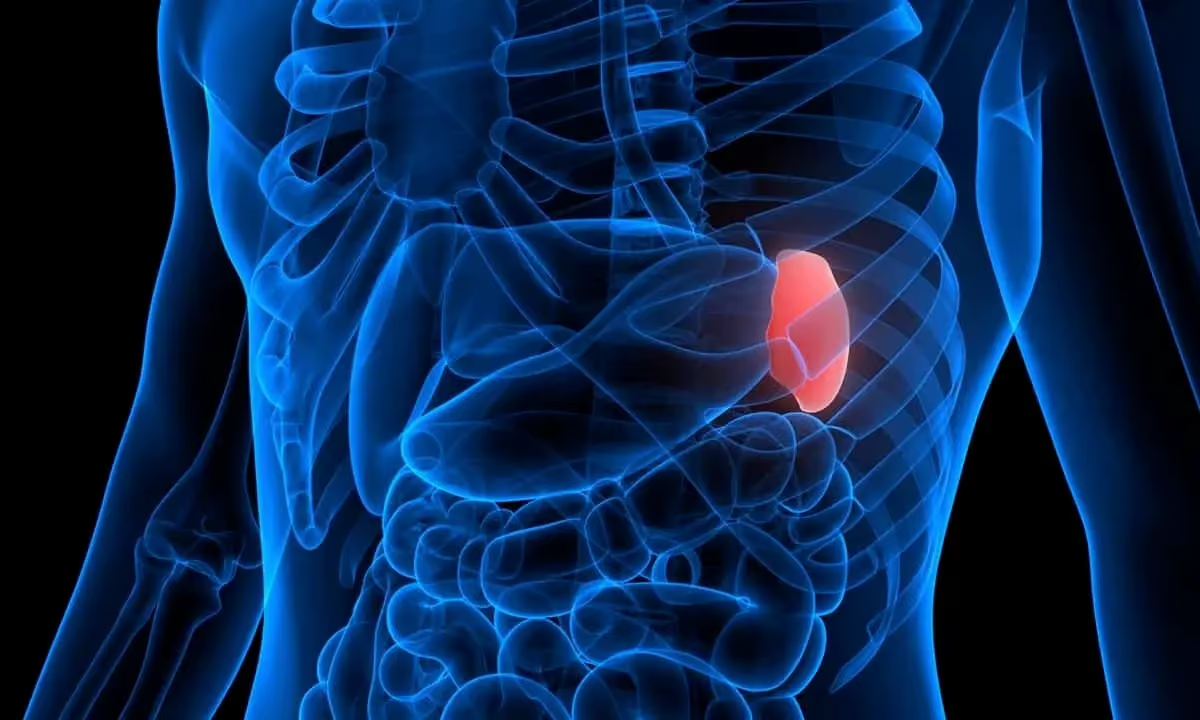
The spleen is located in the upper left part of the abdominal cavity, just below the diaphragm and behind the stomach. It is protected by the lower ribs, which means you barely notice it in everyday life – unless something is wrong.
In an adult, the spleen is approximately 10–12 centimeters long and weighs around 150 grams. Its shape resembles a large bean or a clenched fist. The organ is surrounded by a connective tissue capsule that protects its inner, soft, and spongy tissue.
Internally, the spleen consists of two main parts: red pulp and white pulp. The red pulp filters blood and processes old blood cells. The white pulp is where the immune system is activated and white blood cells are produced.
The Spleen's Most Important Functions
Although often forgotten, the spleen is unusually versatile. Its functions are usually divided into three main areas: blood filtration, immune defense, and storage.
Blood filtration. The spleen acts as a fine-mesh filter for the blood that passes through it. It captures old, damaged, or misshapen red blood cells and breaks them down.
In this process, important substances are recycled, especially iron, which can then be used to build new red blood cells.
Part of the immune system. The spleen contains large quantities of white blood cells – primarily lymphocytes and plasma cells. When bacteria, viruses, or other foreign substances pass through the spleen, they are detected, and an immune response is triggered. Antibodies that help the body defend itself are also produced here.
Storage of blood and platelets. The spleen acts as a blood reservoir. In an adult, it can store a significant amount of blood – up to around 240 milliliters according to some sources – which can be released into circulation when needed, for example, in the event of major blood loss. It also stores a large proportion of the body's platelets (thrombocytes), which are central to blood coagulation.
Part of the lymphatic system
The spleen is the body's largest lymphatic organ, making it a central player in the lymphatic system. The lymphatic system is a network of vessels, tissues, and organs that work together with the circulatory system and the immune system.
While the lymph nodes throughout the body filter lymph fluid, the spleen's role is to filter blood in a similar way. This means it constantly monitors what circulates in the blood and reacts quickly if anything undesirable appears.
The spleen also works closely with other organs – not least the liver. Together, these two form a large part of the body's system for purifying blood and managing old cells.
The Spleen During the Fetal Stage
An interesting detail is that the spleen plays a partially different role before we are born. During the fetal stage, it is one of the sites where blood cells are produced.
Once we are born, the bone marrow takes over this task – but the spleen retains its ability to activate blood cell production if needed, for example, in certain disease states.
This flexibility is one of many things that makes the spleen an unusual organ. It adapts its role to different phases of life.
When the Spleen Shows Symptoms
The spleen, much like the liver, is unusually quiet. It rarely complains. When it does show symptoms, it could be due to:
Enlarged spleen (splenomegaly). The most common spleen-related change is when the organ becomes larger than normal. This can be a reaction to infections, blood-related conditions, or liver involvement. An enlarged spleen is sometimes noticed as discomfort or a feeling of heaviness under the left rib cage.
Pain in the left side of the abdomen. The spleen is located deep within the body, but enlargement or injury can cause pain – sometimes radiating up towards the left shoulder.
Fatigue or increased susceptibility to infection. Since the spleen is so central to the immune system, an affected spleen can sometimes manifest as increased susceptibility to infection.
If problems are suspected, an ultrasound is a common initial examination, often along with blood tests.
Can You Live Without a Spleen?
Yes, you can actually live without a spleen. In cases of severe injury or certain diseases, the organ may need to be removed, an operation called a splenectomy.
When the spleen is removed, other parts of the lymphatic system and the liver can partially take over its functions. However, not entirely. People who have had their spleen removed have a slightly increased susceptibility to certain types of bacterial infections, as the spleen specializes in that particular type of defense.
Therefore, vaccination against certain bacteria is often recommended for these individuals. This speaks to how important the organ actually is – even if the body can manage without it.
How can you support spleen function?
There are no specific "spleen cures" or special supplements that research points to for this organ. The spleen benefits from the same things that benefit the rest of the body.
Vary your diet. A diet rich in vegetables, fruit, whole grains, legumes, and lean protein provides the immune system – including the spleen – with the building blocks it needs.
Exercise regularly. Physical activity supports both blood circulation and lymphatic flow, which benefits the spleen's function.
Manage stress. Chronic stress can affect the entire immune system, which also includes the spleen.
Protect your left rib area. Since the spleen is relatively exposed, strong blows to the left side of the abdomen can damage the organ – one of the few instances where you can physically be careful with this particular organ.
Listen to subtle signals. Persistent fatigue, unexplained infections, or discomfort under the left rib cage are worth checking out.
Summary
The spleen is one of those organs you barely think about until you hear of someone who's had something done to theirs. But every second, it works to filter blood, manage old cells, and contribute to the body's defense against unwanted visitors.
In a body full of star organs, it's easy to forget the quiet workhorses. The spleen is one of them. It does its job behind the scenes and probably deserves a little more attention than it usually gets.
Next time you place your hand on your left side under your ribs, you can remember that one of the body's most underestimated organs is there – and it continues to do its job, completely without asking for thanks.
About Relivo
Relivo is a complete daily nutritional supplement developed in collaboration with Swedish researchers and nutritionists. Relivo combines 38 carefully selected nutrients that support the body's most important systems and structures.
All combined in one scoop of powder, developed to be easy to use and integrate into daily life. Relivo mixes in 60 seconds and is used as a long-term nutritional foundation for energy, immune system, gut health, muscles, and joints.
Sources
- 1177 – How the lymphatic system works
- The Testing Center – The Spleen: function, symptoms, and common diseases
- The MRI Lab – The spleen's function and importance in the body
- Illustrated Science – What is the spleen's function and do you really need it?
- Folkvet – The spleen's location and functions in the body
- Betik – The spleen's function in the body
- Senatormedia – The Spleen: where is it located and what does it do?
- Quizwiz – The Spleen's Secrets Revealed