Tendons and ligaments – why they take longer to build than muscles
Muscles respond in weeks. Tendons in months. Here is the biological explanation—and what you can do to avoid becoming a victim of your own success.
Introduction
It is one of the most common patterns in training. You start working out, your body responds, and your strength increases faster than you expected. After three months, you are lifting significantly heavier than when you started. And then, somewhere around month four or five, it starts to hurt. In your shoulder. In your knee. In your Achilles tendon.
The explanation is almost always the same: your muscles became strong faster than your tendons and ligaments could adapt. Your engine grew faster than your chassis.
In this guide, we go through why tendons and ligaments build up so much slower than muscles, what research shows about how they actually adapt, how you can structure your training to let them keep up—and the role nutrition plays.
Tendons and ligaments—what is the difference?
Two similar tissues with different tasks.
Tendons connect muscle to bone. They transfer the force from muscle contraction to the skeleton so that movement occurs. The Achilles tendon is the body's largest and most durable tendon—it can handle forces several times your body weight when running.
Ligaments connect bone to bone. They stabilize joints and limit movements that could damage the joint. The cruciate ligaments in the knee are probably the most well-known.
Both belong to the category of dense connective tissue and have much in common in terms of structure. However, tendons are slightly more elastic and built for force transmission, while ligaments are stiffer and built for stability.
Composition—why they are different
This is where the explanation for the difference in speed begins.
A muscle consists largely of contractile proteins—actin and myosin—and has a high proportion of water and cell content. Muscle cells are large, metabolically active, and surrounded by a rich network of blood vessels.
Tendons and ligaments consist of approximately 70–80 percent type I collagen by dry weight. The rest is elastin, proteoglycans, water, and a small amount of cells. The structure is essentially a tightly packed rope of collagen fibers arranged in parallel bundles.
The difference is therefore fundamental. Muscle is living, cell-rich tissue. Tendon is essentially a structural matrix with relatively few cells within it.
Blood supply—the main reason for the difference
If you only remember one thing from this article, let it be this.
Muscle tissue is richly supplied with blood. During work, blood flow to a muscle can increase many times over compared to rest. This means rapid delivery of oxygen, amino acids, and nutrients—and rapid removal of waste products.
Tendons and ligaments have a comparatively poor blood supply. Certain parts of the tendon tissue—especially the middle of the Achilles tendon and parts of the cruciate ligaments—have areas that are almost devoid of blood vessels.
The consequence is simple: everything happens more slowly. Nutrients arrive more slowly. Repair processes are slower. Adaptation to training is slower. And recovery after injury takes a dramatically longer time.
The cells that do the work
Muscles have their own repair system in the form of satellite cells—stem-cell-like cells that lie dormant along the muscle fibers and are activated by strain or injury. They can divide, fuse with existing fibers, and help build new muscle tissue relatively quickly.
Tendons and ligaments instead have tenocytes and fibroblasts, respectively. These cells produce collagen and maintain the matrix, but they are significantly fewer in number and have a slower activity profile.
Approximately 90–95 percent of a tendon's volume is matrix. Only a few percent are cells. It is difficult to renovate a house quickly when there are only five construction workers for a thousand square meters.
The carbon-14 study that changed the view of tendon tissue
One of the most striking discoveries in tendon research comes from an unexpected source: nuclear weapons testing.
During the 1950s and 60s, atmospheric levels of carbon-14 increased sharply due to above-ground nuclear tests. When testing ceased in 1963, levels began to drop again in a predictable manner. This means that one can date when a specific tissue in the body was formed by measuring its carbon-14 content.
A Danish research group used this method on Achilles tendons. The result was startling: the core of the Achilles tendon proved to be essentially formed during the teenage years and thereafter barely turned over at all for the rest of one's life.
In other words—the tendon tissue you have in the middle of your Achilles tendon today is essentially the same tissue you had as a seventeen-year-old. This provides a completely new understanding of why tendon injuries are so stubborn and why prevention is so much more important than repair.
How tendons still adapt
It sounds discouraging, but the picture is more nuanced. Tendons can and do adapt to load—just more slowly and in different ways than muscles.
Research shows two main adaptations:
Increased stiffness. The tendon becomes better at transferring force without losing energy. This is the fastest adaptation and can be noticed within a few months.
Increased cross-sectional area. The tendon simply becomes thicker. This takes significantly longer—often a year or more of consistent loading.
The mechanism behind this is called mechanotransduction. When tendon tissue is loaded, the cells convert the mechanical pressure into chemical signals that increase collagen synthesis. Loading is therefore not just wear and tear—it is the very signal that causes the tendon to build itself up.
The six-hour rule—something few people know about
Here is a practical detail that is surprisingly little known.
Studies on collagen synthesis show that it increases after loading, but that the tissue then enters a period where additional loading does not provide much extra effect. That period appears to be around six hours.
This means that for tendon and ligament health, several shorter loading sessions spread throughout the day can be more effective than one long session. This is a principle used in sports rehabilitation, for example with Achilles tendon issues, where short loading exercises twice daily are often standard.
For the average exerciser, the conclusion is simpler: consistent, regular loading beats sporadic, intense sessions.
Why injuries occur - and why they take so long to heal
The risk of injury arises in the gap between the rapid adaptation of muscles and the slow adaptation of tendons. Muscles can produce more force than the tendon has had time to prepare for.
This is why classic overuse injuries - Achilles problems, jumper's knee, tennis elbow, shin splints - often appear after a period of successful training, not during a period of failure.
And once an injury has occurred, the recovery time is long precisely because of the poor blood supply and low cell count. A muscle strain can heal in weeks. A tendon issue can take 3–12 months.
Nutrition that supports connective tissue
Here are nutrients that research has linked to collagen synthesis and connective tissue health:
Collagen peptides. Provides the amino acids glycine, proline, and hydroxyproline in concentrated form - the three most abundant in tendon tissue collagen.
Vitamin C. Absolutely essential. Vitamin C is a cofactor for the enzymes prolyl hydroxylase and lysyl hydroxylase, which are required without exception for collagen to be formed in a stable state. Contributes to normal collagen formation for the normal function of cartilage and bone according to EU health claims.
Zinc. Participates in protein synthesis in general and contributes to normal protein synthesis according to EU health claims.
Sulfur via MSM. Sulfur is part of the structure of several connective tissue components, including sulfur-containing amino acids and glycosaminoglycans.
An interesting detail from research: one study showed that intake of collagen together with vitamin C about an hour before loading resulted in increased collagen synthesis compared to a placebo. Timing can therefore play a role.
Practical principles for tendon and ligament health
1. Increase volume gradually. Ten percent per week is a rough but useful rule of thumb.
2. Train eccentrically. Slow, controlled lowering is particularly effective for tendon adaptation. It is the foundation of most rehab protocols for Achilles tendon issues.
3. Isometric work for pain. Static holds of 30–45 seconds are often used when the tendon is irritated, as they provide load without provocation.
4. Give it time. Tendon adaptation is measured in months, not weeks. Getting impatient is the most common mistake.
5. Vary the directions of load. Tendons and ligaments adapt specifically to the directions in which they are loaded.
6. Get enough sleep. Collagen synthesis occurs around the clock, but sleep is when the body’s repair processes are prioritized.
Where Relivo fits in
One of the core ideas behind Relivo is to provide a broad base of nutrition, and the formula includes several relevant components for connective tissue health.
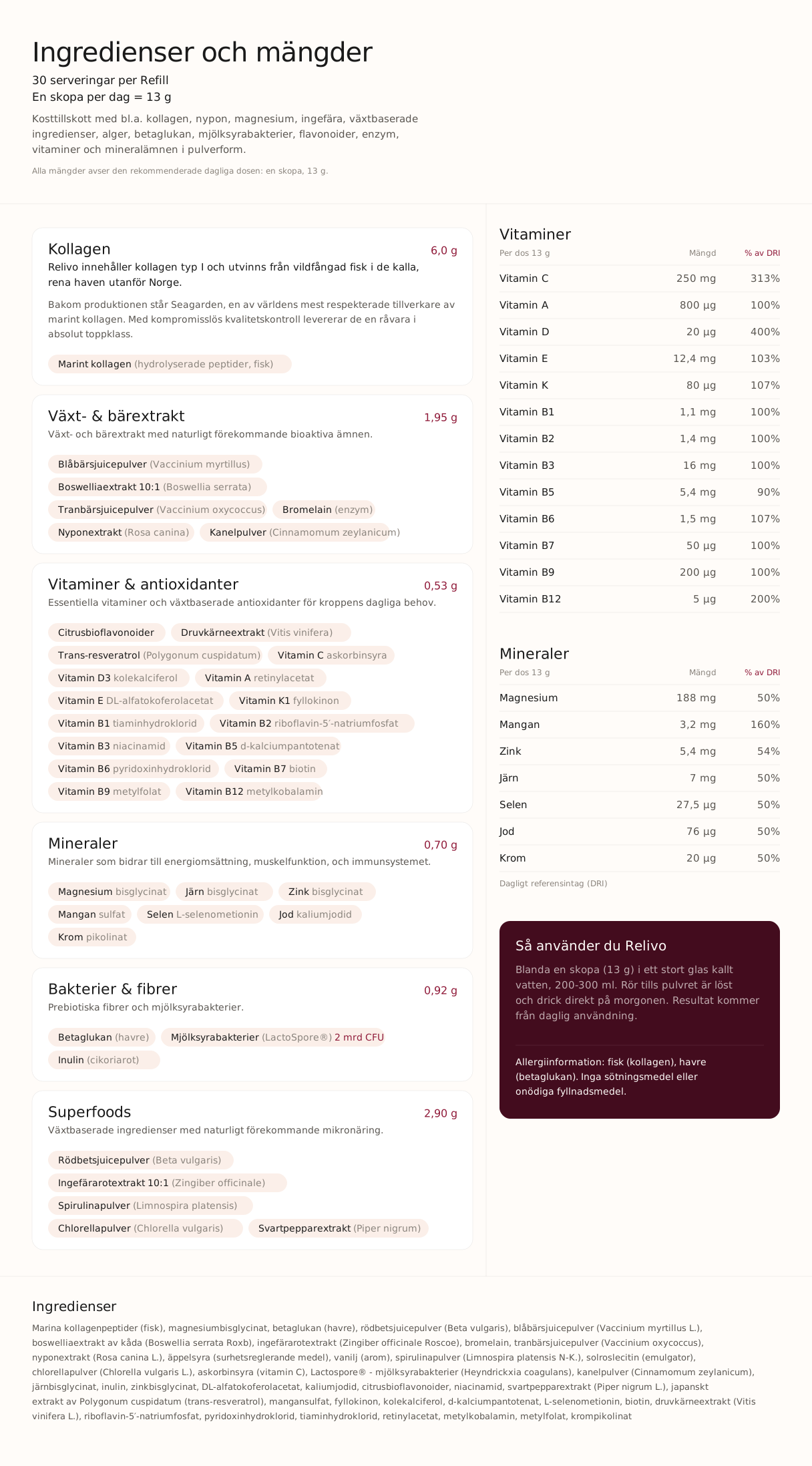
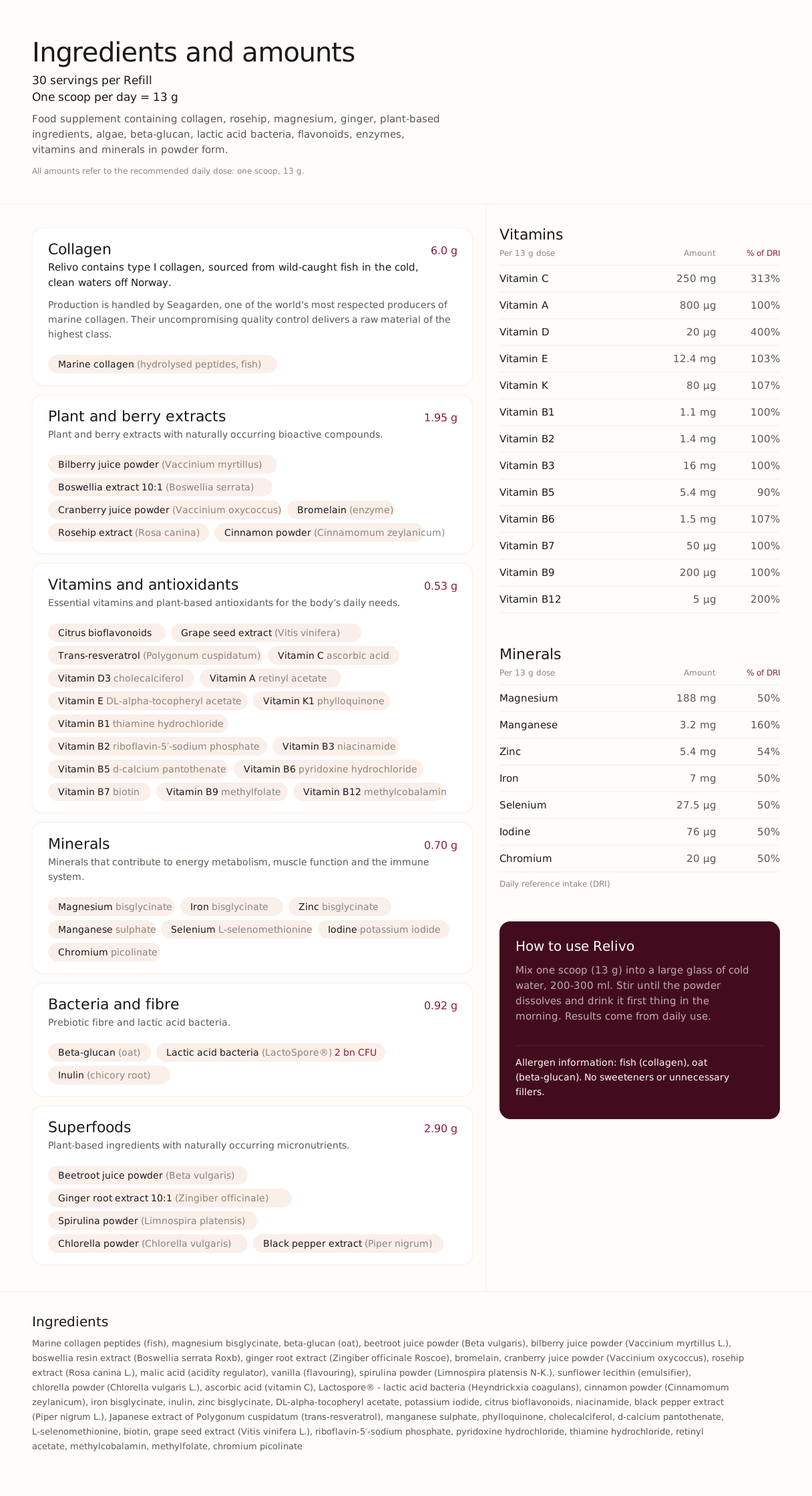
Relivo contains marine collagen type I – the same type of collagen that makes up the majority of tendons and ligaments. The formula also contains vitamin C, an essential cofactor for the body's own collagen production, as well as copper and zinc, which are involved in protein synthesis and the cross-linking of collagen fibers. MSM provides sulfur.
In addition, the formula includes plant extracts such as boswellia, ginger, and rosehip – ingredients traditionally used in contexts related to joints and mobility.
No supplement can replace progressive loading. Tendons are built by mechanical signaling, not by nutrition. However, the nutrients need to be present as building materials once the signal is received.
When should you seek medical care?
Contact a physiotherapist or doctor if you have:
- Pain in a tendon or joint that lasts for more than 4–6 weeks
- Pain that worsens despite rest and modified activity
- Swelling, warmth, or redness around the tendon
- Sudden, sharp pain accompanied by an audible sound during activity
- Reduced function or strength in the affected body part
- Numbness or tingling associated with the discomfort
Tendon and ligament issues generally respond well to structured load-based training, but getting the right diagnosis first makes a big difference in how quickly you recover. Read more at 1177 Vårdguiden.
Summary
Tendons and ligaments build up more slowly than muscles for three main reasons: poorer blood supply, much lower cell density, and a structure that consists of 70–80 percent collagen matrix rather than living cells. Furthermore, carbon-14 research suggests that the core of the Achilles tendon barely undergoes any turnover at all after adolescence.
This does not mean that adaptation is impossible—tendons become stiffer and, over time, thicker with consistent loading. However, the timeframe is months to years, not weeks.
With gradual progression, eccentric training, patience, and a nutritional foundation that contains the building blocks for collagen synthesis—for example, through Relivo —you give your connective tissue the conditions it needs to keep up with your muscles. It is the best injury prevention available.
About Relivo
Relivo is a complete daily nutritional supplement developed in collaboration with Swedish researchers and nutritional physiologists. Relivo combines 38 carefully selected nutrients that support the body's most important systems and structures.
Everything is gathered in one scoop of powder, developed to be simple to use and easy to incorporate into your daily routine. Relivo mixes in 60 seconds and serves as a long-term nutritional foundation for energy, immune system, gut health, muscles, and joints.
Sources
- Heinemeier KM et al. – Lack of tissue renewal in human adult Achilles tendon is revealed by nuclear bomb 14C (FASEB Journal)
- Kjaer M – Role of extracellular matrix in adaptation of tendon and skeletal muscle to mechanical loading (Physiological Reviews)
- Magnusson SP et al. – The pathogenesis of tendinopathy: balancing the response to loading (Nature Reviews Rheumatology)
- Bohm S, Mersmann F, Arampatzis A – Human tendon adaptation in response to mechanical loading (Sports Medicine Open)
- Shaw G et al. – Vitamin C-enriched gelatin supplementation before intermittent activity augments collagen synthesis (AJCN)
- Langberg H et al. – Type I collagen synthesis and degradation in peritendinous tissue after exercise
- Baar K – Minimizing Injury and Maximizing Return to Play: Lessons from Engineered Ligaments (Sports Medicine)
- Rucker RB et al. – Copper, lysyl oxidase, and extracellular matrix protein cross-linking (AJCN)
- EFSA – Vitamin C and normal collagen formation
- 1177 Vårdguiden – Achilles tendinitis and tendon issues