HRV - what heart rate variability says about your stress resilience
A healthy heart does not beat like a metronome. The variation between beats tells us something about how well the body handles stress—if you know how to interpret it.

Introduction
You wake up, reach for your phone, and open the app. The ring on your finger or the band on your wrist has been measuring all night. There it is: HRV 42. Yesterday it was 58.
What does that mean? Should you cancel your workout? Are you coming down with something? Or did you just have an extra glass of wine with dinner?
HRV—heart rate variability—has moved from the research lab to the wrist in just a few years. Oura, Whoop, Garmin, Polar, and Apple Watch all measure it. The problem is that the metric is significantly more complex than the number suggests, and most people interpret it incorrectly.
In this guide, we go through what HRV actually measures, what the research shows it says about the body, how to interpret your own numbers—and the most common mental trap that leads many to draw completely wrong conclusions.
What is HRV, really?
HRV is the variation in time between each heartbeat, measured in milliseconds.
If your heart rate is 60 beats per minute, it doesn't mean your heart beats exactly once per second. One beat might occur after 980 milliseconds, the next after 1040, the next after 1010. That variation is HRV.
The important—and counterintuitive—thing is that variation here is positive. A heart that beats perfectly evenly like a metronome is not a well-functioning heart. It is a heart that has lost its ability to adapt.
HRV is therefore not a measure of heart health per se, but of the nervous system's ability to fine-tune the heart rhythm according to what the situation requires.
The autonomic nervous system—the gas pedal and the brake
To understand HRV, you need to understand the two branches of the autonomic nervous system.
The sympathetic nervous system is the gas pedal. It is activated during exertion, stress, and danger. It increases heart rate, blood pressure, and alertness.
The parasympathetic nervous system is the brake. It dominates during rest, digestion, and recovery. It lowers heart rate and supports restoration.
The two are active simultaneously, all the time, and their relative balance shifts continuously. HRV primarily reflects the activity of the parasympathetic system—how well the brake is working.
High HRV generally indicates good parasympathetic activity and thus a good ability to switch between states. Low HRV suggests that the system is more constantly in a state of high alert.
The vagus nerve and breathing
The primary parasympathetic connection to the heart is via the vagus nerve, the body's longest cranial nerve.
There is a phenomenon called respiratory sinus arrhythmia that you can feel yourself if you are still enough. When you inhale, your heart rate increases slightly. When you exhale, it drops. The more pronounced that variation is, the higher your HRV.
This also explains why breathing exercises affect HRV so directly. Slow breathing with an extended exhale increases vagal activity and, consequently, variability. It is not magic—it is mechanics.
The metrics you see in the app
There are several ways to calculate HRV, and different apps use different metrics.
RMSSD is the most common in consumer products. It primarily reflects parasympathetic activity and can be calculated from relatively short measurements. When your app displays an HRV value, it is usually RMSSD.
SDNN measures total variability and requires longer recordings, often 24 hours. It is used more in clinical research.
HF and LF are frequency-based metrics. HF reflects parasympathetic activity. LF is more debated—it was long interpreted as sympathetic activity, but that interpretation is now considered too simplistic.
For practical use, it is enough to know that RMSSD is what you usually look at, and that it reflects recovery rather than performance.
The most important rule: never compare yourself to others
This is the most common and costly misconception.
HRV varies enormously between individuals. Two equally fit and healthy people can have an RMSSD of 25 and 120 milliseconds, respectively. Both can be completely normal.
Factors that influence your baseline include age, genetics, body composition, training background, and measurement method. Comparing your number to a friend's or to an internet average provides no useful information at all.
The only thing that matters is your own trend over time, measured under consistent conditions.
A reasonable rule of thumb: don't worry about individual days. Look at the weekly average and whether it is trending upward or downward over several weeks.
What affects your HRV
Here are the factors that research has consistently identified:
Lowers HRV:
- Alcohol - one of the most dramatic and reliable effects
- Insufficient sleep
- Strenuous exercise the day before
- Acute illness or onset of infection
- Mental stress
- Dehydration
- Late and heavy meal before bedtime
- High doses of caffeine late in the day
Raises HRV over time:
- Regular endurance training
- Adequate sleep
- Breathing exercises and meditation
- Recovery days
- Good nutritional status
Natural variation that is not a problem:
- Age - HRV gradually declines throughout life
- Phases of the menstrual cycle
- Seasonal variations
The effect of alcohol is the most pronounced
If you want to see HRV in action, there is no better experiment than alcohol.
The effect is dramatic and reliable. Even a couple of glasses of wine often cause a clear drop in overnight HRV, and the effect can last for one to two nights. Many people who start tracking HRV discover this connection quickly, and it is one of the most common reasons why people actually change their drinking habits.
The mechanism is that alcohol activates the sympathetic nervous system and disrupts sleep architecture, especially during the latter part of the night.
HRV and training
In sports, HRV is used to manage training load. The idea is simple: when HRV is high, the body is ready for intense exertion. When it is low, recovery is needed.
Studies on HRV-guided training have shown promising results. In several trials, groups that adjusted their training based on HRV performed better than groups that followed a predetermined schedule.
However, researchers working with elite athletes emphasize one important thing: it is weekly averages that are useful, not individual mornings. A low reading could be due to poor sleep, a glass of wine, or measuring in a different body position. Only when the trend persists over several days is the signal meaningful.
HRV biofeedback and resonance breathing
One area with surprisingly strong research support is HRV biofeedback.
The method involves breathing at a rate that maximizes variability, which for most people is around six breaths per minute. This is significantly slower than normal breathing at 12–16 breaths per minute.
In practice: inhale for four seconds, exhale for six seconds. Repeat for ten to twenty minutes.
Studies have shown effects on perceived stress and anxiety, and the method is currently used in both clinical psychology and sports psychology. It is one of the few tools where you can directly influence the autonomic nervous system with a simple, free technique.
The trap: when tracking becomes the problem
There is a risk with daily HRV tracking that is worth taking seriously.
The phenomenon has been dubbed orthosomnia when it comes to sleep data—anxiety that arises from chasing good scores in an app. The same thing happens with HRV. People cancel workouts, worry about their health, and get worse sleep because of a number that might just reflect that they slept in a warmer room than usual.
If you notice that your morning reading is negatively affecting your mood, it is a sign that the tool is working against you. An alternative is to track the data but only look at it once a week.
Data should inform your decisions, not dictate your mood.
How to measure correctly
For the numbers to be comparable over time, the measurement conditions need to be consistent:
1. The same time of day. Immediately upon waking is the standard.
2. The same body position. Lying down produces different values than sitting or standing.
3. Before getting out of bed. Getting up and going to the bathroom first will alter the reading.
4. Before caffeine. Coffee has an immediate effect.
5. The same equipment. Chest straps are generally more accurate than optical sensors in wristbands or rings, but consistency is more important than absolute precision.
6. At least two weeks before drawing any conclusions. You need a baseline to compare against.
When should you seek medical care?
HRV is not a diagnostic tool and should not be used as one. However, contact your primary care provider if you experience:
- Persistently low HRV combined with other symptoms such as fatigue, shortness of breath, or chest pain
- An irregular pulse that you can feel
- Dizziness or lightheadedness
- Heart palpitations that recur without an obvious cause
- A significant decrease in energy levels compared to before
Irregular heart rhythms such as atrial fibrillation produce distorted HRV values and require medical evaluation. Read more at 1177 Vårdguiden.
Summary
HRV measures the variation between heartbeats and primarily reflects the activity of the parasympathetic nervous system—the body's ability to downshift and recover. High variability generally indicates good adaptability.
However, this metric is highly individual, making comparisons with others meaningless. What matters is your own trend under consistent measurement conditions, ideally viewed as a weekly average rather than a daily figure.
Alcohol, sleep, training load, and stress are the factors that have the greatest impact. Breathing exercises with prolonged exhalation are one of the few tools that can directly influence the system. And if the number starts to dictate your mood more than your decisions, it’s time to check it less often.
About Relivo
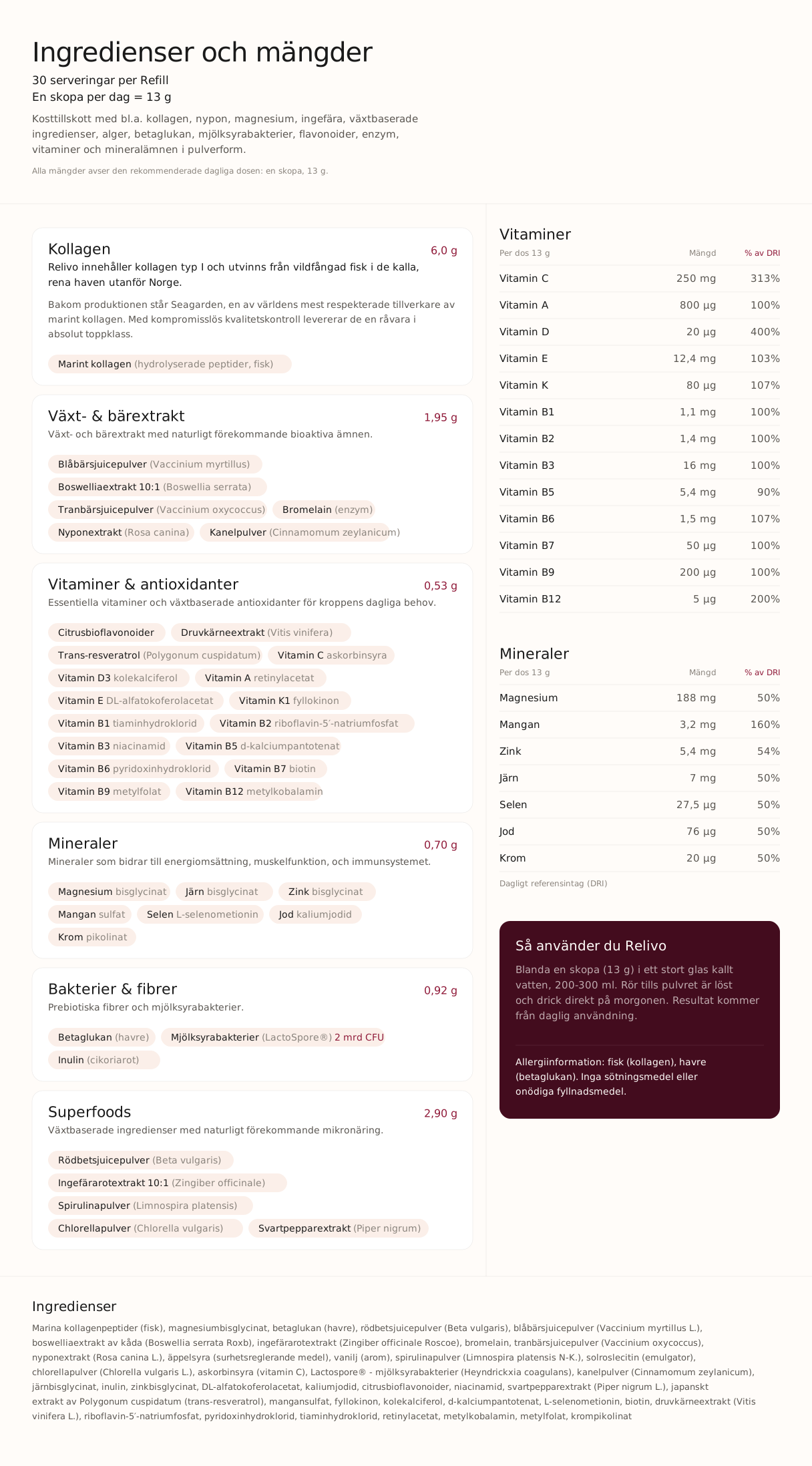
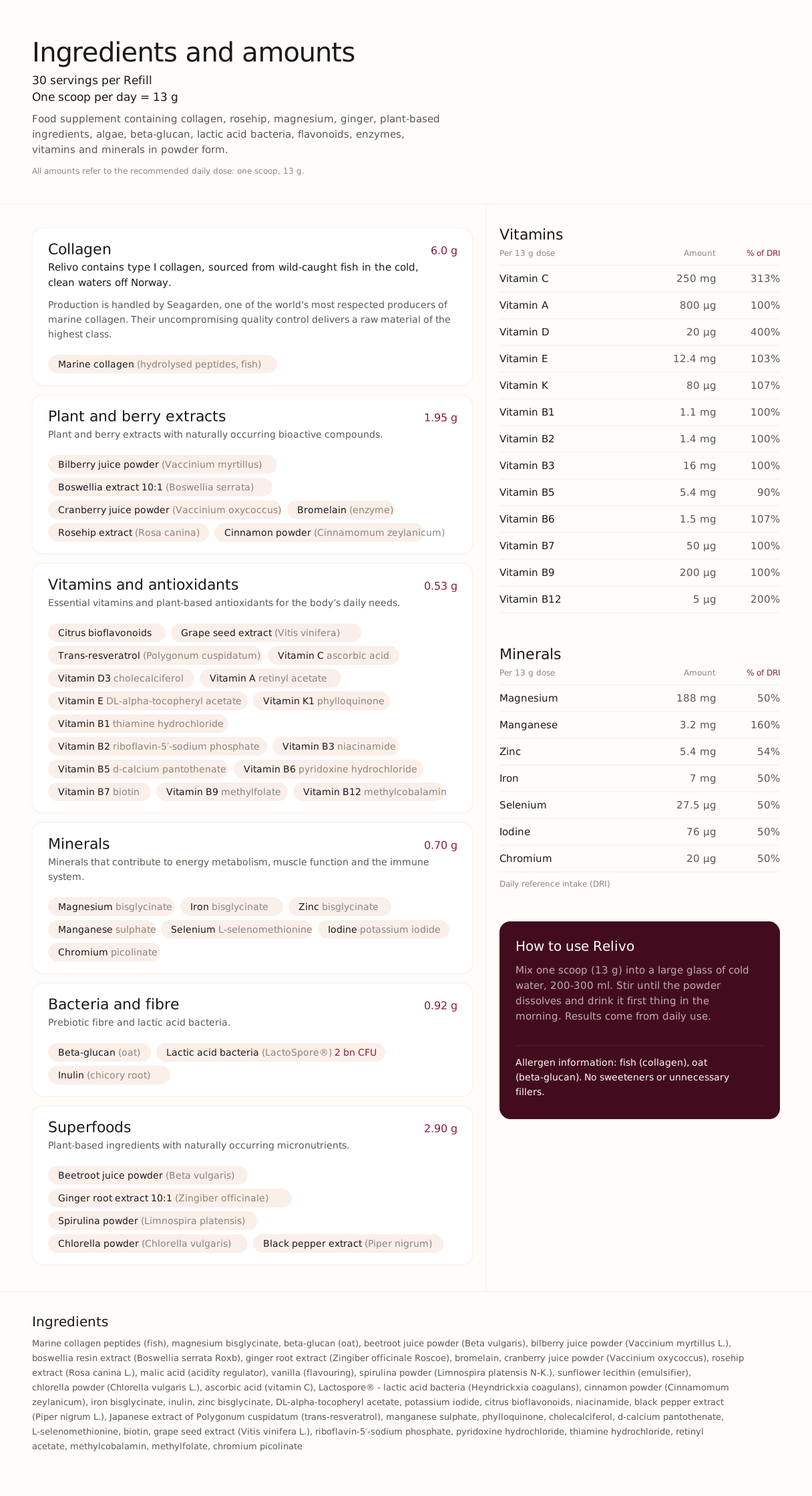
Relivo is a complete daily nutritional supplement developed in collaboration with Swedish researchers and nutritionists. Relivo combines 38 carefully selected nutrients that support the body's most important systems and structures.
Everything is gathered in one scoop of powder, developed to be simple to use and easy to incorporate into your daily routine. Relivo mixes in 60 seconds and serves as a long-term nutritional foundation for energy, immune function, gut health, muscles, and joints.
Sources
- Shaffer F, Ginsberg JP – An Overview of Heart Rate Variability Metrics and Norms (Frontiers in Public Health, 2017)
- Task Force of the European Society of Cardiology – Heart rate variability: standards of measurement, physiological interpretation and clinical use (Circulation)
- Thayer JF, Lane RD – A model of neurovisceral integration in emotion regulation and dysregulation (Journal of Affective Disorders)
- Laborde S et al. – Heart Rate Variability and Cardiac Vagal Tone in Psychophysiological Research (Frontiers in Psychology)
- Plews DJ et al. – Training adaptation and heart rate variability in elite endurance athletes (Sports Medicine)
- Kiviniemi AM et al. – Endurance training guided individually by daily heart rate variability measurements (European Journal of Applied Physiology)
- Lehrer PM, Gevirtz R – Heart rate variability biofeedback: how and why does it work? (Frontiers in Psychology)
- Pietilä J et al. – Acute Effect of Alcohol Intake on Cardiovascular Autonomic Regulation During the First Hours of Sleep (JMIR Mental Health)
- EFSA – Health claims for iron, B vitamins and magnesium
- 1177 Vårdguiden – Heart rhythm disorders