The immune system explained - the body's defense at three levels
Behind every breath, a silent defense is working around the clock. Here, we explain the immune system on three levels – so you understand how your body protects itself and what it needs.
Introduction
We rarely think about our immune system until we feel under the weather. But it works tirelessly, every second, to keep the body in balance.
The immune system isn't a single organ but an entire network of cells, tissues, and barriers. It's easier to understand if we divide it into three levels.
In this article, we'll go through all three, from the outermost layer to the specialized cells deep within the body. You'll see that it's a system built in layers, where each level picks up where the last one leaves off.
Level 1 - The Barriers That Keep Most Things Out
The first level consists of physical barriers. Skin is the most obvious – a dense outer layer that keeps most things out.
But there are more barriers than that. Mucous membranes in the nose, mouth, and gut trap particles, and tiny cilia in the airways sweep them away.
Stomach acid also plays a role here. Its acidic environment means many microbes never even make it further into the body.
This is the immune system's first line of defense, and it's surprisingly effective. Most things are stopped right here, without us even noticing.
Level 2 - The Innate Defense That Reacts Quickly
If something still gets past the barriers, the second level steps in. This is called the innate immune system, and it's our fast, broad defense.
The innate defense doesn't recognize specific invaders. Instead, it reacts to anything that looks foreign, and it does so within minutes to hours.
Here, cells consume microbes, and messenger molecules call for reinforcements. Inflammation is part of this process – redness and swelling are signs that the defense is at work.
You can think of the second level as the body's alarm system and first response team. It buys time while more specialized help prepares.
A slight fever is often a sign that this defense is in full swing. The elevated temperature makes the environment less favorable for many microbes.
The innate defense remains the same throughout life and requires no prior exposure. It's our basic readiness, always present and ready to act.
Level 3 - The Adaptive Defense with Memory
The third level is the adaptive immune system, the body's specialists. It's slower to get started, but much more precise.
Here, cells are formed that learn to recognize the exact invader the body has encountered. Some of them produce antibodies, small proteins that mark microbes for removal.
The beauty of the adaptive level is that it has memory. If the body encounters the same invader again, the response can be much faster next time.
This mechanism is what underpins how vaccines work. The body gets to train in peace, and the immune system builds up a memory it can use later.
The three levels never work in isolation. The innate defense helps activate the adaptive one, and together they form a finely tuned interplay.
It is precisely this coordination that makes the system so powerful. Each level has its strengths, and the weaknesses of one are covered by the other.
The Gut – The Immune System's Unexpected Center
One thing that surprises many is the significant role the gut plays. A very large proportion of the immune system's cells are actually located in the intestinal wall.
Here, two worlds meet: your gut flora and your immune cells. They are in constant dialogue, and the balance between them affects how the defense functions.
This is one reason why fiber and probiotics have received so much attention. A healthy gut flora provides the immune system with better conditions to do its job.
The intestinal wall also functions as its own barrier, part of the very first level. It needs to let nutrients through but keep many other things out, and the balance within is crucial.
Nutrients the Immune System Depends On
The immune system is energy-intensive, and it needs the right building blocks to function normally. Several vitamins and minerals have a well-documented role here.
Vitamin C and Vitamin D contribute to the normal function of the immune system, according to EFSA. The same applies to zinc, selenium, and several B vitamins, all of which are involved in different parts of the defense.
It's not about individual super-substances, but about the body needing a broad spectrum simultaneously. If a building block is missing, it can affect the whole.
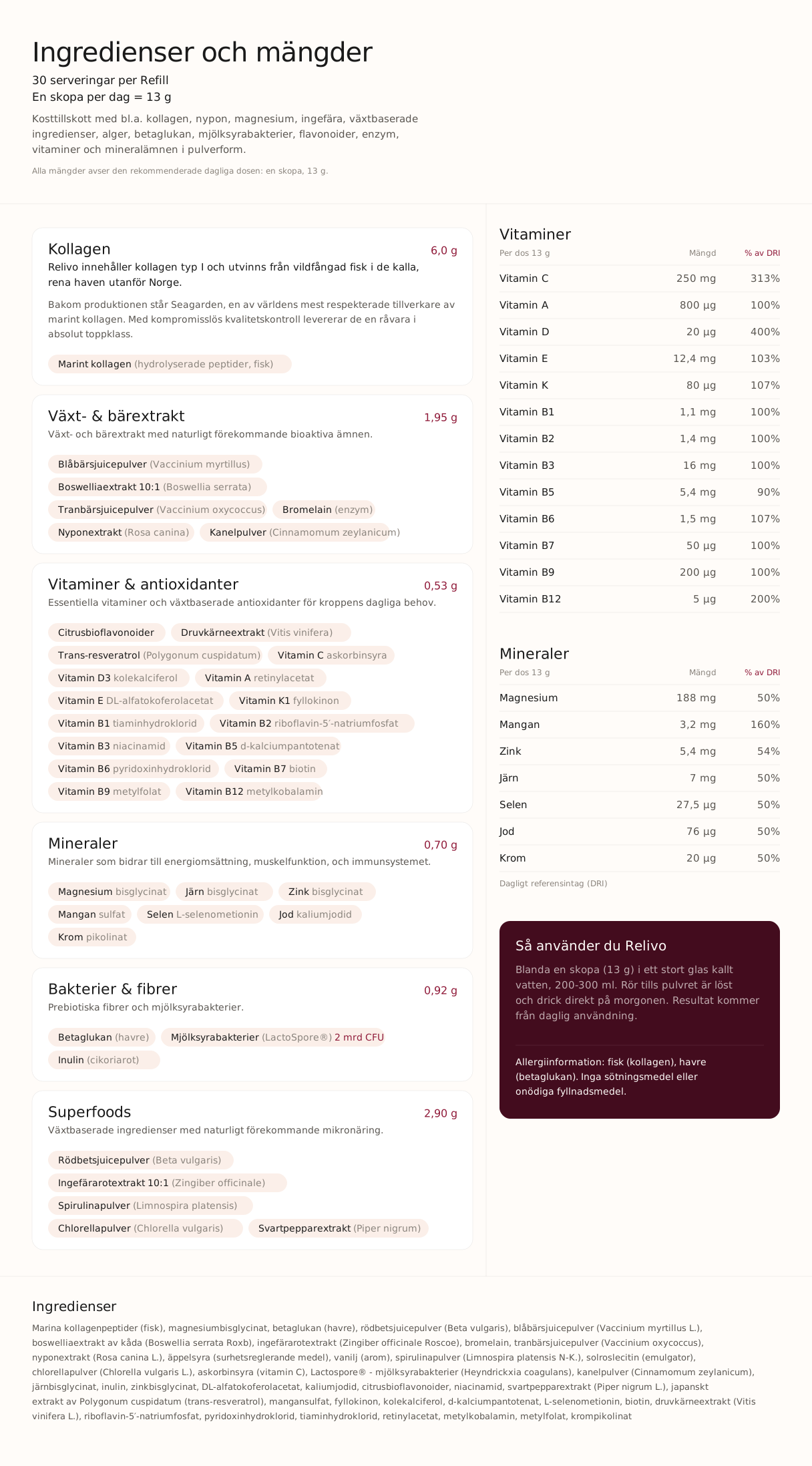
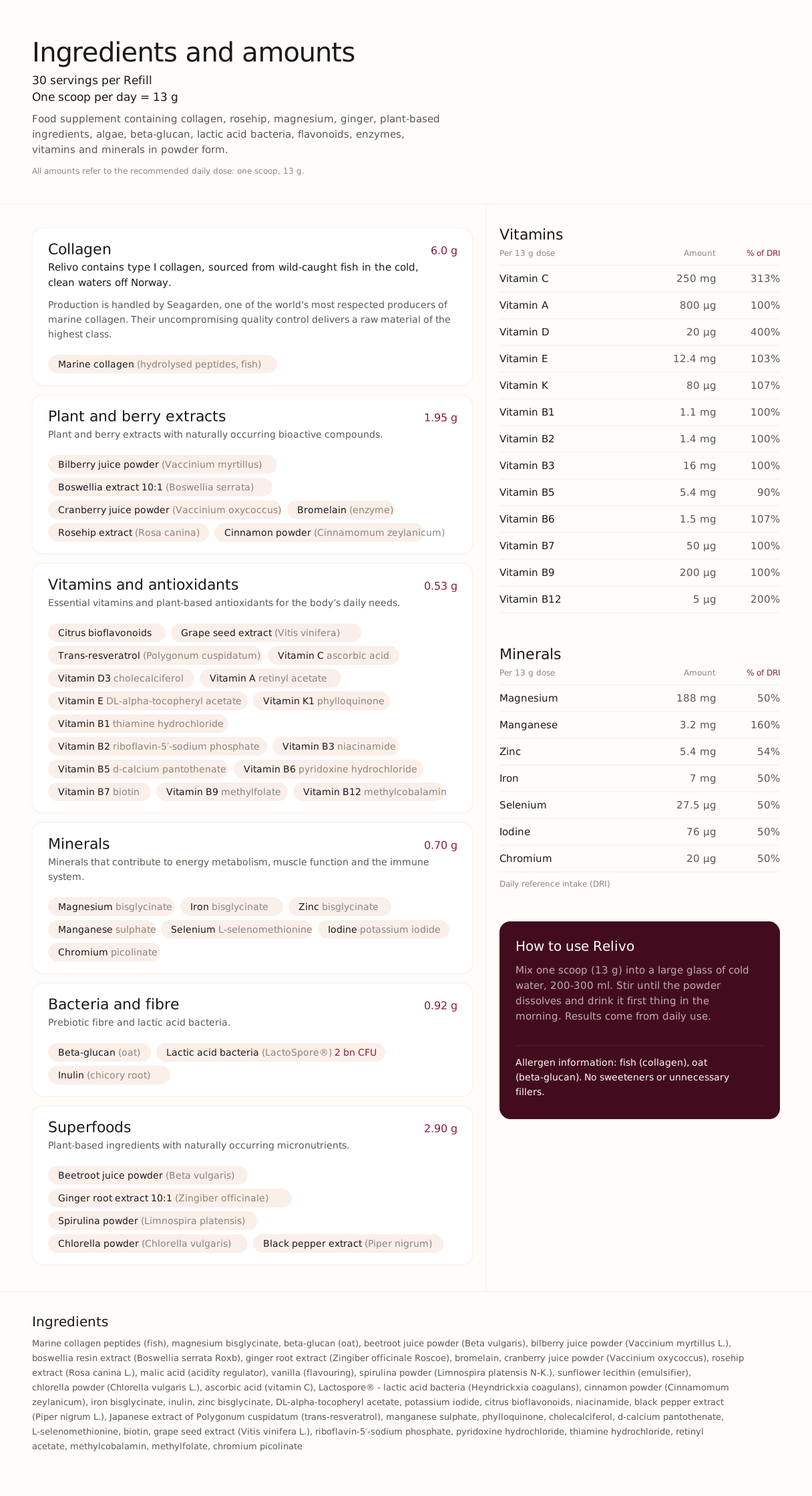
That's the idea behind Relivo, where a range of such nutrients are combined in a daily serving. The idea is to give the body a broad foundation of building blocks that the immune system can use.
What Can Deplete the Immune System
Just as important as knowing what supports it is understanding what depletes it. Certain factors can cause the body's defense to not perform as well.
Chronic stress is one of the clearest examples. When the body is in a constant state of alert, resources are reallocated, and the maintenance of other systems takes a backseat.
Lack of sleep is another. If you get too little sleep over an extended period, it often shows in how well your body can resist seasonal colds.
A monotonous diet and lack of exercise also play a role. It's rarely about a single factor, but rather the sum of habits over time.
How You Can Support Your Immune System in Everyday Life
The good news is that everyday habits play a significant role. You can give your immune system a good foundation with relatively simple measures.
Sleep is one of the most important pieces of the puzzle. It's during the night that much of the body's maintenance work takes place, and too little sleep quickly becomes noticeable.
Eat a varied and colorful diet to ensure you get a wide range of vitamins and minerals. Exercise regularly and try to keep stress in check, as prolonged stress depletes the body's resources.
If you want to read more about how nutrition relates to the immune system, you can check out our article on nutrition during pollen season, or read more about all our work at relivo.se.
Summary
The immune system is a three-tiered system: the barriers that keep much out, the innate immune system that reacts quickly and broadly, and the adaptive immune system with memory and precision. Together, they form a defense that works around the clock.
The gut ties much of this together, and nutrition is a foundation upon which the entire system rests. When you understand these levels, it also becomes clearer why sleep, diet, and exercise play a role.
You cannot control every part of the immune system - but you can give it excellent conditions to do its job.
About Relivo
Relivo is a complete daily nutritional supplement developed in collaboration with Swedish researchers and nutritionists. Relivo combines 38 carefully selected nutrients that support the body's most important systems and structures.
All in one scoop of powder, developed to be easy to use and integrate into daily life. Relivo mixes in 60 seconds and is used as a long-term nutritional foundation for energy, immune system, gut health, muscles, and joints.