How the body absorbs nutrients – the journey from bite to cell
Join us on the journey of nutrients through the body – from the first bite until every cell receives its fuel. Understanding nutrient absorption also makes it easier to eat smarter.

Introduction
We often talk about what we eat, but rarely about what actually happens to the food afterwards. The truth is, it's not enough to consume the right nutrients – the body must also be able to absorb them.
Nutrient absorption is the invisible process that determines how much of the food actually reaches your cells. And this is where much of the magic happens.
In this article, we'll take you through the journey step by step, from bite to cell. You'll notice that the body is an incredibly well-organized system, where each part has a clear task.
It starts in the mouth
Absorption begins long before food reaches the stomach. Even as you chew, the body starts preparing for digestion.
Saliva contains enzymes that immediately begin breaking down carbohydrates. That's why a piece of bread can start to taste a little sweet if you chew it long enough.
Chewing properly isn't just an old habit from childhood, then. The smaller the food particles become, the larger the surface area digestive enzymes have to work on further down the line.
The Stomach – The Body's Chemical Workshop
Once swallowed, food lands in the stomach, a muscular sac that mixes and processes. Here, food is met with stomach acid and enzymes that break down proteins into smaller building blocks.
Stomach acid also plays another important role. It releases certain minerals and vitamins from food so they can be absorbed further down the system.
This is one reason why the stomach's environment plays such a crucial role in overall absorption. If the initial breakdown step doesn't function optimally, everything that follows is affected.
Food remains in the stomach for approximately two to four hours. Then, it's released gradually, like a carefully metered flow, to the next and most important stop.
The Small Intestine – Where Nutrient Absorption Truly Happens
If the stomach is the preparation, then the small intestine is the main event. This is where the vast majority of absorption actually takes place.
The small intestine is several meters long, and its inner surface is covered with millions of tiny projections called villi. These make the internal surface enormous – roughly the size of a tennis court.
Thanks to this surface area, the body can efficiently pick up nutrients and transport them into the bloodstream. Each villus is filled with tiny blood vessels that carry the nutrients where they are needed.
Carbohydrates, Protein, and Fat Take Different Paths
The three major energy-providing nutrients are handled in different ways. Carbohydrates are broken down into simple sugars like glucose, which are quickly absorbed and provide energy.
Proteins are broken down into amino acids, the body's building blocks for muscles and enzymes, among other things. Fats are broken down into fatty acids with the help of bile from the liver.
The great thing is that the body adjusts the pace as needed. A meal with fat and fiber slows down gastric emptying, leading to a more even and prolonged absorption.
Vitamins and minerals - small but crucial
In addition to the macronutrients, vitamins and minerals are also absorbed in the small intestine. Some, like vitamin C and B vitamins, are water-soluble and absorbed directly.
Others, like vitamins A, D, E, and K, are fat-soluble. They need a little fat in the meal for the body to absorb them properly.
That's why a salad with a drizzle of olive oil provides better nutrient absorption than a completely fat-free version. Small details in how you compose your meal can make a big difference.
The large intestine and gut flora - the final stop
After food has passed through the small intestine, mostly fiber, water, and unabsorbed material remain. In the large intestine, water is absorbed and stool is formed.
But the large intestine is far from passive. Billions of bacteria reside here - your gut flora - which ferment fibers and produce substances the body can use.
A balanced gut flora contributes to better absorption and a healthy intestinal wall. This is why fibers and probiotics have received so much attention in recent years.
You can see it as a collaboration. You feed the bacteria with fiber, and they help you get more out of the food you eat.
How you eat affects nutrient absorption
A common misconception is that absorption is only about what's on your plate. In practice, how, when, and in what combinations you eat also play a significant role.
Stress is a clear example. When the body is in overdrive, digestion is not prioritized, which can temporarily reduce absorption.
Pace also plays a role. If you eat too quickly, the body can't keep up with the early stages, and the rest of the chain suffers.
Combinations that enhance absorption
Certain nutrients work together and help each other be absorbed better. For example, vitamin C increases the absorption of iron from plant-based foods.
Fat-soluble vitamins need fat, and some minerals are better absorbed in the company of others. This is the logic behind the idea that a wide range of nutrients often provides more benefit together than individually.
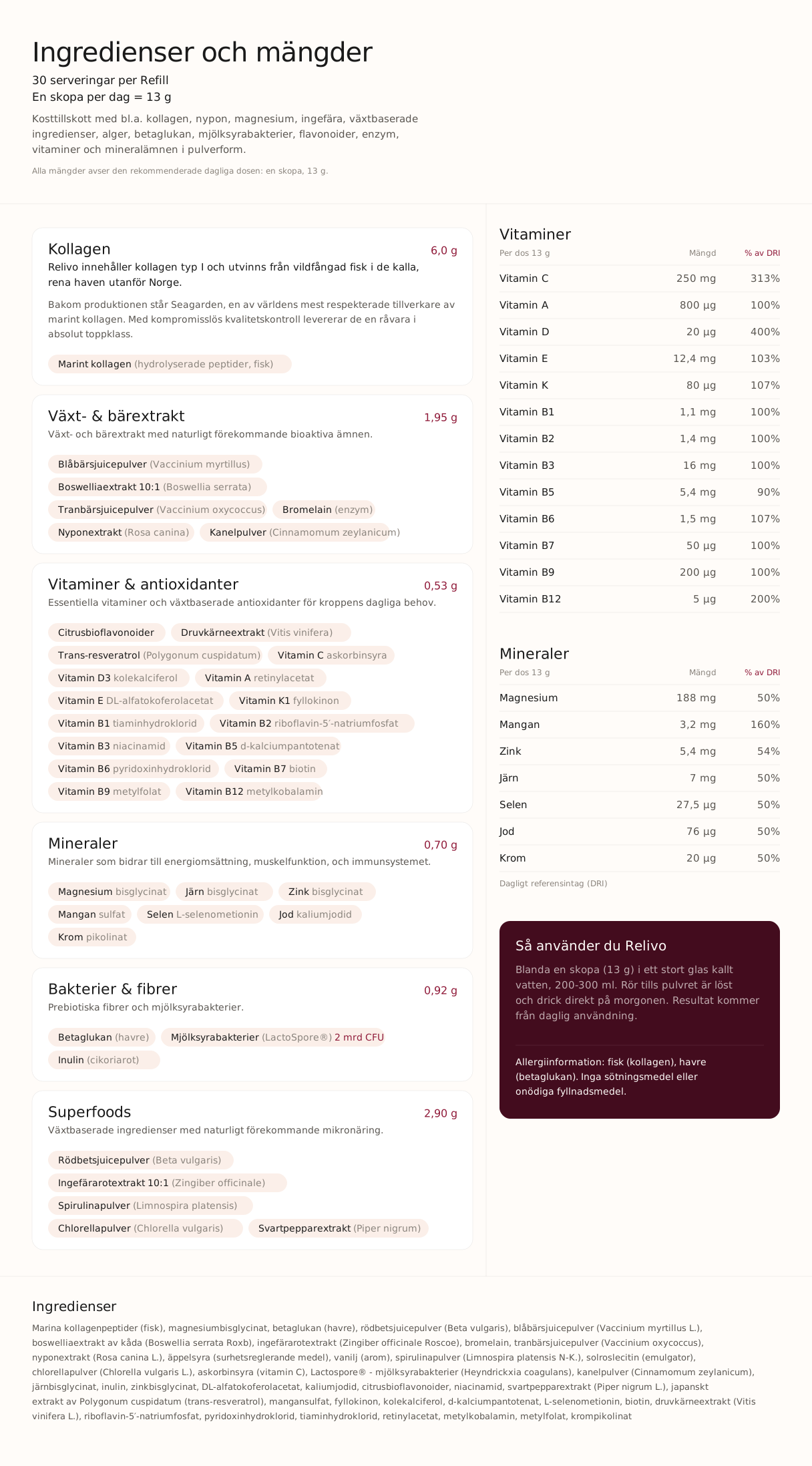
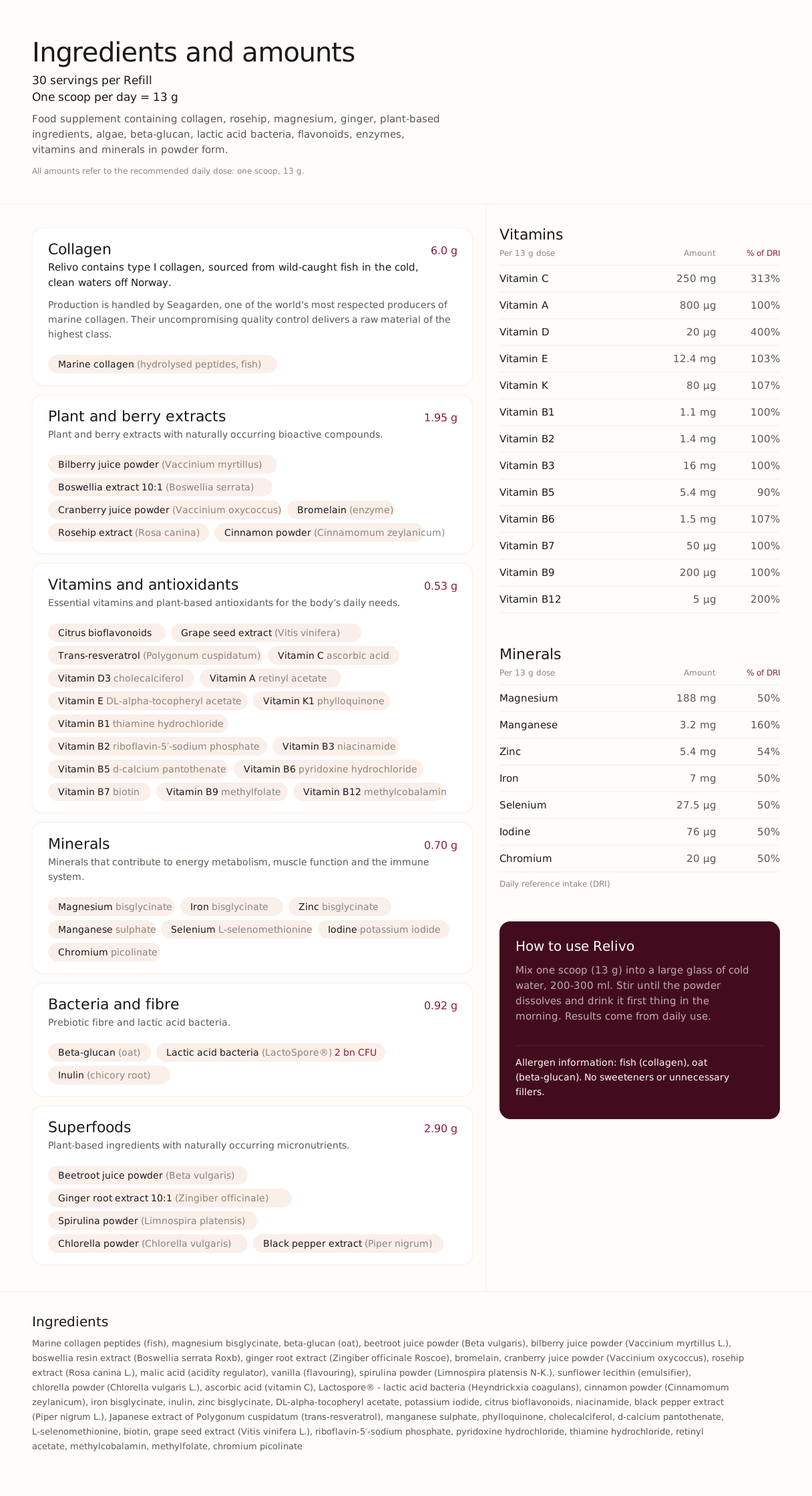
This is also one of the core ideas behind Relivo, where several nutrients are combined in a daily serving. The idea is to support the body with a wide range of building blocks simultaneously, so they can work together during nutrient absorption.
How you can support your body's nutrient absorption
The good news is that you can do a lot yourself to give your body the best conditions. It starts with a few simple habits.
Chew thoroughly and take your time with meals – this eases the burden on the entire digestive chain. Feel free to combine vegetables with a small amount of healthy fat to get more out of fat-soluble vitamins.
Eat a fiber-rich and varied diet to keep your gut flora in good shape. And try to eat in peace and quiet when possible, so your body can direct energy where it's needed.
Summary
The journey of nutrients is impressive: it begins in the mouth, continues through the stomach, and culminates in the small intestine, before the gut flora takes care of the rest. Each step depends on the one before it.
When you understand the process, it also becomes easier to make wise choices. Chewing thoroughly, eating a varied diet, and smartly combining nutrients gives your body better conditions to utilize everything you consume.
Because ultimately, good nutrition isn't just about what you eat – but about how well your body manages to deliver those nutrients all the way to the cell.
About Relivo
Relivo is a complete daily nutritional supplement developed in collaboration with Swedish researchers and nutritional physiologists. Relivo combines 38 carefully selected nutrients that support the body's most important systems and structures.
All combined in one scoop of powder, developed to be easy to use and integrate into daily life. Relivo mixes in 60 seconds and is used as a long-term nutritional foundation for energy, immune system, gut health, muscles, and joints.