The runner's high is likely not caused by endorphins
For decades, the runner's high has been explained by endorphins. Recent research points to a different explanation: the body's own cannabis-like substances.

Introduction
You have been running for half an hour. Your legs have stopped protesting, your breathing has found its rhythm, and suddenly everything feels easier. Your anxiety has faded, your body feels light, and you are in a strangely good mood.
The phenomenon is called a runner's high, and most people have learned the same explanation: it's the endorphins. The body's own morphine-like substances that are released during exertion.
This explanation is found in textbooks, fitness apps, and articles. It sounds reasonable and has been repeated for so long that few question it.
However, research over the last ten years has made the picture significantly more complicated. Several studies suggest that a different group of substances plays the leading role. In this article, we go through what has been discovered, what remains uncertain, and what it means for you as an athlete.
Where the endorphin theory came from
Endorphins were discovered in the 1970s. The name is a combination of endogenous, meaning produced within the body, and morphine. They act on the same receptors in the nervous system as morphine and other opioids, and they can dampen pain and influence well-being.
When researchers discovered that endorphin levels in the blood rose during physical exertion, the conclusion seemed obvious. If exercise releases the body's own morphine, it should explain both the pain relief and the feeling of euphoria.
The theory quickly became widely accepted. But it had one problem.
The problem with endorphins in the blood
One of the arguments against the simple endorphin theory has been that the endorphins measured in the blood have difficulty entering the brain. The brain is protected by a barrier that keeps many substances from the blood out, and endorphins are relatively large molecules.
The fact that levels rose in the blood did not necessarily mean they were affecting the brain.
At the same time, endorphins can also be released inside the brain itself. Therefore, the question has not been whether endorphins exist, but whether they are what create the feeling.
The study with mice
In 2015, a German research group published a study in the scientific journal PNAS that received a great deal of attention.
The researchers let mice run in wheels. After running, the mice were less anxious and less sensitive to pain, two effects usually associated with a runner's high. The levels of so-called endocannabinoids in their blood had also increased.
Then the researchers tested what happened when they blocked different systems.
When they blocked the endorphin receptors with the drug naloxone, the effects remained. The mice were still less anxious.
When they removed cannabinoid receptors on certain nerve cells, the calming effect disappeared. When they blocked the cannabinoid receptors with medication, the pain relief vanished.
The conclusion was that endocannabinoids, not endorphins, appeared to be behind the effects in the mice.
The researchers were clear about one limitation, however. You cannot ask a mouse if it feels euphoric. The study could therefore only investigate one part of what a runner's high entails.
What are endocannabinoids?
Endocannabinoids are substances that the body produces itself. The name comes from the fact that they act on the same receptors as the active substances in cannabis.
The system was mapped during the late 1980s and early 1990s and is involved in a range of processes, including pain, stress, appetite, mood, and memory.
The most well-known substance is called anandamide, named after the Sanskrit word ananda, which means joy or bliss.
An important difference compared to endorphins in the blood is that endocannabinoids are fat-soluble and can more easily cross the blood-brain barrier.
The study with humans
Mice are not humans. Therefore, the same research group conducted a study on humans, which was published in 2021.
The study included 63 people and was double-blind and placebo-controlled. This means that neither the participants nor the researchers knew who received what.
Half of the participants received the drug naltrexone, which blocks the body's opioid receptors and thus the effect of endorphins. Half received a placebo. Then, everyone ran on a treadmill.
The result was that the participants reported comparable euphoria and comparable reduced anxiety, regardless of whether their endorphins were blocked or not. The levels of endocannabinoids in the blood increased after the run.
The researchers' conclusion was that a runner's high in humans is not dependent on the opioid system.
But endorphins have not been completely ruled out
We need to be careful here, because the picture is not black and white.
In 2008, a German study was published in which ten athletes were examined with a special type of brain scan before and after two hours of running. The researchers saw signs that opioids had been released in the brain's areas for emotion and reward, and the stronger the change, the more euphoria the participants reported.
This suggests that endorphins inside the brain may play a role, even if those measured in the blood cannot explain the feeling.
Commentators have also pointed out that euphoria in the 2021 human study decreased slightly in those who received naltrexone, but that the difference was not statistically significant. A minor role for endorphins can therefore not be ruled out.
The overall conclusion is that endocannabinoids likely play the primary role, but that several systems probably work in tandem. The researchers themselves describe the question as partially open.
Why would the body reward running?
A 2012 American study provided an interesting clue.
Researchers measured endocannabinoids in the blood of humans, dogs, and ferrets before and after treadmill exercise. Humans and dogs are animals that have evolved to be capable of running long distances. Ferrets are not.
In humans and dogs, endocannabinoids increased after higher-intensity running, but not after low-tempo walking. In ferrets, they did not increase at all.
The researchers interpreted this as meaning that species built for endurance may have developed an inherent reward for that specific type of exertion. This would, in that case, be a way to make hunting or foraging over long distances appealing, despite the energy cost.
It is a hypothesis, but it offers a possible explanation for why exertion can sometimes feel surprisingly good.
What this means for you as an athlete
Regardless of which substance is behind it, there are a few practical conclusions.
1. A certain level of effort is required. In the study with humans and dogs, leisurely walks did not produce the same increase in endocannabinoids as running. A light jog can therefore provide more than a low-tempo walk.
2. It is not about pushing yourself to the max. The feeling is most often described in connection with endurance training at a steady pace, not during short, maximal intervals.
3. It takes time. Many people only experience the feeling after a while, often after half an hour or more.
4. Not everyone experiences it. A runner's high is not guaranteed, and it is not a sign that you are training incorrectly if you don't feel it.
5. It doesn't just apply to running. Cycling, swimming, cross-country skiing, and other forms of endurance training can produce similar experiences.
Summary
For a long time, the runner's high has been attributed to endorphins. However, endorphins in the bloodstream struggle to cross into the brain, and recent research points toward a different explanation.
In mice, the calming and pain-relieving effects of running disappeared when researchers blocked the body's cannabinoid receptors, but not when they blocked endorphins. In humans, the euphoria remained even when the effect of endorphins was blocked.
Endorphins have not been entirely ruled out, however. Brain studies have shown signs that opioids are released during long runs, and a minor role cannot be excluded.
The most likely explanation today is that endocannabinoids play the leading role, and that several systems work in tandem. The feeling of happiness after a run likely comes from a system using the same receptors as cannabis—something few runners would have guessed.
About Relivo
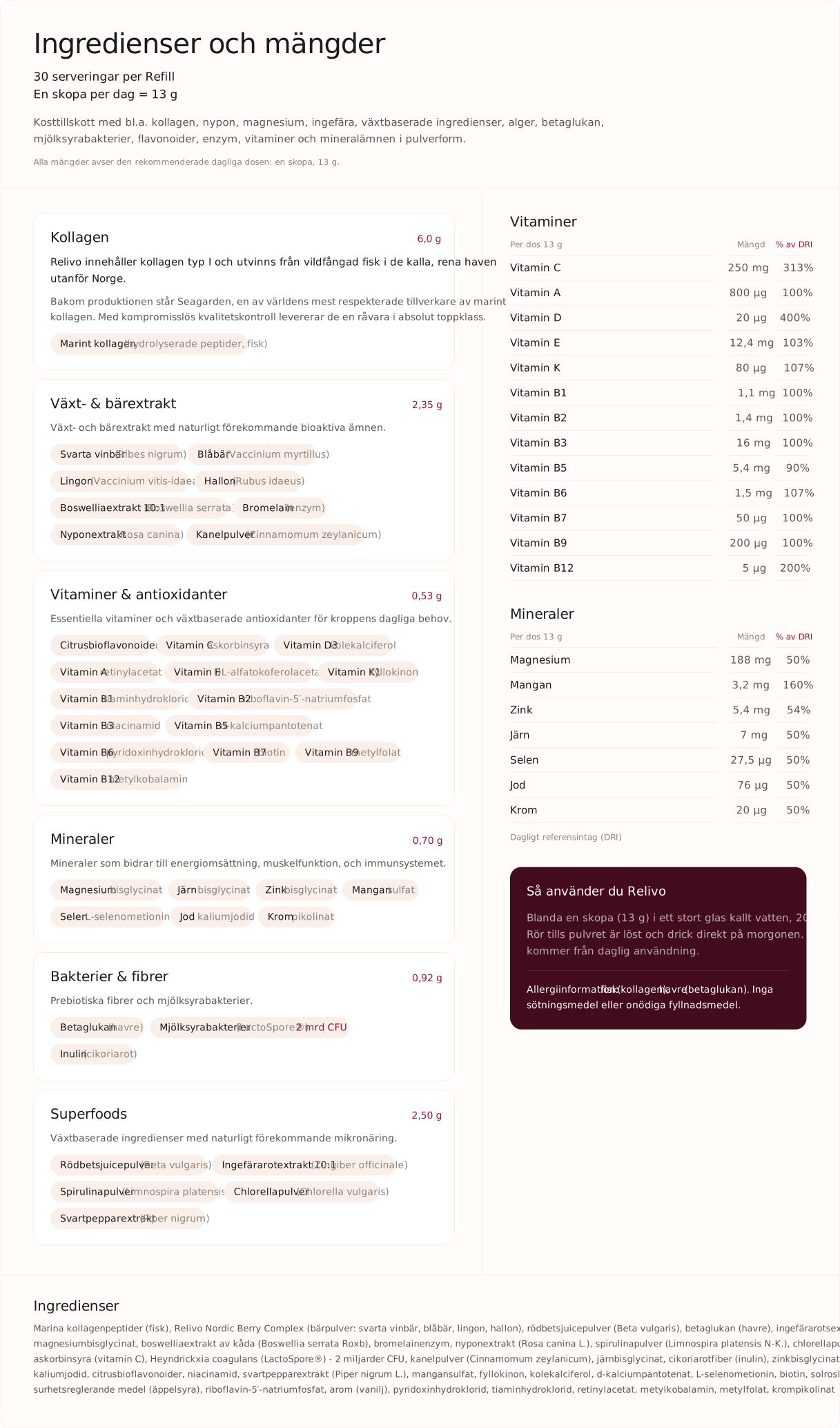
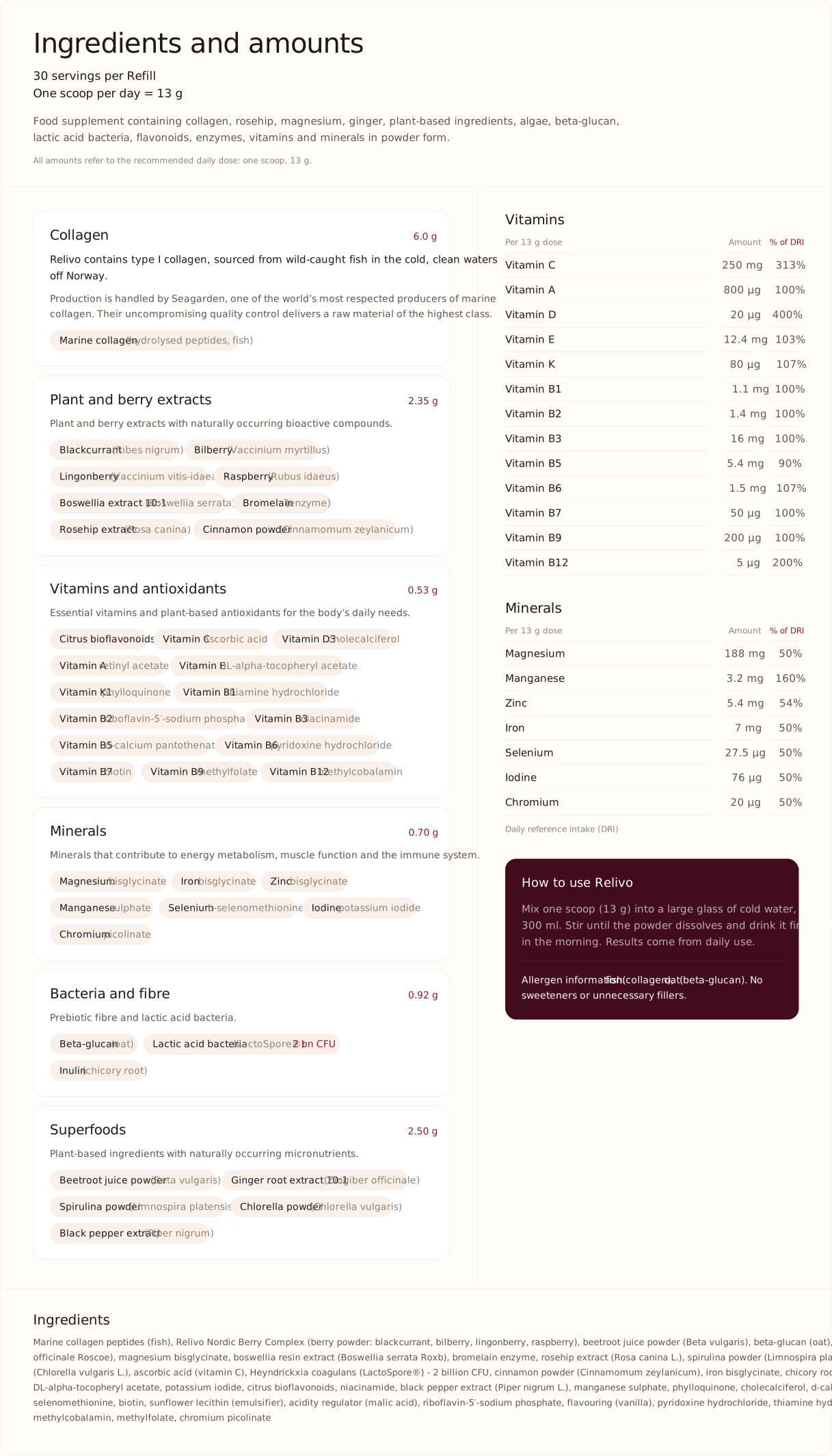
Relivo is a complete daily nutritional supplement developed in collaboration with Swedish researchers and nutritional physiologists. Relivo combines 38 carefully selected nutrients that support the body's most important systems and structures.
Everything is gathered in one scoop of powder, developed to be simple to use and easy to incorporate into your daily routine. Relivo mixes in 60 seconds and serves as a long-term nutritional foundation for energy, immune function, gut health, muscles, and joints.
Sources
- Fuss J et al: A runner's high depends on cannabinoid receptors in mice (PNAS, 2015)
- Siebers M et al: Exercise-induced euphoria and anxiolysis do not depend on endogenous opioids in humans (Psychoneuroendocrinology, 2021)
- Siebers M, Biedermann SV, Fuss J: Do Endocannabinoids Cause the Runner's High? Evidence and Open Questions (The Neuroscientist, 2023)
- Boecker H et al: The Runner's High: Opioidergic Mechanisms in the Human Brain (Cerebral Cortex, 2008)
- Raichlen DA et al: Wired to run: exercise-induced endocannabinoid signaling in humans and cursorial mammals (Journal of Experimental Biology, 2012)
- EFSA: Health claims for magnesium and iron