Nutrients Swedes most often don't get enough of - according to the Swedish Food Agency
We are eating more than ever, but not always what our bodies need. Here are the nutrients that the Swedish Food Agency says Swedes most often lack, and what you can do about it.

Introduction
We live in a country where food is safe, varied, and accessible. Yet, the Swedish Food Agency's recurring dietary surveys show that we consistently miss out on certain nutrients.
It is rarely a matter of dramatic deficiencies, but rather patterns over time. Many people consume too little of the same nutrients, year after year, without even thinking about it.
In this article, we go through the nutrients that the Swedish Food Agency says Swedes most often lack. We also look at why these gaps occur and how you can close them in your everyday life.
What the Swedish Food Agency has actually observed
The Swedish Food Agency periodically conducts the major dietary survey Riksmaten, which maps the eating habits of thousands of Swedes. The results provide an unusually clear picture of how we actually eat.
What recurs in survey after survey is that certain nutrient levels are lower than recommended for large groups. It is not an exception; it is the rule.
Some gaps are general, while others are more significant in specific groups such as women, children, or the elderly. Here are the most important ones to be aware of.
Nutrients Swedes most often lack
The list below is based on the Swedish Food Agency's assessments and the recurring patterns in Riksmaten. These are not isolated exceptions—they are trends across the entire population.
Vitamin D
Vitamin D is the classic Swedish nutrient gap. Between October and March, the sun is too low for the skin to produce vitamin D, making food the most important source.
Vitamin D contributes to, among other things, the normal function of the immune system and the normal absorption of calcium. Fatty fish, eggs, and fortified products are the most prominent sources in everyday Swedish life.
The Swedish Food Agency recommends vitamin D supplements for large groups, including the elderly, those with dark skin, or those who rarely spend time outdoors. For many others, supplements can be a wise choice during the winter.
Iron – especially for women
Iron is one of the clearest examples of a gap that affects different groups in different ways. For women of childbearing age, intake often falls below the recommended levels.
Iron contributes to the normal formation of red blood cells and normal energy metabolism. Meat and fish contain the form of iron that is most easily absorbed, but leafy greens and legumes also contribute.
Combining iron-rich foods with vitamin C is a simple trick that actually works. And not washing your food down with coffee makes a bigger difference than many realize.
Folate
Folate, also known as folic acid, is a B vitamin that many women do not get enough of. It is especially important before and during early pregnancy.
Folate contributes to normal blood formation and normal cell function. Leafy green vegetables, legumes, and whole grains are the best sources.
The Swedish Food Agency recommends folic acid supplements for women planning to become pregnant. For others, a green and varied diet is the easiest path.
Selenium
Selenium is an interesting example of a geographical gap. Swedish soil is comparatively poor in selenium, which means that Swedish food contains less of it than food in many other countries.
Selenium contributes to the normal function of the immune system and normal thyroid function. Brazil nuts, fish, and shellfish are some of the most prominent sources in a Swedish diet.
This is one of the gaps that many people are not even aware of. It is on the Swedish Food Agency's radar and is worth keeping on yours as well.
Iodine
Iodine is a gap that has widened in recent years. As the consumption of dairy products and iodized salt decreases, more people are falling short.
Iodine contributes to normal thyroid function and normal cognitive function. Dairy products, eggs, fish, and specifically iodized table salt are the primary practical sources.
Those who eat a strictly plant-based diet and avoid iodized salt have the most reason to be mindful of their iodine intake. For others, it is worth thinking twice before cutting out iodized salt entirely.
Fiber
Fiber is not a classic nutrient, but it absolutely belongs on the list. The vast majority of Swedes eat too little fiber.
Fiber affects satiety, blood sugar, and bowel function. Furthermore, according to EFSA, soluble fibers such as beta-glucan from oats help maintain normal cholesterol levels.
The recommendation is around 25-35 grams per day, but many fall far below this. Whole grains, legumes, vegetables, fruit, and berries are the obvious steps to take.
What this can mean in everyday life
Gaps of this type rarely cause dramatic symptoms. It is more like a silent low-power mode, where the body has to work a little harder than it needs to.
Fatigue, poor focus, and a more fragile immune system are some of the more common everyday signs. But because there can be many causes, it is difficult to point to a single gap as the culprit.
That is where a broad foundation in your diet—and sometimes a supplement—comes in. You do not need to know exactly where the gap is to be able to close it.
How to cover the most common gaps
The first step is almost always variety and diversity on your plate. Colorful vegetables, whole grains, legumes, fatty fish, and nuts cover a large portion of the gaps all on their own.
During winter, vitamin D is the most common supplement to add. For women of childbearing age, it may also be wise to keep an eye on iron and folate levels.
And the simplest thing of all: don't be afraid of fiber. Build it into your breakfast, snacks, and dinner, and much of the rest will follow.
Summary
According to the Swedish Food Agency, the nutrients Swedes most often get too little of are vitamin D, iron, folate, selenium, iodine, and fiber. These aren't dramatic deficiencies, but clear patterns across the entire population.
The greatest leverage lies in the breadth of your diet—colorful vegetables, whole grains, legumes, and fatty fish cover large parts of the gaps. For certain groups, supplements of vitamin D, iron, or folate are a safe complement.
The beauty of it is that you don't have to do everything right at once. Closing a few of the most common gaps already makes a big difference.
About Relivo
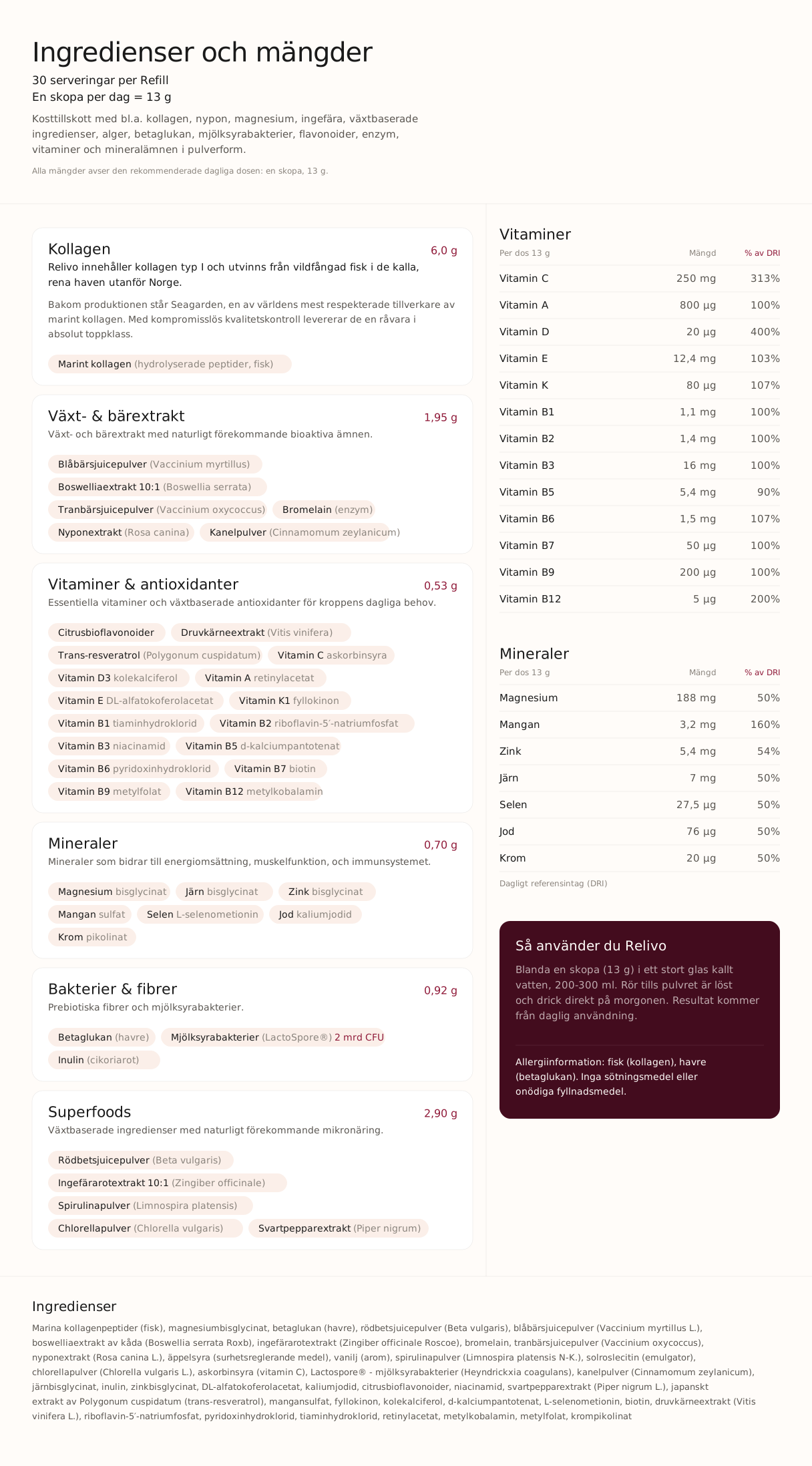
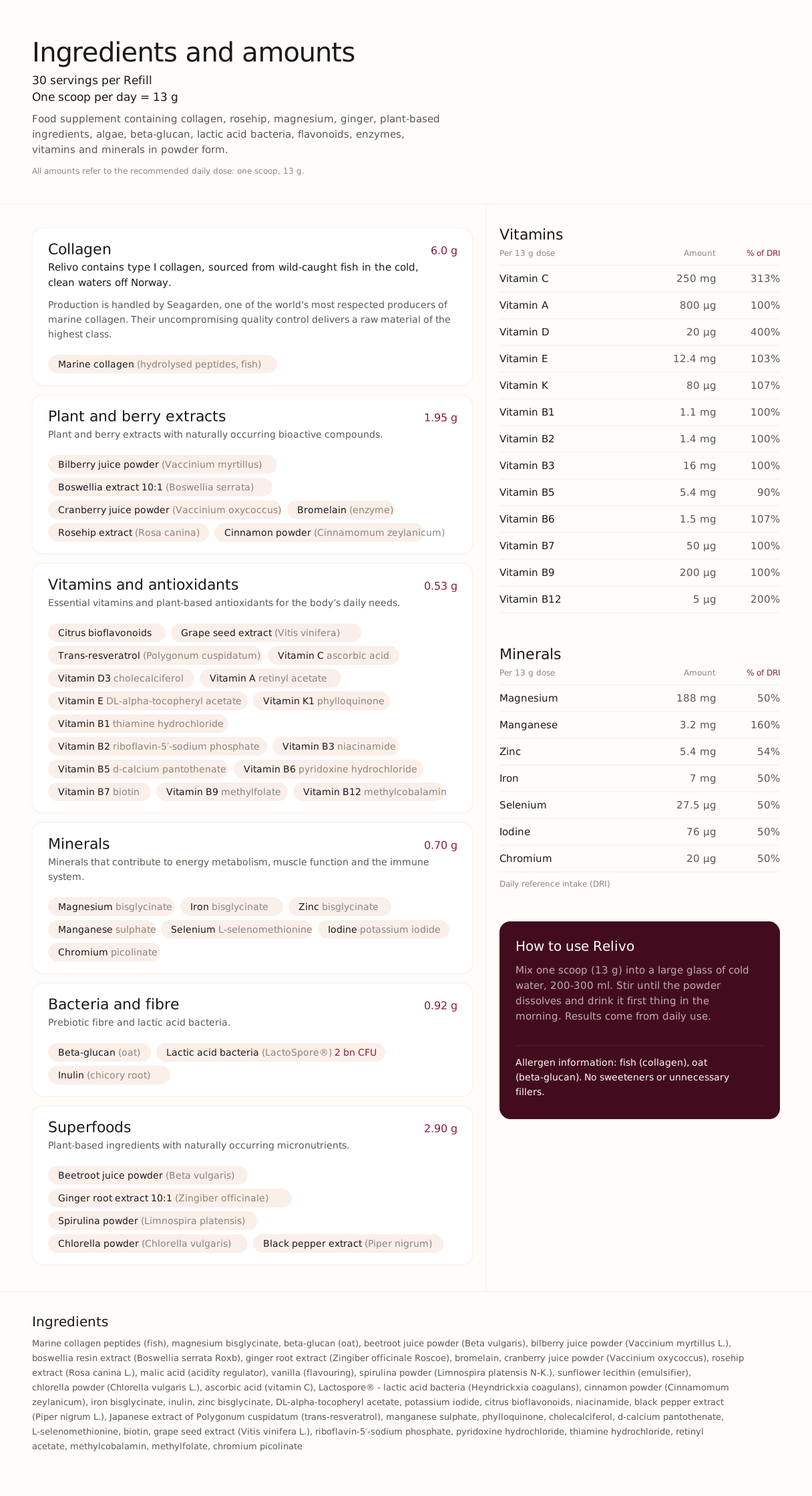
Relivo is a complete daily nutritional supplement developed in collaboration with Swedish researchers and nutritionists. Relivo combines 38 carefully selected nutrients that support the body's most important systems and structures.
Everything is gathered in one scoop of powder, developed to be simple to use and easy to incorporate into your daily routine. Relivo mixes in 60 seconds and serves as a long-term nutritional foundation for energy, immune function, gut health, muscles, and joints.
Sources