Magnesium glycinate and sleep - why it's 2026's most talked-about supplement
Discover why magnesium glycinate and sleep have become this year's hottest health topic - and what's really behind the hype.
Introduction
If you've scrolled past a single health tab this year, you've seen the word: magnesium glycinate. Suddenly, everyone's talking about it - on TikTok, in podcasts, and at coffee breaks.
And it's not just noise. Searches for magnesium glycinate and sleep have increased sharply in 2026, and this form has gone from a niche substance to perhaps the most talked-about supplement right now.
In this article, we'll explain what magnesium glycinate actually is, why this particular form is linked to sleep, and how it relates to the body's own recovery. We'll keep it simple, concrete, and fact-based – without overpromising.
Why everyone is talking about magnesium glycinate in 2026
Sleep has become one of this year's biggest health trends. "Sleepmaxxing" - optimizing one's sleep with everything from the right bedding to calm evening routines - has, according to several sources, become one of the hottest health movements in Sweden.
At the same time, the perception of magnesium has changed. In the US, almost one in five adults now take magnesium specifically for sleep, more than doubling in two years. Sweden is following the same trend.
This isn't happening in a vacuum. The Public Health Agency reports that approximately one in two adult Swedes experience recurring sleep problems. When so many are sleeping poorly, it's no wonder that interest in magnesium glycinate and sleep has grown so rapidly.
What exactly is magnesium glycinate?
Magnesium comes in many different forms, and the form determines how well the body can absorb the mineral. It's much like the difference between a gift wrapped in paper you can easily tear open, and one that's taped in multiple layers.
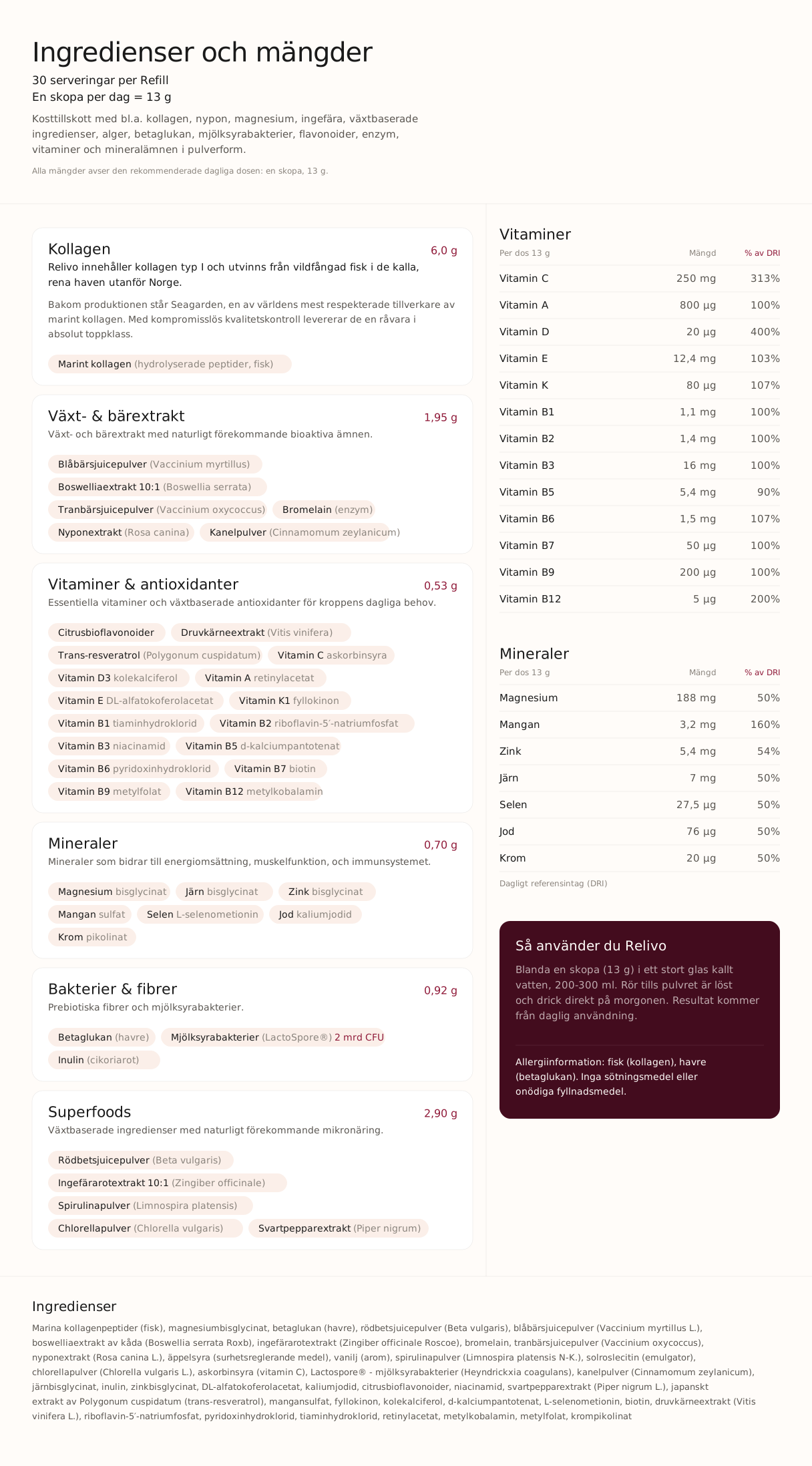
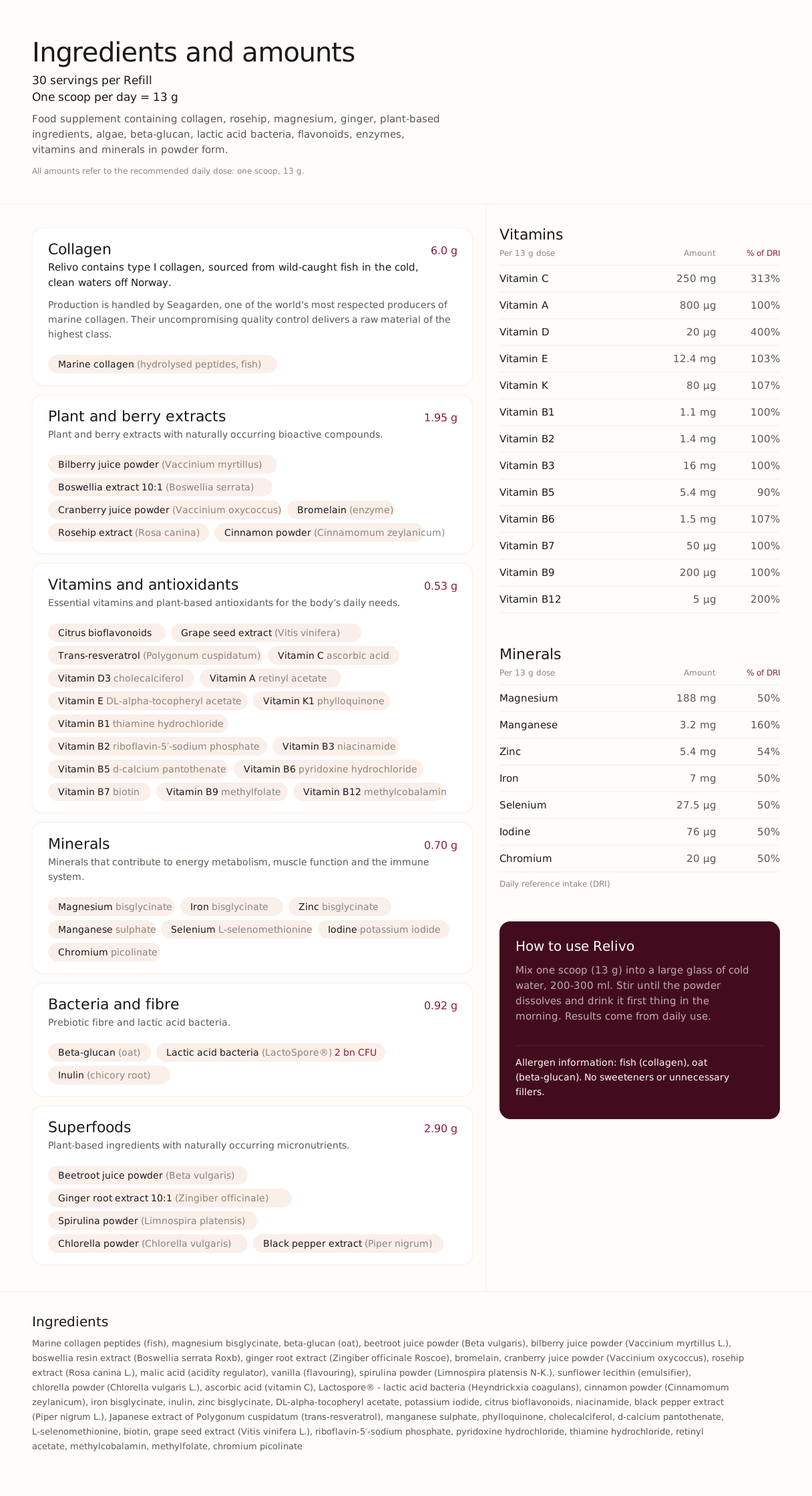
Magnesium glycinate - often also called magnesium bisglycinate - is magnesium bound to the amino acid glycine. This bond makes the form gentle on the stomach and easy for the body to absorb.
Why the glycinate form is specifically linked to sleep
Unlike, for example, magnesium oxide, which is primarily used for constipation, the glycinate form is the one most often studied in relation to relaxation and recovery.
That's a major reason why magnesium glycinate and sleep are mentioned in the same breath. This form is simply the one research most often focuses on when it comes to calm and evening routines.
How magnesium is connected to sleep
Magnesium contributes to the normal function of the nervous system and to normal psychological function. This isn't marketing jargon, but rather formulations based on EFSA's scientific assessments.
At a cellular level, magnesium is involved in the processes that calm nerve signals. The mineral supports the body's GABA system, the brain's primary inhibitory signaling system, and acts as a natural counterbalance to the signals that keep us awake and alert.
A randomized, placebo-controlled study from 2025 on adults with self-reported poor sleep specifically investigated magnesium bisglycinate. Research on magnesium glycinate and sleep is steadily growing, even though every individual study naturally has its limitations.

Glycine - the calming half of the molecule
This is where it gets really interesting, and it's something few people talk about: glycine isn't just a carrier for magnesium. The amino acid plays its own role.
Glycine acts as an inhibitory neurotransmitter in the central nervous system. Research shows that glycine can slightly lower the body's core temperature – and a slight drop in temperature is one of the natural signals the body uses to wind down before bed.
This means that magnesium glycinate, in a way, provides two calming components in the same molecule: magnesium and glycine. This is a large part of the explanation for why magnesium glycinate and sleep are so naturally linked.
Magnesium is just one part of the chain
Here's an important nuance: no single nutrient manages sleep on its own. The body's circadian rhythm relies on an interplay of many building blocks.
Melatonin – the hormone that signals it's nighttime – is produced by the body itself in several steps. The amino acid tryptophan is first converted to serotonin and then further to melatonin.
The cofactors that drive melatonin production
Each step in that chain requires cofactors: magnesium, vitamin B6, vitamin B12, folate, and iron. If a building block is missing, the process falters. This is why magnesium is often described as part of a system rather than a solution in itself.
Vitamin B6 contributes to normal psychological function and is involved in neurotransmitter metabolism. Vitamin B12 contributes to the normal function of the nervous system. Together, they form part of the same machinery that magnesium relies on.
Everyday tips to strengthen the foundation
Supplements are a complement, never a shortcut. What truly moves the needle are the surrounding routines.
Try to go to bed and wake up at roughly the same time each day, even on weekends – your circadian rhythm loves predictability. Dim screens and bright lights during the last hour, as light inhibits the body's own melatonin production.
Keep your bedroom cool and dark. A slight drop in temperature helps the body wind down, just as glycine helps signal from within.
And be kind to yourself about sleep. Chasing "perfect" sleep can paradoxically make it harder to relax – those who sleep best often think about it the least.
When to seek medical attention
Temporary sleep difficulties are common and usually harmless. However, persistent problems should be taken seriously.
If you have trouble sleeping for several weeks, constantly wake up exhausted, or if sleep deprivation affects your mood, concentration, or daily life, you should contact healthcare professionals. The same applies to snoring with breathing pauses, which can be a sign of sleep apnea.
A dietary supplement never replaces a medical assessment. If you are concerned, always speak with 1177 or your primary care provider.
Summary
The fact that magnesium glycinate and sleep have become the big topic of conversation in 2026 isn't just about a trend. Behind the interest lies a logical explanation: the form is gentle and easily absorbed, magnesium supports the normal function of the nervous system, and glycine contributes its own calming role.
At the same time, magnesium is just one piece of the puzzle. The body's melatonin production relies on several nutrients working together — and on the daily routines that frame the night.
Think system, not shortcut. It's the combination of the right building blocks and good routines that provides the best conditions for a calmer evening and better sleep.
About Relivo
Relivo is a complete daily nutritional supplement developed in collaboration with Swedish researchers and nutritionists. Relivo combines 38 carefully selected nutrients that support the body's most important systems and structures.
All gathered in one scoop of powder, developed to be easy to use and simple to incorporate into daily life. Relivo mixes in 60 seconds and is used as a long-term nutritional foundation for energy, immune system, gut health, muscles, and joints.
Sources
- The Public Health Agency of Sweden – Sleep problems among adults in Sweden
- EFSA – Health claims related to magnesium
- EFSA – Health claims related to vitamin B6 and B12
- NIH – Magnesium Fact Sheet
- Magnesium Bisglycinate in Adults Reporting Poor Sleep – RCT 2025
- Bannai M, Kawai N – Glycine improves the quality of sleep
- Kawai N et al. – Sleep-promoting and hypothermic effects of glycine