Joint health – how diet and nutrition support your joints
We rarely think about our joints until they make themselves known. A creaky staircase, a stiff morning, shoulders that just won't cooperate. This is what diet, movement, and nutrition actually have to do with it.

Introduction
Joints are some of the body's hardest-working structures. Every step, lift, and twist passes through them, often thousands of times a day without us even noticing.
And that is precisely why they are most noticeable when something feels off. Morning stiffness, a clicking knee, a shoulder that won't reach all the way. That is often when we start wondering what our joints actually need.
The good news is that much can be supported through everyday choices. Diet, movement, and the right nutrition all play a role in how our joints feel over time.
What exactly is a joint?
A joint is the place where two bones meet. But it is not the bones that do the work—it is everything surrounding them.
The ends of the bones are covered with cartilage, a smooth and elastic tissue that allows bones to glide against each other without friction. Between them is synovial fluid, a viscous liquid that lubricates and absorbs shock.
Surrounding the joint itself is connective tissue: ligaments, tendons, and the joint capsule, which hold the structure together and provide stability. And at the foundation of all this is one recurring material—collagen.
Collagen is the protein that gives cartilage, tendons, and ligaments both structure and resilience. You can think of it as the rebar in concrete: it is what makes the tissue both strong and flexible at the same time.
Foods that joints thrive on
There is no single superfood for joints. But there is a dietary pattern that research keeps returning to, and it is all about building blocks and balance.
Collagen and Vitamin C—the perfect pair
The body is constantly building new collagen, and for that, it needs raw materials. Amino acids from protein in the diet are the base, but one of the most important partners is Vitamin C.
Vitamin C contributes to normal collagen formation for the normal function of cartilage. Without enough Vitamin C, the body simply cannot assemble collagen fibers properly—it is a cofactor in the process itself.
Therefore, it makes sense to think of collagen and Vitamin C together. Citrus fruits, bell peppers, rosehips, and berries provide plenty of Vitamin C, while protein from fish, eggs, legumes, and meat provides the amino acids.
Omega-3 and fatty fish
Fatty fish like salmon, mackerel, and herring are among the most studied dietary factors for joints and connective tissue. The omega-3 fats in fish are part of the body's own regulation of inflammatory processes.
Those who rarely eat fish get significantly less omega-3, and here, plant-based sources like walnuts, flaxseeds, and rapeseed oil can help. Including fatty fish a couple of times a week is one of the simplest dietary adjustments you can make.
Color on the plate—antioxidants and polyphenols
Berries, vegetables, and spices with vibrant colors contain polyphenols and antioxidants. These play a role in the body's cellular protection against oxidative stress, which also affects connective tissue over time.
Blueberries, rosehips, pomegranate, dark leafy greens, and spices like turmeric and ginger are classic examples. A simple rule of thumb is to make your plate colorful—the more shades, the wider the spectrum of phytonutrients.
The minerals that are often forgotten
Connective tissue is not built by protein alone. Manganese contributes to the normal formation of connective tissue and is found in whole grains, nuts, seeds, and legumes.
Magnesium plays a role in muscle function around the joints, while vitamin D and calcium are fundamental to the skeleton. It is the interplay between these that makes a varied diet so important—it is rarely enough to focus on a single nutrient.
Plant extracts studied for joint comfort
Certain plants have a long tradition of use in connection with joints and movement, and many of them are currently being examined in modern research.
Boswellia serrata, an extract from the frankincense tree, has been studied in relation to joint comfort and mobility. Ginger is another well-known spice that has been investigated in similar contexts, often in combination with other plant extracts.
It is worth being realistic here: the research is promising but still evolving, and plant extracts are a supplement to—not a replacement for—diet, exercise, and rest. However, as part of a holistic approach, they are interesting additions.
The lifestyle surrounding your joints
Diet is only half the picture. How you move and load your body affects your joints just as much.
Movement is how cartilage receives nutrition. Cartilage has no blood supply of its own; instead, it receives nutrients as synovial fluid is pressed in and out when the joint is bent and loaded. Sedentary behavior does the opposite—joints become stiffer when they remain still.
Strength training builds the muscles around the joint, which relieves the joint itself and provides support. Walking, swimming, and cycling maintain mobility without high impact.
Body weight also plays a role, especially for knees and hips, as the load is multiplied with every step. And recovery is part of the picture: sleep and rest days are when the body rebuilds tissue.
When you should seek medical care
Diet and nutrition are about supporting the body over time, not about fixing acute problems. If you experience severe joint pain, swelling, redness, or heat in a joint, or if symptoms appear suddenly and do not subside, you should contact a healthcare professional.
The same applies if stiffness and pain persist for a long time or affect your daily life. In those cases, it is a matter for a physiotherapist or medical professional, not something you need to solve on your own.
Summary
Joints thrive on a holistic approach. Collagen and vitamin C provide the building blocks, omega-3 and colorful plants contribute to balance, and minerals like manganese support the connective tissue.
Add regular movement, some strength training, and sufficient rest, and you have the foundation in place. A complete supplement like Relivo can fill in the gaps—but it is your daily habits that will carry your joints the furthest.
About Relivo
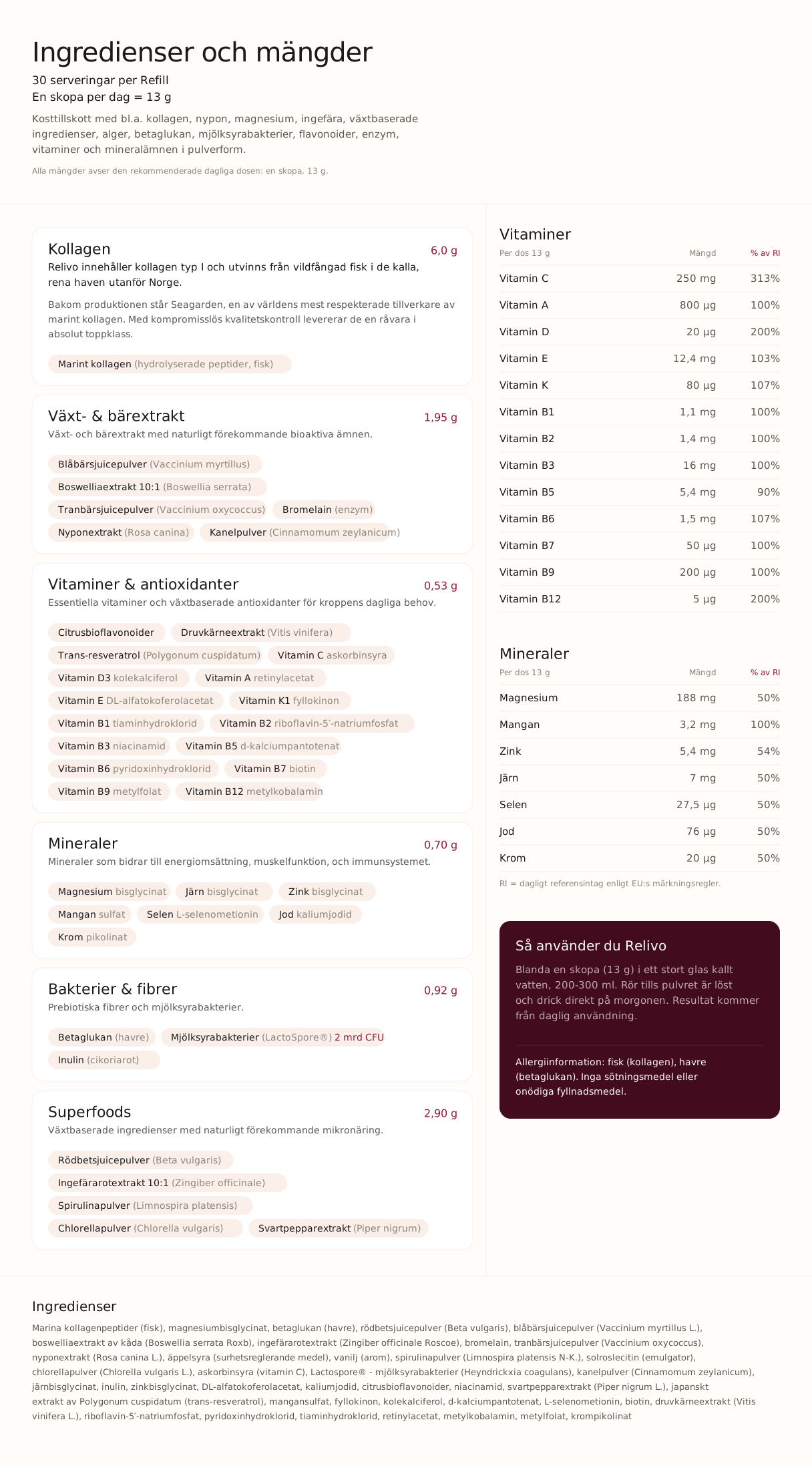
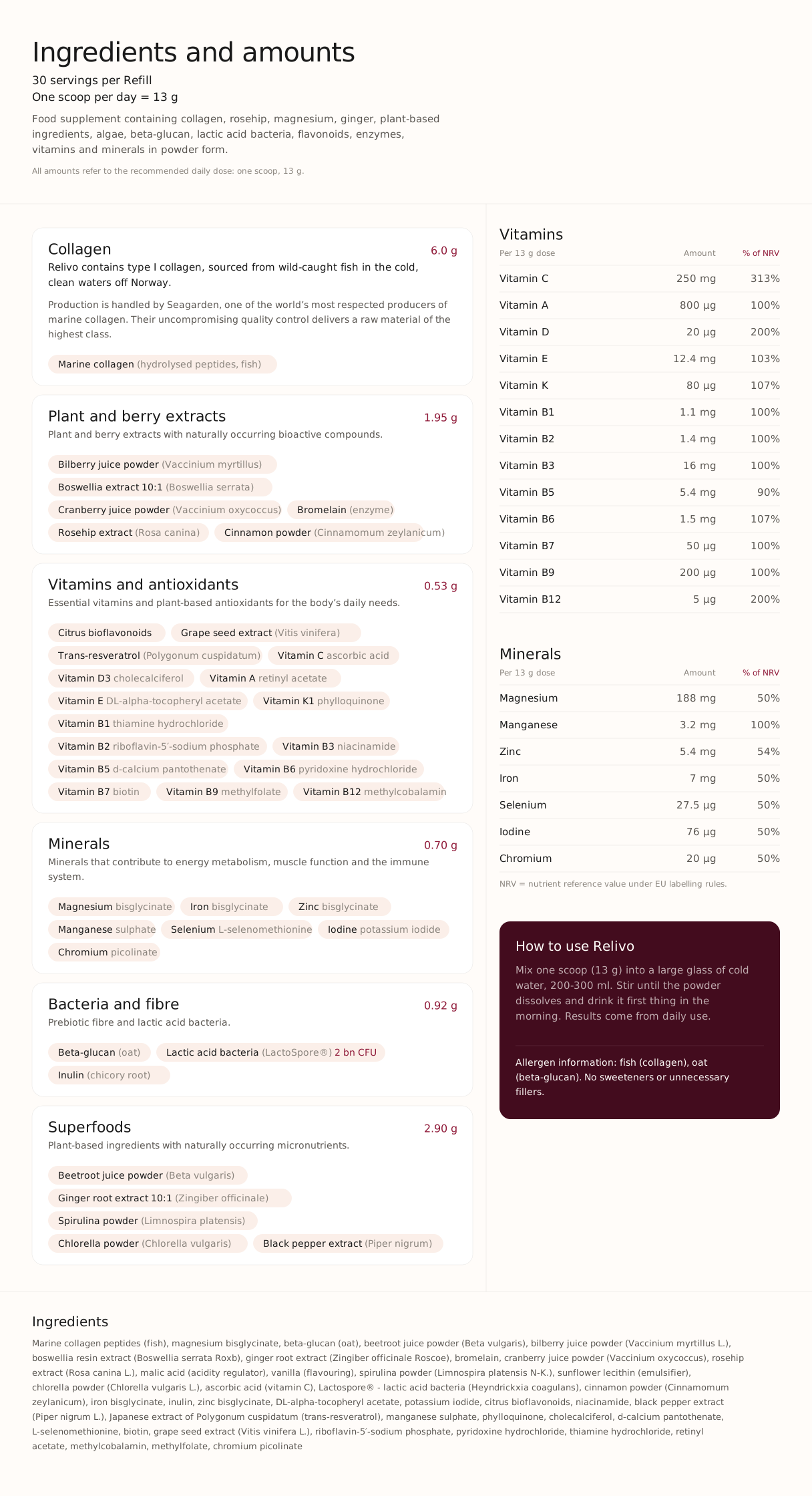
Relivo is a complete daily nutritional supplement developed in collaboration with Swedish researchers and nutritionists. Relivo combines 38 carefully selected nutrients that support the body's most important systems and structures.
Everything is gathered in one scoop of powder, designed to be easy to use and simple to incorporate into your daily routine. Relivo mixes in 60 seconds and serves as a long-term nutritional foundation for energy, immune function, gut health, muscles, and joints.
Sources
- Swedish Food Agency – Vitamin C and dietary sources: https://www.livsmedelsverket.se
- EFSA Journal 2009; 7(9):1226 – Vitamin C and normal collagen formation for cartilage function
- EFSA Journal 2010; 8(10):1808 – Manganese and normal connective tissue formation
- 1177 Healthcare Guide – Joints and joint problems: https://www.1177.se
- NIH Office of Dietary Supplements – Omega-3 Fatty Acids: https://ods.od.nih.gov/factsheets/Omega3FattyAcids-HealthProfessional/
- PubMed – Boswellia serrata extract and joint comfort: systematic review (Sengupta et al.)
- PubMed – Ginger (Zingiber officinale) and musculoskeletal discomfort: review
- Relivo – Ingredients and research: https://www.relivo.se/en/forskning