Collagen for Sleep — Glycine and the Way to Better Sleep Quality
Collagen naturally contains the amino acid glycine, which is often linked to better sleep quality. Here you get a shorter, clearer and fact-based guide to how collagen can fit into an evening routine.

Introduction
Sleep is one of the most important parts for mental and physical balance, but many people find it difficult to unwind in the evenings.
Interest in ingredients that can support sleep quality has increased, and glycine -- an amino acid found abundantly in collagen -- is one of the most studied.
Collagen has therefore become a popular choice in evening routines in people who want to create calmer evenings and more stable sleep quality.
What is Glycine - and Why Is It in Collagen?
Glycine is the body's simplest amino acid and makes up about a third of all collagen.
It is precisely glycine that makes collagen interesting for sleep, as several studies show that glycine can contribute to relaxation and perceived improvement in sleep quality.
The role of glycine in the body
Research has shown that glycine can affect relaxation, body temperature and the feeling of recovery.
It makes the amino acid relevant for evening routines where the goal is calm and stability.
How collagen can support sleep quality
1. Collagen is a natural source of glycine
Since collagen contains a lot of glycine, it is an easy way to get this amino acid in conjunction with evening routines.
It is a gentle and natural method that many people find fits well in a downshift focus.
2. A warm drink with collagen can become a ritual
Many people use collagen in tea, hot chocolate or an evening drink.
The heat helps the body relax, while at the same time you get glycine from the collagen.
3. Can be combined with other soothing habits
Collagen works well paired with routines such as screen-free minutes, light stretching, breathing, or journaling.
It's the big picture that makes the difference.
How to think about collagen and timing?
The most important thing is not when you take collagen — but that you take it every day. The effect is built up through continuity, just like with Relivo.
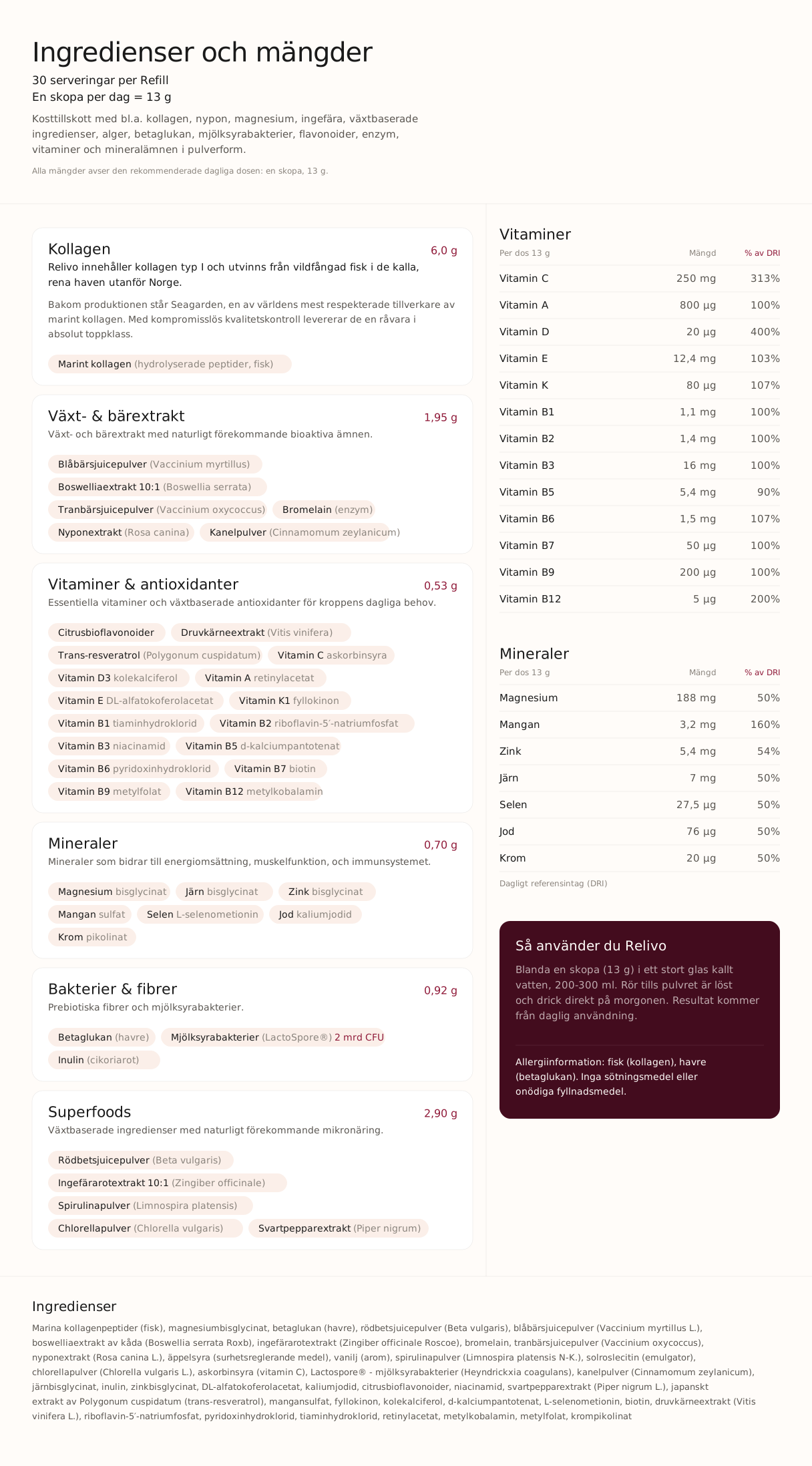
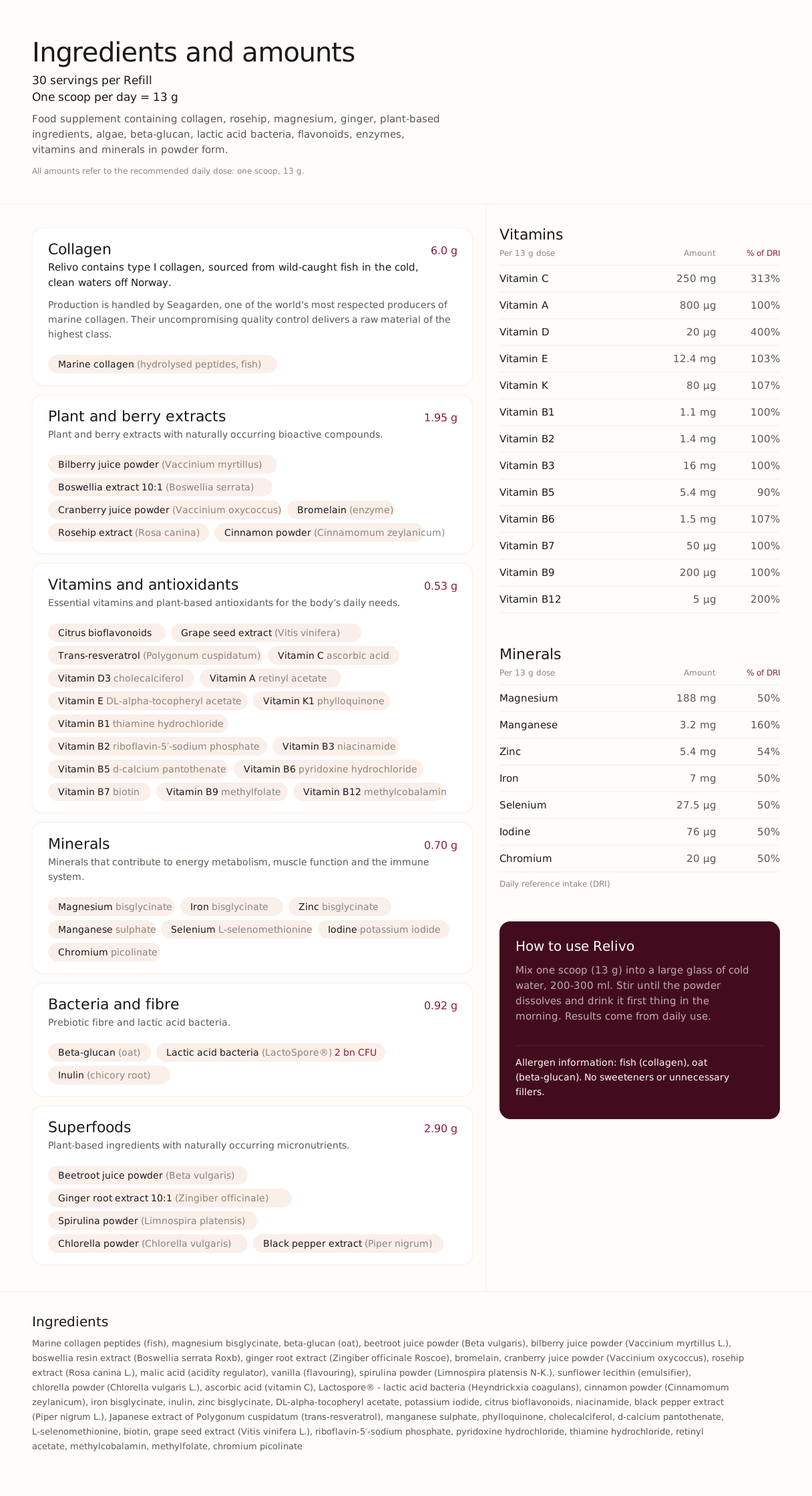
You can therefore advantageously let Relivo be your morning routine, and if you use pure collagen as a separate supplement, it can be taken at any time of the day — the time that is easiest to stick to.
In short:
- Relivo in the morning - easy daily start
- Collagen: morning or evening - choose what you can do consistently
- Continuity > time
Which type of collagen is best suited?
Both bovine and marine collagen contain abundant glycine.
The most important thing is that it is hydrolyzed so that the body can easily absorb it - and that it mixes smoothly into the evening drink.
The Science Behind Glycine and Sleep
Research has shown that glycine can:
- affect subjective sleep quality
- contribute to better perceived morning alertness
- affect body temperature before sleep
- support downwarping
It is these results that make glycine interesting in the context of sleep.
Summary
Collagen is more than just a supplement for skin and joints - its high glycine content makes it a popular feature of evening routines.
By mixing collagen in a warm drink and combining it with soothing habits, you can create a ritual that helps the body find a calmer pace for the night.
Small steps go a long way when done regularly.
Sources
- Yamadera, W. et al. , Glycine ingestion improves subjective sleep quality, Sleep and Biological Rhythms, 2007.
- Bannai, M. et al. , Effects of glycine on daytime performance after restricted sleep, Frontiers in Neurology, 2012.
- Kawai, N. et al. , Glycine and its influence on brain wave activity, Journal of Pharmacological Sciences, 2015.
- Inagawa, K. et al. , Glycine reduces core body temperature before sleep, Neuropsychopharmacology Reports, 2020.
- Harvard Health Publishing, “Nutrition and Sleep”, 2021.