Inflammaging – how low-grade inflammation is linked to aging
The silent inflammation that increases with age has its own name: inflammaging. Here, we explain what it is and what you can actually influence.
.jpg)
Introduction
Inflammation sounds like something acute—a swollen joint, an infection, redness. But there is a quieter variant that researchers are talking about more and more: inflammaging.
The term is a combination of the words inflammation and aging. It describes the low-grade inflammation that tends to increase in the body over the years, often completely without us noticing it.
In this article, we go through what inflammaging is, what research says about why it occurs, and how diet and lifestyle are connected to it. We keep it simple, concrete, and fact-based.
What is inflammaging, really?
To understand inflammaging, we first need to distinguish between two types of inflammation. They are very different things.
Acute inflammation is the body's rapid, protective response to an injury or infection. It is short-lived, powerful, and subsides once the job is done. It is a force for good.
Inflammaging is something else. It is a low-grade, systemic inflammation that persists for a long time without resolving itself—an ember rather than a fire. And it tends to increase with advancing age.
It is precisely this persistence that makes it interesting. An inflammation that never really ends puts the body's systems under constant low-level stress.
Why does it occur with age?
Inflammaging is not the result of a single cause, but of several interacting processes. Research points to a few recurring mechanisms.
One is immunosenescence—the fact that the immune system changes with age and more easily ends up in a chronically activated state. Another is the accumulation of so-called senescent cells, aged cells that have stopped dividing but remain and send out inflammatory signals.
The gut also plays a role. An unbalanced gut flora and a more permeable intestinal lining can contribute to the spread of inflammatory signals throughout the body.
The important message is that a large part of inflammaging is linked to external, modifiable factors: an unbalanced diet, a sedentary lifestyle, stress, poor sleep, and environmental factors. That is where the opportunity lies.
What research links inflammaging to
This type of low-grade inflammation has become a hot research area because it keeps appearing as a common denominator in aging.
Researchers describe inflammaging as one of the central markers of aging, intertwined with several of the processes that drive age-related functional decline. Inflammatory markers such as CRP and interleukin-6 are often used to measure the condition.
It is worth being honest and sober here: research shows correlations, and the field is developing rapidly. The point is not to panic, but to understand that everyday habits actually seem to play a role in this balance.
The role of diet—what the studies say
Diet is one of the most studied ways to influence low-grade inflammation. And the evidence points in the same direction.
Polyphenols from colorful plants
Polyphenols are compounds found in colorful vegetables, berries, olives, and tea. In a study of people over 60 with elevated inflammatory markers, a polyphenol-rich diet led to a clear reduction in markers such as interleukin-6 and CRP—while simultaneously promoting a more diverse gut microbiome.
This is one of the reasons why berries and greens appear in almost every dietary pattern associated with healthy aging.
Omega-3 from fatty fish
The fatty acids EPA and DHA, found in fatty fish, are frequently studied in relation to inflammatory markers. They are also a cornerstone of the Mediterranean diet, which is linked to lower levels of inflammation.
Antioxidants and the big picture
Vitamin C and vitamin E help protect cells against oxidative stress, while selenium and zinc are part of the body's own antioxidant system. Oxidative stress and inflammation are closely linked.
As is so often the case, it is the overall picture that counts. The Mediterranean diet—rich in greens, berries, olive oil, fish, and nuts—is the dietary pattern most clearly associated with lower inflammaging.
Everyday habits carry the most weight
Diet is central, but it is not the only factor. Several other habits influence the same balance.
Regular movement is one of the most powerful tools—physical activity itself has a dampening effect on low-grade inflammation. Also, prioritize sleep, as insufficient sleep is linked to higher levels of inflammation.
Keep stress in check and nurture your gut with fiber and variety. And the obvious but crucial ones: avoid smoking and keep alcohol consumption moderate.
No single thing fixes this. It is the sum of many small, sustainable choices over time that makes the difference.
Summary
Inflammaging is the low-grade, persistent inflammation that tends to increase with age—a glow rather than a fire. Research views it as one of the central markers of aging, intertwined with several age-related processes.
The good news is that much of it is linked to modifiable factors. A polyphenol-rich diet, omega-3, a broad antioxidant foundation, regular movement, good sleep, and a healthy gut are the recurring common denominators.
Think holistically, not in shortcuts. Consistency over time is what carries the most weight for this balance.
About Relivo
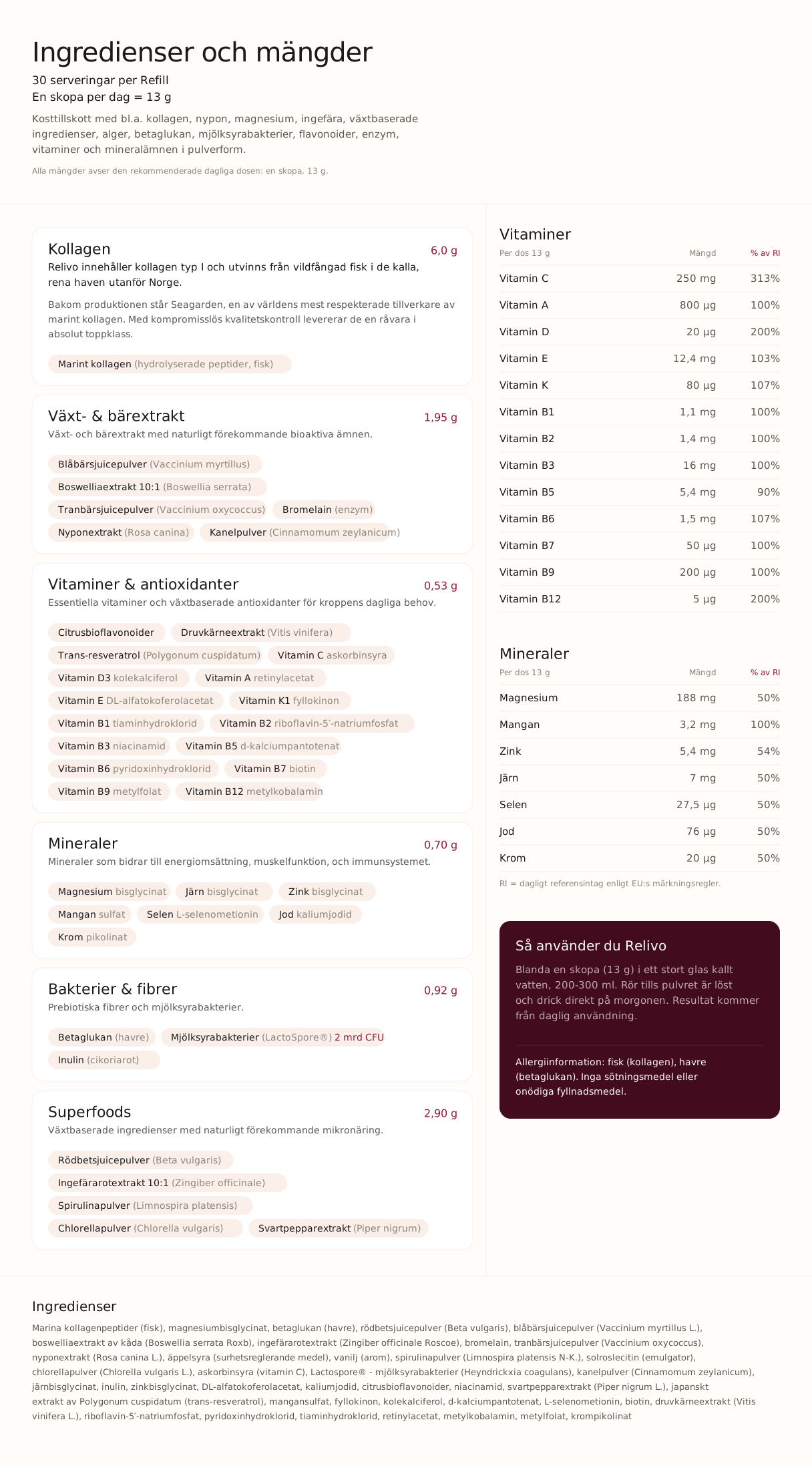
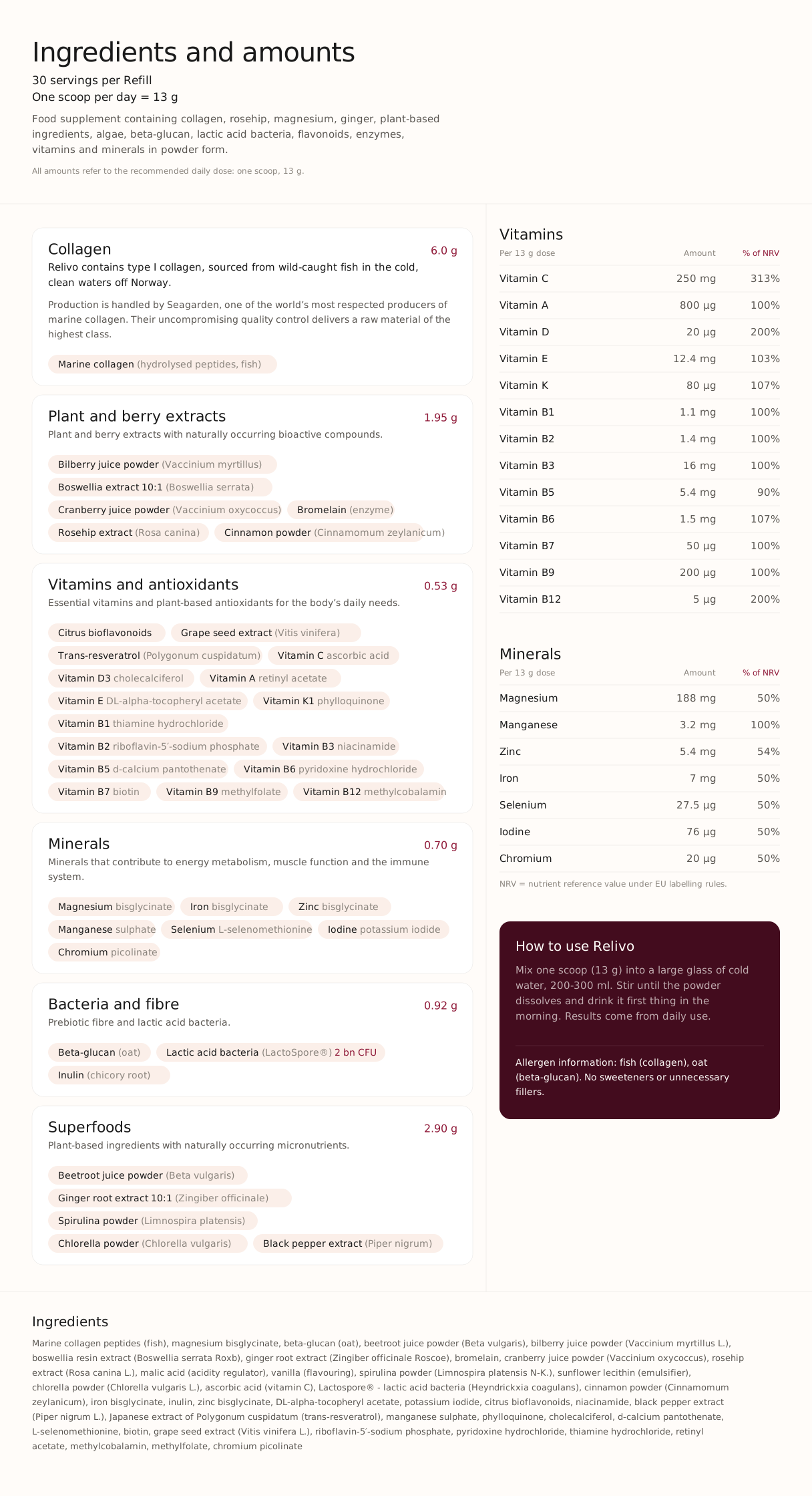
Relivo is a complete daily nutritional supplement developed in collaboration with Swedish researchers and nutritionists. Relivo combines 38 carefully selected nutrients that support the body's most important systems and structures.
Everything you need in one scoop of powder, developed to be easy to use and simple to incorporate into your daily routine. Relivo mixes in 60 seconds and serves as a long-term nutritional foundation for energy, immune function, gut health, muscles, and joints.
Sources
- Immunosenescence and inflammaging: Mechanisms and modulation through diet and lifestyle (Frontiers in Immunology, 2025)
- Effect of a polyphenol-rich dietary pattern on inflammatory markers in older adults (PMC, 2025)
- The impact of the Mediterranean diet on immune function in older adults (Aging Clinical and Experimental Research)
- Polyphenol-rich diets linked to reduced inflammaging (Nutrition Insight)
- Franceschi C et al. – Inflammaging: a new immune–metabolic viewpoint
- EFSA – Health claims related to vitamin C, vitamin E, selenium and zinc (oxidative stress)