Does thinking burn calories? The surprising answer
After a day of studying for exams or intense meetings, it feels like your brain has run a marathon. But does it actually consume more energy? Research provides an answer that surprises most people.

Introduction
You have been working on a difficult task all day. Your brain feels drained, you are hungry, and you think that you must have burned some energy in the process.
It is a reasonable thought. The brain is the body's most energy-demanding organ, and mental work certainly feels exhausting.
The answer to the question is both yes and no. The brain consumes a lot of energy. But the difference between thinking intensely and not thinking much at all is surprisingly small.
In this article, we go through what the brain actually uses energy for, why hard mental work only marginally changes consumption, why you still get tired and hungry, and what that means in practice.
The brain is an energy hog
Let's start with what is true.
In an adult, the brain accounts for about two percent of body weight. Yet, it uses about twenty percent of the body's energy at rest. That is about ten times more than its weight alone would predict.
Calculated as one-fifth of an adult's resting consumption, this corresponds to roughly 250 to 350 kilocalories per day. Exactly how much depends on body size and individual metabolism.
The main energy source is glucose, i.e., sugar from the blood. During prolonged fasting, the brain can also use so-called ketones, which are formed when the body breaks down fat.
So the brain is expensive to run. The question is what it does with all that energy.
Most of it is used even when you are doing nothing
Here is what is surprising.
The largest part of the brain's energy consumption does not go to the tasks we consciously engage in. It goes to the constant activity in the brain: maintaining the charge of nerve cells, allowing networks to communicate, maintaining connections, and keeping the system ready to react.
Neurologist Marcus Raichle, who has researched the brain's energy budget, has described it as the extra energy used when the brain works on a specific task being remarkably small compared to consumption at rest. Often, it is less than five percent of the baseline level.
In other words: the brain is almost as expensive to run when you are staring out the window as when you are solving a difficult equation.
The calculation
Based on the figures above, a rough estimate can be made.
If the brain consumes about 300 kilocalories per day, that is about 12 to 13 kilocalories per hour. If intense mental work increases consumption by at most five percent, we are talking about less than one extra kilocalorie per hour.
Even during a full workday of heavy mental labor, this estimate amounts to only a few kilocalories. That is roughly equivalent to a bite of a cookie.
This is a simplified calculation, and the figures vary between studies and individuals. But the conclusion holds: the extra energy from deep thinking is very small.
The myth of the chess players
Perhaps you have read that chess grandmasters can burn 6,000 kilocalories a day during a tournament.
The claim spread in 2019 following a report in which a researcher was quoted, and it has since been repeated in many media outlets. However, the figure has not been substantiated in published research, and it aligns poorly with what we know about the brain's energy consumption.
It is a good reminder that a claim does not become true just because it is repeated often.
The child's brain is a different story
There is one time in life when the brain's energy consumption really takes off.
A study published in PNAS in 2014 estimated how much glucose the brain uses during development. During early childhood, consumption reaches a peak. At that point, it accounts for about two-thirds of the body's resting energy consumption and about 43 percent of the total daily energy requirement.
The researchers linked this to the fact that the child's physical growth is at its slowest during those years. The body seems to prioritize brain development over height growth.
It is therefore not the thinking itself that is costly, but the building and development of the brain.
Why does thinking make you so tired?
If thinking barely costs any extra energy, why does a day of concentrated work feel so draining?
A study published in Current Biology in 2022 provided a possible explanation. Researchers in France had participants perform either demanding or simple cognitive tasks throughout a full workday. Using an MRI scanner, they measured the levels of various substances in the brain at several points during the day.
In those who had performed demanding tasks, the level of the signaling substance glutamate had increased in the part of the brain known as the lateral prefrontal cortex. This is an area that is important for control and planning.
At the same time, their decision-making changed. They were more likely to choose options that required less effort and provided immediate rewards.
The researchers' interpretation is that fatigue after mental work is not about the brain running out of energy, but about certain substances accumulating and needing to be managed. The feeling of fatigue may therefore be a way to get us to take a break.
This is a single study, and the results need to be confirmed by others. However, it provides a plausible explanation for why one can be exhausted without having consumed much energy.
Why does thinking make you hungry?
Many people feel that they eat more during exam periods or intense work weeks. There is research that supports that experience.
In a Canadian study from 2008, 14 female students were asked on different occasions to either rest, read and write a summary, or perform a series of computerized tests. Afterward, they were allowed to eat freely from a buffet.
After the mental tasks, they ate an average of about 200 and 250 kilocalories more, respectively, than after resting.
The researchers also noted that blood sugar and insulin levels fluctuated more, and that levels of the stress hormone cortisol were higher during the mental tasks.
The study was small and conducted only on young women, so the results should be interpreted with caution. However, when compared to how little energy thinking itself actually consumes, the pattern is interesting: what you eat afterwards can be significantly more than what the brain actually used up.
What does this mean in practice?
A few conclusions can be drawn.
1. Thinking is not a weight-loss method. No matter how intensely you work mentally, it has very little impact on your energy expenditure.
2. Be mindful of hunger during intense periods. It may be greater than your actual needs. Having nutritious food available makes it easier to make the right choices.
3. The brain needs a steady supply of energy. Since the baseline consumption is high at all times, regular meals work better than long gaps followed by large meals.
4. Fatigue does not mean you have run out of energy. Taking a break, getting fresh air, and moving around often work better against mental fatigue than eating more food.
5. Sleep is the brain's most important form of recovery. It is during sleep that the brain cleanses and restores itself.
Where Relivo fits in
No product can make the brain think better or faster, and it would be wrong to claim otherwise.
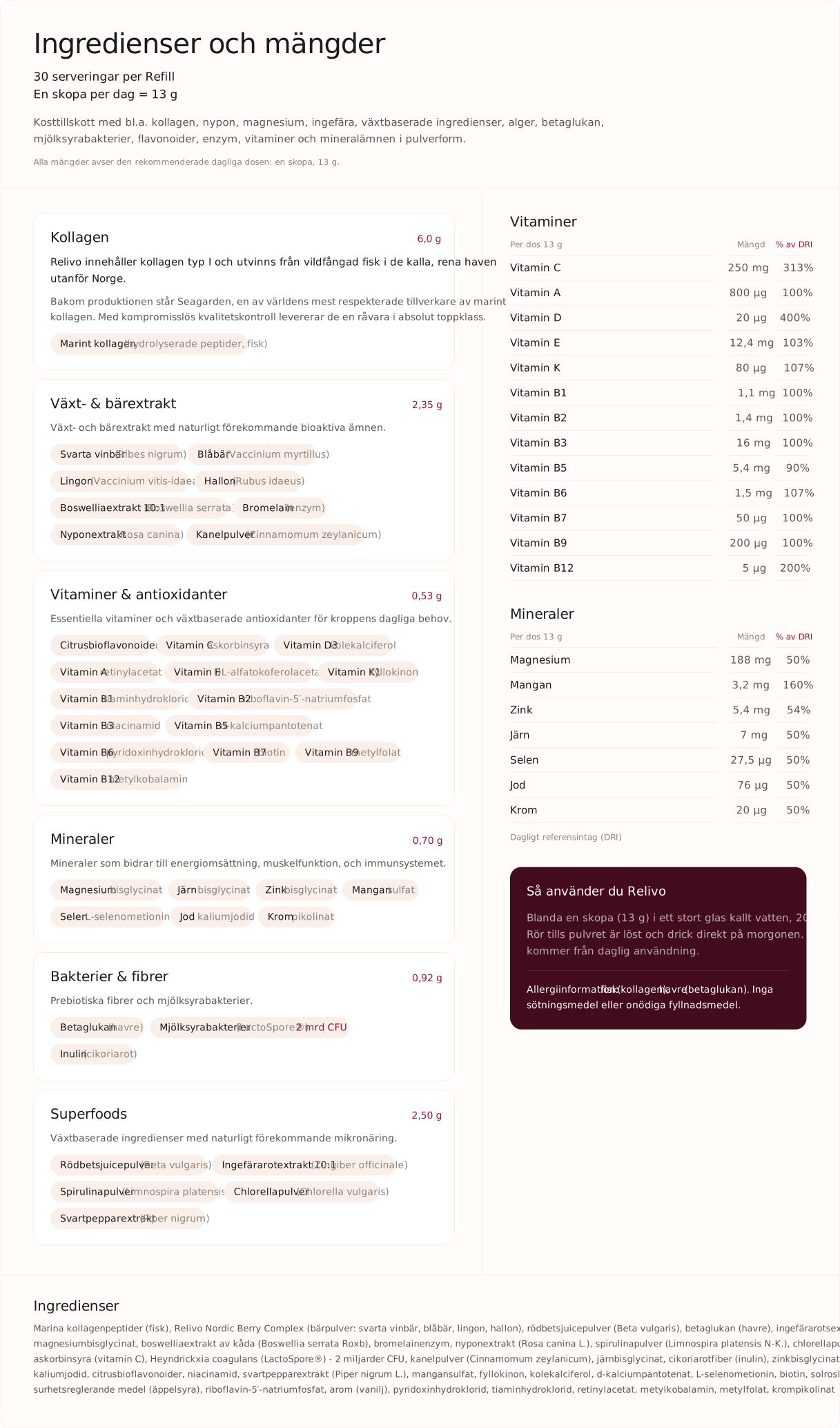
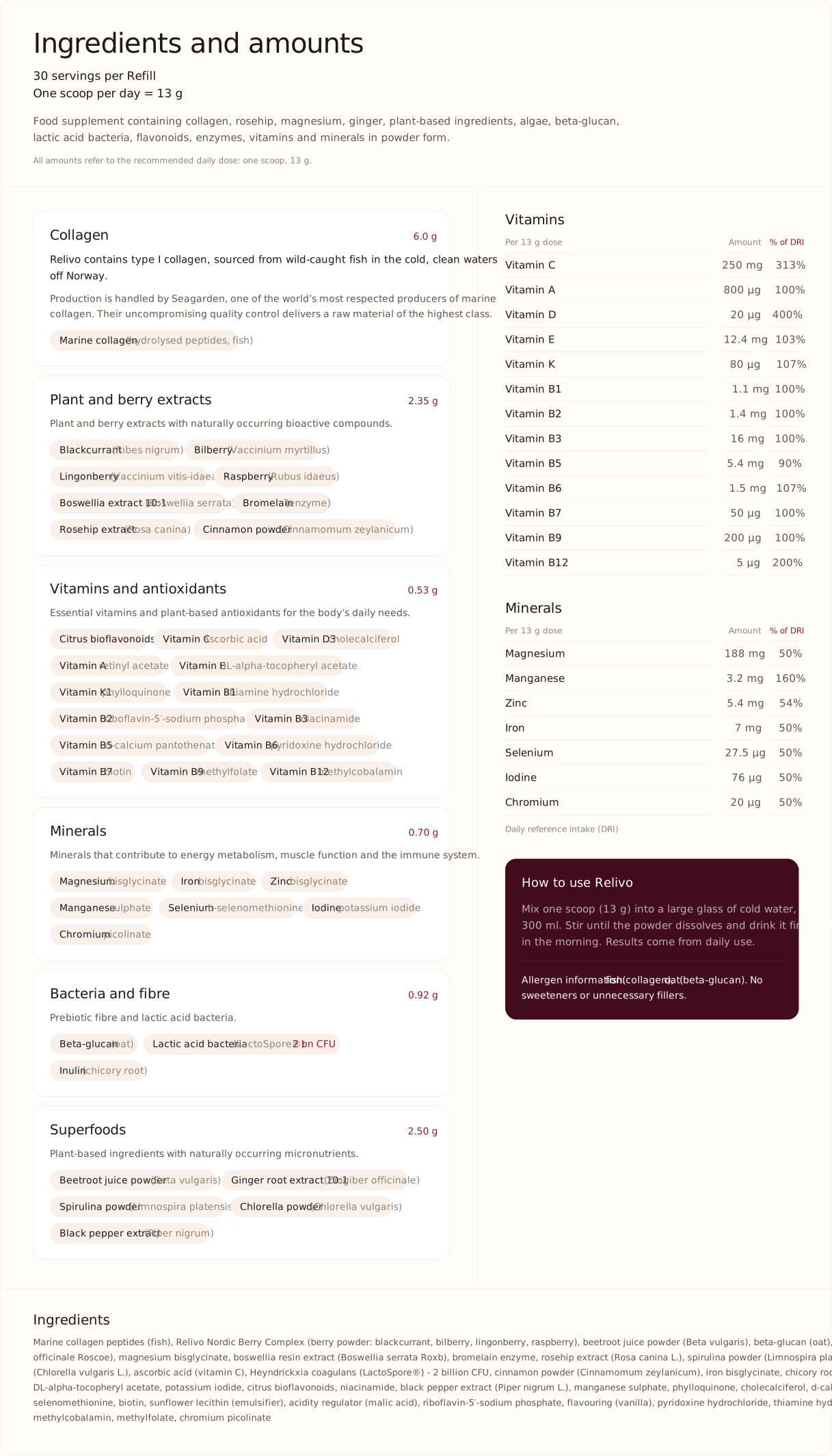
What can be said is that the brain, just like the rest of the body, requires certain nutrients to function normally. Relivo contains, among other things, iron, zinc, and iodine, which, according to EU-approved health claims, contribute to normal cognitive function. The formula also contains the entire B-complex, where several of the B vitamins contribute to normal energy metabolism.
It is part of the foundation. Sleep, regular meals, and breaks do more for the brain than any supplement.
When should you seek medical care?
Mental fatigue after a tough day is normal. Contact your primary care center if you have:
- Fatigue that does not go away after rest and sleep
- Concentration difficulties that affect your daily life over a long period
- Memory problems that are clearly worsening
- Fatigue accompanied by other symptoms, such as weight loss or low mood
Long-term fatigue can have many causes, including iron deficiency, B12 deficiency, thyroid problems, sleep disorders, or depression. Read more at 1177 Vårdguiden.
Summary
The brain accounts for about twenty percent of the body's energy consumption at rest, even though it only makes up two percent of body weight. However, most of that energy is used for the brain's constant, ongoing activity, not for the tasks we are actively working on.
The extra energy required by intensive mental work is often less than five percent of the baseline level. Over an entire workday, this amounts to only a few kilocalories.
The reason you still feel tired may be that certain substances, such as glutamate, accumulate in the brain. The fact that you get hungry is supported by research showing that people eat more after mental work, even though the brain has barely consumed any extra energy.
So no, studying for exams does not burn very many calories. But it does explain why the biscuit tin is empty when you are finished.
About Relivo
Relivo is a complete daily nutritional supplement developed in collaboration with Swedish researchers and nutritional physiologists. Relivo combines 38 carefully selected nutrients that support the body's most important systems and structures.
Everything is gathered in one scoop of powder, developed to be simple to use and easy to incorporate into your daily routine. Relivo mixes in 60 seconds and serves as a long-term nutritional foundation for energy, immune function, gut health, muscles, and joints.
Sources
- Raichle ME: The restless brain: how intrinsic activity organizes brain function (Philosophical Transactions of the Royal Society B, 2015)
- Raichle ME: The Brain's Dark Energy (Science, 2006)
- Kuzawa CW et al: Metabolic costs and evolutionary implications of human brain development (PNAS, 2014)
- Wiehler A et al: A neuro-metabolic account of why daylong cognitive work alters the control of economic decisions (Current Biology, 2022)
- Chaput JP et al: Glycemic Instability and Spontaneous Energy Intake: Association With Knowledge-Based Work (Psychosomatic Medicine, 2008)
- EFSA: Health claims for iron, zinc, iodine and B vitamins
- 1177 Vårdguiden: Fatigue