Cortisol and nutrients - how chronic stress steals your vitamins
Stress is felt in the head, but consumed in the cells. Here is how chronic stress depletes your most important nutrient stores - and which nutrients you need to replenish first.

Introduction
When we talk about stress, the conversation usually lands on the head—headaches, anxiety, sleep problems, and the feeling of not being enough. But what happens inside the body is just as important to understand.
Chronic stress is not just a mental burden. It is a physiological process where the stress hormone cortisol changes how the body uses, consumes, and stores nutrients. Some vitamins and minerals are depleted rapidly. Others are excreted at a higher rate through urine. And when cortisol is involved, it often drags sleep, eating habits, and gut function along in its wake.
The connection between cortisol and nutrients is therefore one of the most important—and most underestimated—explanations for why long-term stress leads to fatigue, brain fog, impaired recovery, and a weakened immune system. In this guide, we go through exactly what happens, which nutrients are affected the most, and how you break the cycle.
What is cortisol, really?
Cortisol is a hormone produced by the adrenal glands as part of the body's stress response. In the short term, it is vital—it raises blood sugar, increases alertness, mobilizes energy, and allows you to handle acute threats.
The problem arises when stress becomes chronic. Cortisol levels are then kept elevated over time, the circadian rhythm is disrupted, and the body never gets the chance to wind down properly. It is in this state that cortisol begins to act like a nutrient thief.
The connection between cortisol and nutrients is not marketing—it is well-documented basic physiology.
The five nutrients cortisol consumes the fastest
Here are the nutrients that research consistently points out as the most sensitive during long-term stress.
1. Magnesium - cortisol's biggest loser
Magnesium is perhaps the clearest example. During stress, the excretion of magnesium via urine increases, while the need within the cells also rises. Low magnesium status can, in turn, impair sleep and make the nervous system more reactive—which worsens the stress. A classic vicious cycle.
Magnesium also contributes to normal psychological function according to EU health claims, making it one of the most logical nutrients to support during stress.
2. B vitamins - fuel for the nervous system
The entire B complex is involved in the function of the nervous system, and the need increases during stress. B5 (pantothenic acid) is particularly important because it is needed for the actual production of stress hormones in the adrenal glands.
B6 affects the synthesis of serotonin and GABA. B12 and folate are central to the myelin formation of nerves and for normal psychological function. If you want to delve deeper, you can find more in B vitamins and stress – the role of the entire B complex in the nervous system.
3. Vitamin C - the adrenal gland's favorite
The adrenal glands, where cortisol is produced, are among the tissues in the body with the highest concentration of vitamin C. During stress, vitamin C is consumed more rapidly because it is used both in the synthesis of cortisol itself and in protecting against the resulting oxidative stress.
Vitamin C also contributes to the normal function of the immune system—something that often deteriorates when cortisol levels remain high for long periods.
4. Zinc - mood regulation and immune balance
Zinc is involved in over 300 enzymatic reactions in the body and plays a particularly important role in mood regulation and immune function. During chronic stress, zinc status can decline, and it is also one of the nutrients that Swedish intake studies often identify as being in short supply.
Zinc contributes to normal cognitive function and to protecting cells from oxidative stress.
5. Vitamin D - a companion for your mood
Vitamin D has a documented role in normal immune system function and is also linked to mood regulation in research. Chronic stress is often associated with less time outdoors, poorer sleep, and lower sunlight exposure—all of which can collectively affect vitamin D status, especially during the Swedish winter months.
The vicious cycle: stress and poor eating habits
Prolonged stress changes more than just nutrient absorption. It also affects the food choices we make.
Cortisol drives cravings for quick carbohydrates and sugary foods. Meals are skipped. Caffeine replaces nutrition. Sleep quality suffers, leading to cravings for more coffee and more sugar the next day. The result: a reduced intake of the very nutrients the body needs most.
This is why the most effective strategy against stress-related nutrient deficiency is not just about adding nutrients—but about structuring your daily life so that your body has a chance to store them.
How to break the cycle - 6 practical strategies
There are proven, effective paths back. Here are six that have a significant impact and require relatively little from you in the beginning.
1. Eat regularly - do not skip meals
Blood sugar fluctuations amplify the stress response. Three main meals and a couple of snacks keep the body in fuel mode instead of emergency mode.
2. Prioritize protein at breakfast
A protein-rich breakfast stabilizes blood sugar throughout the morning and reduces cravings for quick carbohydrates later in the day. Eggs, quark, cottage cheese, or yogurt are simple starting points.
3. Build your plate around nutrient-dense foods
Dark leafy greens, legumes, fish, whole grains, nuts, and berries. These are the classic nutrient reservoirs—and they are cheaper than supplements.
4. Cut down on caffeine after lunch
Caffeine prolongs the stress response and disrupts the sleep that your body needs to recover.
5. Move your body – but choose the right kind of movement
Light to moderate walks, yoga, and strength training lower cortisol over time. Conversely, if you are already exhausted, intense, long-duration cardio without proper recovery can keep cortisol levels elevated.
6. Prioritize sleep as if it were a project
Seven to nine hours of sleep is the single most important cortisol regulator you have. If you want to build a better evening routine, check out How to create the ultimate evening routine for better sleep.
When should you seek professional help?
If you recognize yourself in the following points over a longer period, it is worth talking to a health center, occupational health service, or counselor:
- Persistent exhaustion despite rest
- Sleep problems that last for several weeks
- Difficulty concentrating that interferes with daily life
- Feeling down or anxious without a clear cause
- A body that no longer recovers from exercise or illness
Burnout syndrome is a condition that requires more than just nutritional support – but the right nutrition is a piece of the puzzle there as well. Read more at 1177 Vårdguiden.
Summary
Cortisol and nutrients are intertwined in a way that explains much of what chronic stress does to the body. Magnesium, B vitamins, vitamin C, zinc, and vitamin D are the five nutrients that research most clearly identifies as being depleted – and they are also some of the easiest to support.
About Relivo
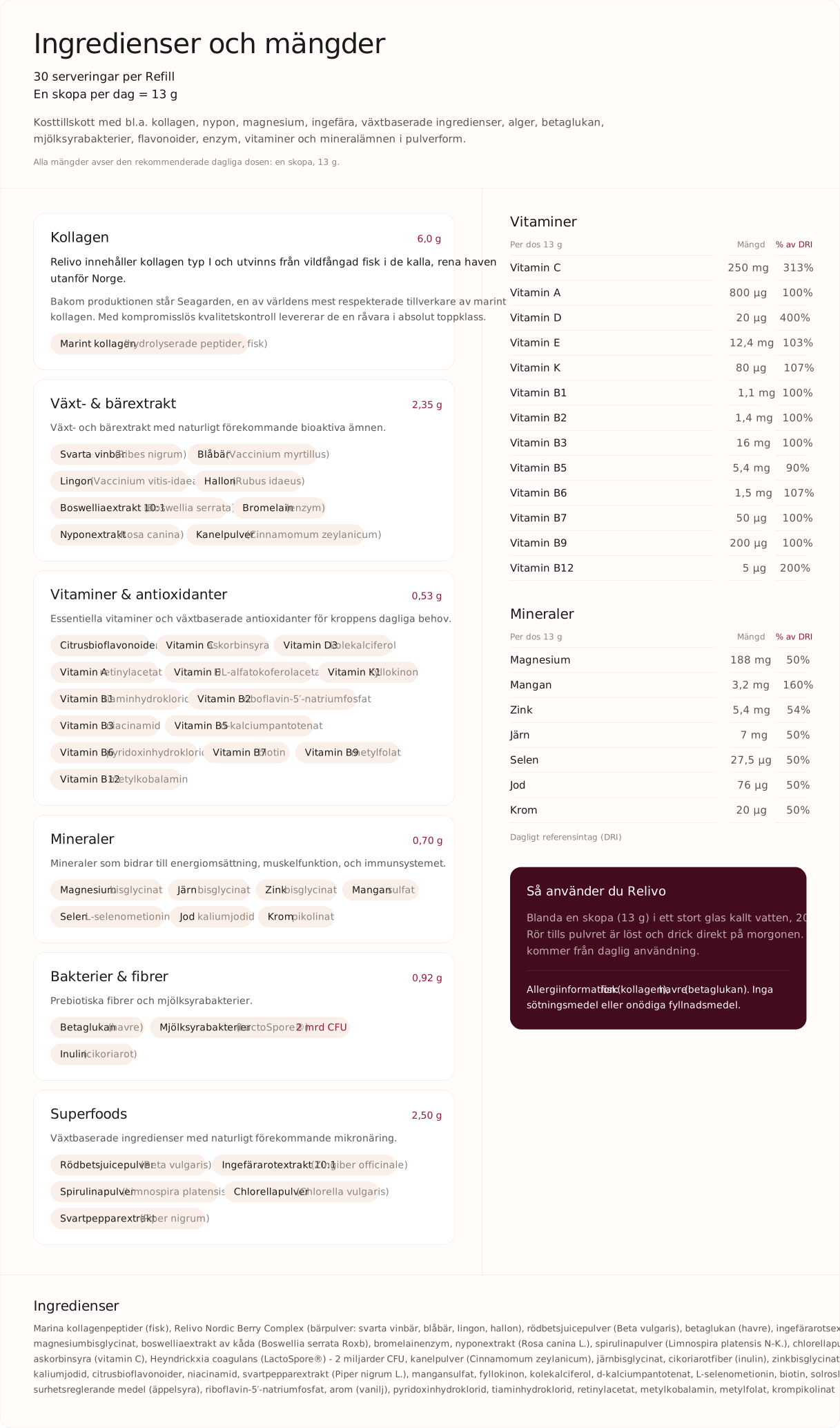
Relivo is a complete daily nutritional supplement developed in collaboration with Swedish researchers and nutritionists. Relivo combines 38 carefully selected nutrients that support the body's most important systems and structures.
Everything is gathered in one scoop of powder, designed to be easy to use and simple to incorporate into your daily routine. Relivo mixes in 60 seconds and serves as a long-term nutritional foundation for energy, immune function, gut health, muscles, and joints.
Sources
- EFSA – Health claims for magnesium and psychological function
- Pickering G et al. – Magnesium Status and Stress: The Vicious Circle Concept Revisited
- Cuciureanu MD, Vink R – Magnesium and Stress (Magnesium in the Central Nervous System)
- Kennedy DO – B Vitamins and the Brain: Mechanisms, Dose and Efficacy (Nutrients)
- Padayatty SJ, Levine M – Vitamin C: the known and the unknown and Goldilocks (Oral Diseases)
- Prasad AS – Zinc: An Antioxidant and Anti-Inflammatory Agent (Journal of Trace Elements)
- Anglin RE et al. – Vitamin D deficiency and depression in adults: systematic review
- Chrousos GP – Stress and disorders of the stress system (Nature Reviews Endocrinology)
- Swedish Food Agency – Dietary guidelines
- 1177 Healthcare Guide – Exhaustion disorder