How Nature and Daylight Affect Mental Health and Energy
Nature and daylight are fundamental parts of the human habitat. Research shows that regular exposure can affect both perceived energy and mental well-being.

Introduction
Humans have evolved in interaction with natural light and outdoor environments.
Even so, many people today spend most of their time indoors.
This change has led to a growing interest in how nature and daylight affect mental health and energy.
Research in environmental psychology and neuroscience points to clear correlations.
Understanding these connections can help us make more conscious choices in everyday life.
The Importance of Nature for Mental Well-Being
Several studies show that staying in natural environments is often linked to experiences of calm and reduced mental strain. The effect has been observed both in urban environment and more pristine nature.
Natural environments are characterized by soft sensory impressions. Light, sound and movement are often perceived as less demanding than in urban environments.
This can give the brain the opportunity for recovery from constant information processing.
Green Environments and Cognitive Recovery
Environmental psychology research describes how nature can support the recovery of attention. The phenomenon is often referred to as “attention restoration”.
As the demands for directed attention decrease, mental clarity experienced can increase. Many report improved focus after time in nature.
This also applies to short stays, such as walks in parks or green spaces.
The influence of daylight on circadian rhythm and energy
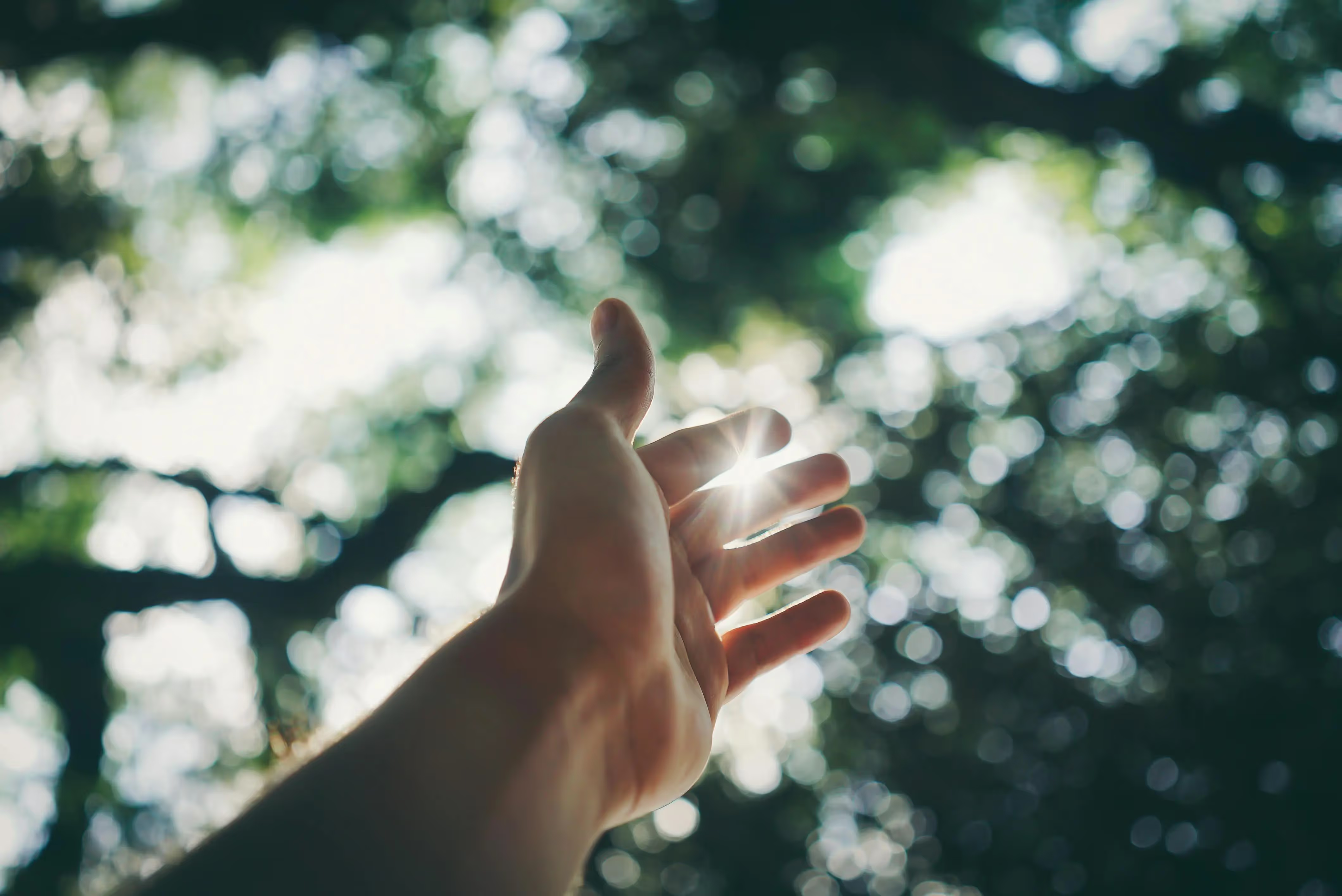
Daylight is a central factor in the body's circadian rhythm. The light signals when it is day and when it is evening.
This rhythm affects alertness, fatigue, and perceived energy level. Natural light has a significantly higher light intensity than indoor lighting.
Therefore, exposure to daylight plays an important role in everyday life.
Difference between daylight and artificial light
Even on cloudy days, the light level outdoors is often several times stronger than indoors. The body perceives these differences clearly.
Indoor lighting rarely provides the same signal strength to the body's internal clock. It can contribute to unclear circadian signals.
Regular exposure to daylight, especially during the morning and morning, is therefore important.
Nature and daylight combined
When staying in nature is combined with daylight, the perceived effect is often amplified. Movement outdoors provides both light exposure and variety in sensory impressions.
Walking in daylight has been linked in studies to improved experience of energy compared to staying indoors.
It is not the intensity that is decisive, but the regularity.
Why indoor environments can be perceived as energy-draining
Indoor environments are often characterized by sedentary, artificial light, and limited variety. This can contribute to mental fatigue.
When the body does not receive clear signals about the time of day, energy levels can be perceived as uneven.
Nature and daylight then act as important counterweights.
The importance of the seasons for daylight
In Nordic countries, the availability of daylight varies greatly over the year. During the winter months, the days are short and the light intensity is low.
This variety is natural but requires adaptation. Research shows that people often change behavior and routines during darker periods.
Conscious exposure to daylight therefore becomes especially important during these months.
Strategies in light poor periods
Staying outdoors in the middle of the day can provide maximum light exposure during the winter months. Even brief moments have proved significant.
Placement near windows during the working day can also help increase the amount of light.
Small adjustments can make a big difference over time.
The role of nature in focus and creativity
Studies in cognition research show that natural environments can support creative thinking. Reduced mental load creates space for new ideas.
Many people find that thoughts flow more easily during walks in natural environments. It's a recurring pattern in research.
Variation and low demand picture are key factors.

Digital break in natural environment
Digital environments require constant attention. Nature offers the opposite -- stimulation without demands.
Spending time in nature without digital distractions can amplify the experience of mental rest.
Even short breaks can have a noticeable effect.
Small habits with long-term meaning
Regular walks in daylight, especially in the morning, are an easy habit. It does not require advanced planning.
When several small lifestyle choices interact, the perceived energy can be positively influenced.
Consistency over time is often more important than scope.
Scientific support for nature and daylight
International research in public health, environmental psychology and neuroscience shows clear links between the environment and well-being.
Organisations such as WHO highlight daylight and green spaces as important factors in sustainable habitats.
Urban planning is also taking greater account of access to light and nature.
Summary
Nature and daylight are not trends, but fundamental parts of the human environment.
They affect how we experience energy and mental balance.
Through small, conscious choices in everyday life, contact with these factors can increase.
Often the answer is closer than we think - right on the doorstep.
Sources
- World Health Organization (WHO) — Urban green spaces and health
- National Institute of Environmental Health Sciences — Benefits of Nature Exposure
- NIH — Circadian rhythms and light exposure
- European Environment Agency — Green spaces and well-being
- Kaplan R, Kaplan S. The Experience of Nature: A Psychological Perspective
- Berman MG “et al.” Interacting with nature improves cognition and affect
- NC State University — Light exposure and human behavior
- Nature Scientific Reports — Effects of natural environments on mental well-being