7 everyday habits that strengthen your mental resilience
Mental resilience is about how we face the demands, changes and adversities of everyday life. With conscious everyday habits, it is possible to create more stability, balance and tranquility over time.

Introduction
The pace of today's society is high. Many experience a constant flow of impressions, demands and expectations.
Mental resilience is about the ability to adapt and cope with stresses without losing your footing. Research shows that this ability is largely shaped by our daily habits.
1. Regular routines create stability
Routines help the brain conserve energy. When parts of everyday life are predictable, the mental load decreases.
Sleep, meals and breaks that occur at about the same time each day can contribute to a sense of control and security. It provides a stable foundation even during more intense periods.
2. Daily recovery is crucial
Recovery is not something that only belongs to weekends or vacations. Regular breaks in everyday life play an important role in mental balance.
Short moments of calm, such as stillness, nature rest, or breathing pauses, can help lower stress levels. Research shows that recovery is central to long-term mental resilience.
3. Regular meals and attendance at food
How and when we eat affects more than just energy levels. Regular meals can contribute to a smoother rhythm throughout the day.
Eating with presence, without constant distraction, gives the body better conditions to cope with the demands of the day. Meals can become natural breaks for both body and mind.
4. Movement as a natural part of everyday life
Physical activity is strongly linked to mental balance. However, it does not have to be about intense training.
Walking, daily exercise or light exercise can contribute to better focus and increased stress resistance. Regular movement supports the body's natural recovery processes.
5. Restrict the flow of information
The constant access to information can be mentally demanding. Many people underestimate how much energy is spent on processing impressions.
Consciously reducing notifications, screen time, and multitasking can give the brain more space. Studies show that reducing exposure to digital impressions can contribute to better focus and calmness.
6. Support the body with sustainable habits
Mental resilience is shaped by the big picture. Sleep, diet, movement and recovery interact and influence each other.
At Relivo, we start from a holistic perspective where long-term everyday habits are at the center. Our products are designed to fit into a balanced lifestyle, as a complement to good routines.

7. Reflection and self-compassion strengthen resilience
Regularly reflecting on one's everyday life can create greater awareness. Small insights can lead to more sustainable choices.
Self-compassion is also an important part of mental resilience. Accepting that all days don't look the same reduces internal pressure and creates greater room for action.
How Mental Habits Are Built Over Time
Mental resilience does not develop through rapid changes. It is shaped by small, consistent actions in everyday life.
By focusing on one habit at a time, change becomes more realistic and sustainable. It increases the chances that the habits will become a natural part of life.
Summary
Mental resilience is not built in extreme stakes. It is formed in the daily choices.
By creating sustainable everyday habits, you can put yourself in a better position to face life's challenges with stability and balance.
About Relivo
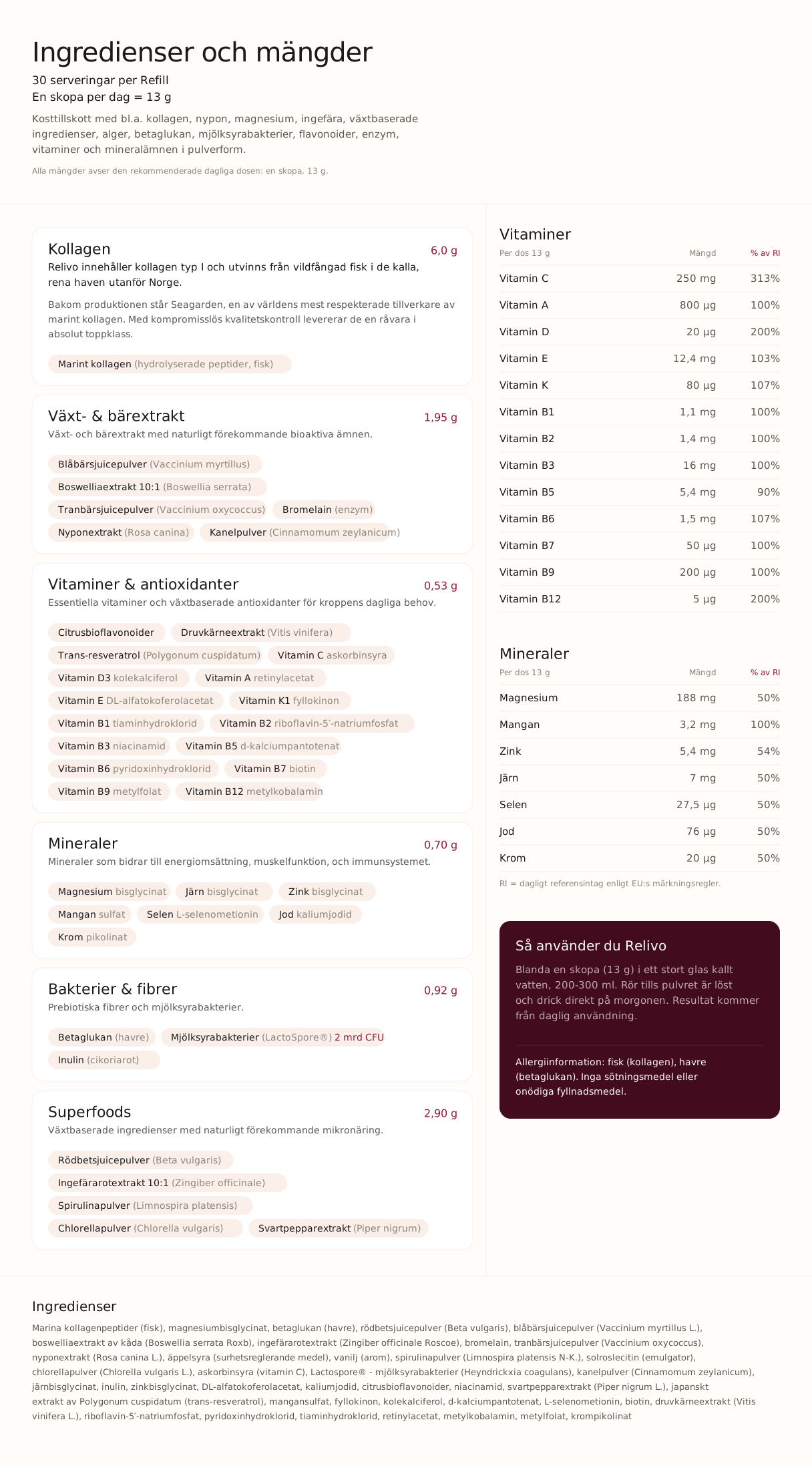
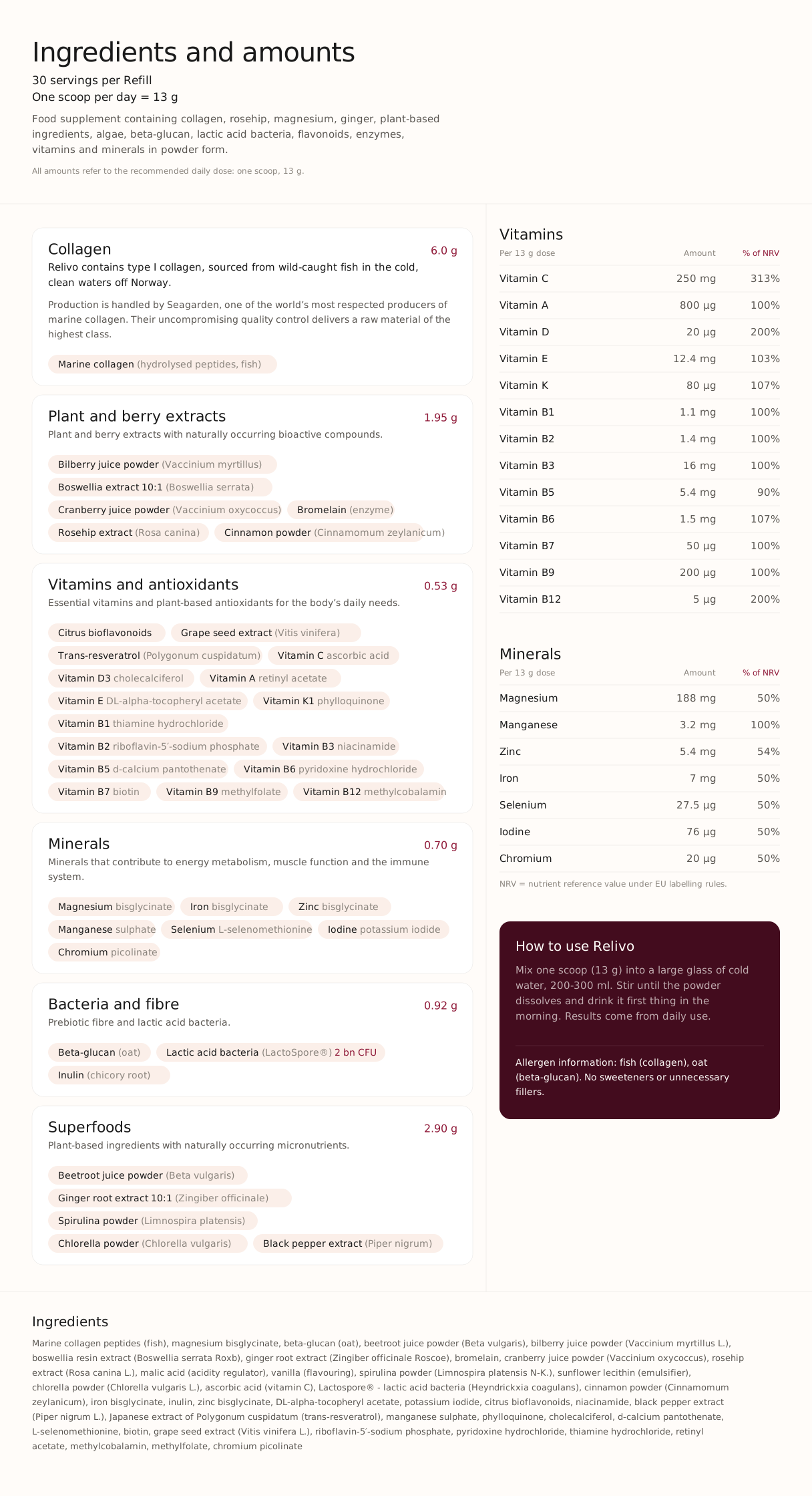
Relivo is a complete daily nutritional supplement developed in collaboration with Swedish scientists and nutritionists. Relivo combines 38 carefully selected nutrients that support the body's most important systems and structures.
All collected in a scoop in powder form, developed to be easy to use and easy to bring into everyday life. Relivo is blended in 60 seconds and is used as a long-term nutritional foundation for energy, immune system, gut health, muscles and joints.
Sources
- forskning .se — Articles on Stress, Recovery and Mental Resilience
- World Health Organization (WHO) — materials on mental health and lifestyle factors
- Public Health Agency — reports on stress, recovery and living habits