Uptake beats dose — why more nutrition doesn't always have more effect
High doses sound impressive, but don't tell the whole truth. When it comes to nutrition, it's often the uptake - not the amount - that determines how useful a supplement actually is.

Introduction
In the world of dietary supplements, high doses have long been a selling point.
Large numbers on the label are perceived as powerful and effective.
At the same time, the body does not work linearly.
It can only absorb a certain amount of nutrition at a time, regardless of how much is supplied.
This is where the concept of uptake beats dose becomes central.
Because without uptake, even high doses become limited in their value.
What is meant by uptake?
Uptake describes how the body absorbs nutrients from the food or dietary supplement into the bloodstream.
Only after this stage can nutrients be used in the normal processes of the body.
Everything that is not absorbed leaves the body.
This means that the dose on the package does not automatically correspond to the amount the body actually gets access to.
Bioavailability - a crucial concept
Bioavailability refers to the percentage of a nutrient that can be absorbed and used.
Two supplements may contain the same dose, but give different results depending on the form, binding and composition.
Therefore, bioavailability is often used as a measure of quality rather than quantity alone.
Why high doses are not always taken up
The body has several natural restrictions on nutrient absorption.
Transport proteins and enzyme activity can become saturated.
Once these systems reach their capacity, absorption does not increase, even if the dose is increased further.
The excess then passes through the body without being used, making high doses less meaningful in practice.
The body prioritizes balance
Nutrients often interact with each other. An excess of one substance can affect the absorption of another.
This is one reason why unilateral or extremely high doses are rarely recommended in scientific contexts.
A balanced supply is closer to how the body is used to absorbing nutrition through the diet.
Importance of nutritional form
Minerals and vitamins occur in several chemical forms. Not all forms are taken up equally effectively.
Some minerals are bound to organic compounds, others to inorganic salts. The difference affects the uptake.
The choice of form therefore has a great impact on how useful a dietary supplement will be.

Examples from research
Studies show that some organically bound mineral forms often have higher bioavailability than inorganic alternatives.
The same principle applies to several vitamins, where different forms may have different stability and uptake.
This means that the list of ingredients often says more than the total dose.
Uptake beats dose in practice
In practice, this means uptake beats dose that a lower dose may be sufficient if the body can absorb it effectively.
This is clearly seen in comparisons between supplements with different forms but similar contents.
For the consumer, it therefore becomes important to look beyond marketing and focus on composition.
Why high numbers have become the norm
High doses are easy to communicate and compare. They give a clear and quick signal of “strength”.
But numbers don't say anything about how the body actually handles the content.
It has led to dose sometimes receiving greater attention than quality and form.
Quality, Transparency and Formulation
A well-thought-out dietary supplement is based on clear formulation and transparent ingredient selection.
It is about each ingredient fulfilling a function and interacting with the whole.
Fewer ingredients with a clear purpose can often be more thought out than complex mixtures.
How serious actors reason
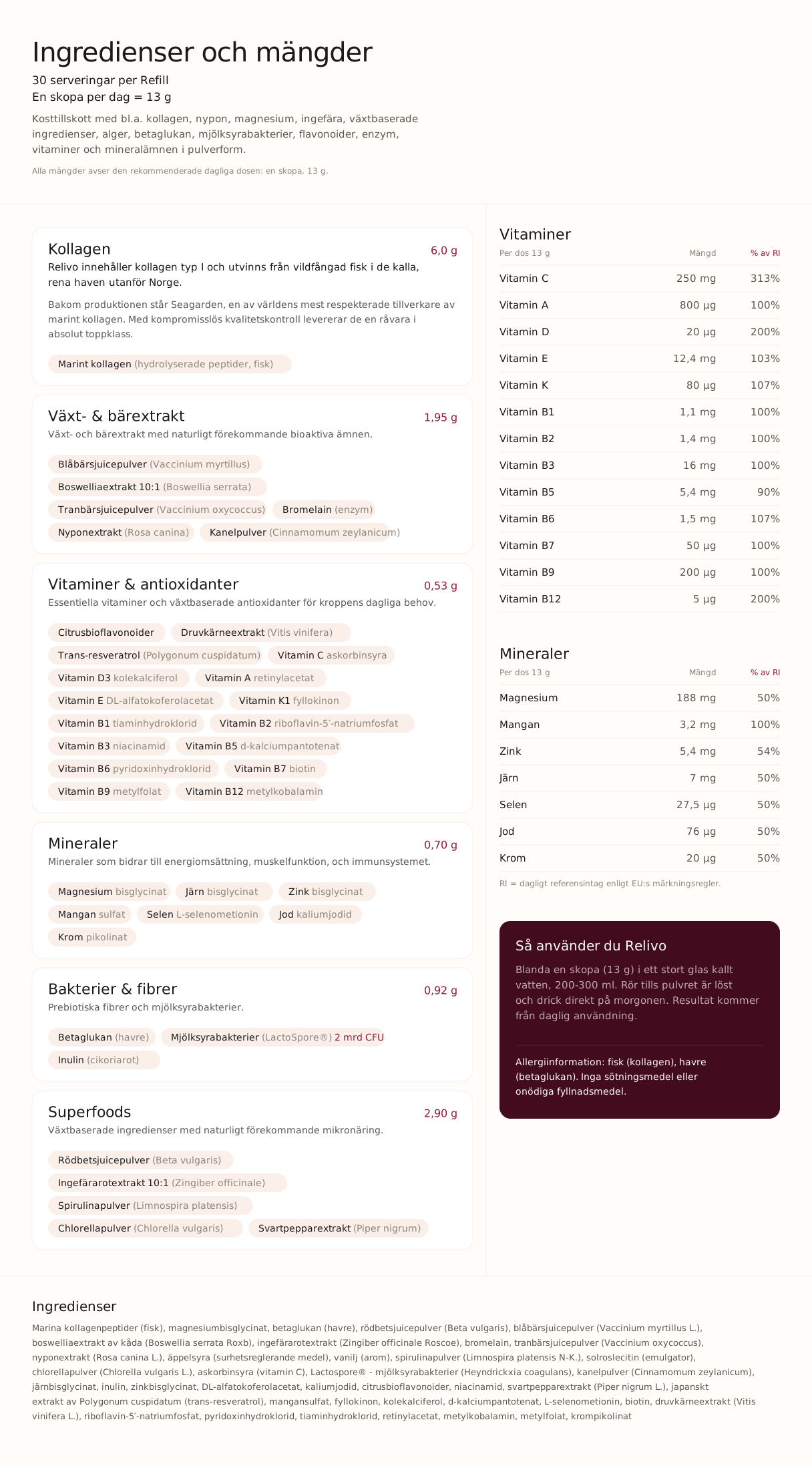
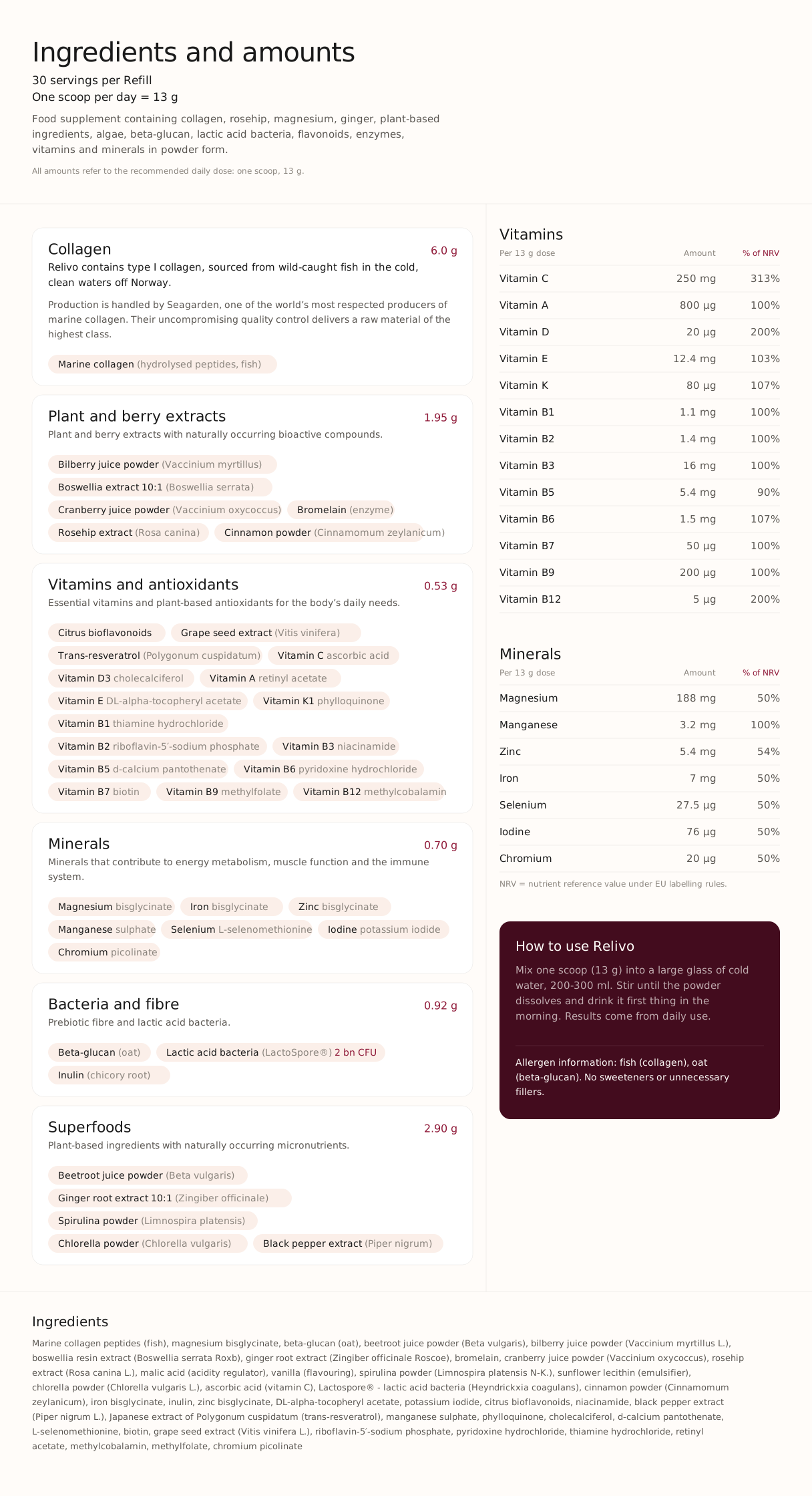
Many brands, including Relivo, today communicate more around formulation than dose size.
It reflects a broader movement within the industry where the focus is shifting towards quality, traceability and understandability.
For the consumer, it creates better conditions for making informed choices.
This is how you can think when choosing dietary supplements
Read the ingredients list carefully and look at what form the nutrients occur in.
Avoid comparing products solely based on milligrams or percent of daily intake.
Also consider whether the composition feels reasonable and balanced.
Practical tips for everyday life
Always follow dosage instructions. More than recommended rarely gives better results.
Take supplements at the same time daily for continuity.
See supplements as a supplement, not a substitute for a varied diet.
What does the research say?
Scientific literature clearly shows that uptake and bioavailability are decisive factors.
Several international authorities highlight the importance of form, interplay and balance rather than high doses.
This applies to both vitamins and minerals.
Summary
High doses may look good on paper, but don't say it all. It is how the body absorbs nutrition that determines its usefulness.
By focusing on absorption, shape and balance, the choice of supplements becomes more thoughtful.
In the end, a simple principle applies: uptake beats dose.
Sources
- European Food Safety Authority (EFSA) — Scientific opinions on nutrient bioavailability
- NIH Office of Dietary Supplements — Nutrient Absorption and Bioavailability
- World Health Organization (WHO) — Vitamin and mineral requirements
- Institute of Medicine (IOM) — Dietary Reference Intakes
- Hurrell RF, Egli I. Iron bioavailability and dietary reference values. Am J Clin Nutr
- Heaney RP. Factors influencing the measurement of bioavailability. J Nutr