Which supplements are good for the brain?
Which supplements are good for the brain and what does the research say about their role? Here you get a factual review of nutrients that are often linked to the normal functioning of the brain.

Introduction
The brain is an energy-consuming organ that depends on an even supply of nutrients.
Fats, vitamins, minerals and amino acids all play a role in the normal processes of the brain.
Diet and lifestyle therefore affect brain function over time.
Dietary supplements are often used as a supplement when dietary intake varies.
Which supplements are good for the brain according to research?
Research in nutrition and neuroscience points to certain nutrients as particularly relevant to the normal functioning of the brain.
It's not about quick effects, but about long-term support for the body's biological systems.
Collagen and glycine - amino acid with function in the nervous system
Glycine is an amino acid that acts as a neurotransmitter in the central nervous system. It is a natural part of the body's nerve signaling and also acts as an important building block in collagen.
In a nutritional context, glycine is primarily studied as part of the body's basic neurological and metabolic functions, rather than as an isolated cognitive substance.
B vitamins and the nervous system
B vitamins such as B6, B12 and folate contribute to the normal functioning of the nervous system.
They participate in the body's energy metabolism and the metabolism of neurotransmitters.
Lack of certain B vitamins has been linked in studies to the impact on cognitive processes.
For this reason, B complexes are often used in dietary supplements for the brain.
Magnesium bisglycinate - a mineral for nerve signaling
Magnesium contributes to the normal functioning of the nervous system and to normal psychological functioning.
It is involved in hundreds of enzyme reactions in the body.
Intake may vary depending on dietary habits and stress levels.
Magnesium is therefore a commonly found mineral in brain-related supplements.
Iron - oxygen transport to the brain
Iron contributes to normal oxygen transport in the body and to normal cognitive function.
The brain is particularly sensitive to variations in oxygen supply.
Low iron intake occurs primarily in certain groups, such as menstruating people and individuals with limited animal intake.
Iron supplements are used only when necessary and with caution.
Zinc - an essential trace element
Zinc contributes to normal cognitive function and to the normal functioning of the nervous system.
It is involved in signal transmission between nerve cells.
Zinc occurs naturally in several foods but is also used as a dietary supplement.
Research investigates the role of zinc in several neurological contexts.
Antioxidants and the Brain
Antioxidants such as vitamin E help protect cells against oxidative stress.
The brain is particularly energy-demanding and sensitive to oxidative processes.
For this reason, antioxidants are often studied in relation to the normal functioning of the brain.
Combinations of antioxidants are widely used in research.
Relivo - a systems perspective on the brain
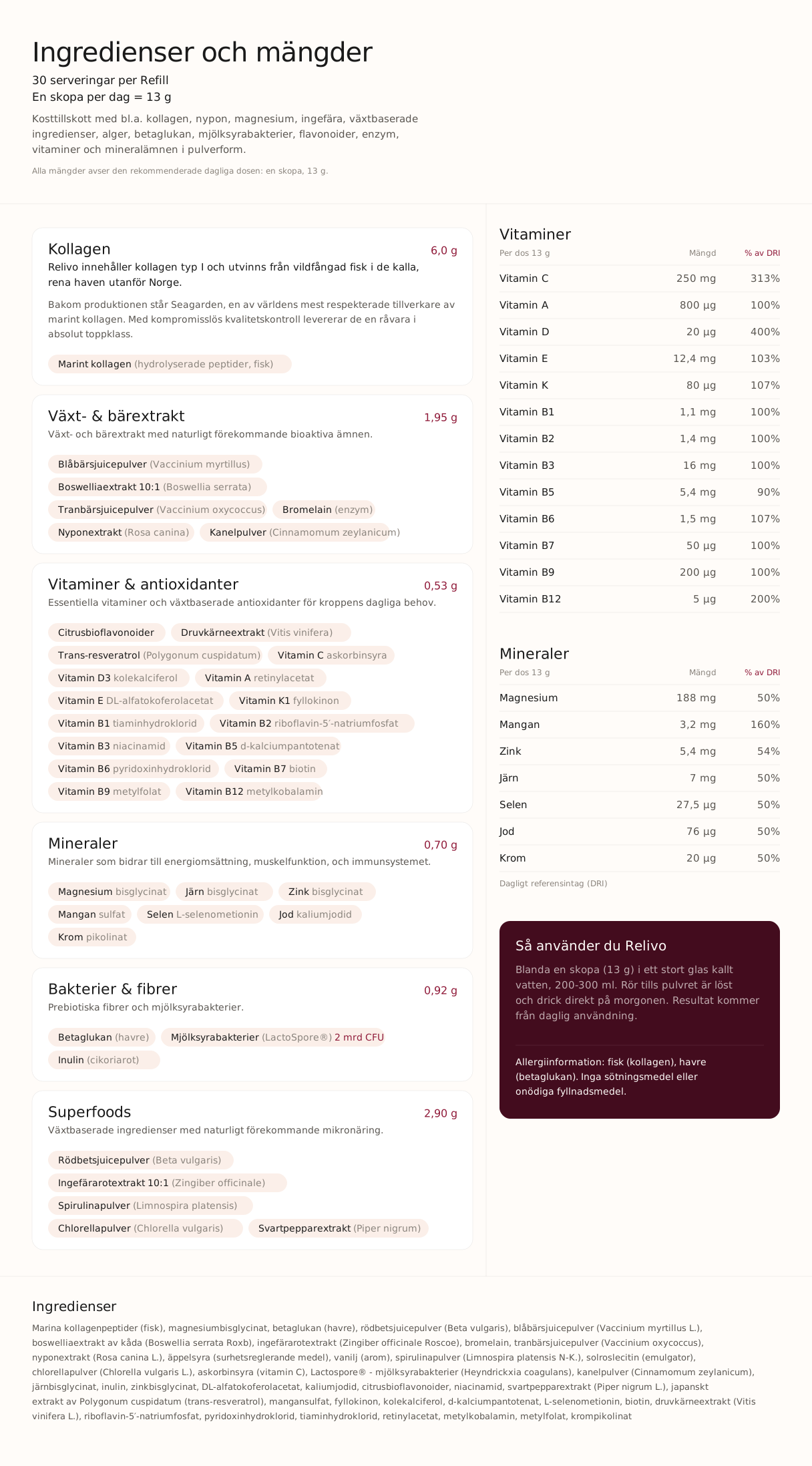
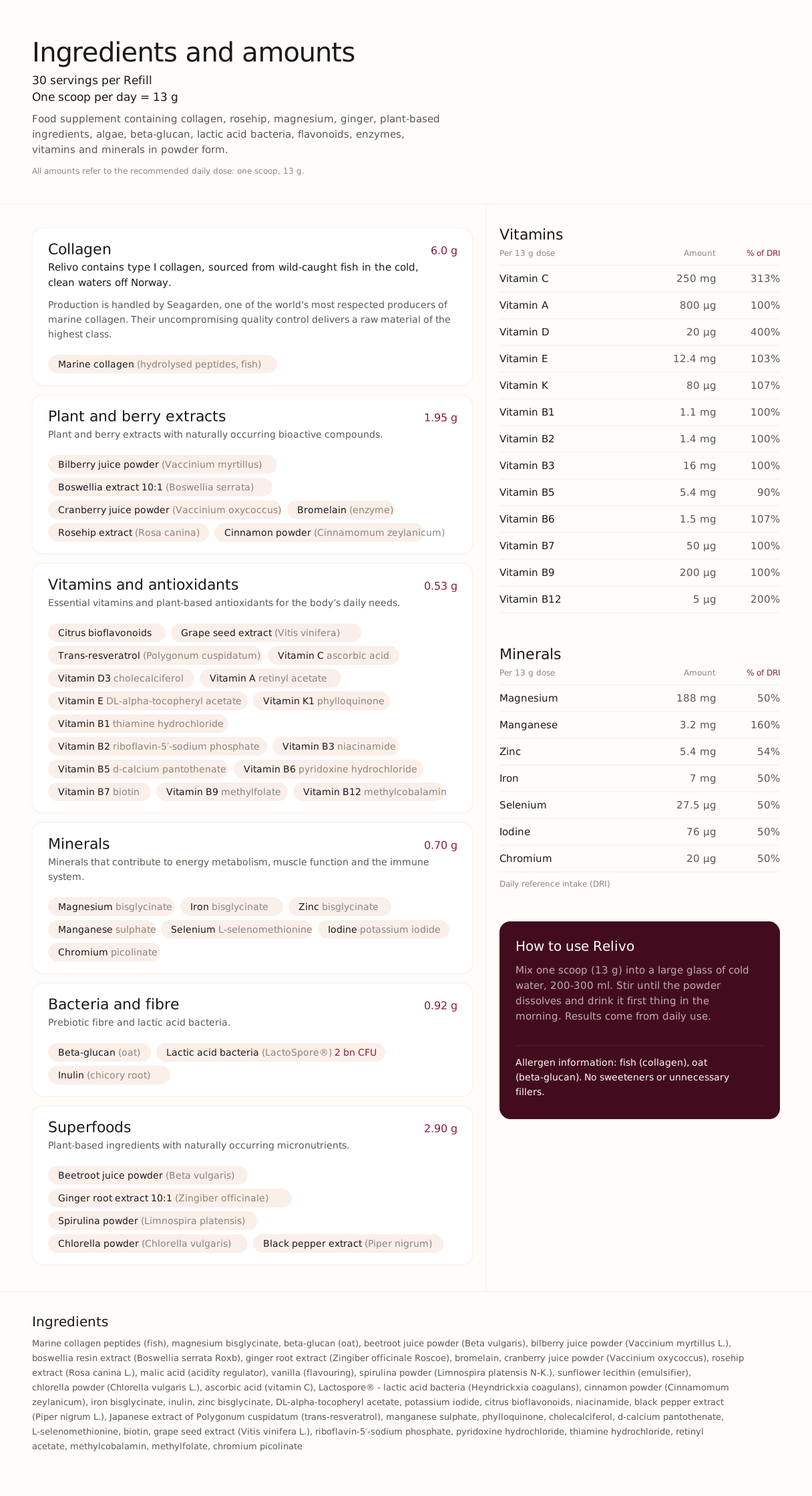
Relivo is not formulated as a “brain supplement”, but as a daily nutritional foundation. Through ingredients such as B vitamins, magnesium, zinc and glycine Relivo provides nutrients that support the normal functioning of the nervous system and brain as part of the body as a whole.
It's not about focus or quick mental effects, it's about giving the brain the building blocks it uses in its normal processes -- day after day.
Supplements as a supplement to lifestyle
Research is clear that supplements do not replace a balanced diet.
They act as a supplement when the intake does not cover the need. Sleep, physical activity and stress management also affect the normal functioning of the brain.
Nutrition should always be seen as part of a larger context.
Summary
Which supplements are good for the brain depends on which nutrients support the normal functioning of the nervous system and brain.
Research particularly highlights fatty acids, vitamins and minerals. A long-term and fact-based perspective provides the best conditions for informed choices.
Sources
- EFSA Panel on Dietetic Products, Nutrition and Allergies. Opiniones scientificos sobre nutrientes relacionados a función del cerebro y cognitivo.
- National Institutes of Health (NIH). Dietary Supplement Fact Sheets: Omega-3, B Vitamins, Magnesium, Iron, Zinc.
- Calder PC. Omega-3 fatty acids and brain health. Advances in Nutrition.
- Kennedy DO. Vitamins B and the brain. Nutrients.
- Gröber U, Schmidt J, Kisters K. Magnesium in prophylaxis and therapy. Nutrients.
- Traber MG, Stevens JF. Vitamin E and oxidative stress. Free Radical Biology & Medicine.