What supplements are good for the stomach?
The functioning of the stomach affects how we absorb nutrition and how the body functions in everyday life. Here we review which supplements, according to research, are often linked to the normal functioning of the stomach and intestines.

Introduction
The stomach and intestines are central to the breakdown of food and the absorption of nutrients.
They also play an important role in the body's immune function and metabolism.
Diet, stress, sleep and lifestyle affect the gastrointestinal tract.
Dietary supplements are often used as a supplement when the diet does not cover all needs.
Which supplements are good for the stomach according to research?
Research in nutrition and gastroenterology highlights several nutrients and microorganisms as relevant to the normal functioning of the stomach.
The focus is on long-term support rather than quick effects.
Probiotics - live bacterial cultures
Probiotics are made up of living microorganisms that are used in studies on the gut microbiota.
They occur naturally in fermented foods and as dietary supplements.
Research shows that different strains of bacteria have different properties. Therefore, strain and quantity are determining factors.
Probiotics are often used in supplements with a focus on gut balance.
Betaglucan - fiber in the body's defense system
Beta glucan is a form of dietary fiber that occurs naturally in yeast and cereals, for example.
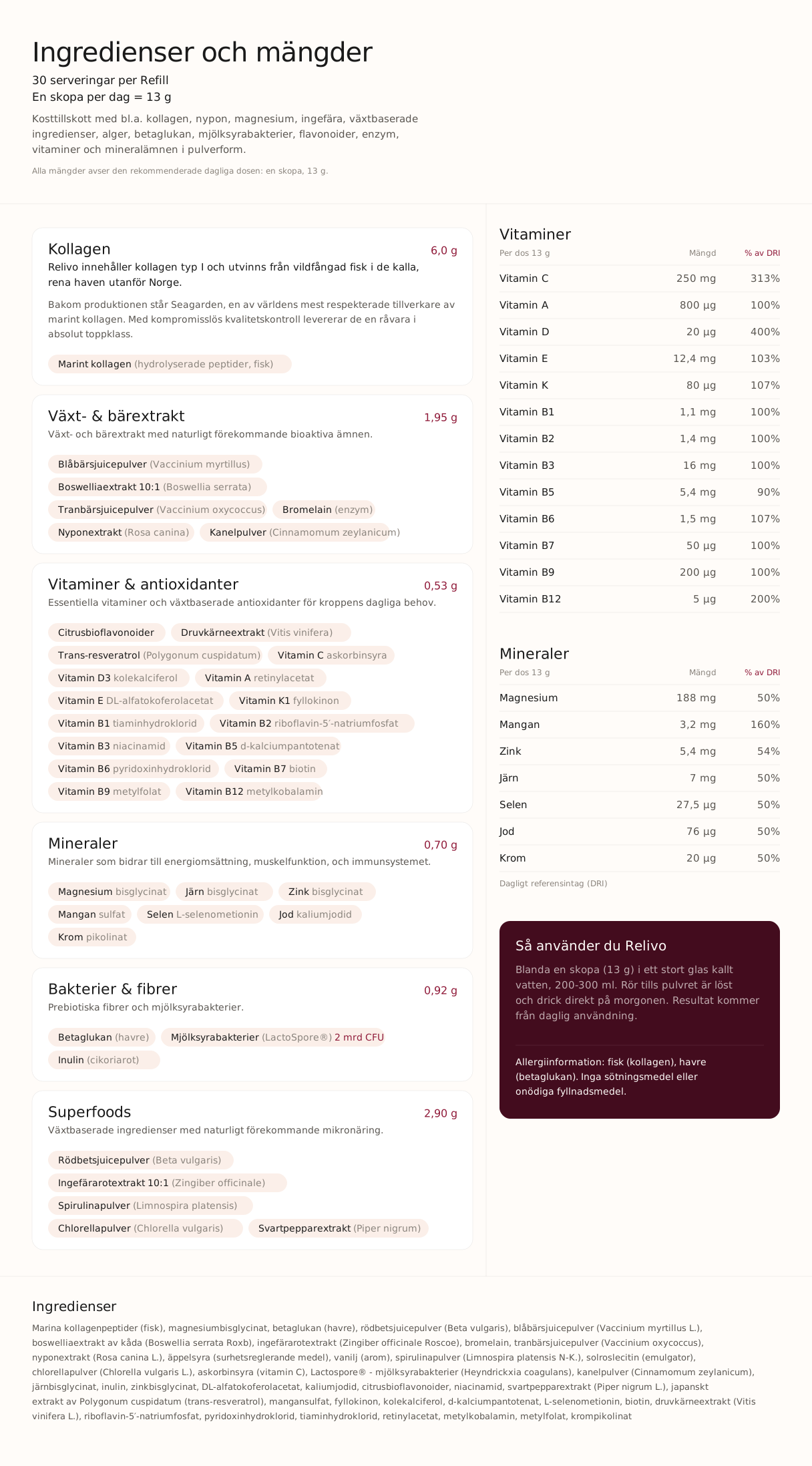
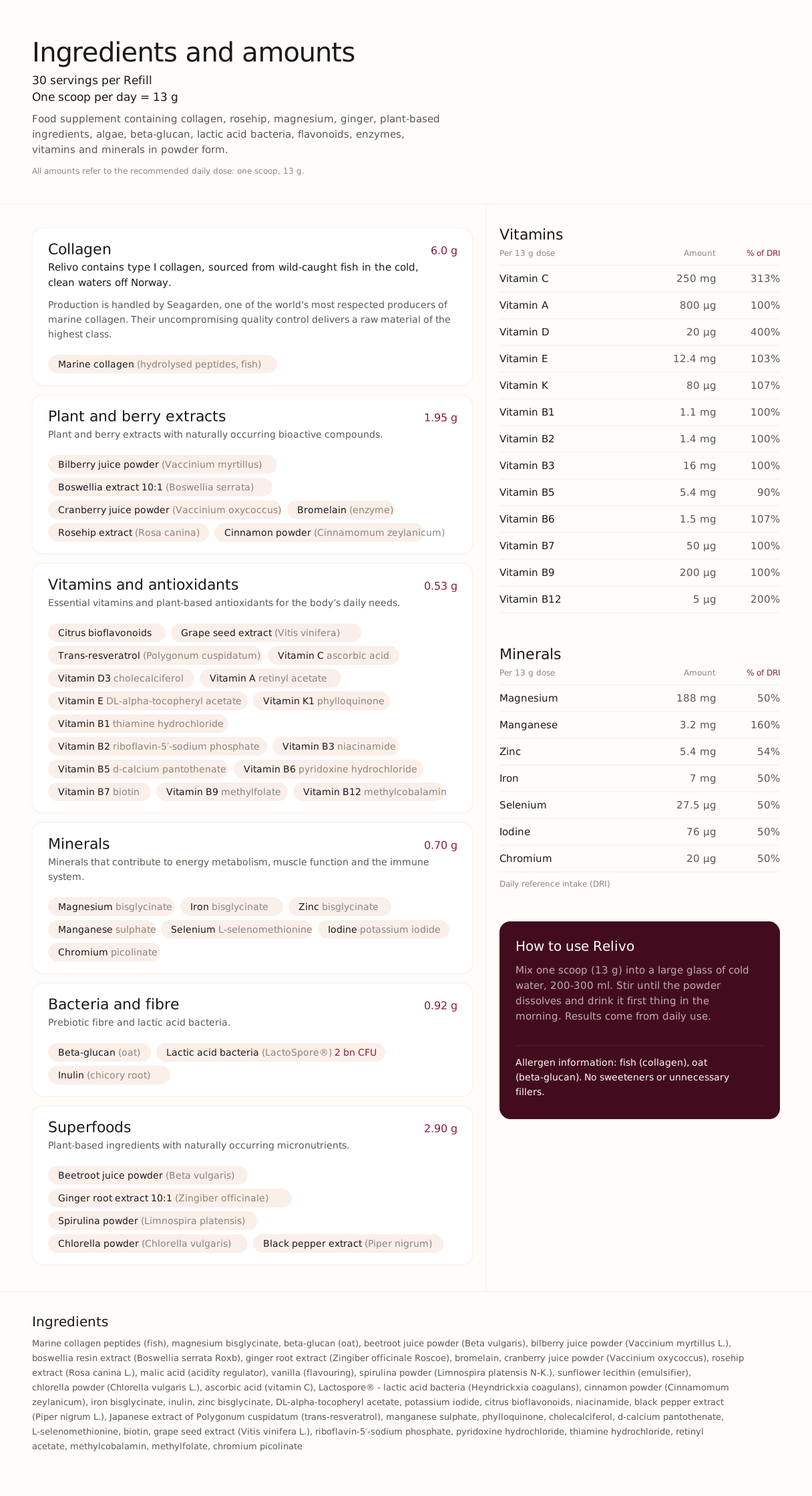
Betaglucan contributes to the normal functioning of the immune system and is studied in relation to the environment of the intestine and its interaction with the immune system.
In the gastrointestinal tract, fibers such as beta glucan function as part of the structure and environment in which the gut microbiota operates, making them relevant in a holistic perspective of gut health.
Bromelain — enzyme support in the digestive process
Bromelain is a naturally occurring enzyme complex extracted from pineapple. It is mainly studied in relation to the breakdown of protein in the digestive process.
Unlike the body's own digestive enzymes, bromelain is supplied via the diet or supplements, where it is used as a supplement to the body's normal digestion.
In Relivo, bromelain is included as part of the whole, in which the effective breakdown of protein interacts with the availability of amino acids, vitamins and minerals.
Magnesium and bowel movements
Magnesium contributes to normal muscle function and electrolyte balance.
The movements of the intestine depend on a well-functioning muscle and nerve interaction.
Therefore, magnesium is also studied in relation to the normal functioning of the gastrointestinal tract, where form and bioavailability are key factors.
Zinc and Vitamin A
Zinc helps maintain normal mucous membranes, including the gastric and intestinal mucosa. Vitamin A has a similar function and plays an important role for the body's barrier system.
The mucous membrane of the gastrointestinal tract serves as an active interface between the body and that which passes through the intestine.
It is central to both protection and nutrient uptake and is continually renewed. For this structure to function normally, access to specific micronutrients is required.
Zinc and vitamin A occur naturally in several foods, but intake can vary depending on dietary habits and lifestyle.
Research links these nutrients to the normal structure and function of the gastrointestinal tract, making them relevant in contexts where the intestinal barrier and integrity are in focus.
Wholeness and collaboration
Research shows that several nutrients interact in the gastrointestinal tract.
Therefore, combinations of bacterial cultures, fibers and minerals are often used. Holistic formulations reflect how the body naturally uses nutrition over time.
Quality and bioavailability
Form, quality and preparation affect how well nutrients can be absorbed and used in the body. Research often compares different forms of the same substance, with uptake and stability being crucial factors.
Nutrition as a complement
Supplements do not replace a varied diet or healthy lifestyle habits. They act as a complement when the need arises, in interaction with diet, movement, sleep and stress management.
Relivo — a system for the stomach
Relivo is formulated from a systems perspective on the stomach and intestines. Through ingredients such as Lactospore®, Betaglucan, bromelain, magnesium, zinc, Vitaminum A and selected vitamins are combined to support the intestinal environment, mucous membranes, digestion and normal functioning of the nervous system.
It is not a point solution for the stomach, but a daily nutritional foundation, developed for long-term balance and continuity.
Sources
- EFSA Panel on Dietetic Products, Nutrition and Allergies. Scientific opinions on dietary fiber, probiotics and gut health.
- National Institutes of Health (NIH). Dietary Supplement Fact Sheets: Probiotics, Magnesium, Zinc.
- Hill C “et al. Expert consensus document: The International Scientific Association for Probiotics and Prebiotics. Nature Reviews Gastroenterology & Hepatology.
- Slavin J. Fiber and prebiotics: mechanisms and health benefits. Nutrients.
- Rao SSC “et al.” Digestive enzymes and gastrointestinal function. Current Gastroenterology Reports.