What supplements are good for the skin?
The skin is affected by the body's nutrient intake. Research shows that certain vitamins, minerals, fatty acids and proteins contribute to the normal functioning and structure of the skin.

Introduction
The skin is the largest organ of the body and has a continuous need for energy and nutrients.
Its structure and normal functioning are affected by the availability of protein, vitamins and minerals.
Diet and lifestyle therefore play a crucial role in the condition of the skin over time. Nutritional intake can act as a supplement when the variety in diet is limited.
Which supplements are good for the skin according to research?
When analyzing studies on skin and nutrition, some nutrients appear more often than others.
It is not about quick solutions, but about long-term support for the normal biological processes of the skin.
Below is a review of dietary supplements for the skin that are well documented in scientific literature.
Collagen - a structural protein
Collagen is the most abundant protein in the skin and forms the basis of its strength and structure.
When hydrolyzed collagen is ingested, it is broken down in the gastrointestinal tract into amino acids and specific peptides. These are absorbed into the blood and used by the body in the normal protein synthesis.
In the skin, these building blocks contribute to the maintenance of connective tissue and extracellular matrix, where collagen fibers provide stability and cohesion. The body's own collagen turnover is continuous and dependent on access to the right amino acids over time.
Vitamin C - necessary for normal collagen formation
Vitamin C is a necessary cofactor in enzymatic steps required for normal collagen formation.
Without adequate levels of vitamin C, collagen fibers cannot form or stabilize in a normal way.
In addition to its role in collagen production, vitamin C helps protect skin cells against oxidative stress.
This is particularly relevant because the skin is continuously exposed to external stresses such as the environment, UV light and air pollution. Vitamin C thus supports both structure and cellular environment.
Biotin and other B vitamins
Biotin helps maintain normal skin through its role in the body's energy metabolism, especially in the metabolism of fatty acids, amino acids and glucose.
The cells of the skin have a high turnover rate and depend on efficient energy production to function normally.
Biotin works in conjunction with other B vitamins, such as B6 and B12, which support cellular processes such as cell division and protein synthesis.
These vitamins work in close interaction and are therefore most relevant in balanced combinations.
Zinc - an essential trace element
Zinc is involved in hundreds of enzymatic reactions in the body, many of which are linked to cell division, protein synthesis, and tissue renewal.
In the skin, these processes are central to the continuous renewal of skin cells and the maintenance of the skin's structure.
Zinc also contributes to the maintenance of normal skin through its role in the barrier function, where the skin acts as the body's first protection from the outside world.
The availability of zinc is therefore important for the normal biological balance of the skin.
Vitamin E - protection of cell membranes of the skin
Vitamin E is a fat-soluble antioxidant that is localized in cell membranes, including the outermost layer of the skin.
Its main function is to help protect cells against oxidative stress by neutralizing free radicals that can form in normal metabolism or environmental exposure.
Since the cells of the skin are particularly vulnerable to oxidative processes, vitamin E is relevant for preserving the normal function and structure of cells over time.
What does the research say about combination supplements?
Many studies show that combinations of nutrients are used in research on skin.
This reflects how the body normally uses several substances at the same time. Combinations such as collagen, vitamin C, zinc and biotin are common in clinical studies.
Holistic formulations are therefore considered more relevant than individual isolated substances.
Relivo - nutrition for the normal functioning of the skin
Relivo is formulated from a systems perspective on the body, where the skin is an integral part.
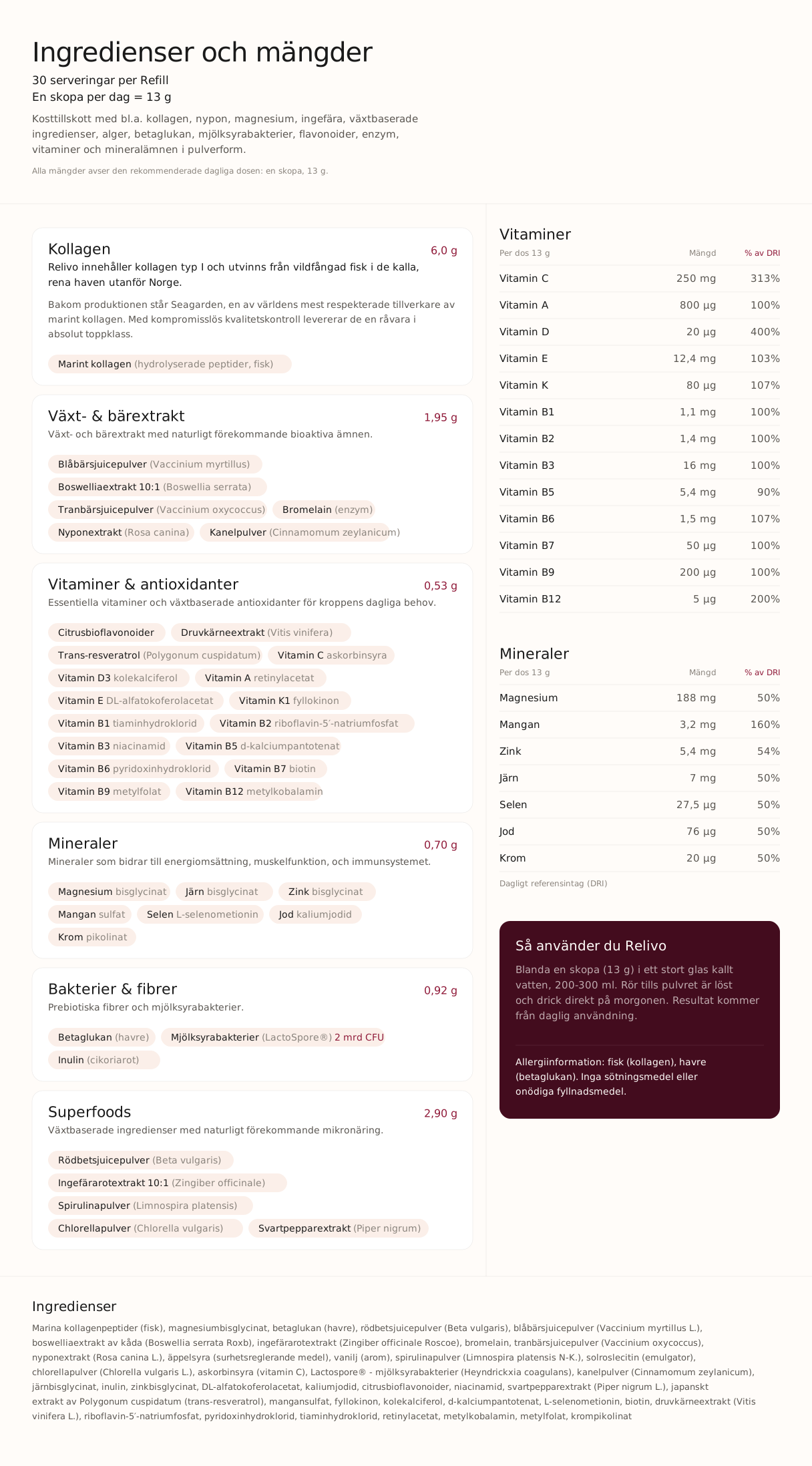
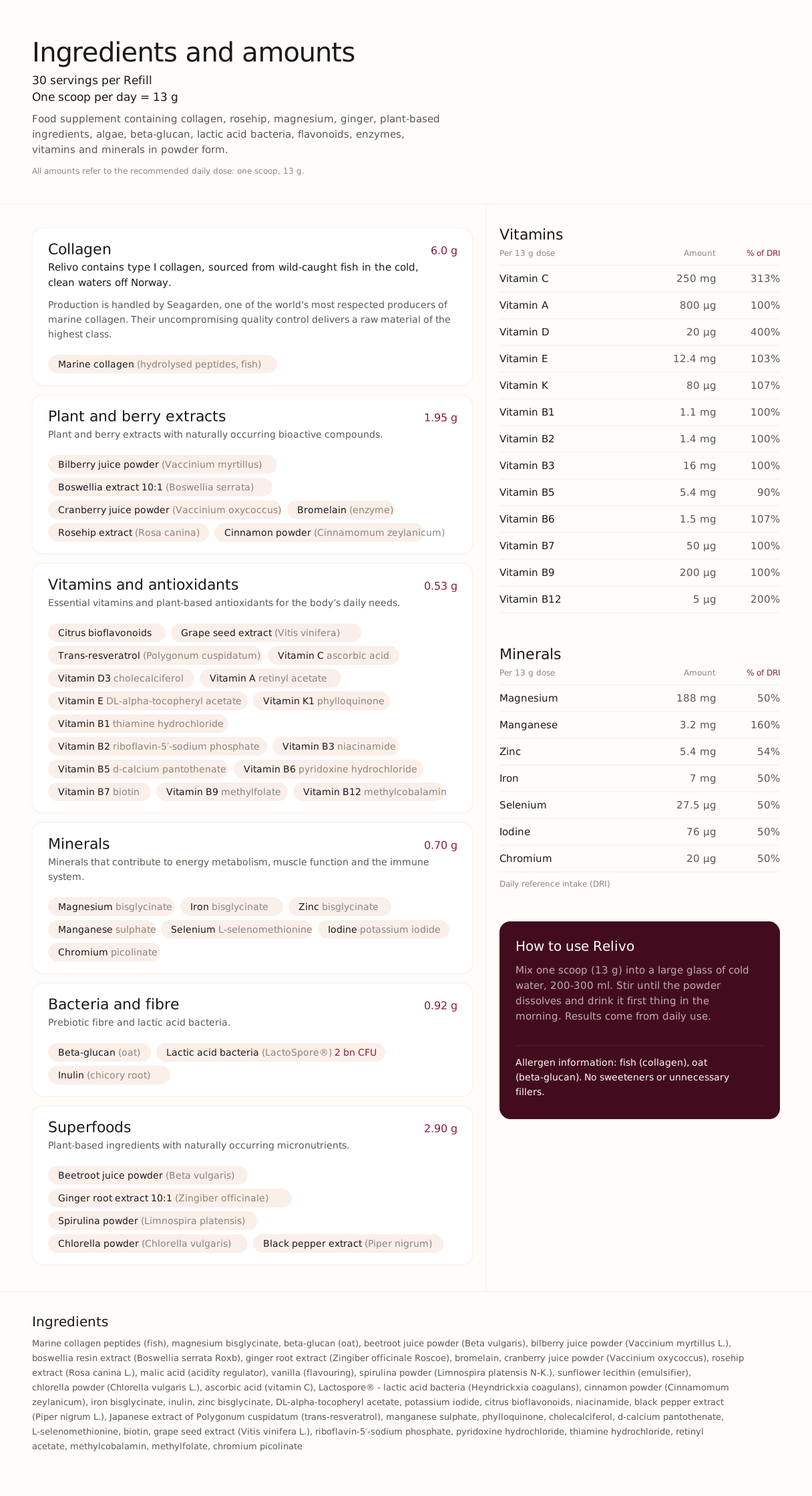
Through ingredients such as marine collagen, Vitamin C, biotin, zinc, Vitaminum E, selenium and selected B vitamins, Relivo provides the nutrients that the skin uses in its normal biological processes.
Supplements as a supplement to diet
Research is clear that supplements do not replace a varied diet.
They are used as a supplement when the intake via food is not enough.
Nutritional status is also influenced by lifestyle factors such as sleep, physical activity and stress.
A holistic perspective is therefore central to all nutrition-related research.
Summary
Which supplements are good for the skin depends on which nutrients support the normal biological processes of the skin. Research points primarily to protein, vitamins, minerals and fatty acids.
A fact-based choice is based on documented ingredients, reasonable doses and a long-term perspective.
Sources
- EFSA Panel on Dietetic Products, Nutrition and Allergies. Opiniones scientificos sobre vitaminas y minerales.
- Proksch E, Schunck M, Zague V, et al. Oral intake of specific bioactive collagen peptides reduces skin wrinkles. Pharmacología y physiologia de la cuina.
- Stamps JM, Carr AC, Vissers MCM. The role of vitamin C in skin health. Nutrients.
- National Institutes of Health (NIH). Dietary Supplement Fact Sheets: Zinc, Biotin, Omega-3, Vitamin C.
- Calder PC. Omega-3 fatty acids and inflammatory processes. Biochemistry and Biophysics Acta.
- Traber MG, Stevens JF. Vitamins C and E: beneficial effects from a mechanistic perspective. Free Radical Biology & Medicine.