The Triage Theory: Bruce Ames and the Biological Prioritization of the Body
When nutrition is not enough for everything, the body is forced to prioritize, and what is not urgent has to wait.

Introduction: when the body does not break down, but still deteriorates
Many people today find themselves in a state that is difficult to put your finger on.
They are not sick in the classical medical sense. Testa di sangue può essere nella rangi di referenza. They function in everyday life, work, train, live their lives. Pero, there is a clear feeling that the body is no longer as stable as before.
The energy is uneven. Takes longer to recover. Joints and muscles feel stiff. Sleep, mental acuity and resilience gradually deteriorate.
Les changes occur slowly, almost imperceptibly, and often only become apparent when you look back over several years. This type of deterioration is often explained by stress, age or lifestyle.
But within nutritional biochemistry there is a more basic framework that helps understand why the body can function relatively well in the short term, while undermining long-term health in the quiet.
This framework is called triage theory.
Triage theory: the biological priority of the body
The triage theory was formulated by the American biochemist Bruce N. AmesProfessor Emeritus of Biochemistry and Molecular Biology at the University of California, Berkeley, and one of the most influential researchers in nutrient-related aging.
Theorea is represented in a total of 2000000 in total Proceedings of the National Academy of Sciences (PNAS), and is based on well-established principles in enzymology, nutritional-biochemistry, and aging science.
Ames's central observation was simple but basic: when the availability of micronutrients is not enough to meet all biological needs at the same time, they are not evenly distributed. Instead, there is a Prioritize.
Vitamins and minerals act as cofactors in hundreds of enzymatic reactions. When these cofactors are limited, different biological processes compete for the same resources.
Enzymes crucial for immediate survival—such as basal energy turnover, nervous system function, and acute immune responses—often have higher affinity for their cofactors and are therefore prioritized over processes that contribute primarily to long-term stability and maintenance.
The result is, with micronutrient,. This is not a failure of the system, but a Evolutionary Protection, and a logical consequence of known biochemistry.
In addition, the triage theory is indirectly supported by a wide range of research showing that mild to moderate micronutrient deficiencies often:
- does not produce acute or obvious symptoms
- not always caught up in standardized blood tests
- but is associated with impaired DNA repair, increased oxidative stress, mitochondrial dysfunction, and low-grade inflammation over time
Púltih and.
Short term takes priority over long term
A large part of the body's micronutrient needs are linked to enzymes. Many vitamins and minerals act as cofactors in hundreds of enzymatic reactions. When access is limited, the body is forced to choose which reactions can proceed in full.
According to the triage theory, priority is given to processes such as:
- basal energy turnover and ATP production
- functioning of the nervous system
- acute response of the immune system
At the same time, processes such as:
- DNA repairer
- Antioxidant Defense
- mitochondrial maintenance
- tissue repair in joints, tendons and connective tissue
Por je,. This does not lead to immediate disease, but to a gradual deterioration in biological quality over time.
Ames described this as a mechanism by which Low-grade, chronic micronutrient deficiency can accelerate aging and degenerative diseases, even in the absence of clear clinical symptoms.
Low-grade nutritional deficiency in a modern society
The triage theory is particularly relevant in today's society, where nutritional deficiencies are rarely about starvation or extreme deficits. Instead, it concerns small but persistent gaps between the needs of the body and the supply of micronutrients.
Several factors interact:
- foods with lower nutrient density
- higher physiological demands as a result of stress, inflammation and physical strain
- irregular meals and a large element of ultraprocessed food
- Aging, which in itself increases the need for several micronutrients
In this context, the body is often able to maintain basic functions. This is why many people find that they “work”. However, according to triage theory, this often happens at the cost of long-term balance.
Why problems rarely feel acute
One of the most important insights of triage theory is that the features that are often downprioritized are the very ones that do not provide immediate warning signals. Impaired DNA repair, increasing oxidative stress, and decreased tissue resilience are not noticeable from day to day.
The result is that the deterioration:
- is slow
- is diffused
- often normalized as “age”
This means that measures are often put in late, when the problems become more difficult to influence.
The restriction with isolated supplements
A common response to diffuse health problems is to try to identify individual nutritional deficiencies and address them separately. Magnesium for stress. Vitamin D for immune defense. Iron for fatigue. Collagen for joints.
The triage theory shows why this is often insufficient.
Biología do corpo no se compartir de tracciones isoladas. Nutrients interact in complex networks. Many biological processes require several micronutrients at once to function optimally. A high dose of an individual substance therefore cannot fully compensate for deficits wider.
From a triage perspective, the problem is rarely about the complete absence of a specific topic. It is about the whole is not sufficient to cover both short-term and long-term needs at the same time.
How triage theory manifests itself in real health problems
The triage theory is not an abstract model. It describes biological priorities that may concrete consequences in everyday life. Most --,, a --. They often follow the same priority logic.
1. Stomach problems: when digestion is not acute
Stomach and intestines are biologically costly systems. Intestinal barrier, intestinal mucosa, microbiota, and immune system in the gut require a continuous influx of micronutrients to function optimally.
According to triage theory, this not a high priority in the case of low-grade nutritional deficiency.
As long as the body can:
- absorb enough energy
- avoid acute infections
Fine adjustments in digestion can be downprioritized.
The result is often:
- Bloating
- upset stomach
- poor tolerance of certain foods
- low-grade inflammation of the intestine
This often occurs without anything being “wrong” in the clinical sense. The gut is functioning — but not optimally.
From a triage perspective, this is logical: digestive comfort is long-term quality, not acute survival.
2. Daily fatigue: energy is enough, but not evenly
Energy turnover is a clear example of biological prioritization.
The body always prioritizes:
- basic ATP production
- cerebellar and nervous function
Maar Mitochondrial efficiency, antioxidant defense and the long-term energy balance of cells require a wide range of micronutrients: magnesium, B vitamins, iron, zinc, selenium and more.
In the case of low-grade deficiency, the energy is often enough to “work”, but not to be stable.
This manifests itself as:
- fatigue that comes and goes
- energy dips during the day
- worse recovery despite sleep
The triage theory explains why this is so common:
, but.
3. Joints and muscles: maintenance postponed
Título de ligação, ligações, tendons e muscolos sono entre os mejores tipicos de triage.
Test tissue vein:
- are not essential for life in the short term
- has low bleeding
- requires continuous maintenance to maintain elasticity and function
In the case of low-grade nutrient deficiency, these processes are prioritized down in favor of acute systems.
A result can be seen:
- Stiffness
- slow recovery
- pain without obvious damage
- increasing susceptibility to load
This is not necessarily a sign of overload or age. It is often a sign that the body lacks resources for long-term tissue maintenance.
Triage theory here provides a clear explanation for why problems are often symmetric, diffuse and gradual.
4. Immune system: emergency protection prioritised over resilience
The immune system is twofold.
Sistema immuno acuta - la abilidad de contra infecciones en aquí y ahora - es una grande prioridad. The long immune system, which regulates and recuperates, is more resource-intensive.
In the case of limited nutrient availability, the body prioritizes:
- acute immune responses
- Inflammatory mechanisms
But downprioritizing:
- immunological balance
- regulation of inflammation
- reconstrucción de infección
This can lead to:
- They often “get by”, but
- get sick more often
- Takes longer to recover
- experiencing low-grade inflammation
The triage theory shows that this is not a sign of weak immune system, but of un sistema immuno forzado para trabajar en modo de survivão.
Why these problems often occur together
One of the key implications of triage theory is that these problems are rarely isolated.
Stomach, energetics, joints and immune system are:
- biologico
- dependence on overlapping micronutrient networks
When the body for a long time is forced to prioritize short-term functioning, therefore often occurs cluster of symptoms, rather than a clear problem.
This is also why point efforts often feel inadequate. We,.
Comprehensive nutrition: a systems perspective on nutrition
Complezione nutrizione — complete nutrition, daily nutrition — is based on a different approach to the traditional supplementation strategy.
Rather than focusing on maximum dosing or point interventions, the goal is to:
- reduce low-grade, chronic deficits
- support many biological systems in parallel
- create continuity rather than peaks
From the perspective of triage theory, this means reducing the need for constant prioritization. When micronutrient availability is stable and broad, the pressure on the body to allocate resources unilaterally to survival decreases at the expense of long-term maintenance.
Relivo: developed from the theory of triage
Relivo is razvil with teorologija triage, kao na.
This means that the formulation:
- Prioritizing width over extreme doses
- is intended for daily, long-term use
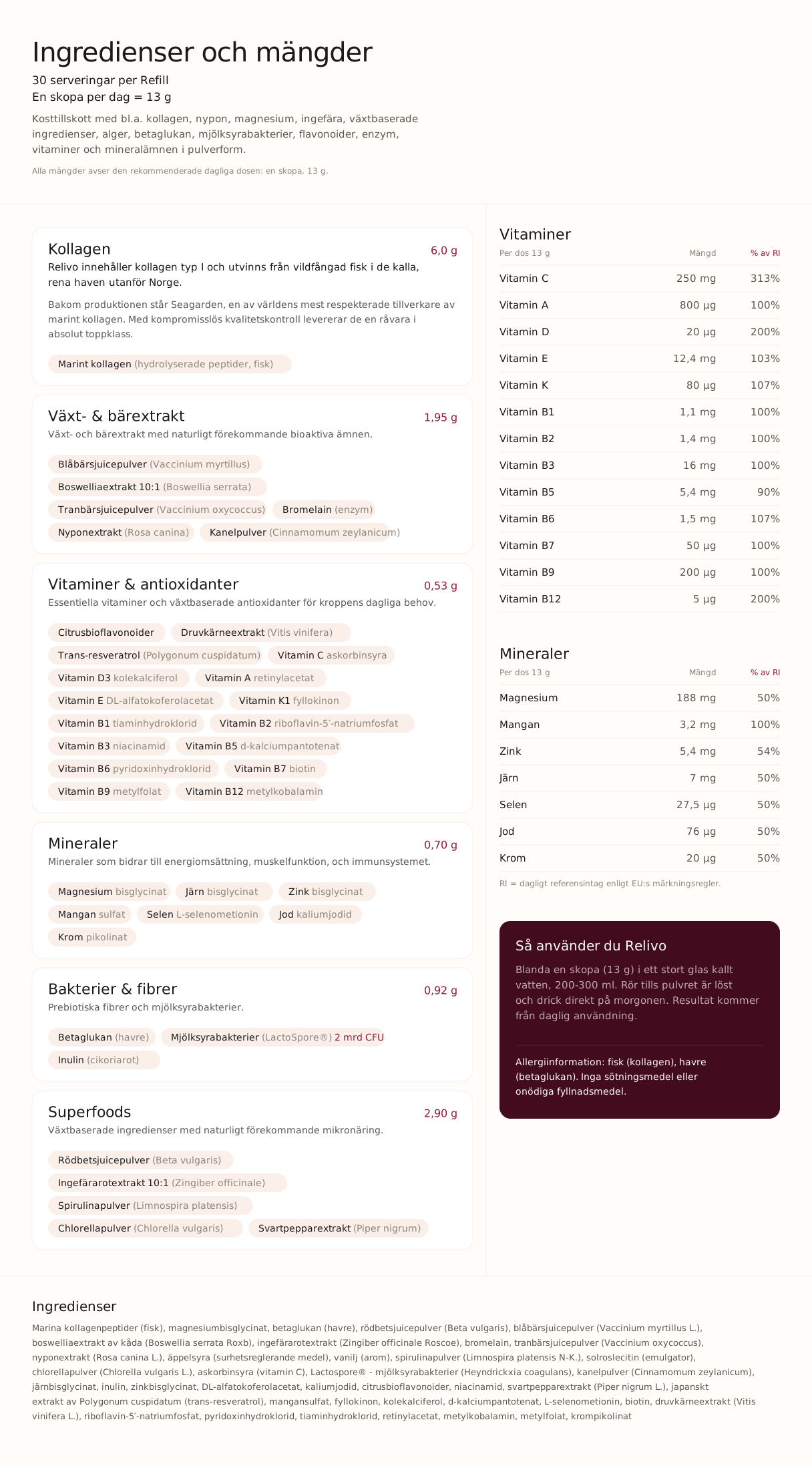
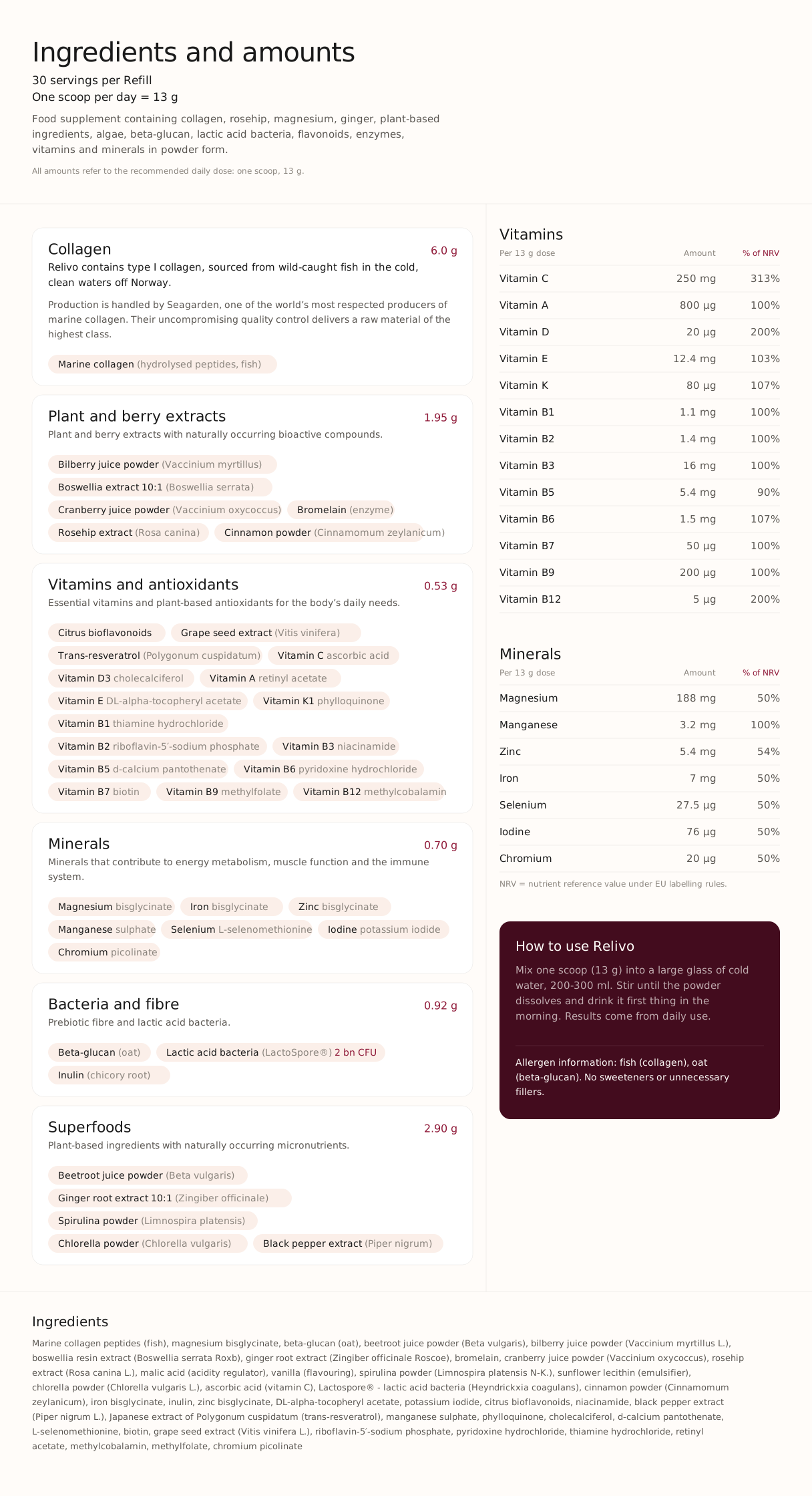
- Combines vitamins, minerals, proteins and bioactive substances in functional levels
- is designed as a coherent system rather than a collection of separate supplements
Relivo is not meant to replace a nutritious diet or other lifestyle factors. It is a tool to reduce the chronic burden that occurs when the body is forced to prioritize long-term maintenance for a long time.
In practice, it is about supporting:
- Stable energy production
- tissue maintenance and recovery
- immunological and inflammatory balance
- the body's ability to function evenly over time
Otra definizione di salute
The triage theory leads to a different view of health than that which often dominates in popular communication.
Health is not the absence of disease.
Health is not a maximized achievement.
Health the ability to maintain biological stability over time, without slowly compromising the future to cope with the present.
This is the definition of health that underpins Relivo.
Conclusion: from survival to balance
The body is built to survive. It has been crucial to human development. But in a modern society, where strain is constant and nutrient deficiencies are often low-grade and long-lasting, survival is not enough as a yardstick.
Triage theory, formulated by Bruce Ames and supported by decades of biochemical research, explains why so many people get -- but at the same time slowly lose biological quality.
Comprehensive nutrition is not a universal solution. But it is a rational, scientific answer to a systemic problem: that too often the body is forced to prioritize away what is not urgent, but which determines how we feel in the long term.
Relivo is built on this insight.
Not for quick effects.
But for balance, continuity and a life to last.
Scientific references
- Ames, B. N. (2006). Low micronutrient intake may accelerate the degenerative diseases of aging through allocation of scarce micronutrients by triage. Proceedings of the National Academy of Sciences.
- Ames, B. N. (2010). Optimal micronutrients delay mitochondrial decay and age-associated diseases. Mechanisms of Ageing and Development.
- McCann, J. C., & Ames, B. N. (2009). Is there convincing biological or behavioral evidence linking vitamin D deficiency to brain dysfunction? The FASEB Journal.
- Kennedy, D. O. (2016). B Vitamins and the Brain: Mechanisms, Dose and Efficacy. Nutrients.
- Gonzalez-Freire, M. et al. (2015). Reconsidering the role of mitochondria in aging. The Journals of Gerontology: Series A.
- Picard, M. et al. (2016). Mitochondrial dysfunction and aging. Anual Review of Pathology.
- Calder, P. C. et al. (2020). Optimal nutritional status for a well-functioning immune system. Nutrients.
- Gombart, A. F., Pierre, A., & Maggini, S. (2020). A review of micronutrients and the immune system. Nutrients.