The hidden effect of sleep deprivation on your skin and collagen production
Did you know that sleep deprivation shows up as more than just dark circles under your eyes? During the night, your skin builds collagen and repairs itself—miss out on sleep, and you impact your skin's elasticity at a deep level.

Introduction
Your skin is the body's largest organ and works hard while you sleep. During deep sleep, blood flow to the skin increases and cell renewal goes into overdrive.
Collagen production, which gives skin its firmness and resilience, occurs primarily at night.
When sleep is lacking, these processes cannot keep up.
Even a single night of insufficient sleep can lead to a pale complexion, puffiness, and fine lines. Long-term sleep deprivation affects the skin's structure more deeply by disrupting collagen turnover.
This is nothing new—research clearly shows how the effects of sleep deprivation on the skin go far beyond just looking tired.
What happens to your skin while you sleep?
During sleep, facial muscles relax and blood circulation increases. This provides the skin with oxygen and nutrients to repair the day's damage from the sun, stress, and pollution.
Collagen—the skin's "framework" of proteins—is built up primarily at night. The body uses amino acids to repair micro-damage and maintain elasticity.
Sleep deprivation disrupts this rhythm and reduces production.
After just two nights of poor sleep, research shows signs of drooping eyelids, bags, and more visible wrinkles.
The skin becomes less resistant to external stressors.
Stress hormones and enemies of collagen
Cortisol, the body's stress hormone, rises when you are sleep-deprived. High levels break down collagen in the skin faster than normal. Over time, this leads to a thinner dermis and reduced firmness.
Studies show that people who are sleep-deprived are perceived as less alert and older. It is not just about appearance—the skin's barrier becomes weaker and moisture loss increases.
The visible and invisible effects of sleep deprivation
The difference is noticeable after just one night. Eyes become puffy, skin looks dull, and fine lines become more apparent. It is the body's way of signaling an imbalance.
In the long term, the effects become more pronounced. The skin's ability to heal wounds, manage UV damage, and retain moisture deteriorates. Collagen production drops, resulting in less firmness and elasticity.
Dermatological research shows that four hours of sleep per night for four days results in clear signs of skin aging. Participants developed more wrinkles, uneven pigmentation, and drier skin.
Why collagen production suffers the most
Collagen is a large protein that requires time and energy to produce. Sleep deprivation diverts energy away from repair and leads to breakdown instead. The body prioritizes the brain and muscles over the skin.
The result is a vicious cycle. A compromised skin barrier leads to more irritation. More irritation further disrupts sleep. That is why beauty sleep is more than just a saying.
The science behind sleep, skin, and collagen
Research shows that the skin's ability to repair itself is 30 times higher at night. During deep sleep, growth hormones are released that stimulate collagen.
A study of 60 women showed that those who slept less than five hours per night had 30% higher cortisol levels. Their skin produced less collagen after just one week.
Other studies link sleep deprivation to increased skin inflammation. This exacerbates dryness, redness, and premature aging. Good sleep counteracts this process through better hormonal balance.
The role of sleep in the skin barrier
The skin's outermost layer weakens with sleep deprivation. Transepidermal water loss (TEWL) increases by up to 20% after a poor night's sleep. This makes the skin drier and more sensitive.
When the barrier is functioning, it protects against allergens and bacteria. Sleep restores it by increasing ceramides and lipids in the epidermis.
How daily habits affect collagen and skin
Late-night caffeine and screen light disrupt melatonin production. This shortens the deep sleep where the collagen work takes place.
Stress from work or personal life raises cortisol even further.
Combine that with sleep deprivation and the effect on the skin is doubled.
Alcohol dehydrates and disrupts REM sleep. One glass can halve the repair phase and result in poorer collagen regeneration the next day.
Age and sleep deprivation - a double impact
After 30, the body's natural collagen production decreases. Sleep deprivation accelerates this decline even further. Older skin has a harder time repairing itself. That is why consistent, quality sleep becomes increasingly important as you age to preserve the skin's structure.

Practical tips: better sleep for better skin
Sleep 7–9 hours per night.
This gives the skin time to fully recover.
Create an evening routine.
A dark room, a cool temperature (18°C), and no screens an hour before bedtime boost melatonin.
Eat collagen-supporting nutrients.
Vitamin C, zinc, and glycine from protein-rich sources aid production.
Drink less caffeine after 2 PM.
It affects deep sleep several hours later.
Manage stress with breathing.
5 minutes of deep breathing before bedtime lowers cortisol and promotes better skin overnight.
Summary
The effect of sleep deprivation on skin and collagen is clear—but it is reversible. Prioritize sleep to give your skin time to repair, build collagen, and strengthen its barrier.
Combine this with a nutrient-dense diet or supplements like Relivo for double the benefits. Your skin reflects what is happening on the inside—give it the right conditions every night.
About Relivo
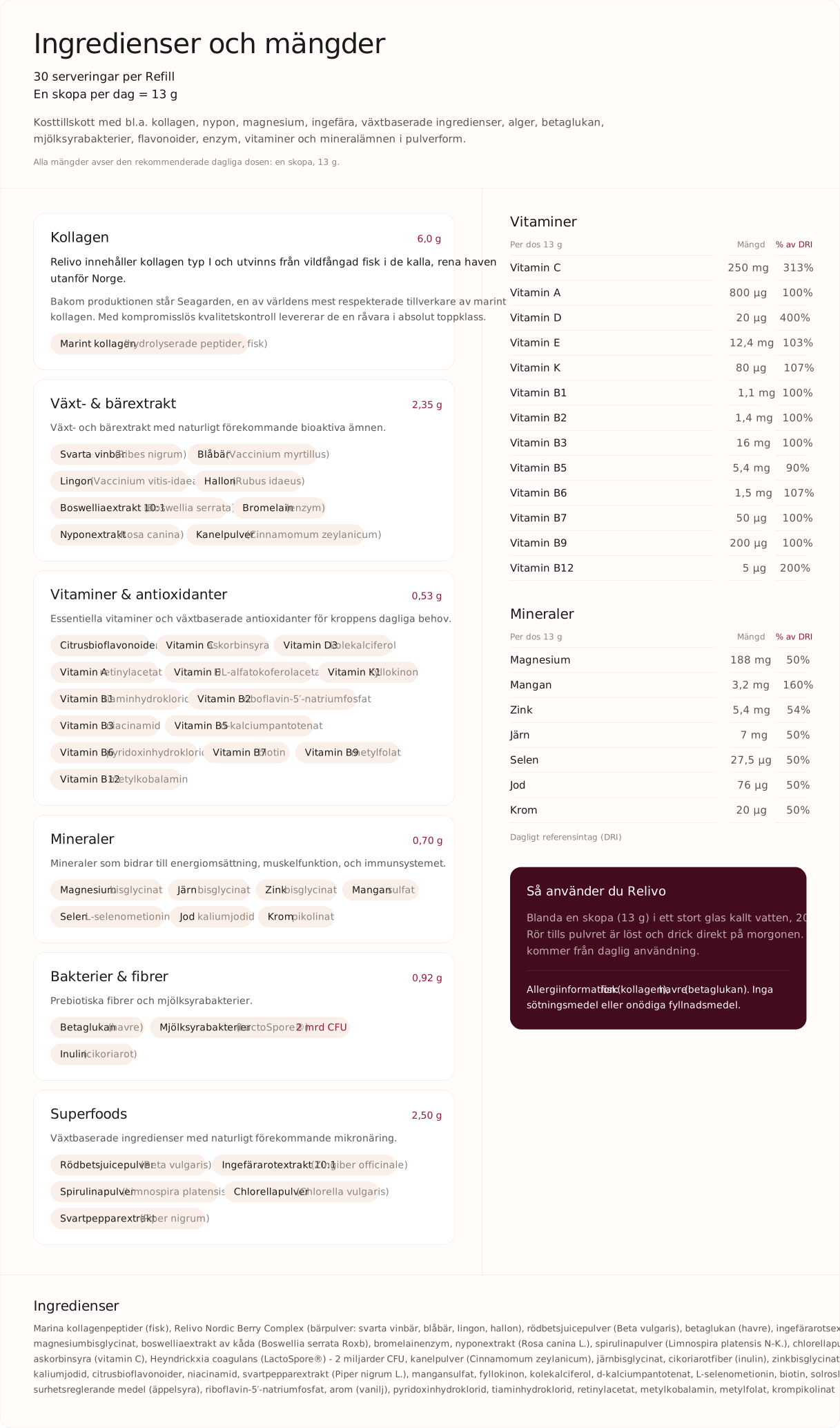
Relivo is a complete daily nutritional supplement developed in collaboration with Swedish researchers and nutritionists. Relivo combines 38 carefully selected nutrients that support the body's most important systems and structures.
Everything is gathered in one scoop of powder, developed to be simple to use and easy to incorporate into your daily life. Relivo mixes in 60 seconds and serves as a long-term nutritional foundation for energy, immune system, gut health, muscles, and joints.
Sources:
• Celloptimum.se – Collagen for skin and sleep
• Naturligt-eksemfri.se – The importance of sleep for the skin
• Hudoteket.se – How does sleep affect the skin?
• If.se – How are you affected by sleep deprivation?
• Relivo.se – Collagen for sleep and skin health