The glymphatic system - the brain's cleaning crew that only works while you sleep
In 2012, researchers discovered something unexpected: the brain has its own cleaning system that works almost exclusively while you sleep.
Introduction
The body has a lymphatic system—a network of vessels that transports waste, excess fluid, and broken-down proteins away from tissues. This is basic physiology and has been known for centuries.
However, the brain has no lymphatic vessels. This was long an accepted fact, which raised an unanswered question: how does the body's most metabolically active organ—consuming about 20 percent of all energy—get rid of its waste?
The answer came in 2012, and it changed how researchers view the function of sleep. The brain has its own cleaning system, named the glymphatic system. What makes it truly remarkable is that it works almost entirely while you are asleep.
In this guide, we walk through how the system works, what the research actually shows, what remains uncertain, and what it practically means for how you prioritize sleep.
The discovery
In 2012, a research team at the University of Rochester, led by Danish neuroscientist Maiken Nedergaard, published a study describing a previously unknown transport pathway in the brain.
They named the system "glymphatic"—a combination of "glia" and "lymphatic." Glial cells are the brain's support cells, and it was their role in the system that made the name a natural fit.
The following year came the follow-up that had a real impact. It showed that the system's activity was dramatically higher during sleep than during wakefulness. Suddenly, sleep research had a new and concrete explanation for why sleep is biologically indispensable.
How the system works
The mechanics are elegant and somewhat unexpected.
Cerebrospinal fluid—the clear fluid surrounding the brain and spinal cord—flows into the brain tissue along the outside of the arteries. It follows the blood vessels, but in its own space surrounding them.
Once inside the tissue, the fluid exchanges places with the fluid between the brain cells. In this process, waste products are captured—broken-down proteins, metabolites, and other substances that have accumulated during the day's work.
The fluid, now carrying the waste, is then transported back out, this time along the veins, leaving the brain for further processing.
The key to the entire system lies in the astrocytes, a type of glial cell. Their projections lie tightly against the blood vessels and are filled with water channels called aquaporin-4. These channels control the flow. In animal studies where aquaporin-4 was absent, clearance was significantly reduced.
The sleep finding that changed everything
In 2013, the study that received the most attention was published.
The researchers were able to show that the space between brain cells—the so-called interstitial space—expands by about 60 percent during sleep compared to wakefulness.
The effect is easy to understand. Wider channels allow for more flow. The throughput of cerebrospinal fluid increased significantly, and the removal of waste products occurred about twice as fast during sleep as during wakefulness.
In other words: the brain seems to need to disconnect in order to clean up. It cannot do both at the same time.
This is one of the most concrete explanations we have for why sleep is non-negotiable.
Evidence from humans
A reasonable objection to all of the above is that it was done on mice. How do we know it applies to humans?
In 2019, the answer arrived. A research team at Boston University used a combination of EEG and functional MRI to simultaneously measure brain waves, blood flow, and the movement of cerebrospinal fluid in sleeping humans.
The result was striking. During deep sleep, the researchers observed large, rhythmic pulsations of cerebrospinal fluid into the brain. These pulsations were closely linked to the slow brain waves that characterize deep sleep.
The pattern was clear: slow wave, blood volume drops, fluid flows in. Over and over again, all night long.
It was the first time the phenomenon was documented directly in humans, and it provided strong support that the system functions in a similar way in us.
Deep sleep is the key
An important nuance: it does not appear to be sleep in general that drives the system, but deep sleep specifically.
The slow brain waves during deep sleep—the stage that dominates the first hours of the night—are what have been most clearly linked to increased flow. This also aligns with the observation that deep sleep is prioritized first when the body recovers after a period of sleep deprivation.
This has practical consequences. Deep sleep is concentrated in the first part of the night. Going to bed four hours later but sleeping the same total number of hours does not provide the same distribution of sleep stages.
This is one of several arguments for why regular sleep schedules matter beyond just the number of hours.
What is transported away
Among the substances that have been studied particularly closely are beta-amyloid and tau—two proteins that accumulate in the brain in Alzheimer's disease.
Animal studies have shown that the clearance of beta-amyloid increases significantly during sleep. This has led to the hypothesis that long-term insufficient sleep could contribute to accumulation over time.
It is important to be cautious with the conclusions here. The connection is biologically plausible, and there are epidemiological studies that have linked poor sleep to a higher risk of cognitive decline. However, it has not been proven that sleep deprivation causes dementia, nor has it been proven that better sleep prevents it.
What we can say is that the mechanism exists, that it is sleep-dependent, and that it provides yet another reason to take sleep seriously.
The system and aging
Animal studies suggest that glymphatic function decreases significantly with age. In comparisons between young and old mice, dramatic differences in flow have been observed.
At the same time, sleep changes with age. The proportion of deep sleep gradually decreases throughout life, and awakenings become more frequent.
If both of these things are also true in humans, it would mean a double effect: a less efficient system and less of the sleep stage that drives it. This is an active area of research.
Sleeping position - what the research shows
A 2015 study examined how body position affected glymphatic flow in rodents. The result was that the side position provided the most efficient transport, followed by the back position, with the stomach position being the least effective.
This has been widely circulated as advice to sleep on your side. It is worth noting that the study was conducted on rats under anesthesia and has not been replicated in humans in a way that justifies strong recommendations.
However, the side position is beneficial for other reasons—including for people with snoring or sleep apnea. So the advice is not wrong; it just has weaker support than it is sometimes portrayed as having.
What we don't know
It is worth being honest about the fact that the field is still evolving.
Some researchers have questioned parts of the model, particularly how much of the transport is driven by active flow compared to passive diffusion. The debate is ongoing.
The majority of detailed research has been done on rodents. The human evidence is compelling but less extensive.
And there is not yet an established way to clinically measure an individual's glymphatic function.
This does not mean the system does not exist—the evidence for it is strong. But it does mean that one should be skeptical of products or methods that promise to "improve your glymphatic function." There is no such thing with established support in humans, other than sleep.
Practical conclusions
What can you actually do with this?
1. Prioritize the first part of your sleep. Deep sleep is concentrated there. Regular bedtimes do more than just sleeping in late in the morning.
2. Take deep sleep seriously. Factors that disrupt deep sleep—alcohol, late exercise, a warm bedroom, a heavy late meal—affect the very stage that drives the system.
3. Prioritize sleep during intense periods. The brain works harder, which logically means there is more to transport away.
4. Be skeptical of shortcuts. There is no supplement, device, or technique with established evidence for increasing glymphatic flow in humans. Sleep is the intervention.
When should you seek medical care?
Contact your primary care clinic if you:
- Snore heavily or have been told that you stop breathing during sleep
- Never feel rested despite getting enough hours of sleep
- Have difficulty falling asleep or sleep restlessly for more than a month
- Experience a noticeable decline in memory or concentration
- Fall asleep unintentionally during the day
Sleep apnea is particularly relevant in this context because the condition fragments sleep and reduces the amount of deep sleep. It is common and often undiagnosed. Read more at 1177 Vårdguiden.
Summary
The glymphatic system is the brain's own waste clearance pathway, discovered as recently as 2012. Cerebrospinal fluid flows in along the arteries, exchanges places with the fluid between brain cells, picks up waste products, and is transported out along the veins.
What makes the system unique is its dependence on sleep. The space between brain cells expands by approximately 60 percent during sleep, and the flow increases dramatically. In humans, researchers have observed how cerebrospinal fluid pulses into the brain in sync with the slow waves of deep sleep.
Much remains to be understood, and one should be skeptical of products that promise to influence the system. However, the fundamental message is hard to ignore: the brain needs to sleep in order to clean itself. And that cleaning primarily takes place during the first hours of the night.
About Relivo
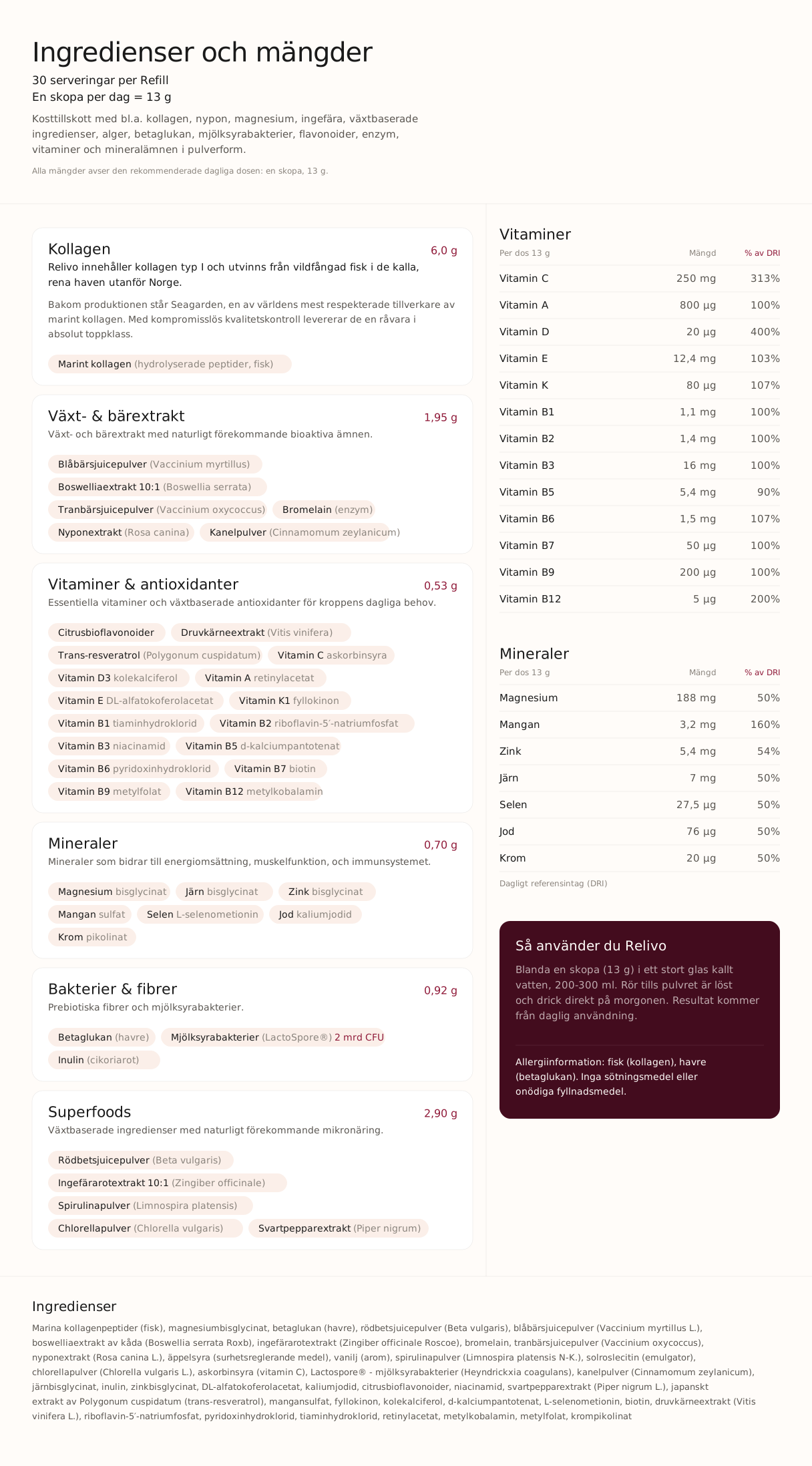
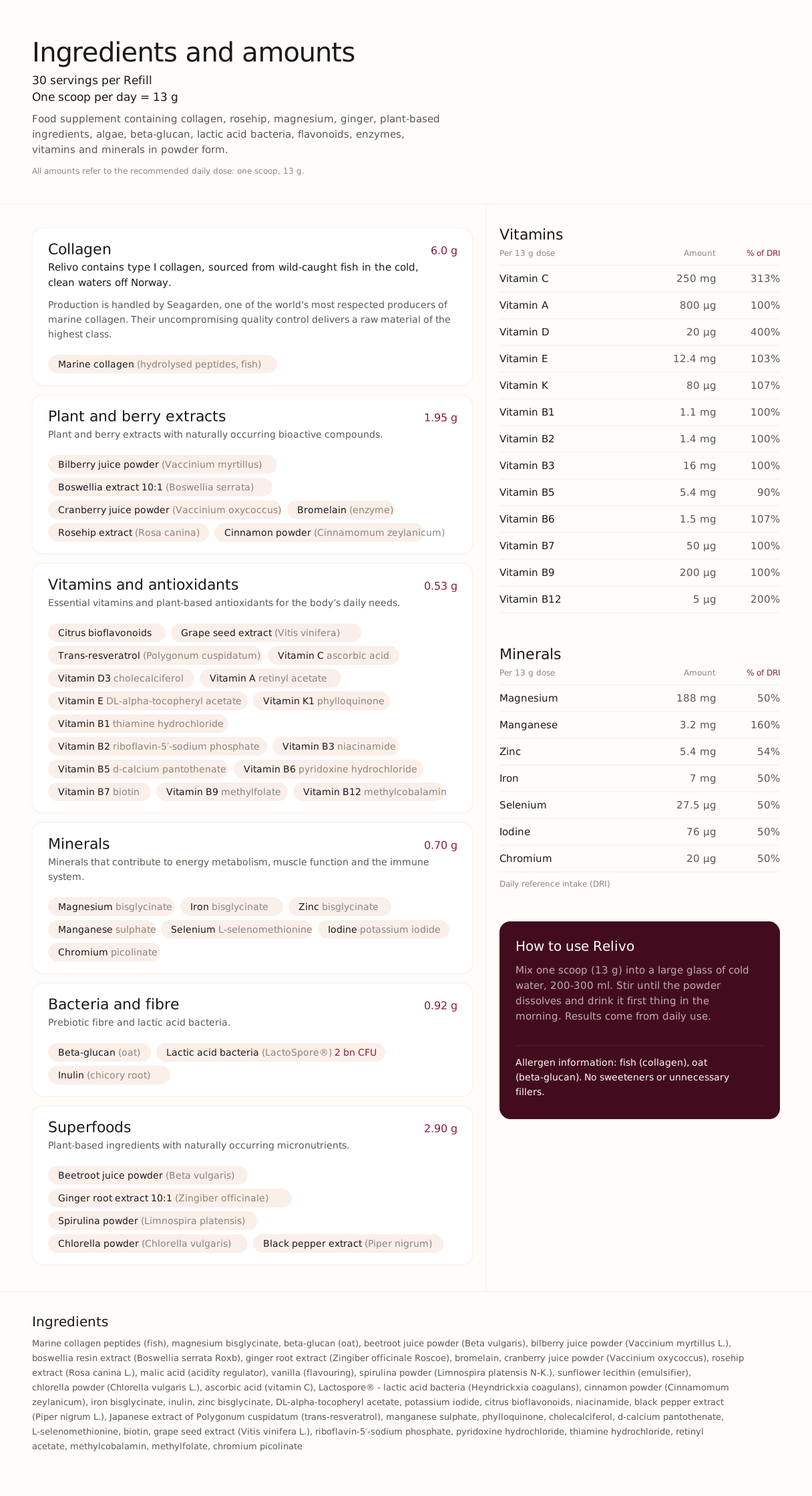
Relivo is a complete daily nutritional supplement developed in collaboration with Swedish researchers and nutritionists. Relivo combines 38 carefully selected nutrients that support the body's most important systems and structures.
Everything is contained in one scoop of powder, developed to be simple to use and easy to incorporate into your daily routine. Relivo is mixed in 60 seconds and serves as a long-term nutritional foundation for energy, immune function, gut health, muscles, and joints.
Sources
- Iliff JJ et al. – A paravascular pathway facilitates CSF flow through the brain parenchyma and the clearance of interstitial solutes, including amyloid β (Science Translational Medicine, 2012)
- Xie L et al. – Sleep drives metabolite clearance from the adult brain (Science, 2013)
- Fultz NE et al. – Coupled electrophysiological, hemodynamic, and cerebrospinal fluid oscillations in human sleep (Science, 2019)
- Jessen NA et al. – The Glymphatic System: A Beginner's Guide (Neurochemical Research)
- Kress BT et al. – Impairment of paravascular clearance pathways in the aging brain (Annals of Neurology)
- Lee H et al. – The Effect of Body Posture on Brain Glymphatic Transport (Journal of Neuroscience, 2015)
- Nedergaard M, Goldman SA – Glymphatic failure as a final common pathway to dementia (Science, 2020)
- Hablitz LM et al. – Increased glymphatic influx is correlated with high EEG delta power and low heart rate in mice under anesthesia (Science Advances)
- Mestre H et al. – Perivascular spaces, glymphatic dysfunction, and small vessel disease (Clinical Science)
- 1177 Healthcare Guide – Sleep apnea