Iron deficiency in women of childbearing age - 7 early signals you should not ignore
Fatigue, pale skin and a brain that refuses to cooperate? Iron deficiency in women is more common than many people think - and the first signals are often so subtle that it's easy to blame stress or poor sleep.

Introduction
It starts stealthily. An extra cup of coffee in the afternoon to perk up, a feeling of breathing heavier on the stairs, nails suddenly coming off at the edges.
For many women between the ages of 18 and 50, these are not occasional bad days - but early signs of something the body tries to whisper about: iron deficiency.
Iron deficiency in women of childbearing age is one of the most common nutritional deficiencies in the world. The World Health Organization estimates that around 30 percent of all women of childbearing age have too low iron values, and in Sweden the figure is not so far behind.
Even so, many people go around for months, or years, not realizing that it is the iron that is the culprit.
In this guide, we'll go over why iron deficiency is so prevalent among women, which seven early signals you should watch out for, and how you can support your iron intake in everyday life without it having to be a hassle.
Why are women of childbearing age more often affected by iron deficiency?
The answer lies in biology. Every month, most women lose between 30 and 80 ml of blood during menstruation, and with the blood follows iron out of the body. If you have heavy menstrual bleeding, the loss can be significantly greater.
Add a diet where red meat may not be on the menu every day, a stressful everyday life that affects absorption in the gut, and possibly pregnancy or breastfeeding - and you'll understand why iron deficiency in women is so widespread.
There are also groups with extra elevated risk: vegetarians and vegans, athletes with a high exercise load, women with an IUD that produces increased bleeding, as well as those suffering from intestinal disorders that affect nutrient absorption.
The 7 Early Signs of Iron Deficiency You Should Watch Out For
Here are the signals the body often gives long before the blood value falls into the red zone. The sooner you catch up with them, the easier it is to reverse the trend.
1. Constant fatigue - even after a good night's sleep
This is the classic signal, and also the most missed. Iron is necessary for the red blood cells to carry oxygen to the body's cells -- and without enough oxygen, it's only noticeable in the energy level.
You sleep eight hours but wake up sluggish. You take a nap but wake up just as tired. The type of fatigue that cannot be compensated away is often an early sign of iron deficiency.
2. Pale skin and pale inside of the lower eyelid
Gently pull down the lower eyelid and look inside. In someone with sufficient iron values, it is distinctly pink—in case of iron deficiency, it becomes light, almost whitish.
Even the skin may look duller and paler than usual, especially on the face and palms. It's about the fact that hemoglobin, which gives the blood its red color, is lower than normal.
3. Shortness of breath during everyday activities
Getting out of breath when you run for the bus is one thing. Getting out of breath while going up a flight of stairs, vacuuming or carrying grocery bags in is another.
When oxygen transport in the blood is insufficient, the heart and lungs work harder to compensate. It is one of the clearest, but also most overlooked, signs of iron deficiency in women.
4. Heart palpitations and pulse beats you may feel
For the same reason as above, the heart can start beating faster to move around the oxygen that is present. You may notice it while lying in bed, or after a gentle effort.
This is a sign that many dismiss as stress — but if it occurs regularly, in parallel with fatigue, it's worth checking out.
5. Brittle nails and increased hair loss
Hair and nails are the first tissues the body “skimps” on when the iron is not enough. The nails can become thin, brittle or acquire longitudinal stripes, and in some cases bend upwards at the edges (so-called spoon-shaped nails).
Hair can lose volume, feel thinner in the bundle and get stuck more in the brush than usual. It's rarely dramatic -- but over a few months the change is clearly noticeable.
6th. Brain joint and impaired concentration
The brain is one of the body's most energy-consuming organs, and it needs oxygen to function optimally. When the iron is low, it becomes more difficult to focus, keep the thread in conversation, or remember what you just intended to do.
Many describe it as thinking through fog. If you start writing more reminders to yourself than usual, think about whether your body is trying to say something.
7. Cold hands and feet
Iron deficiency affects the body's ability to regulate temperature and maintain good circulation in the extremities. The result is cold fingers and toes, even when the rest of the body feels warm enough.
Are you the one who always needs thick socks indoors while others go barefoot? It may be worth investigating the iron value.
How to support your iron intake in everyday life
The good news is that iron levels can often be supported with relatively small changes in diet and habits. Here are some concrete tips to start with.
Eat Trolleyde home and non-home iron
Hem iron is found in animal sources such as red meat, liver, chicken and fish — and is absorbed much more efficiently by the body. Non-heme iron is found in legumes, whole grains, dark green leafy vegetables, pumpkin seeds, and dried fruit.
If you are vegetarian or vegan, the amount becomes more important, as the uptake of non-heme iron is lower. Vary the sources and eat abundantly with them.
Always combine with vitamin C
Vitamin C increases the absorption of non-heme iron several times over. Squeeze a little lemon over the lentil stew, eat a bell pepper for the wholemeal pasta or drink a glass of orange juice for breakfast with oatmeal porridge.
It's one of the easiest and most underrated tricks to get more out of the iron in your food.
Think about what you drink with your food
Coffee and tea contain polyphenols that can reduce iron absorption by up to 60 percent if you drink them right at mealtime. Feel free to wait an hour after eating before taking your cup — it's a small adjustment that can make a big difference over time.
Dairy products and calcium supplements should also be taken away from iron-rich meals for the same reason.
When should you take a blood test?
If you recognize yourself in several of the signals above, a simple blood test at the health center is a good start. The most common values to look at are hemoglobin (Hb), ferritin (the body's iron stores), and transferrin.
Ferritin is especially important for women of childbearing age, as it can show low levels long before hemoglobin has time to drop. You can read more about sampling at 1177 Care Guide.
Summary
Iron deficiency in women of childbearing age is common, but the signals are often so mundane that they are easy to miss. Fatigue, pallor, shortness of breath, palpitations, brittle nails, brain fog and cold hands - alone they can be explained by a thousand things, but together it is worth listening to.
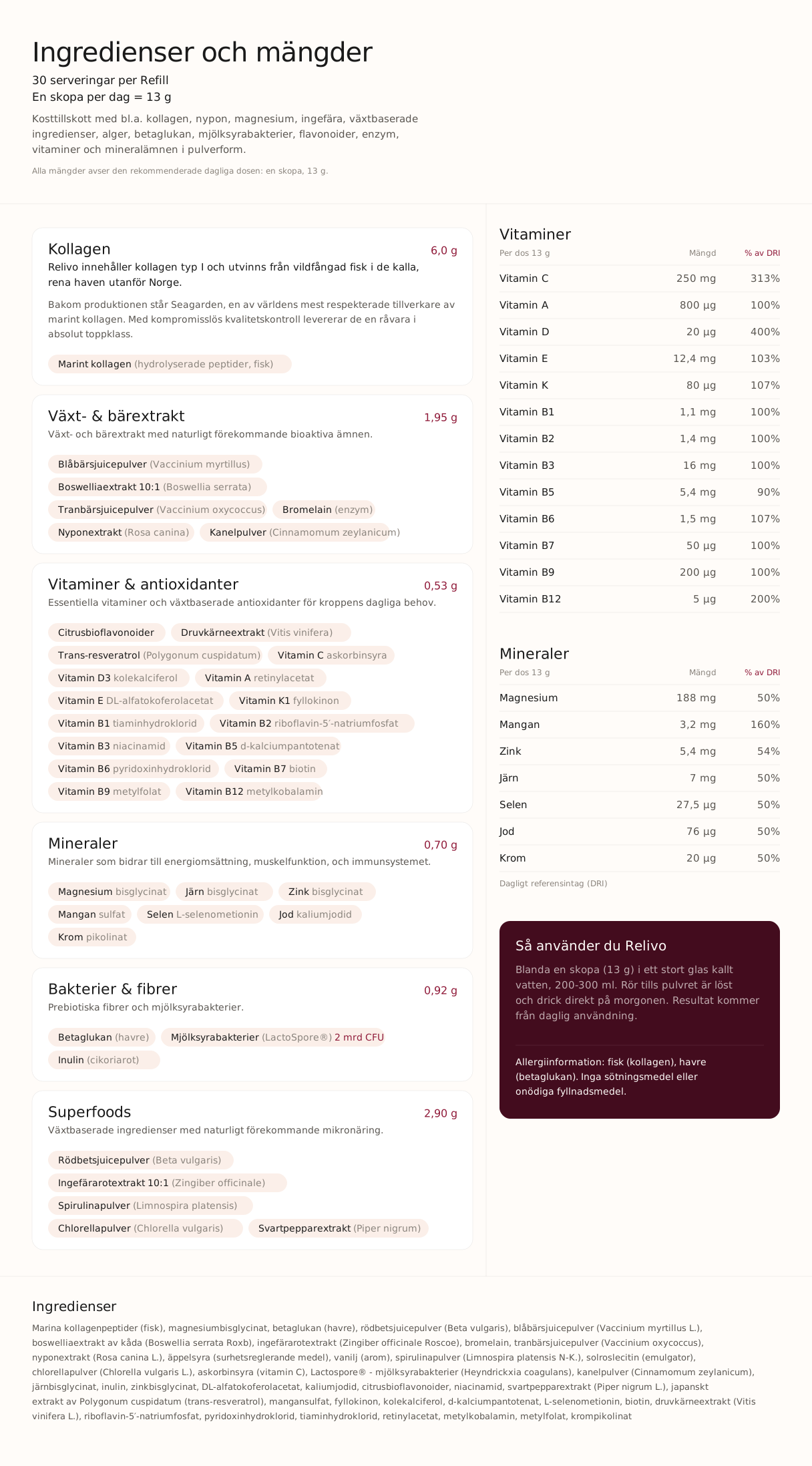
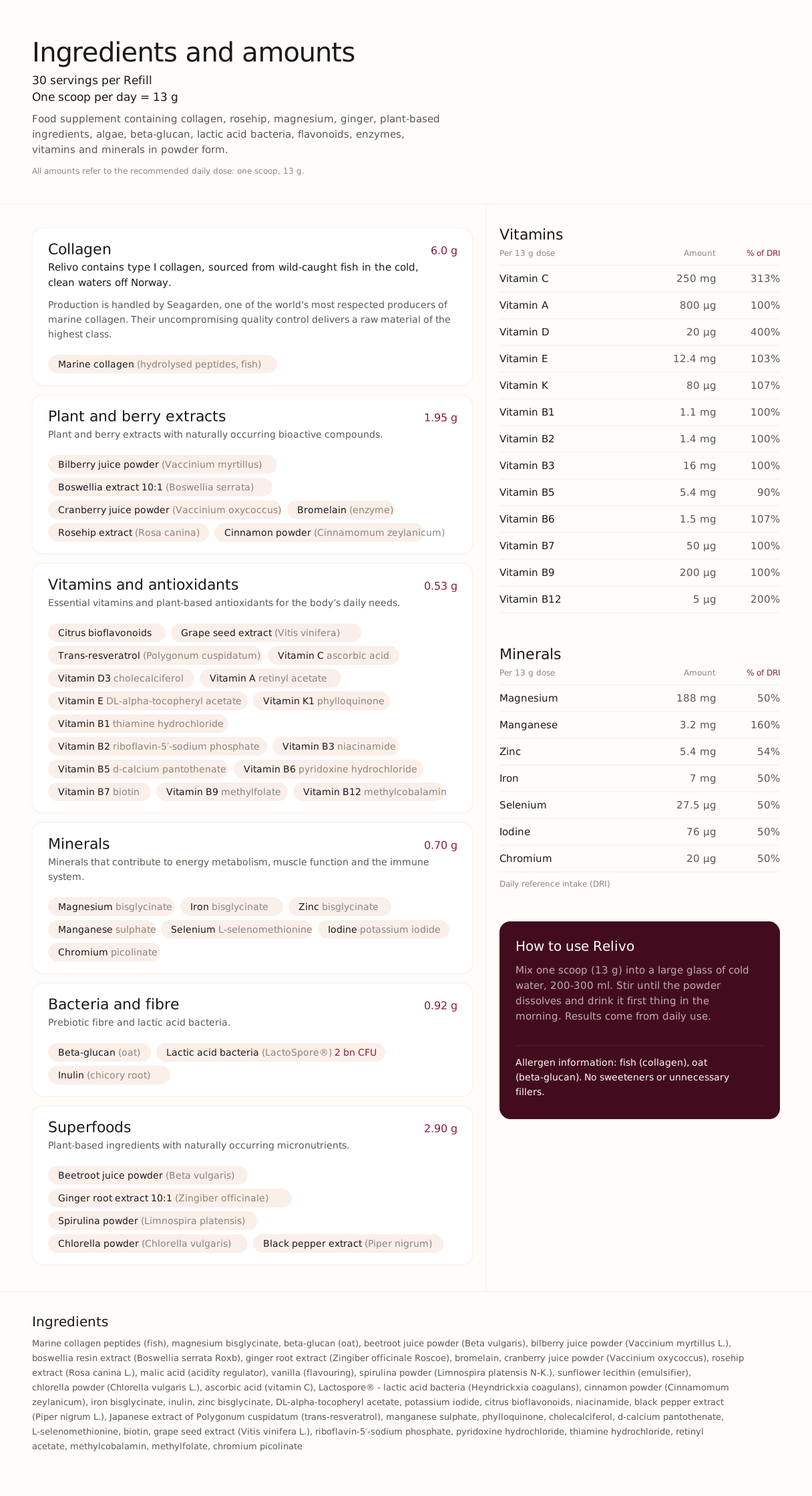
With an iron-smart diet, smart combinations (think vitamin C) and a complete daily supplement like Relivo It makes it easier to give your body the nutrition it really wants. And usually, it's the small, daily habits that make the biggest difference over time.
About Relivo
Relivo is a complete daily nutritional supplement developed in collaboration with Swedish scientists and nutritionists. Relivo combines 38 carefully selected nutrients that support the body's most important systems and structures.
All collected in a scoop in powder form, developed to be easy to use and easy to bring into everyday life. Relivo is blended in 60 seconds and is used as a long-term nutritional foundation for energy, immune system, gut health, muscles and joints.
Sources
- World Health Organization (WHO) — Anaemia in women and children
- Finnish Food Agency — Iron
- 1177 Vårdguide — Iron deficiency and anaemia
- NIH Office of Dietary Supplements -- Iron Fact Sheet for Health Professionals
- Hallberg L. et al. — Iron absorption from the whole diet in men
- Hurrell R, Egli I. — Iron bioavailability and dietary reference values (AJCN)
- Morck TA et al. — Inhibition of food iron absorption by coffee
- Disler PB et al. — The effect of tea on iron absorption
- Cochrane Review — Daily oral iron supplementation during pregnancy
- Karolinska Institutet — Research on women's health and iron status