How often to exercise? The research provides the answer
How often should you exercise to get clear results — without staying in the gym? Here we go over what the research says and how you can adapt the exercise frequency to your everyday life.

Introduction
How often you exercise affects everything from everyday energy to how you perform physically and mentally. At the same time, it's easy to get caught up in either “all or nothing” or unreasonably high demands.
Research shows that regular movement is more important than a perfect layout. It's about finding a workout frequency you can sustain over time, not about maxing out over a few weeks.
How often should you exercise according to research?
International and Swedish guidelines point out that adults should aim for at least 150 minutes a week of moderate activity or 75 minutes of more intense activity. This is seen as a baseline for positive health effects, not as a ceiling.
For example, 150 minutes could be 30 minutes of brisk walking five days a week. If you choose more intense exercise, such as intervals or tougher cardio workouts, 75 minutes per week is often enough according to these recommendations.
Studies and guidelines also show that extra benefits occur if you move more, up to about 300 minutes of moderate activity per week. But even small steps from a sedentary everyday life bring clear effects.
How many days a week is optimal?
There is not an exact number of days that will suit everyone, but a lot speaks in favor of spreading the activity out over the week. For many, three to five training days a week serves as a good starting point.
Even one to two workouts a week will have positive effects if you have previously been inactive.
When you aim for three to five workouts, you often get a better balance between strain, recovery and everyday life.
You can think something like this:
• 2-3 days a week: good starting level, especially if you are new.
• 3-4 days a week: just right for many people who want to develop.
• 4-6 days a week: for those who have been training for a while and have a clear plan.
How often should you do strength training?
When it comes to strength training, it is often recommended to train all major muscle groups at least twice a week.
It provides sufficient stimulation to build and maintain muscle mass over time.
For example, a setup might look like this:
• 2 sessions per week: full body workouts both days.
• 3 fits/week: full body or upper body/lower body/full body.
• 4 workouts per week: two upper body workouts and two lower body workouts.
The important thing is that each muscle group is allowed to rest between the heavier workouts. Feel free to plan so that you avoid straining the same muscle group for several days in a row.
How often to practice fitness?
For cardio training, you often start from the same overall level: at least 150 minutes of moderate or 75 minutes of intense activity per week. It can be anything from walking and cycling to running, swimming or group training.
You can distribute the fitness in different ways:
• 3 sessions of 30—40 minutes at a slow to moderate pace.
• 2 slightly longer sessions plus a shorter, more intense session.
If you move very little today, even a couple of shorter workouts a week can make a big difference. The focus should be on regular heart-rate boosting activity, not on each session having to be maximally hard.
How little exercise is enough for effect?
Many people think that it takes a lot of practice for it to be “worth” something. In reality, clear health effects are seen already when a sedentary person reaches the basic recommendations.
Shorter workouts of 10-15 minutes that you build up over the course of the week can also have an effect. It can be several short walks, bike rides or quick home workouts.
Think that all movement counts. It's better with shorter, doable workouts on a regular basis than long ones that just get off once in a while.

How often should you train as a beginner?
If you are new to exercise, the most important thing is to get started without overloading your body.
Two to three sessions a week is often a good start that gives both effect and room for recovery.
A simple setup can be:
• 1-2 strength training sessions for the whole body per week.
• 1-2 workouts of light to moderate fitness, such as walking or cycling.
Focus on technique, calm progression and how you feel after the sessions. You should feel tired, but still have the energy left so that you want to continue next week.
How often should you exercise as more accustomed?
For those of you who have been exercising regularly for a while, three to five workouts per week can be a good guideline.
Then there is room to work more specifically towards goals such as strength, fitness or body composition.
An example might be:
• 2-3 strength training sessions in which each muscle group is trained at least twice a week.
• 1-3 cardio sessions with a mix of calm and more intense workouts.
The more you exercise, the more important recovery becomes. By varying intensity, adding in rest days, and sometimes opting for calmer workouts, you reduce the risk of being overloaded.
How do you know if you are exercising too often?
There are some common signals you can keep an eye out for. If you often feel unusually tired, chewy, or notice that workouts that previously felt light suddenly feel heavy, this can be a warning sign.
Other signs may include poorer sleep, decreased motivation, or that you feel disproportionately exhausted for a long time after your workouts. Then it may be wise to adjust your exercise frequency, add in extra rest days, or swap a few workouts for lighter activity.
Practical tips: how to find the right training frequency
To find a workout frequency that works, it needs to fit your everyday life, not someone else's.
It should feel realistic over many weeks, even when life is stressful.
Here are some concrete tips:
• Book the training in the calendar like any other important meeting.
• Determine a “minimum” level, such as 2-3 workouts per week, that you almost always pass.
• Have a plan B: if you don't have time for the full session, choose a shorter version rather than skipping it completely.
• Use everyday exercise — walking, stairs, cycling — to complement your workouts.
Once you have found a level that flows with everyday life, you can adjust the intensity, length or number of sessions incrementally. It is the continuity over time that gives the greatest effect.
Summary
The research shows that a good exercise frequency is at least 150 minutes of moderate activity or 75 minutes of intense per week, plus strength training for larger muscle groups twice. Spread out the sessions over 3—5 days depending on your level - beginners start with 2—3, while habitual exercisers can aim for 3—5.
Signs of too much exercise include persistent fatigue and poorer sleep, so listen to your body and prioritize durability over perfection. Calendar booking, minimum levels and daily exercise make it easier to create a routine that lasts a lifetime.
About Relivo
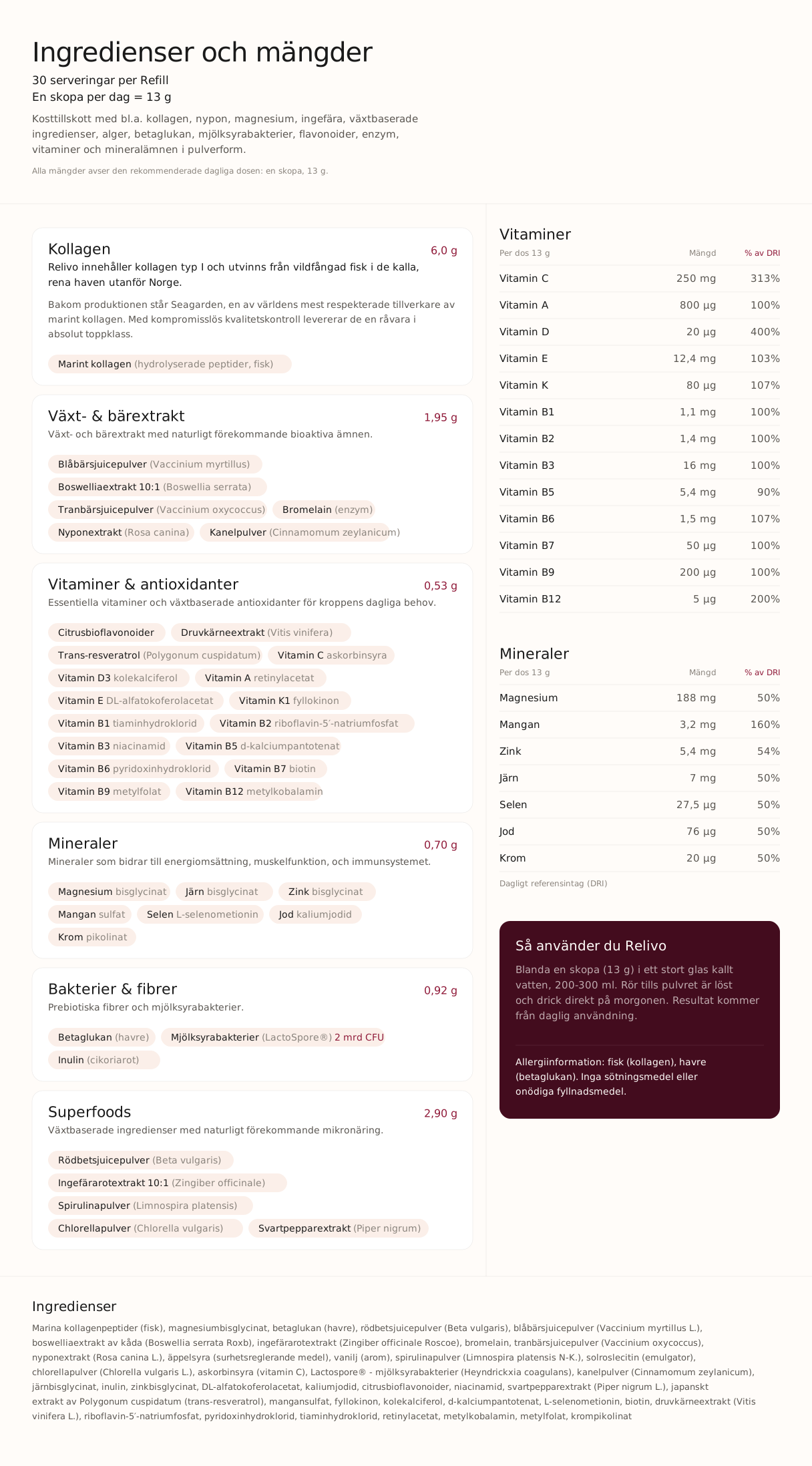
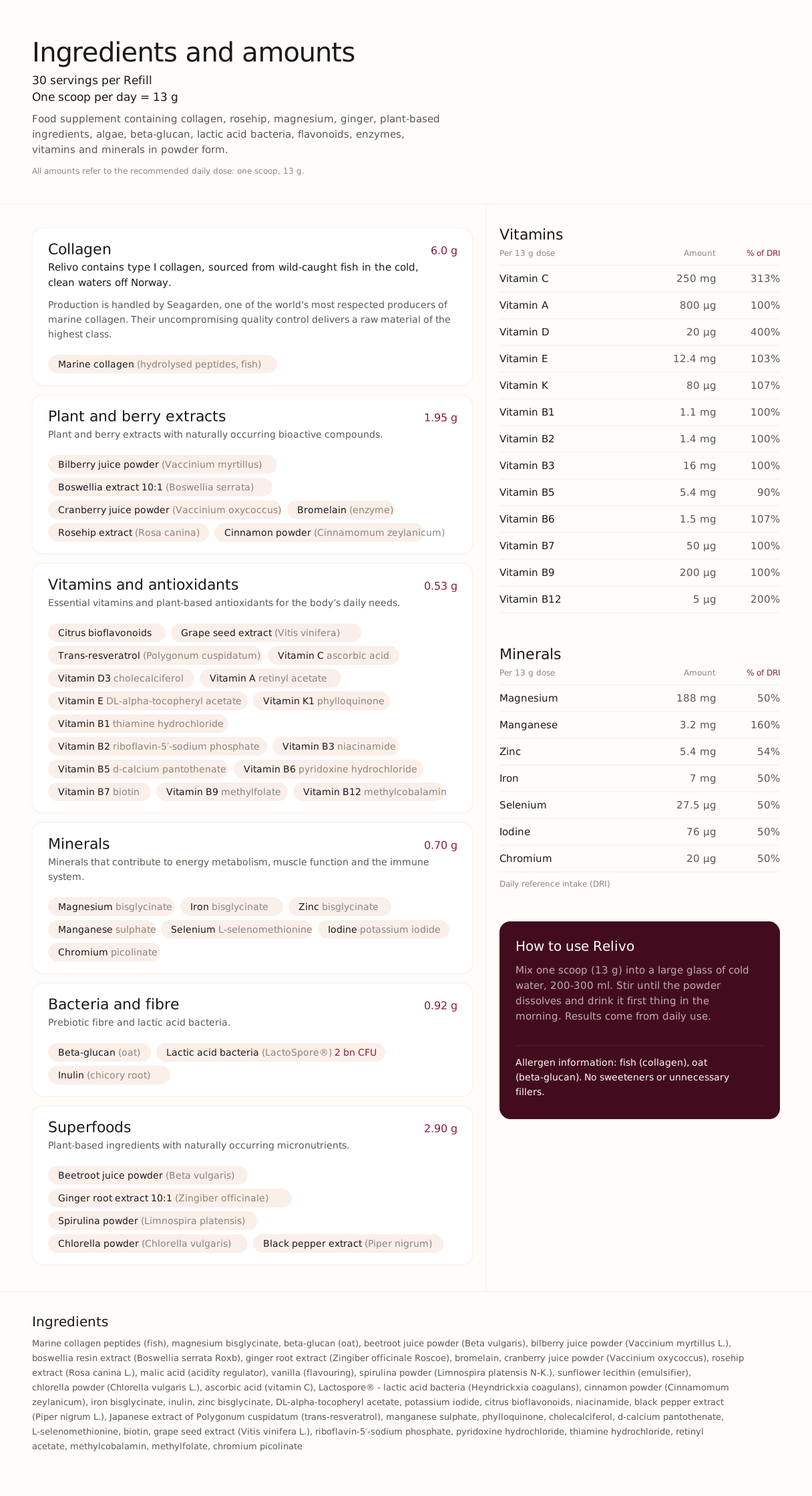
Relivo is a complete daily nutritional supplement developed in collaboration with Swedish scientists and nutritionists. Relivo combines 38 carefully selected nutrients that support the body's most important systems and structures.
All collected in a scoop in powder form, developed to be easy to use and easy to bring into everyday life. Relivo is blended in 60 seconds and is used as a long-term nutritional foundation for energy, immune system, gut health, muscles and joints.
Sources
• https://www.folkhalsomyndigheten.se/livsvillkor-levnadsvanor/fysisk-aktivitet-och-stillasittande/om-fysisk-aktivitet-och-stillasittande/riktlinjer-och-rekommendationer-for-fysisk-aktivitet-och -
• https://www.folkhalsomyndigheten.se/contentassets/106a679e1f6047eca88262bfdcbeb145/riktlinjer-fysisk-aktivitet-stillasittande.pdf
• https://www.fyss.se/wp-content/uploads/2021/10/Rek-vuxna.pdf
• http://www.yfa.se/wp-content/uploads/2012/03/SLS-Rekommendationer-om-fysisk-aktivitet-f%C3%B6r-vuxna-2011.pdf
• https://efyss.se/allmanna-rekommendationer