Collagen peptides and cartilage: this is how Relivo supports your joints
Marine collagen has sailed up as one of the most talked about nutrients for mobility and everyday strength. Here we go over how it actually builds into cartilage, tendons and ligaments - and how you can take advantage of it in practice.

Introduction
Have you ever felt numb in your knees, hips or shoulders without really understanding why? Then you're far from alone - joint comfort and mobility are something most people start thinking about only when the body tells you to.
At the center of all this is the connective tissue of the body: cartilage, tendons and ligaments that hold together, stabilize and distribute load at every step, jump and lift.
A key player in this tissue is called collagen, and marine collagen in particular has received a lot of attention for its bioavailability and how easily the body seems to absorb it.
What is marine collagen - and how does it differ?
Marine collagen is extracted from fish, for example from skins and bones, and consists above all of collagen type I. Type I is the predominant collagen type in skin, tendons, ligaments and bones, while type II is found above all in the cartilage of the joints.
When you ingest hydrolyzed marine collagen, it breaks down into smaller peptides that are absorbed through the gut and can quickly be found in the blood. It is these small peptides that can then be used by cells that build up connective tissue — most notably fibroblasts in tendons and ligaments and chondrocytes in cartilage.
How is marine collagen built into cartilage?
Cartilage acts as shock absorbers in your joints and consists of collagen fibers and proteoglycans, among other things.
Type II collagen predominates inside the cartilage itself, but type I collagen and collagen peptides can support the overall structure and environment in which cartilage is constantly broken down and built up.
Studies on hydrolysed collagen show that the peptides are absorbed into the blood and can accumulate in cartilage tissue, where they are used by chondrocytes to produce new matrix.
In practice, this can mean that the cartilage becomes a more stable “building material” to work with during everyday loads, such as walking on stairs, running or heavy work.

Tendons: where force is transferred from muscle to skeleton
Tendons are the strong, fibrous “ropes” that connect muscles to skeletons and cause each muscle contraction to lead to movement.
Here, collagen type I predominates, packed in parallel fibers that can withstand traction but at the same time need a certain elasticity.
When you ingest marine collagen, the body receives a concentrated source of the very amino acids — such as glycine, proline, and hydroxyproline — that tendon tissue is made up of.
Hydrolyzed collagen peptides can be taken up and used by the fibroblasts of the tendons to strengthen and maintain the fibers, especially in recovery after strain.
It can be especially relevant if you practice jumping, running, powerlifting or any other activity where the tendons receive a lot of force, session after session.
Ligaments: the stabilizing “seat belts” of the body
Ligaments hold skeletal parts together and prevent unwanted looseness in joints such as the knee, ankle and shoulder.
Here, too, collagen type I is the major structural component, organized into strong fibers that can withstand stretching up to a certain limit.
When the collagen in the ligaments breaks down faster than it builds up, it can affect the sense of stability, especially during repeated small loads or after periods of sitting.
Marine collagen then acts as a rich “reserve layer” of collagen peptides that ligament cells can use when tissue is to be rebuilt in everyday life.
Why Hydrolyzed Marine Collagen Is Extra Interesting
Hydrolysis means that the collagen is already broken down into shorter chains, making it easier for the body to absorb.
Several studies have shown that hydrolyzed collagen produces distinct peaks of collagen peptides in the blood after ingestion, often within an hour.
These peptides can then act both as building blocks and as signaling molecules that trigger cells in the connective tissue to increase their own collagen production.
For you as a user, this means that a daily intake for several weeks is more relevant than single doses here and there.
Practical tips: how to use marine collagen in everyday life
To give your body a chance to actually build collagen into cartilage, tendons, and ligaments, you need to think long term.
Many studies on collagen look at periods of 8—12 weeks, often in combination with some kind of load, such as walking, strength training or physical therapy.
Here are some practical habits that can make a difference over time:
• Take your marine collagen at the same time each day, for example along with breakfast or after exercise.
• Combine the intake with vitamin C-rich foods or a supplement that already contains vitamin C.
• Give your tissues a reason to rebuild through regular, adapted loads — such as walking, light running or strength training.
• Be patient and monitor progress over at least two to three months before evaluating.
Example: a training week where marine collagen makes a difference
Imagine a person who runs twice a week, strength trains once, and has a sedentary job. Knees and Achilles tendons receive regular, sometimes one-sided load, while recovery is not always a priority.
By adding a daily intake of marine collagen, preferably in conjunction with protein after training, the body receives both building blocks and a recurring signal to strengthen the connective tissue. Combined with leisurely mobility training, sleep and smart load increase, it can contribute to more durable feeling in the knees, ankles and hips over time.

When does marine collagen fit extra well?
Marine collagen may be of particular interest to you as:
• Exercises regularly and wants to give tendons, ligaments and cartilage good conditions.
• Sitting very still but wanting to start moving more without the joint and connective tissue tissue coming as a shock.
• Wants to supplement the diet with a protein that specifically targets the structural tissues of the body.
It does not replace a balanced diet, but can be a smart addition in an everyday life where the load on the body is often higher than the recovery.
Summary
Marine collagen is basically about giving cartilage, tendons and ligaments better conditions to deal with what you expose your body to every day.
By combining a quality collagen supplement with movement, recovery and other nutrition, you can work long-term with the structure of the body - not just the muscles you see in the mirror.
About Relivo
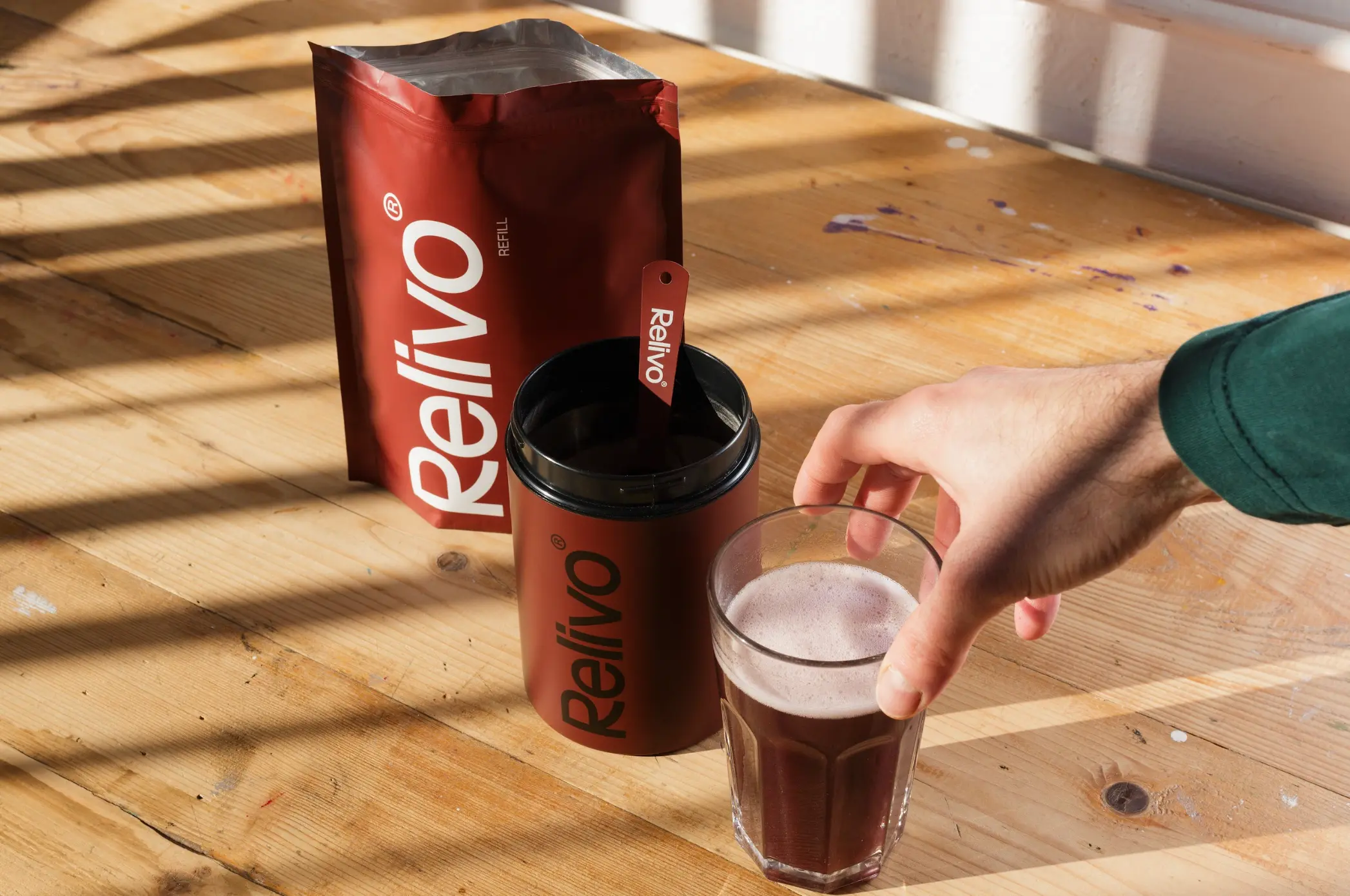
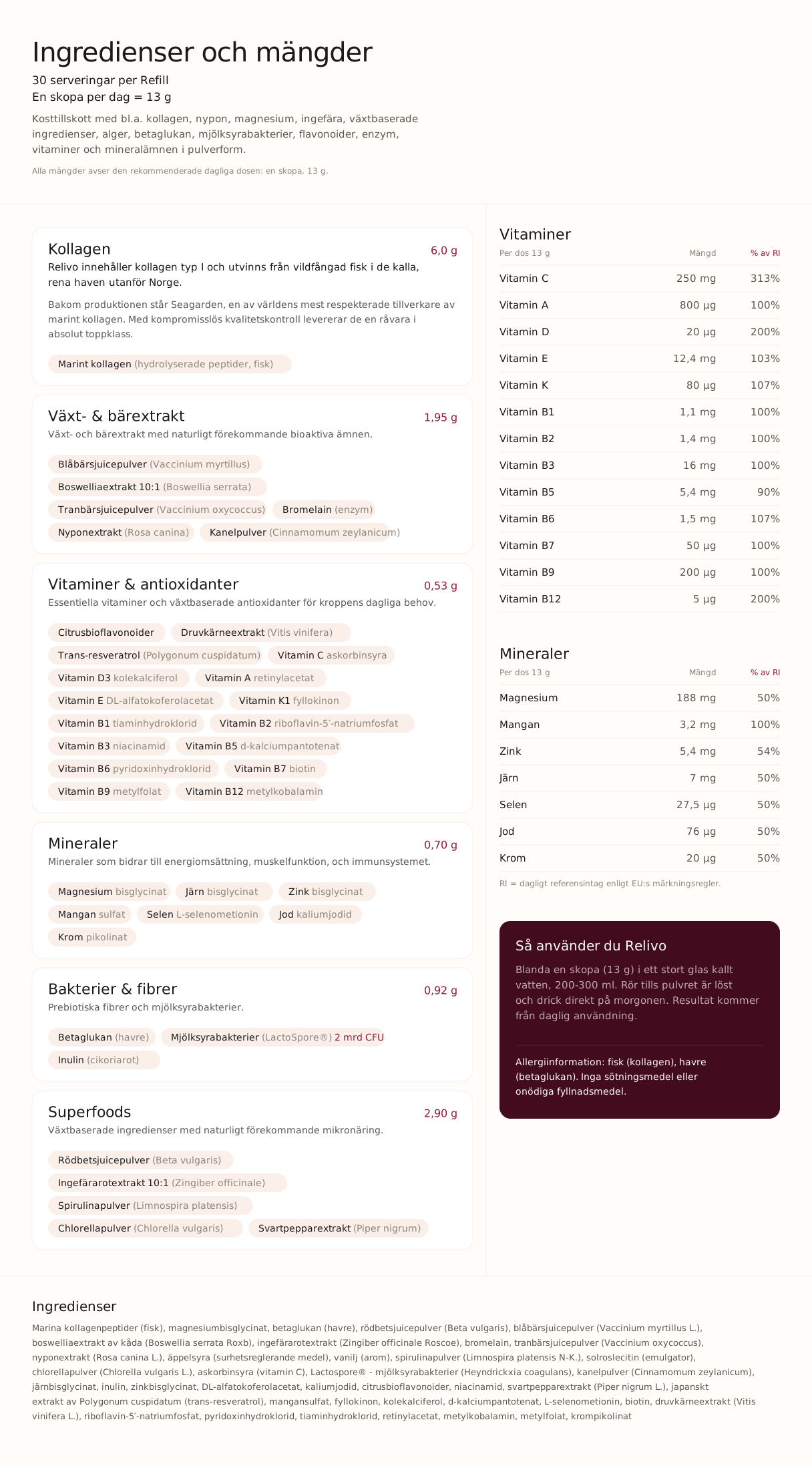
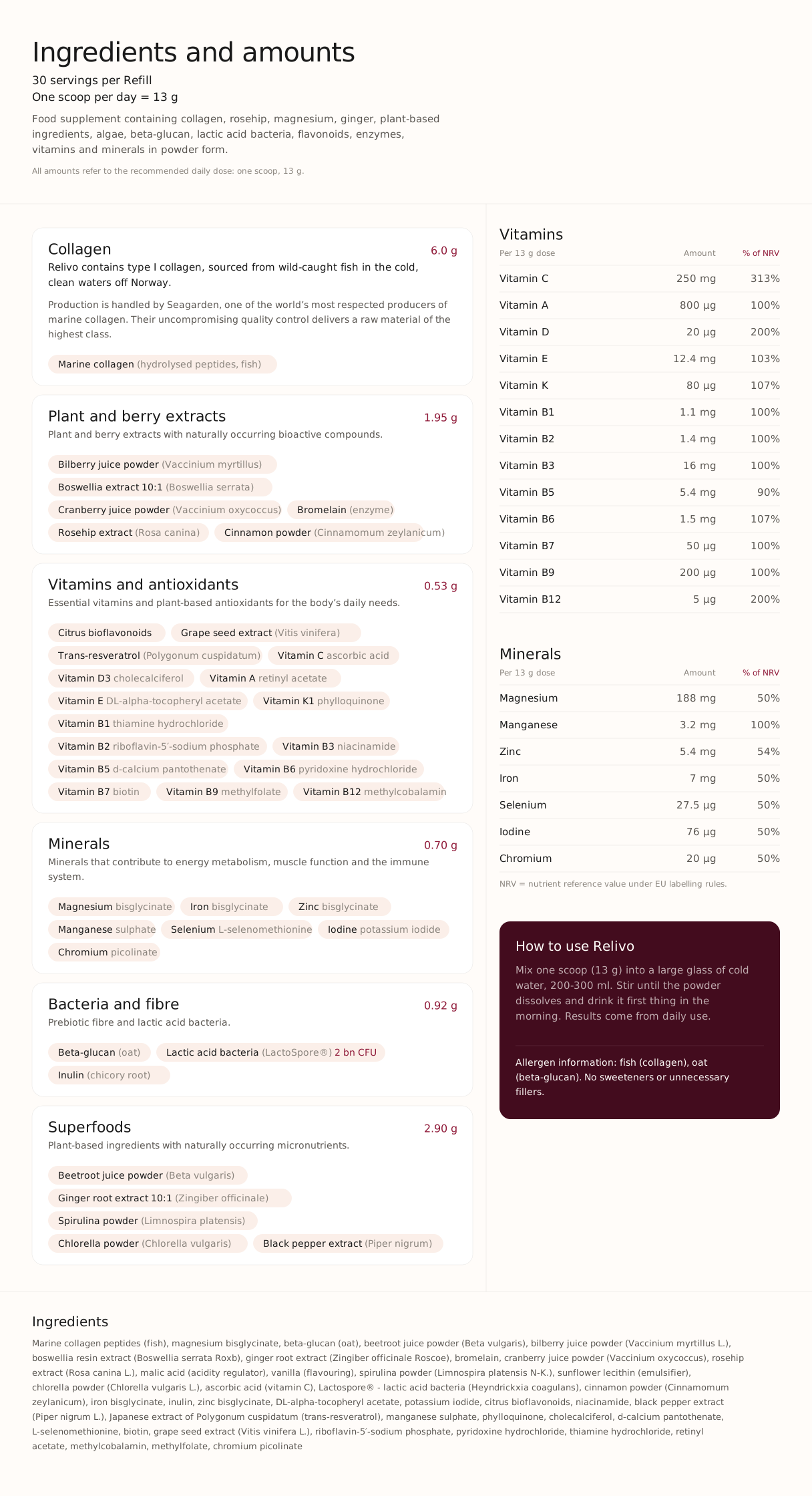
Relivo is a complete daily nutritional supplement developed in collaboration with Swedish scientists and nutritionists. Relivo combines 38 carefully selected nutrients that support the body's most important systems and structures.
All collected in a scoop in powder form, developed to be easy to use and easy to bring into everyday life. Relivo is blended in 60 seconds and is used as a long-term nutritional foundation for energy, immune system, gut health, muscles and joints.
Sources
• https://www.relivo.se/artiklar/topp-5-studerade-naringsamnen-for-muskler-och-leder
• https://halsokosten.se/inspiration/halsa/darfor-ska-du-kombinera-ditt-kollagen-med-hyaluronsyra
• https://elexirpharma.se/products/kollagen-100-marint
• https://sv.differkinome.com/articles/biology-science-nature/difference-between-type-1-and-2-collagen.html
• https://www.relivo.se/artiklar/vetenskapen-bakom-relivos-hogkvalitativa-kollagen
• https://re-freshsuperfood.se/produkter/collagen/collagen_hyaluron/
• https://celloptimum.se/blogs/artiklar/kollagen-for-starka-leder-brosk-och-senor-7
• https://www.relivo.se/artiklar/allt-du-behover-veta-om-marint-kollagen—syfte-fordelar-och-dosering