5 Common Mistakes That Sabotage Your Post-Workout Recovery
Recovery after exercise is at least as important as the workout itself. Here we go over five common mistakes that can slow your progression - and how to avoid them sustainably.

Introduction
We live in a time where many people train hard, push times and try to do more than the body always has time to recover from.
However, recovery after exercise is the basis for feeling energized, stable and motivated for the next workout.
It is not uncommon for people to do “everything right” at the gym but still experience a lack of development - often due to small habits that sneak in and affect recovery more than you think.
In this article, we go over five common mistakes that can sabotage your post-workout recovery, based on research on energy, nervous system, and circadian rhythm.
The goal is to give you simple, practical tools to get more out of each workout.
1. You sleep irregularly - the biggest culprit behind poor recovery
Sleep is the most powerful form of recovery after exercise. This is when the body restores energy, balances hormones and processes the physical load of the day.
When you sleep at different times from day to day, the rhythm is disturbed, and the body becomes more difficult to know when it should recover.
Why Irregular Sleep Times Affect Exercise
The circadian rhythm controls energy levels, appetite, stress sensitivity and muscle recovery, among other things. When this rhythm is out of balance, the energy often becomes uneven and the recovery less effective.
Tips that make a difference
- Keep about the same bedtime, even on weekends.
- Create a quiet routine the last half hour before going to bed.
- Avoid strenuous workouts late at night if you notice that it interferes with your sleep.
2. You ignore the importance of the nervous system in recovery
Recovery isn't just about muscles - it's about the entire nervous system.
After exercise, the body is often left in an activated state where the sympathetic nervous system (the “gas”) predominates.
When the body is not allowed to switch down
If you are stressed, exercising intensively, or moving straight on to the next activity without a break, the body may find it difficult to hit the “brake”.
This means that the recovery takes time.
How to help the nervous system land
- Finish the exercise with calm breathing or light stretching.
- Give your body a short break before you throw yourself further.
- Notice how your body feels after the workout — refreshed or calm?

3. You are not getting enough energy and nutrition
Exercise increases the need for energy and nutrition, but many wait too long to eat or eat too little after a workout.
Food affects how quickly the body restores its energy levels.
The role of nutrition in recovery
After exercise, the body wants to replenish energy stores and support reconstruction. It's not about perfection - it's about giving the body fuel when it needs it most.
A Simple Post-Workout Routine
- Feel free to eat within 1-2 hours after your workout.
- Combine carbohydrates and protein sources.
- Drink water to restore fluid balance.
4. You train too hard - and too often
Motivation is great, but can also lead to pushing the body longer than it has time to recover.
Signs that the training is too intense can be decreased motivation, tenacious energy or the feeling that the performance is going backwards.
Why too much exercise can slow progress
The body needs time between workouts to build up strength and energy. Without recovery, the body falls into a constant state of load.
How to find a better balance
- Vary the intensity from day to day.
- Give yourself at least one day of rest a week.
- Feel after: do you exercise because you want to - or because you feel like you “should”?

5. You underestimate the impact of everyday stress on recovery
Exercise puts a strain on the body - but so do stress, time pressure, screens and information cues.
If life around you is stressful, even light exercise can feel heavier and recovery slower.
The body does not distinguish between mental and physical stress
The nervous system reacts similarly to both, which allows the total load to be high even if you exercise moderately.
Small Ways to Reduce Everyday Stress
- Take several short breaks during the day.
- Slow down the pace with the help of deep breathing.
- Create routines that provide security and stability in everyday life.
Relivo's perspective on recovery
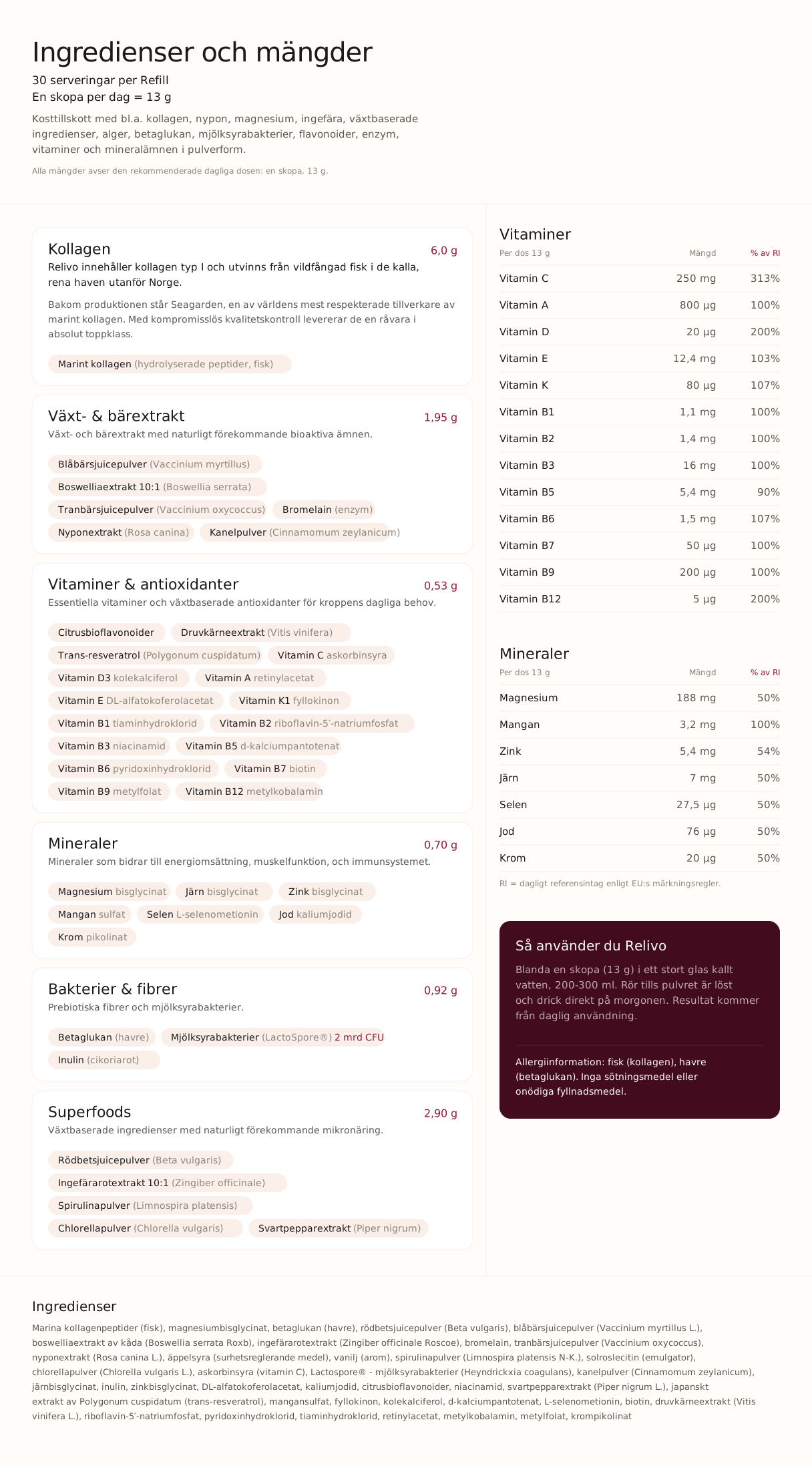
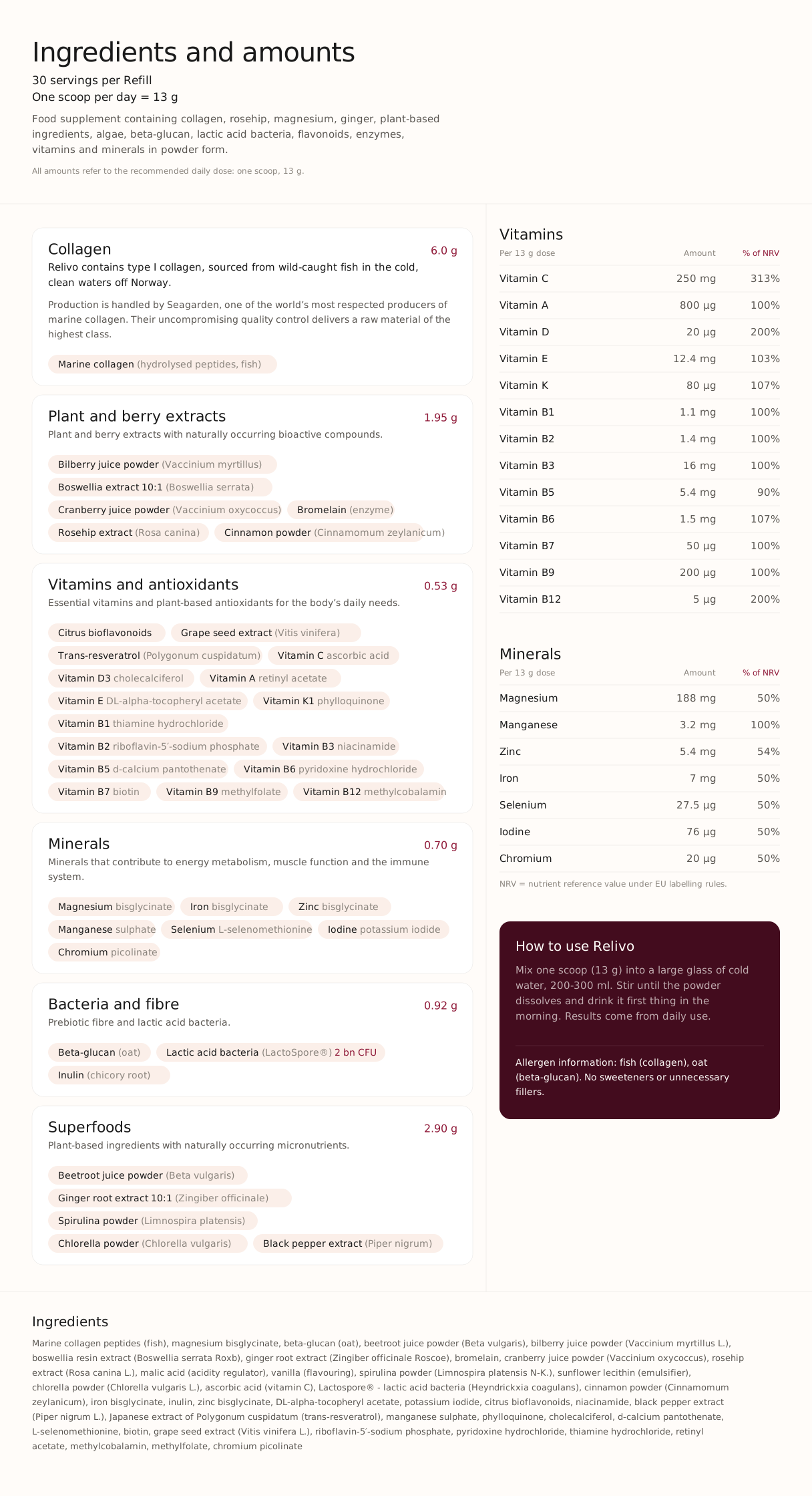
Relivo works with a focus on recovery, nervous system and balance, and highlights the importance of everyday routines that help the body land after both exercise and stress.
The brand emphasizes precisely the overall picture: sleep, habits, recovery and balance in everyday life.
Summary
Avoiding these five common mistakes can make a big difference in how you recover after exercise. When you give your body more support between workouts, you also get more energy, better training pleasure and more stable development.
Recovery is not “doing less” - it's giving the body what it needs to be able to perform and feel good in the long term.
Small changes can create a big impact over time.
Sources
- Fullager, H. H. et al. (2015). Sleep and athletic recovery. The European Journal of Sport Science.
- Roenneberg, T. et al. (2012). Social jet lag and its impact on well-being. Current Biology.
- Meeusen, R. et al. (2013). Overtraining and recovery. The European Journal of Sport Science.
- Knutson, K. L. (2010). Sleep and physiological balance. Sleep Medicine Reviews.
- American College of Sports Medicine (ACSM). The Position Stand is for Nutrition and Athletic Performance.