Which collagen is best - marine, bovine or chicken?
Not all collagen is created equal. What really determines the effect is not what “type” it comes from -- but how small the peptides are and how easily the body can absorb them.

Why collagen plays a bigger role than many people think
Collagen is not “another supplement”. It is the body's most abundant protein and forms the backbone of everything from skin and connective tissue to tendons, ligaments and bones.
From about the age of 25, the body's own collagen production gradually decreases. This is why many people experience changes in tension, recovery and joint comfort over time. That's also the crux of why collagen supplements have become so talked about.
But the important question is not if you take collagen — without which.
Not all collagens are the same
The differences are about three things:
✅ Collagen type - what structure the protein has
✅ Source - fish, cattle or chicken
✅ Molecular size How easily the body can absorb it
It is the combination of these factors that determines how effectively a collagen works in the body.
Marine Collagen (Fish) - Type I
Dominant type: Type I — the same type that predominates in the skin, connective tissue and skeleton.
What does the research say?
Studies show that marine collagen most often has lowest molecular weight, which means less peptides that the body can absorb faster and in higher concentration.
It makes marine collagen the most bioavailable alternative — that is, the collagen your body can actually use effectively.
When is marine collagen best?
- The structure and firmness of the skin
- Connective tissue and “structural support”
- All-round daily use
- When you want the best possible uptake
Bovine Collagen - Type I & III
Dominant types: Type I + Type III
Strengths
- Wide option
- Often more cost-effective
Limitations
- Bigger peptides → slower uptake
- May have a clearer taste/smell
When is bovine suitable?
- When Price Is a Decisive Factor
- When to combine type I and III
Chicken Collagen - Type II
Dominant type: Type II — associated with cartilaginous structures.
Strengths
- Specific attachment to cartilage and joint surface
Limitations
- Not rich in Type I
- Less suitable as “all-round support”
When is chicken collagen suitable?
- At a specific focus on cartilage/joint function
- Complementary to Type I
Hydrolysis - therefore the collagen type matters less than many people think
When collagen is broken down into smaller peptides by a process called Hydrolysis, something crucial happens:
- The collagen stops behaving as a “large, complex protein”
- Instead, it becomes small peptides and amino acids which the body absorbs
And here's the important insight:
Once collagen is hydrolyzed, the significance of whether it was originally type I, II, or III decreases.
Why?
- The body does not recognize the “type” after decomposition
The peptides are so small that they no longer function as type-specific structures. They become raw materials — building blocks — that the body can use where the need is greatest. - Efficacy is governed by bioavailability, not the label on the can
Research shows that uptake, transport, and biological activity correlate more strongly with molecular size than with collagen type. - Peptides trigger the body's own processes
Hydrolyzed peptides work in part by stimulating the body's own collagen synthesis -- and that process itself determines what kind the body needs to produce.
That is why many experts today emphasize:
“Choose collagen based on uptake - not just type.”
And this is also the reason why marine collagen, which often has lowest molecular weight, singled out as the most bioavailable option in comparative studies.
So... which collagen is best?
For the structure of the whole body and the matrix of the skin:
Marine Collagen (Type I)
For an affordable base option:
Bovine Collagen (Type I & III)
At specific cartilage focus:
Chicken Collagen (Type II)
FAQs
Do you need to combine several types?
Not for all-round support. Type I accounts for the majority of the body's structure.
When to take collagen?
The timing is less important — Continuity is crucial.
Is vitamin C needed at the same time?
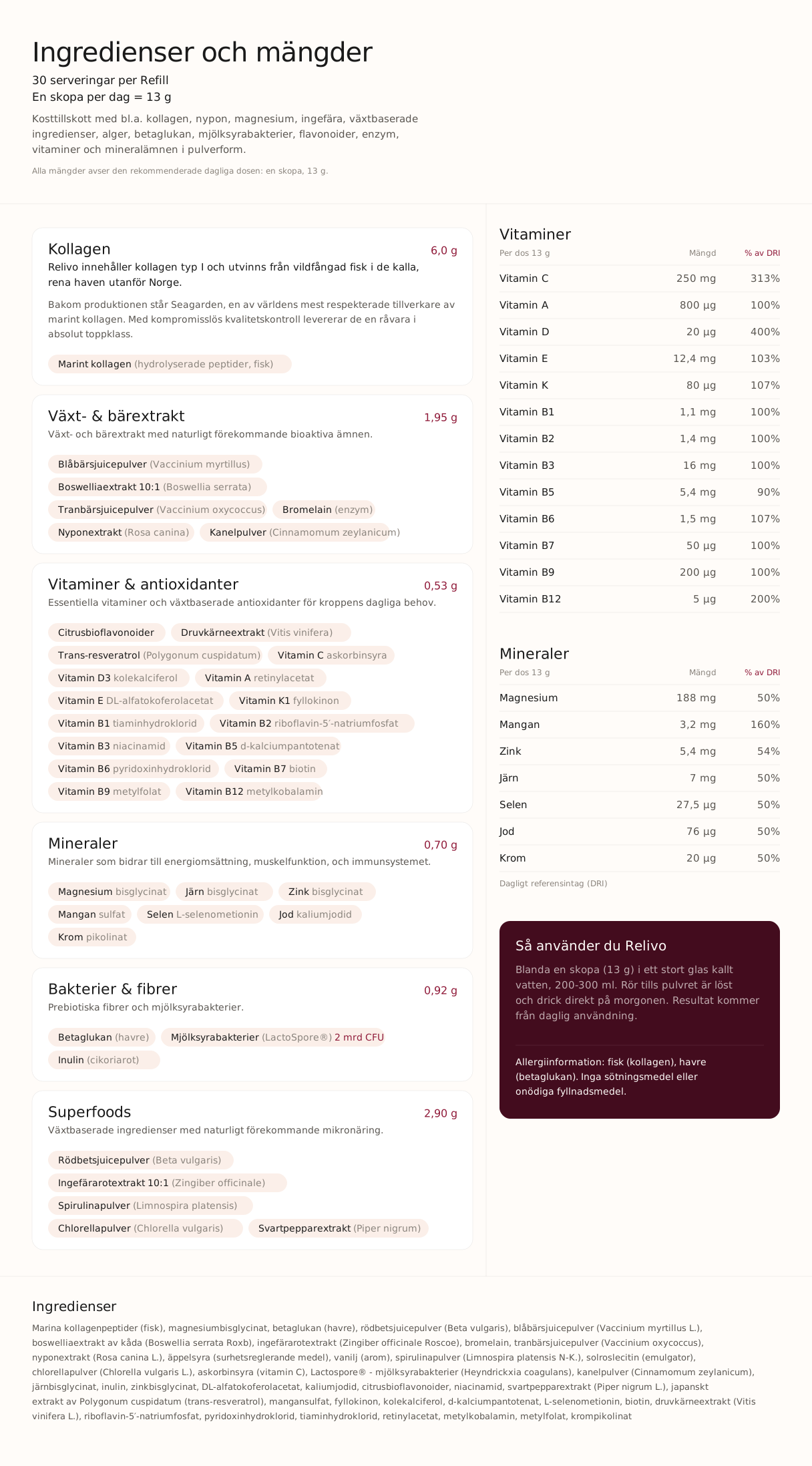
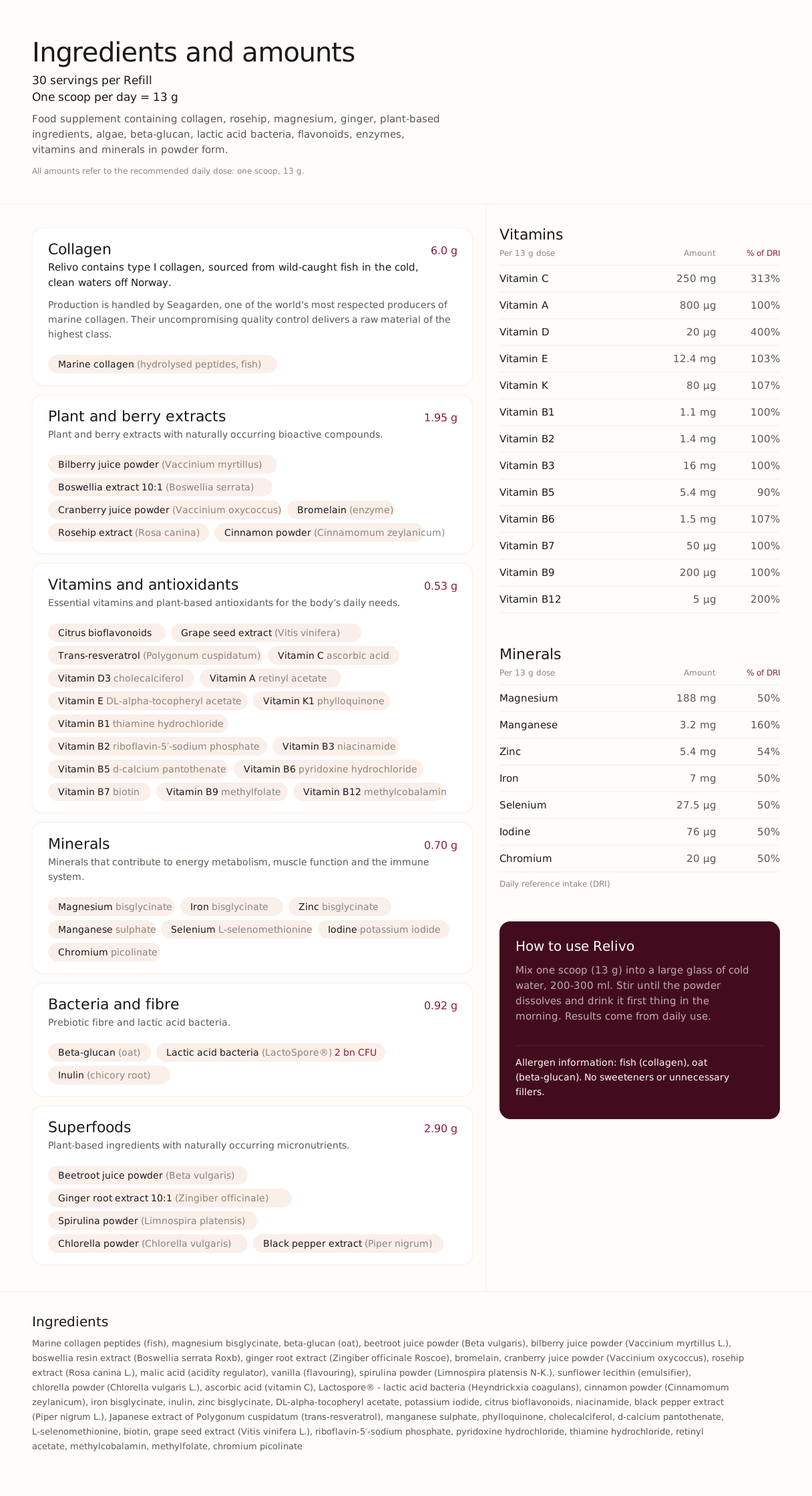
Vitamin C is involved in collagen processes and therefore often appears together with collagen in formulations.
Summary
Collagen naturally decreases with age, which is why supplementation has become popular. What primarily determines the effect is how small the peptides are and how easily the body can absorb them - not only what type the collagen is.
Marine collagen has lowest molecular weight and best uptake, making it the most all-round and bioavailable option for skin, connective tissue and structure.
In short: for daily, effective collagen support, research points most clearly to marine collagen.