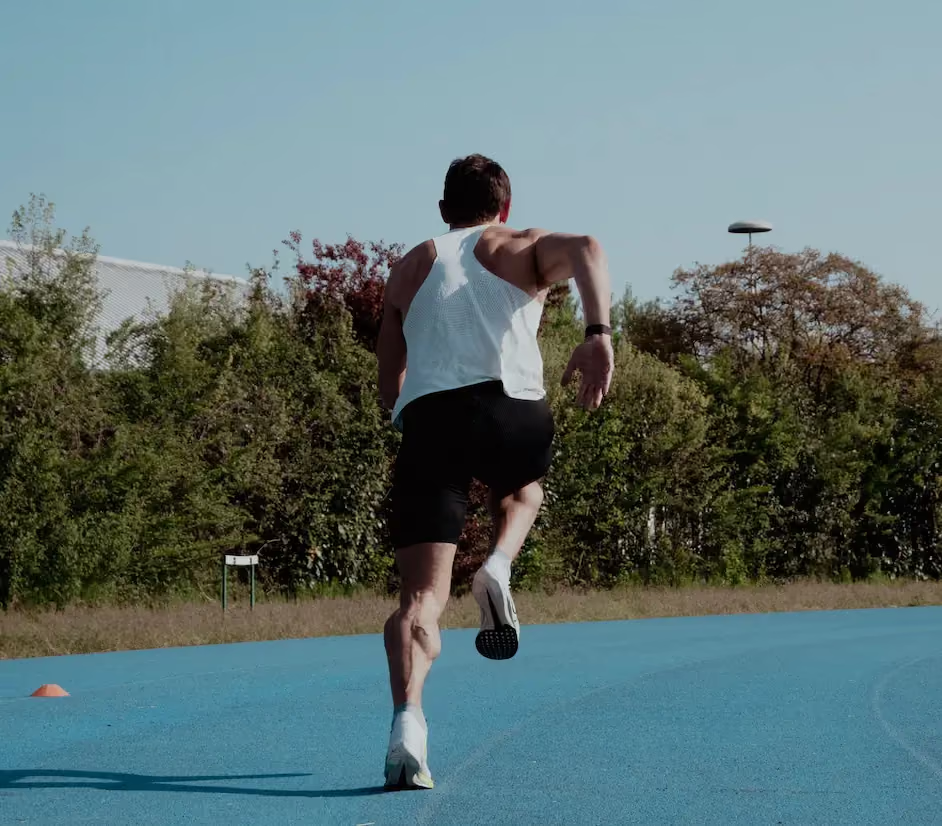
Do you exercise hard but feel tired?
Exercise is supposed to provide energy — not take it away from you. Still, there are many people who train hard but still feel tired. Here you get a research-based guide to why it happens and what can help.
Introduction
It's easy to believe that more exercise automatically brings more energy, a better mood and a more stable everyday life.
But sometimes the opposite happens. Many people who exercise regularly still feel tired, drained or unfocused during the day.
That doesn't mean something is “wrong” -- rather that the body is trying to tell you something. Fatigue despite hard training is often a sign that the recovery does not match the load.
In this article, we'll go over why hard exercise can lead to fatigue, what habits help, and how to strike a balance between exercise, nutrition and recovery.
Why You May Feel Tired Despite Hard Exercise
Imbalance between load and recovery
The body needs recovery to build strength and energy after exercise.
When rest is not enough, fatigue comes as a natural “stop sign”.
Stress + exercise sometimes becomes too much
Exercise is a form of stress for the body — a positive, yet stress.
If your everyday life already contains a lot of pressure, exercise can add even more strain.
Sleep quality plays a bigger role than you think
Even if you sleep many hours, the quality can be low.
It makes it harder for the body to recover from exercise.

Common Signs You're Working Out Hard But Recovering Too Little
1. Decreased energy and motivation
You feel more tired than you usually do, even before training.
Motivation dips and the passes feel heavier for no apparent reason.
2. Worse focus and more brain fog
Too little recovery makes it harder to stay focused.
The brain needs time to “land” after exercise just like the body.
3. Increased stiffness and slow recovery
You feel chewy several days after workouts that previously felt easy.
It may be a sign that the body is not catching up.
4. Greater sensitivity to stress
You notice that little things affect you more.
When the body is drained, the nervous system becomes more sensitive.
Nutrition that supports energy and recovery
Protein for building and stable energy
Protein helps the body recover after exercise.
Getting enough can support both muscular and mental energy.
Collagen as a source of protein
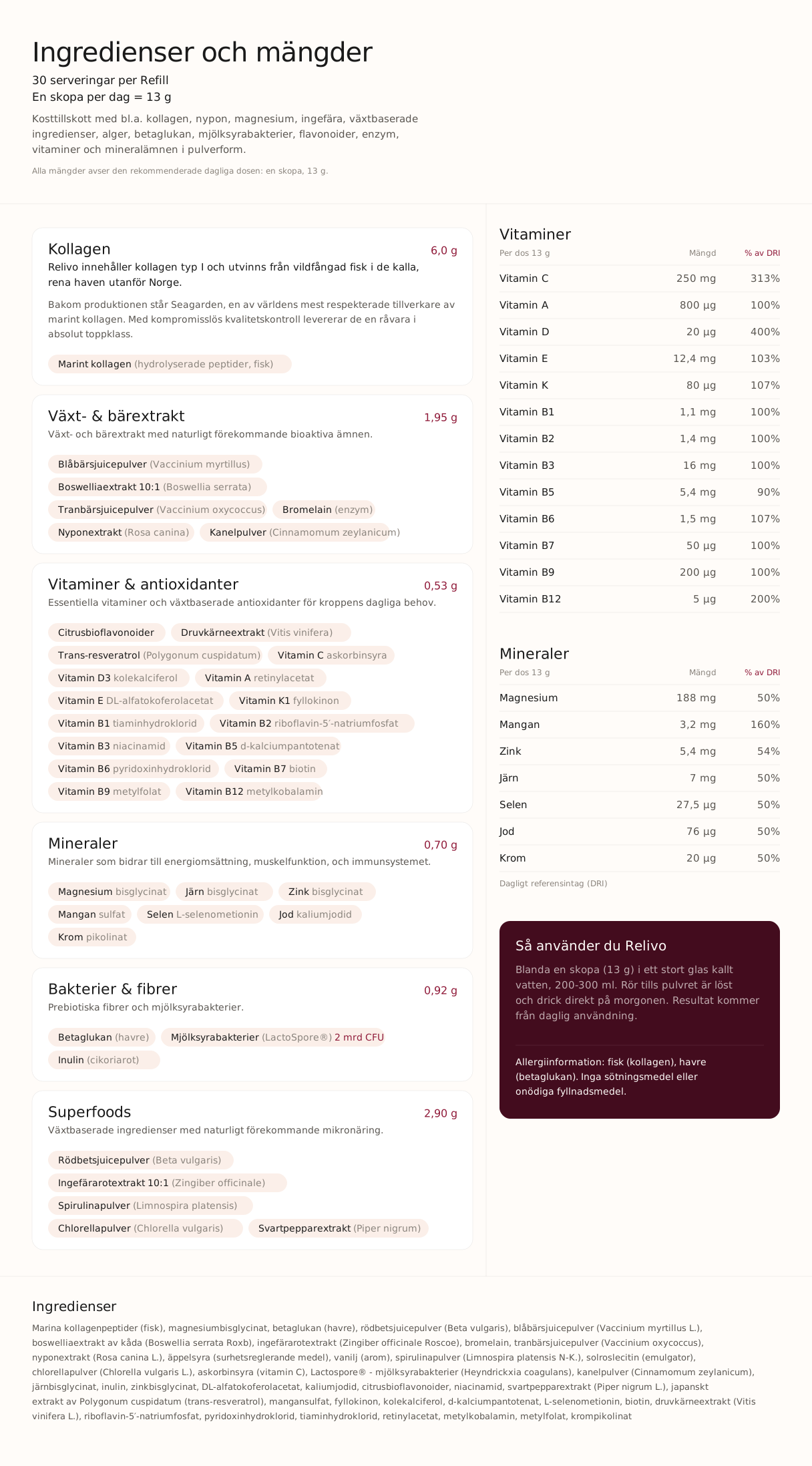
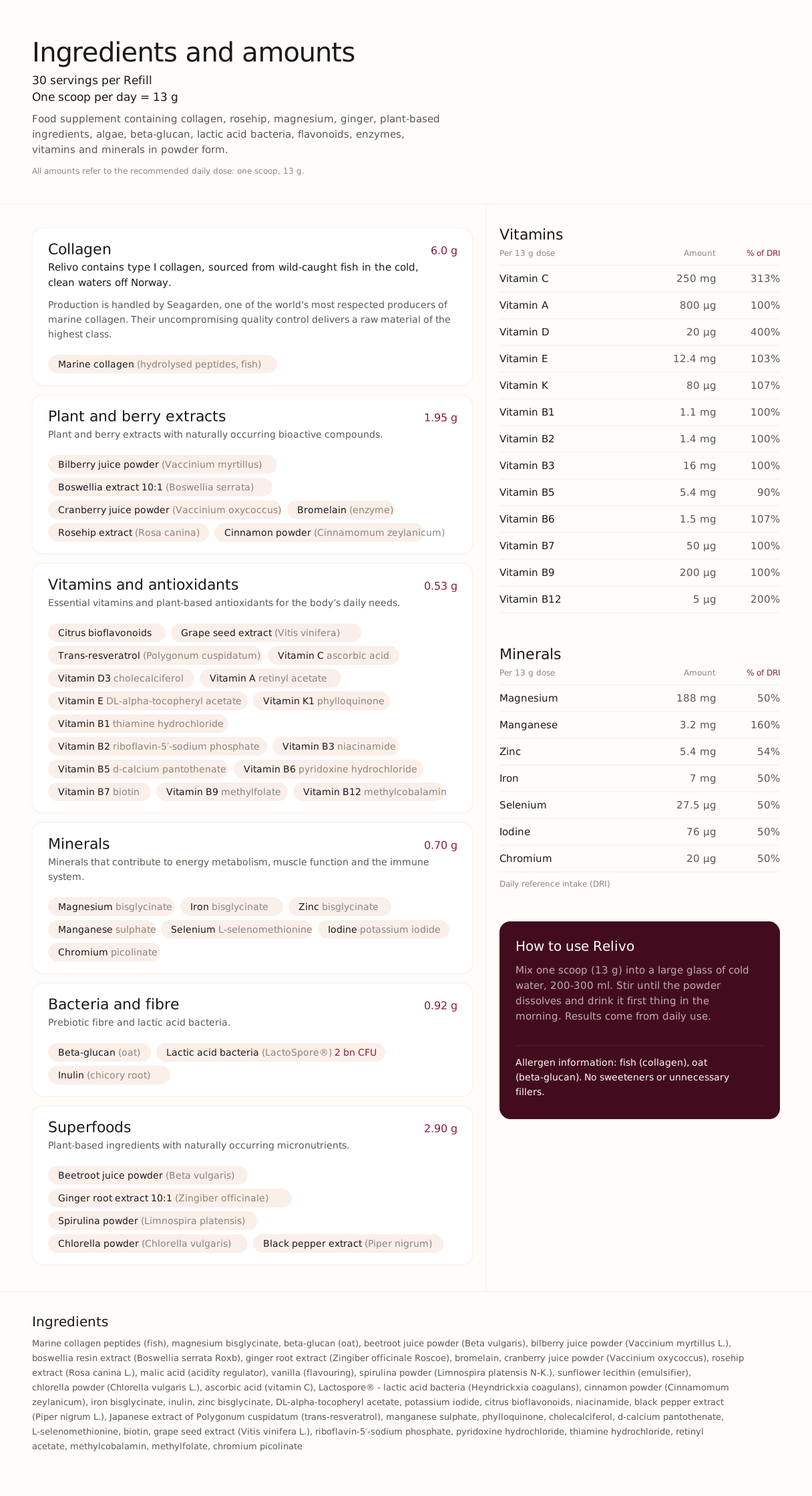
Collagen is easy to use in everyday life and contains amino acids such as glycine and proline.
It can be a smooth addition in smoothies, coffee or snacks.
Magnesium for evening routines and warm-up
Magnesium is used by the body in processes linked to recovery and calm.
Many people use it in the evening as part of a routine to unwind after exercise.
Omega-3 and mental energy
Omega-3 fatty acids have been highlighted in studies for their link to mental energy and recovery.
Oily fish or a supplement can be a good support, especially during hard exercise.
How to find the balance between exercise and recovery
1. Plan rest days as carefully as training days
Rest is not the opposite of exercise -- it's part of training.
A day of rest can give you more energy for upcoming workouts.
2. Vary the exercise to reduce the load
Combine intense days with calmer workouts.
It gives the body a chance to recover without you having to stop exercising.
3. Focus on evening routines that signal 'time to recover'
Calm breathing, warm drink or light stretching can help the nervous system unwind.
This allows the body to recover better for the next day.

Sleep - the main factor of energy when training hard
Why Sleep Affects Recovery So Much
During sleep, impressions are processed, muscles are recovered and energy stores are replenished.
When sleep sways, it affects everything else.
An Evening Routine for Better Sleep Quality
- Avoid screens 60 minutes before bedtime
- Drink something warm
- Test slow breathing
- Keep the same routine every night
Small adjustments often produce big effects.
Stress and exercise — find your balance
Exercising in stressful periods requires more care
If you're already mentally stressed, hard exercise can feel like an extra strain.
In such periods, calmer exercise may be more helpful.
Yoga, walking and mobility can be ideal
Low-intensity workouts help the body release stress.
They build energy instead of taking it.
Signs You Need to Adjust Your Workout
When passports feel like a “must”
If the joy disappears, it is often a sign that the balance is wrong.
Think of it as a signal to pause and adjust.
When you feel more pressure than energy from exercising
Training should give, not take.
If you feel drained after each session, it's time to scale down the intensity.
Summary
Feeling tired despite hard exercise is more common than you think.
It rarely means you're doing “wrong” -- just that the body needs more recovery than you're giving it.
By adjusting intensity, adding nutrition, strengthening the evening routine and listening to your body's signals, you can create a balance that returns energy instead of taking it.
It's about training smart, not just hard.
Sources
- Harvard Health — Exercise and fatigue
- Journal of Sports Sciences -- Recovery and performance
- British Journal of Sports Medicine — Sleep and training load
- Frontiers in Psychology — Stress, exercise and mental fatigue
- Nutrients Journal — Proteins and recovery mechanisms